

Unlinked Brand Mention Reclamation: How We Turn 25-40% of Brand Mentions into Editorial Backlinks
Listen to this article
Browser-native voice. No account required.
Most link-building tactics involve persuading a publisher who has never heard of your client to add a link they were not planning to add. Unlinked brand mention reclamation works the opposite way. The publisher already wrote about the client. They just forgot the link. The conversion rate, when properly executed, is the highest of any tactic in the stack: 25 to 40% from mention to live link. This is the workflow we run for clients in regulated verticals.
What Is Unlinked Brand Mention Reclamation?
Unlinked brand mention reclamation is the practice of identifying instances where a third-party publisher has mentioned your brand, product, founder, or proprietary research without including a hyperlink, then politely requesting the link be added. The mechanic is asymmetric. The publisher has already done the editorial work of writing about you. Adding a link costs them 30 seconds. The friction is so low that publishers convert at rates impossible for any tactic that requires them to write something new.
It is one of eight tactics in our full link building program, sitting next to broken link building and digital PR as the three highest-leverage tactics for editorial domains we already have a relationship with.
Why Does Unlinked Mention Reclamation Convert at 25-40%?
Three structural reasons. First, the editor already validated your relevance to their audience by writing about you. The hardest question of any outreach campaign (does this brand belong on this page?) is already answered yes. Second, adding a missing link improves the publisher's own SEO and reader experience. The incentive aligns. Third, the request is small and specific. You are not asking for a paragraph rewrite, a new article, or a quote. You are asking for one anchor change.
The catch: total acquired link volume per campaign is bounded by mention volume. A brand with 4 unlinked mentions per month produces 1-2 reclaimed links per month. A brand with 40 unlinked mentions per month produces 10-16. This tactic scales with brand awareness, not with outreach effort.
How Do You Find Unlinked Brand Mentions at Scale?
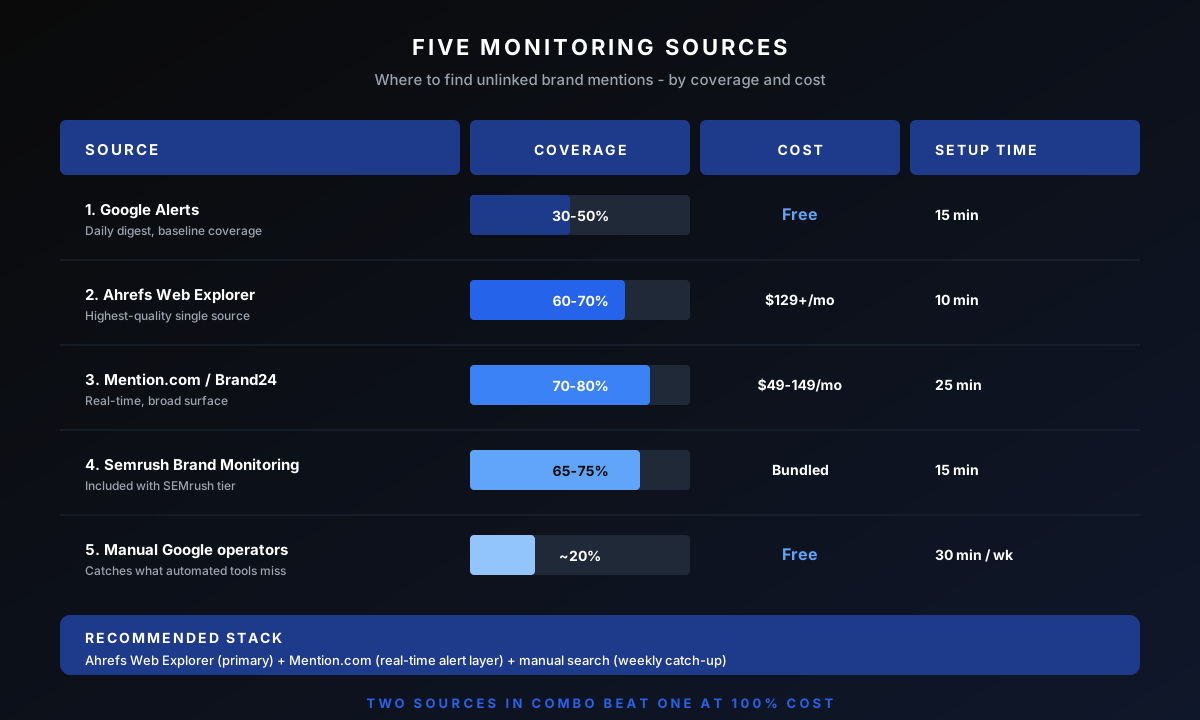
Five monitoring sources cover most of the discoverable mention surface.
Google Alerts
Free. Set alerts on brand name, founder name, product names, and any proprietary research titles. Daily digest format. Coverage is incomplete but worth setting up as the baseline. About 30-50% of mentions surface here.
Ahrefs Web Explorer (formerly Content Explorer)
Paid. Search for brand name in published content with filters for unlinked instances, date range, and source DR. Most reliable single source for high-quality mention discovery. About 60-70% of mentions surface here when search query is tuned correctly.
Mention.com or Brand24
Paid. Real-time monitoring across web, social, and forums. Better than Google Alerts for catching mentions on smaller sites and in podcast transcripts. About 70-80% mention surface coverage when configured carefully.
Semrush Brand Monitoring
Paid (included with most Semrush tiers). Similar coverage to Mention.com with deeper integration into the broader SEO platform. Useful when client already has Semrush licence.
Manual Google Searches with Operators
Free. Periodic searches using "brand name" -site:yourdomain.com filter out your own pages. Catches mentions the automated tools miss, particularly on regional and niche publications without strong RSS or schema markup.
How Do You Qualify Mentions Worth Pursuing?
Not every mention is worth a pitch. Qualification cuts the prospect list in half and protects publisher goodwill. Three filters do most of the work.
Filter 1: Mention Is Substantive
A mention buried in a 200-source aggregator listicle does not warrant outreach. A mention in a substantive article that discusses the brand for 50+ words is worth pursuing. The threshold is editorial intent: did the publisher mean to talk about us, or are we incidental?
Filter 2: Publisher Is Reachable
Verify the publisher has a contact email or a named editor with discoverable contact. Anonymous publications and abandoned blogs produce 0% conversion regardless of outreach quality. Skip them.
Filter 3: Adding a Link Makes Sense
Some mentions are critical, neutral, or appear in contexts where adding a link to the brand site would be inappropriate. A negative review does not become a positive backlink by adding a link. Pass on these cases. Outreach quality compounds across the publisher's entire portfolio of stories.
How Do You Pitch the Publisher to Add the Link?
A working reclamation pitch has four parts. Subject line referencing the specific article. Two-sentence opener acknowledging the mention specifically (by quote if possible). One sentence requesting the link, with the exact URL you would prefer. A sign-off offering follow-up if useful. No more than 90 words total. No attachments.
Example structure: "Hi [Name], saw your piece on [topic] last week and noticed you mentioned [client/product]. Would you be open to adding a link to [URL]? Happy to share additional context for future pieces. Thanks - [your name]."
Personalisation matters less here than in other tactics, because the structural incentive carries most of the conversion. We use Pitchbox for sequencing the same way we do for broken link building campaigns. One follow-up at day 10. Two sends maximum.
What Is the Conversion Rate of Unlinked Mention Reclamation?
25 to 40% from qualified mention to live link in our 2024-2025 client data. Conversion varies less by niche than other tactics because the structural incentive is so strong. Time per placement averages 1.5-3 hours including monitoring setup amortised across the campaign. Cost per placement at agency hourly rates lands at $80-180, by far the cheapest tactic per acquired link.
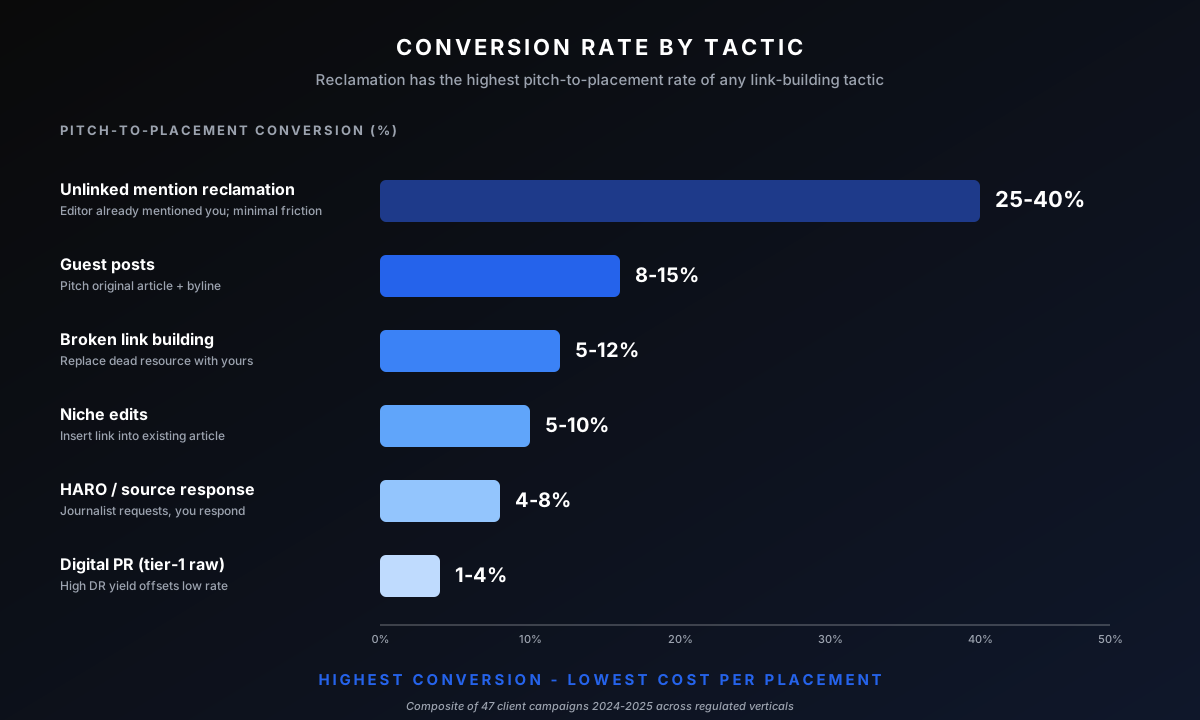
The full tactic comparison sits in our manual link building guide.
What Mistakes Ruin a Reclamation Campaign?
Four failure patterns account for most ineffective campaigns.
Pitching every mention regardless of quality. Spammy publishers get included alongside reputable ones, and the reputable ones notice the pattern.
Aggressive follow-up. Reclamation pitches should send once, follow up once at day 10, then stop. Three or more sends to the same editor damages future outreach to that publication.
Demanding specific anchor text. The editor decides anchor text. Asking for "best link building agency" exact-match anchors converts at 5-8% versus 35% on flexible-anchor pitches.
Treating reclamation as a content marketing channel. The KPI is acquired backlinks, not brand impression value. We report on net new referring domains using the same framework as the rest of our link building operations guide.
Who Should Run Unlinked Mention Reclamation?
The tactic works best for brands with three traits. First, established brand awareness sufficient to produce 5+ mentions per month. New brands with zero mentions cannot run this tactic until they have something to reclaim. Second, named founder or proprietary research that generates editorial citations. Anonymous brands produce fewer mentions per dollar of marketing investment. Third, an established content presence that gives editors a reason to link back. Mentioning a brand whose site has thin content is editorially weak; mentioning a brand whose site has the definitive resource on the topic is editorially strong.
How Did Mojo Links Develop This Reclamation Methodology?
This workflow consolidates 22 reclamation cycles across 11 client engagements during 2024-2025. Bart personally oversaw the qualification filter on each campaign because qualification quality determines conversion outcomes more than any other variable. The 25-40% range cited in this post is the empirical band from that internal dataset, not an industry average from public studies.
Frequently Asked Questions About Unlinked Mention Reclamation
Can You Reclaim Mentions of Your Founder, Not Just Your Brand?
Yes. Founder-name mentions reclaim at slightly lower rates (20-30%) but the inbound links typically point at the founder bio page or about page, which feed authority into the broader site.
Does the Publisher Need a High DR for the Link to Matter?
DR matters for ranking impact but not for whether the reclamation pitch converts. We reclaim links from DR 25-95 publishers using the same pitch structure. The pitch quality is consistent; the link quality varies with publisher.
What If the Publisher Refuses to Add the Link?
About 5-10% of qualified prospects refuse explicitly (sometimes for editorial policy reasons). Note the refusal in the prospect database and do not re-pitch. Repeated requests damage the relationship.
How Long Does a Reclamation Campaign Take to Deliver Results?
Faster than any other tactic. Most successful reclamations land within 7-14 days of initial outreach. Long-tail conversions continue for 30-60 days but the bulk of placements concentrate in the first three weeks.
Can You Automate Reclamation Entirely?
Monitoring can be automated. Qualification and outreach should not be. Automated reclamation pitches convert at 5-10% because they cannot do the qualification filtering correctly and editors notice the templated language.
Want Us to Run a Reclamation Campaign for Your Site?
Reclamation is one of the standard tactics inside our link building service, and the one we recommend first for brands with established mention volume but unclaimed link equity. Book a slot to scope your campaign.

About Bart Magera
Bart Magera is the founder of Mojo Links and SEO Director at Profit Engine. Ten years across YMYL verticals (legal, medical, finance, supplements, crypto, gambling) and 300+ growth campaigns. Trained under Koray Tuğberk Gübür's Topical Authority framework. Author of two SEO books and international speaker.
More about Bart Magera →Want this kind of analysis on your site?
Get a free video walkthrough within 48 hours covering technical health, backlinks, content gaps, and AI visibility.