

Digital PR Link Building: How It Works, Strategies, and Examples
Listen to this article
Browser-native voice. No account required.
One Wall Street Journal mention produces more compounding ranking lift than thirty mid-DR guest posts, because it delivers linked and unlinked mentions at once. The catch is that one mention costs more to earn than thirty guest posts combined, and most attempts fail. Digital PR is the highest-leverage tactic in the link building stack, and the one most operators run badly. This guide covers how the tactic works, the full workflow, and the numbers behind it.
What Is Digital PR for Link Building?
Digital PR is the practice of pitching original data, research, or news angles to journalists at major publications, earning editorial coverage that includes a backlink to your site. It differs from traditional PR in one operational detail: the link is the primary KPI, not the press mention. A glowing feature with no link is a failure under digital PR metrics, even if the brand impressions look good. That coverage is one of the best sources of contextual backlinks.
It sits alongside guest posts, niche edits, broken link replacement, and HARO in the modern tactic stack covered by the operations guide for SEO teams. Digital PR is the highest-DR-yielding tactic and also the lowest-conversion-rate tactic. Both facts shape how to plan around it.
Why Does Digital PR Produce Such High-Authority Backlinks?
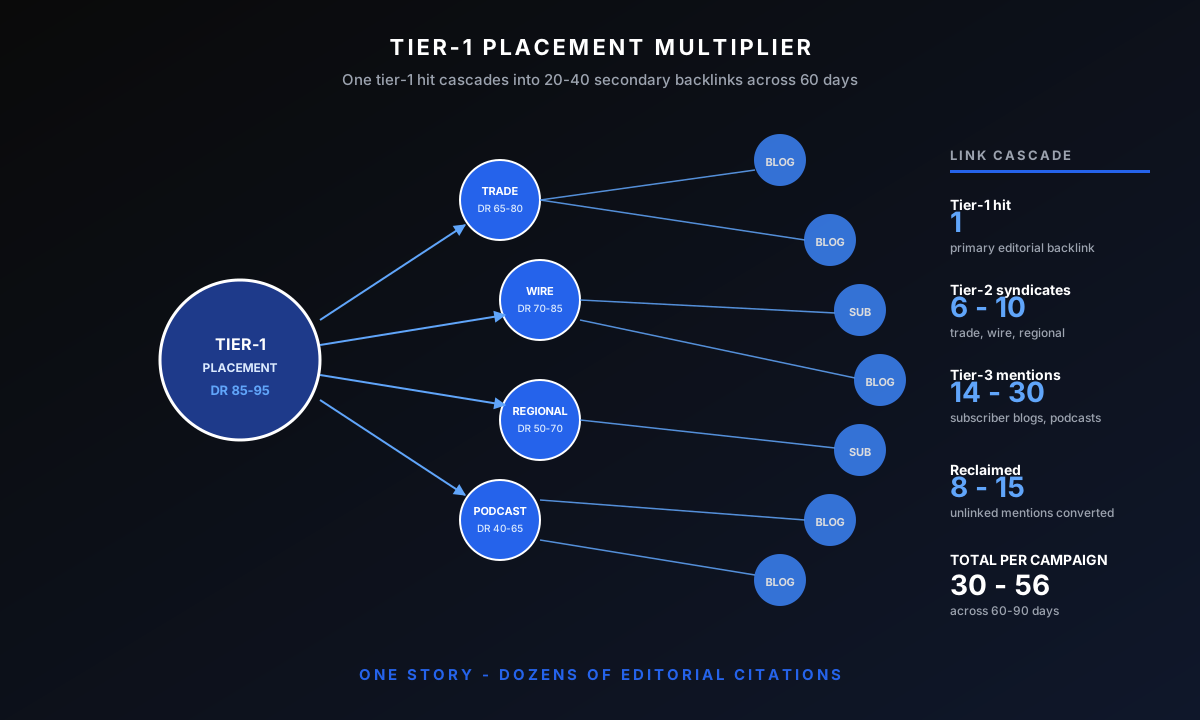
Two reasons. First, the receiving publications (Wall Street Journal, Forbes, Reuters, Bloomberg, Inc, major trade titles) are themselves at DR 80-95. Their editorial standards filter out low-quality content automatically, which means Google trusts their citations more. The Reuters Institute Digital News Report tracks how much audiences trust those titles. Second, when a tier-1 publication covers a data study, the original story gets syndicated, quoted, and re-reported across dozens of secondary outlets. In Mojo Links campaigns, a tier-1 placement typically produces 20 to 40 secondary backlinks over the following 60 days. The math is brutal in the inverse direction too. Without the original tier-1 hit, none of the secondary coverage exists.
How Does The Digital PR Workflow Run End-To-End?
Five phases run in order: asset development, media list building, embargoed pitch, syndication tracking, link reclamation.
Phase 1: Asset Development
Build an original data study, survey, calculator, or research report. The asset must produce a quotable headline finding (a single number journalists can cite in their headline). Asset development takes 40-80 hours and is the single most common failure point. Generic content is filtered immediately by experienced journalists.
Phase 2: Media List Building
Identify journalists who cover your topic. Pull historical articles via Muck Rack, Cision, or manual Google News searches. Each journalist gets a profile: publications they write for, recent topic coverage, response patterns, preferred pitch format. A target list of 30-60 journalists is standard per campaign.
Phase 3: Embargoed Pitch
Pitch the asset with a 24-72 hour embargo, giving the first-receiving journalist exclusive coverage. The pitch is short (under 120 words), leads with the headline finding, links to a full asset summary, and offers an exclusive interview if relevant. Embargoes increase conversion because they remove the journalist's fear of being scooped.
Phase 4: Syndication Tracking
After the initial publication, monitor for syndication and secondary coverage. Most major stories get re-reported within 5-15 days. Each secondary mention is a chance to add a backlink that may have been omitted in the syndicated version.
Phase 5: Link Reclamation
Some coverage will mention your brand or research without linking, leaving unlinked brand mentions to chase. Polite outreach to add the missing link converts at 25-40% (the same range as standard unlinked mention reclamation). Most campaigns produce 30-50% of total acquired links through reclamation, not the original pitch. Those same mentions, linked or not, are what AI answer engines draw on, which is why some brands now run done-for-you AI mention placement as a parallel track.
What Is The Conversion Rate of Digital Pr?
1 to 4% from pitched journalist to live placement on the original tier-1 publication. Add 20 to 40 secondary placements per successful tier-1 hit. Add reclamation conversions on top. Effective conversion across the full campaign typically lands between 40 and 80% on net new backlinks per campaign cycle, but the headline rate (the tier-1 conversion) stays in single digits.
Compared to other tactics, the per-pitch rate is the lowest. The per-placement value is the highest. Detail on the full tactic comparison sits in the manual link building guide.
What Kinds of Data Assets Actually Earn Tier-1 Coverage?
Four linkable asset categories produce most of the tier-1 hits in Mojo Links campaigns.
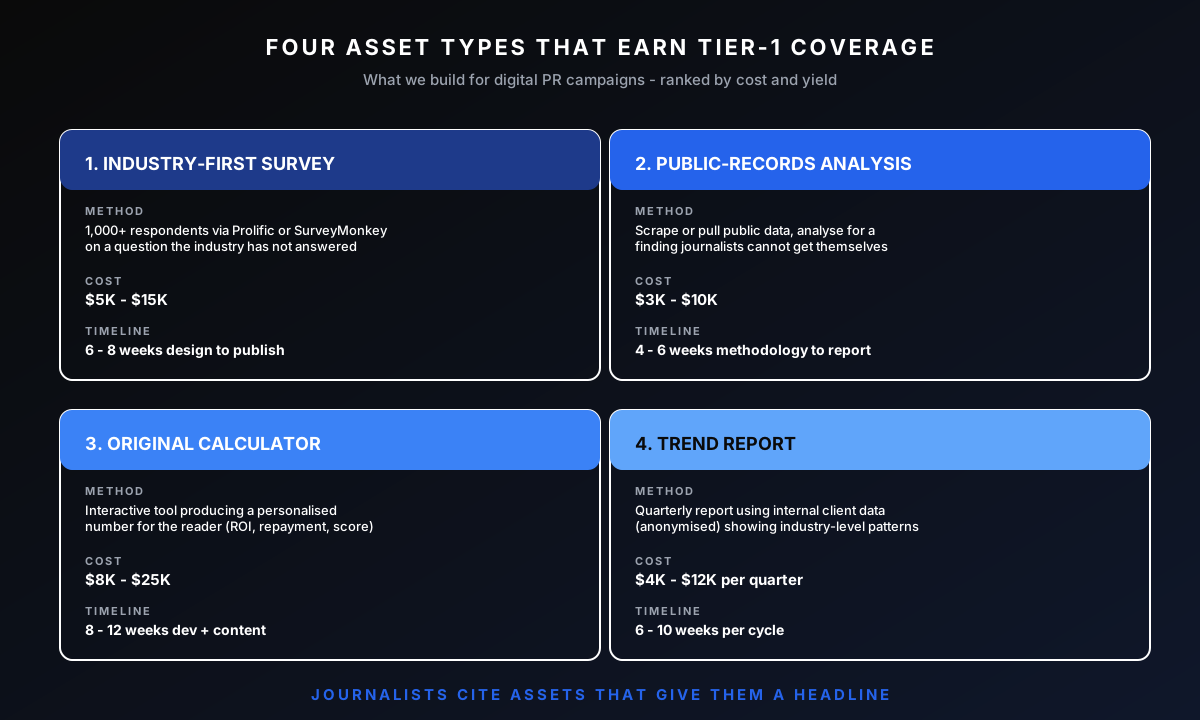
Industry-first surveys. A 1,000+ respondent survey on a question the industry has not answered. Cost: $5K-15K on a SurveyMonkey or Prolific platform. Time: 6-8 weeks from design to publishable report.
Data analysis of public records. Crawled or scraped data analysed for a finding journalists cannot easily get themselves. Example: pricing analysis across 500 SaaS products, or the buying-trend data a store mines for ecommerce link building. Time: 4-6 weeks. Risk: data must be obtained ethically and the methodology must withstand scrutiny.
Original calculators and tools. A free interactive tool that produces a personalised number (loan repayment, ROI projection, sustainability score). Time: 8-12 weeks for development plus content. Earns links indefinitely after launch.
Trend reports with proprietary data. Quarterly trend reports built on internal campaign data (anonymised) that show industry-level patterns. Time: 6-10 weeks per quarterly cycle. Mojo Links produces these internally for our own latest link building statistics and the same playbook applies to any campaign.
What Does Mojo Links Do Differently in Regulated Verticals?
Three operational changes in legal, medical, finance, and crypto. First, asset development includes a clinical-style methodology statement that withstands fact-checking. Tier-1 journalists in YMYL niches fact-check more aggressively. Second, we maintain a vertical-specific journalist list per niche. The Reuters finance desk is not the same as the Reuters tech desk; pitches go to the right desk on the right cycle. Third, we time pitches around niche news cycles (earnings season for finance, regulatory deadlines for healthcare) to ride existing journalistic attention.
What Mistakes Ruin a Digital PR Campaign?
Six mistakes account for most failed campaigns.
Building generic assets that produce no headline finding. Journalists ignore them.
Pitching too many journalists simultaneously. Without exclusivity, no journalist prioritises the story.
Following up too aggressively. Two follow-ups maximum. More than that and you become spam to the journalist.
No embargo. Without exclusivity, the first-mover advantage that gets tier-1 coverage disappears.
Skipping syndication tracking. Half of the available backlinks come from secondary coverage that requires reclamation outreach.
Treating PR coverage as the KPI. A glowing feature with no link is a digital PR failure regardless of brand impressions. Report on net new referring domains, in line with the framework covered in how we measure link building ROI.
How Long Does a Digital PR Campaign Take To Produce Results?
Plan for 10 to 16 weeks from campaign kickoff to first tier-1 placement. Asset development is the long pole (40-80 hours of work compressed across 4-8 weeks). Pitching adds 2-4 weeks. Secondary syndication arrives over the following 60-90 days. Reclamation runs in parallel through week 16. Most of the link volume concentrates between weeks 8 and 14.
How Did Mojo Links Develop This Digital PR Methodology?
This workflow consolidates 9 digital PR campaigns we ran 2023-2025 across legal, fintech, and crypto verticals. Each campaign produced a postmortem documenting what worked and what failed. The framework above is the synthesis of those postmortems. Conversion rate ranges in this post are the empirical numbers from that internal dataset, not industry averages from public studies.
Frequently Asked Questions About Digital PR
What Is The Difference Between Digital PR and HARO?
Pitching through HARO is reactive: journalists post requests, sources respond. Digital PR is proactive: you build an asset, then pitch journalists who have not asked for it. HARO is lower cost and lower yield per placement. Digital PR is higher cost and higher yield. Most agencies run both in parallel.
Can Small Businesses Afford Digital Pr?
Below $15K monthly link-building budget, digital PR is rarely cost-effective as a standalone tactic. Asset development costs dominate the budget. The standard recommendation: focus on guest posts and broken link building first, and add digital PR only when monthly budgets exceed $20K.
What Is a Press Release Versus a Digital PR Pitch?
A press release is broadcast to a wire service for general distribution. It produces low-quality citations and rarely earns editorial backlinks. A digital PR pitch is direct to a named journalist with an exclusive angle. The two are not interchangeable.
Do Journalists Actually Click Backlinks in Pitches?
They check the asset before deciding to cover. They do not necessarily click every link in your email. Observed pitch link click-through rates are 15-30%, asset URL clicks specifically are 60-80% when the journalist is engaged with the story.
What Happens If Your Data Study Gets Criticised After Publication?
Tier-1 placements survive criticism if your methodology was clean. Tier-1 placements crash if a competing publication picks apart your numbers. Invest heavily in methodology documentation before publication for exactly this reason.
Want Us To Run a Digital PR Campaign for Your Site?
Digital PR is one of the standard tactics inside our managed campaign retainers. Most engagements run one digital PR cycle per quarter alongside guest posts and broken-link campaigns. Book a slot to scope your campaign.

About Bart Magera
Bart Magera is the founder of Mojo Links. Ten years across YMYL verticals (legal, medical, finance, supplements, crypto, gambling). Trained under Koray Tuğberk Gübür's Topical Authority framework. Author of two SEO books and international speaker.
Want this kind of analysis on your site?
Get a free video walkthrough within 48 hours covering technical health, backlinks, content gaps, and AI visibility.
Related posts
Keep reading on adjacent topics.
- Link Building
 Bart Magera10 min read
Contextual Backlinks: What They Are, Why They Win, and How To Earn Them
A contextual backlink sits inside the body of an article, surrounded by relevant text, not in a footer or author bio. That placement is what gives it weight. Here is what contextual backlinks are, what makes one high quality, how to earn them, and how to spot the cheap fakes.
- Link Building
 Bart Magera12 min read
What Is White Hat Link Building? Techniques That Work in 2026
The Problem: Why Most Link Building Fails Your SEO You wrote great content. It’s relevant. It’s useful. It even has infographics. But guess what? Crickets. Nobody’s linking. Google’s not ranking. And your “ultimate guide” is buried somewhere on page 7 under a recipe blog and a…
- Link Building
 Bart Magera10 min read
Tiered Link Building: How It Works and How To Do It Safely
Tiered link building layers weaker links behind your strongest ones to pass more authority to your money pages. Here is how the pyramid works, how to build one, which links are worth tiering, the risk SpamBrain introduced, and the lower-risk path I use on client sites.