
Brand Mentions for SEO: Linked, Unlinked, and AI Citations
Listen to this article
Browser-native voice. No account required.
Most SEO budgets still treat a mention without a link as a failed pitch. That math is out of date: the unlinked mention that never moved PageRank now feeds the AI engines deciding which brands get named in answers.
A brand mention is your company named on a page you do not own, linked or not. Mojo Links runs mention campaigns, and every one of them is priced on the model in this post: one earned mention now counts twice.
Do Brand Mentions Help SEO?
Yes. Brand mentions help SEO by building the off-site reputation Google reads to understand your company as an entity. The same mentions now decide which brands AI answer engines name. Linked mentions add PageRank; unlinked mentions still build the entity.
A brand mention for SEO is not the social media mention your community manager counts. The SEO asset is editorial: your company named inside content on a site you do not control, where the naming itself is the endorsement.
Brand mentions for SEO take more forms than most audits count:
Editorial prose. Named inside an article's argument, the strongest single format.
Roundup and listicle slots. The comparison pages buyers and AI engines both quote.
Reviews and testimonials. Reputation evidence in exactly the form quality raters research.
Podcast and video transcripts. Indexed text that models read like any other page.
Community threads. Reddit and forum namings, weighted by AI engines more than most brands expect.
Google treats that off-site record as evidence. The search quality rater guidelines instruct raters to research what independent sources say about a site before judging its quality. Reputation, measured. Your brand's mentions are the raw material of that research.
Reputation research in practice means reviews, expert references, press coverage, and the online reputation that forms when your company gets described with nobody from your company in the room. Sentiment sits inside that record: a positive mention builds trust, a negative one erodes it, and monitoring tools score the balance. A brand with a thin mention record gives raters and ranking systems nothing to confirm. A brand named across its category's publications reads as established, because in every way that matters to a search engine, it is.
Who feels this most? Brands in categories where buyers ask for shortlists: products, software, and services, anything compared before purchase. If your competitors get named on the pages that answer those questions and you do not, the gap shows up in rankings first and AI answers second. This is brand awareness a search engine can read.
Linked vs Unlinked Brand Mentions: Which Matters More?
Linked mentions matter more per instance: the same editorial naming plus PageRank, referral clicks, and a crawl path. Unlinked mentions matter more in aggregate: most brands accumulate far more unlinked than linked mentions, and AI engines read the sentence, not the hyperlink.
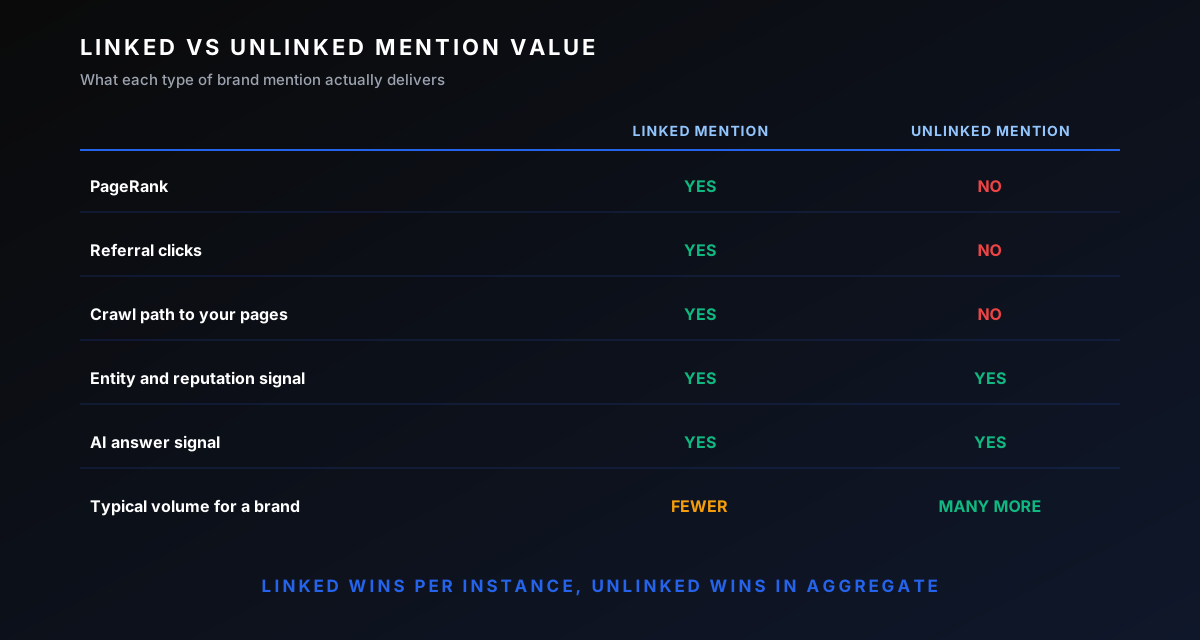
A linked mention is the full package. The naming builds the entity, the hyperlink passes PageRank, the anchor adds context, and the click sends a buyer.
An unlinked mention keeps only the naming, and the naming does more work than most SEOs credit. It still builds reputation, still reinforces the entity, and still lands in the corpus AI models learn from. Converting those namings into links is the unlinked mentions reclamation play, and it is the cheapest authority win on the board.
A concrete version. A SaaS brand gets named in a trade publication's market overview with no link: entity signal banked, zero PageRank. The same brand gets a linked slot in a "best tools for X" roundup: entity signal, PageRank, and a stream of buyers already comparing options. Both are wins. The second one pays faster.
Not every unlinked naming deserves a reclamation email either. Prioritize by the same two variables that govern link value: the domain's strength and its topical alignment with your category. A naming on a strong, aligned publisher is worth the follow-up. A directory scrape is not.
Implied mentions, the implied links Google's patents describe, sit one rung lower: your product described in identifying terms without the brand name. They matter for AI recall and they are nearly impossible to reclaim. Track them; do not chase them.
Are Brand Mentions The New Backlinks?
No. Brand mentions are not the new backlinks; they are a second, parallel signal. Backlinks still move rankings through PageRank. Mentions move entity trust and AI answer inclusion. A campaign that earns editorial mentions usually earns both at once.
Half the industry declared links dead the week ChatGPT launched. Links did not notice.
Backlinks do two jobs nothing else does: they pass PageRank and they give crawlers a discovery path to your pages. Mentions do two jobs backlinks cannot: they build entity trust at editorial scale, and they drive AI answer inclusion, where the hyperlink is optional.
There is also a middle category the debate skips: co-occurrence. When your brand keeps appearing next to your category's core terms, and next to the rivals buyers compare you against, search systems and language models both learn the association. You become one of the names that belongs in the answer. That effect needs no link at all; it needs repetition in the right company.
The honest weighting: for AI visibility, the mention footprint outweighs the link profile. For classic rankings, links still carry the vote. Run both, and weight them by where your buyers actually search.
How Do Brand Mentions Feed AI Citations?
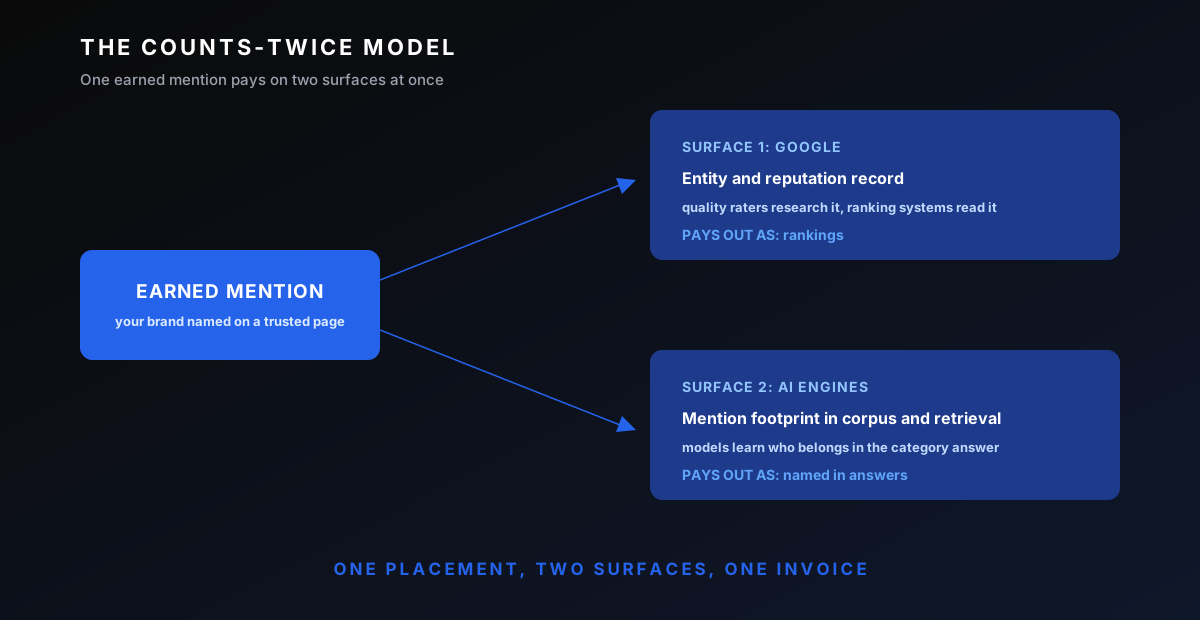
AI engines cite brands they have seen named repeatedly on sources they trust. Every earned mention adds to the footprint these models read during training and retrieval, so the same placement that supports your Google entity also raises your odds of being named in answers, from ChatGPT to Google's AI Overviews.
Search Engine Land, Semrush, and Neil Patel all treat brand mentions as an entity signal in their guides. None of the three prices in the AI layer. That gap is the point of this page.
The mechanism is corpus plus retrieval. Models learn brand associations from the pages they train on, then refresh them from the pages they retrieve at answer time. A mention on a trusted source lands in both pools, and the accumulated mention footprint decides recall. The anatomy is broken down separately, including explicit and implicit mentions.
Source quality decides how much each mention deposits. The pages that count sit in three groups: your category's trade publications, reference and comparison sites, and the communities where practitioners argue about tools by name. A hundred namings on scraped directories teach a model nothing. Five namings across those three groups teach it you belong in the category.
Freshness compounds it. Engines that retrieve at answer time favor current pages, so a mention footprint that keeps growing beats a bigger one that stopped. Recency is a signal; a dormant brand fades from answers the way it fades from memory.
This is the counts-twice model. One earned placement raises your entity trust inside Google and your recall odds inside the answer engines at the same time, which is the trade LLM SEO is built on. Nothing else in off-site SEO pays on two surfaces from one invoice.
How Do You Earn More Brand Mentions?
You earn brand mentions in three lanes, in this order: reclaim the unlinked mentions you already have, place editorial mentions on credible publishers through digital PR, and get named inside the comparison content buyers and AI engines both read.
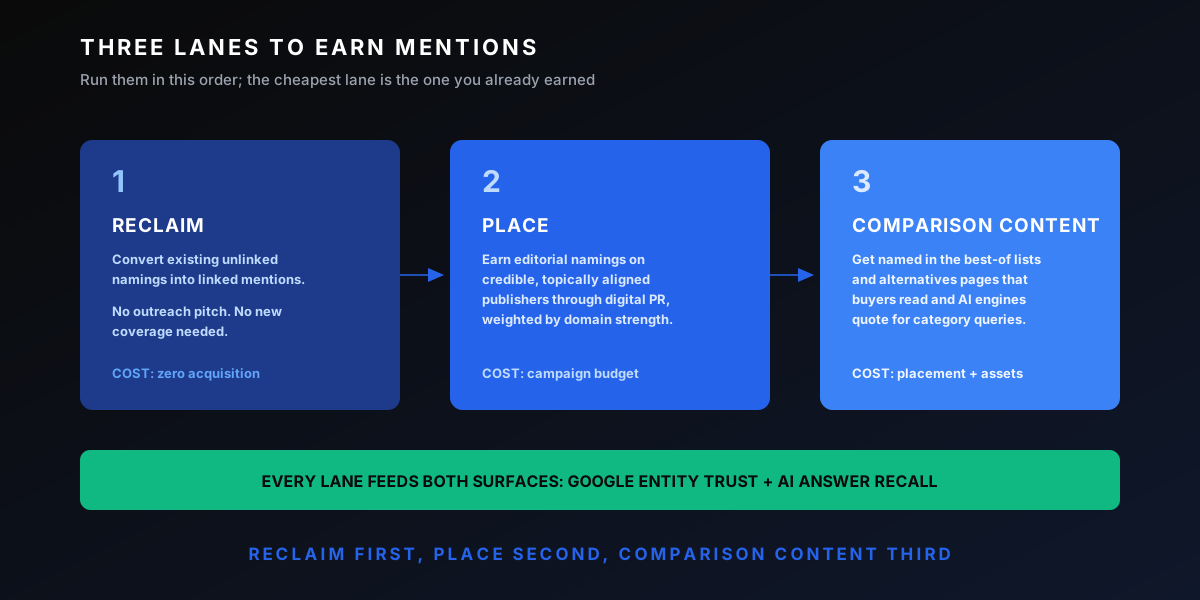
You probably think earning mentions starts with pitching journalists. It starts with the mentions you already have; the pitch comes third.
Reclaim what exists. Free authority, already earned. A reclamation pass converts your unlinked namings into linked ones without a single outreach email. This is where Mojo Links starts every engagement, because it is the only lane with zero acquisition cost.
Place through digital PR. Real editorial coverage on credible, topically aligned publishers. The digital PR link building process lands the tier-one namings that carry both surfaces.
Get into the comparison content. Best-of lists and alternatives pages are the exact pages buyers read and AI engines quote. The workflow for being mentioned in AI search runs through them.
Lanes two and three are what Mojo Links' mention placement campaigns run at scale: earned namings on sources Google and the answer engines already trust, organized by domain strength. The reclamation lane you can run in-house this week.
Measurement closes the loop. Two trendlines tell you whether the lanes are working: your share of voice across buyer queries in AI answers, and the count of referring domains that mention your brand in topical context. Both should climb quarter over quarter. If placements land and neither line moves, the sources were wrong, not the model.
Frequently Asked Questions
What Is a Brand Mention for SEO?
A brand mention for SEO is your company or product named on a page you do not own, with or without a link. Search engines read the mention as reputation and entity evidence; AI engines read it when deciding which brands to name in answers.
Do Unlinked Brand Mentions Help Rankings?
Yes, indirectly. An unlinked mention builds the reputation and entity signals Google reads, and it feeds AI answer inclusion. It passes no PageRank, which is why a reclamation pass that converts namings into links is the cheapest authority win available.
How Do I Track Brand Mentions?
Classic web mentions: a brand monitoring tool like Google Alerts, Ahrefs, or Semrush, plus a monthly manual pass. AI answers need prompt-based tracking instead; see the nine AI visibility tools evaluated for exactly that job.
How Many Brand Mentions Do You Need?
No fixed number exists. The working benchmark is share of voice: count how often the top three rivals in your category get named across your buyer queries, then close the gap. A brand trailing its category's mention share stays invisible regardless of the absolute count.
Are Brand Mentions a Google Ranking Factor?
Not a confirmed, direct one. Google's documentation treats off-site reputation as quality evidence rather than a countable factor. The working model: mentions build the entity and reputation record that ranking systems and quality raters read, which moves rankings without being a dial you can point to.

About Bart Magera
Bart Magera is the founder of Mojo Links. Ten years across YMYL verticals (legal, medical, finance, supplements, crypto, gambling). Trained under Koray Tuğberk Gübür's Topical Authority framework. Author of two SEO books and international speaker.
Want this kind of analysis on your site?
Get a free video walkthrough within 48 hours covering technical health, backlinks, content gaps, and AI visibility.
Related posts
Keep reading on adjacent topics.
- SEO
 Bart Magera12 min read
AI Visibility Tools: 9 Trackers Ranked and Compared
Nine AI visibility tools, one yardstick: engines covered, what gets measured, competitor tracking, and price. Every page-one comparison of these trackers is written by a vendor ranking its own product first. This one is not. Here is where each tool fits, from a $29 entry plan to enterprise quotes, and the one thing none of them can do.
- SEO
 Bart Magera10 min read
ChatGPT Brand Mentions: How To Track and Earn Them
When a buyer asks ChatGPT for the best option in a category, it names a few brands inside the answer. Those ChatGPT brand mentions, not the linked citations beneath them, are what get you recommended. Here is how to track them and how to earn them.
- SEO
 Bart Magera9 min read
Brand Mentions in Google Gemini: How To Track and Earn Them
Google Gemini names a short list of brands inside its answers, and for many queries it picks them by grounding in live Google Search. That makes your Search reputation the lever. Here is how to track brand mentions in Gemini across all three surfaces, why your brand may be missing, and how to earn the mention.