
Unlinked Brand Mentions: Why They Matter More in The Age of AI
Listen to this article
Browser-native voice. No account required.
The web talks about your brand more than it links to it. Every one of those mentions without a link is something, just not a backlink, and the question of how much it is worth has a real answer.
Some SEOs dismiss unlinked mentions as worthless because they pass no PageRank. Others oversell them as a secret ranking factor. The truth sits in between, and it has shifted now that AI engines surface brands by how often they are mentioned. This is what an unlinked mention is actually worth, and what to do about it. Earning those mentions across AI search at scale is done-for-you AI brand mention placement; turning the ones you already have into links is a separate reclamation discipline.
What Is An Unlinked Brand Mention?
An unlinked brand mention is any reference to your brand, product, or people in online content that does not include a clickable link back to your site. A journalist naming your company in an article, a Reddit thread discussing your tool, a roundup listing you without linking: all unlinked mentions. The brand is named; the hyperlink is missing.
They happen constantly, especially to brands that do anything noteworthy. Most go unnoticed because nobody is watching for them, which means most go unconverted and unmeasured. That is the opportunity and the blind spot at once.
They show up in predictable places: news coverage, podcast show notes, "best of" roundups, forum threads, supplier and partner pages, and increasingly in AI-generated summaries that name brands without citing a source. Each is a place the web decided you were worth naming.
Do Unlinked Brand Mentions Help SEO?
Not the way a link does. An unlinked mention passes no PageRank, and Google's search advocates have said plainly that a mention without a link is not a link. But it is not nothing: mentions contribute to how Google understands your brand as an entity and to your off-site reputation, both of which feed into rankings indirectly.
So the honest answer is "indirectly, and more than it used to." Anyone who tells you unlinked mentions secretly rank your pages is selling something. Anyone who says they are worthless is missing where search is going.
Implied Links and What Google Has Said
The idea that mentions could count is not new. Google was granted a patent describing "express links" and "implied links," where an implied link is a reference to a resource without an actual hyperlink. A patent is not proof of use, and Google's public position is that an unlinked mention is not a link, but the concept shows the thinking is on the table. Ahrefs covers the unlinked-mention debate in detail.
What Google has confirmed is that off-site reputation matters, and that it builds a picture of entities from across the web. A brand mentioned consistently in relevant, trusted contexts looks more like a real, authoritative entity, which is the whole case for brand mentions for SEO. That is the mechanism worth caring about, not a mythical mention-to-rank pipeline.
Mentions, Entities, and The Knowledge Graph
The mechanism worth understanding is entities. Google builds a model of your brand as an entity from everything it reads across the web, and consistent mentions in relevant contexts strengthen that model. The more the web associates your brand with a topic, the more confidently a search engine can connect the two.
This is why a mention in a topically relevant article does more than a mention in a random one, even with no link in either. Co-occurrence teaches the search engine, and the language model, what you are known for. A supplement brand named alongside clinical-study language reads differently than the same brand in a generic business listing.
It is also how a Knowledge Panel and other entity features get built and reinforced over time. None of this requires a link. It requires being talked about, accurately and often, in the places that cover your topic.
Why Mentions Matter More in The Age of AI
AI search changed the math. When ChatGPT, Perplexity, or Google's AI features assemble an answer, they surface brands they have seen referenced often across the web. Frequency and consistency of mention, not just backlink count, shape which names come up. A brand the web talks about gets recommended, linked or not.
This is the part of link building that genuinely shifted. For classic SEO, a mention without a link was a near-miss you tried to reclaim. For AI visibility, the mention itself carries weight, because the language model learned your brand from text, not from href attributes. Earning mentions is now a goal in its own right, not only a path to links, which is why AI brand mentions have become their own discipline.
The practical implication is blunt. If you want to show up when someone asks an AI engine for the best provider in your category, your brand has to already be in the text those models drew from. You cannot backfill that with a burst of links the week before. The accumulated mention footprint is what decides whether you are in the answer at all.
Linked vs Unlinked Mentions
A linked mention is the full package: it passes PageRank, sends referral traffic, and reinforces the brand entity. An unlinked mention drops the PageRank and most of the referral value, but keeps the entity and reputation signal, which is the part AI SEO leans on.
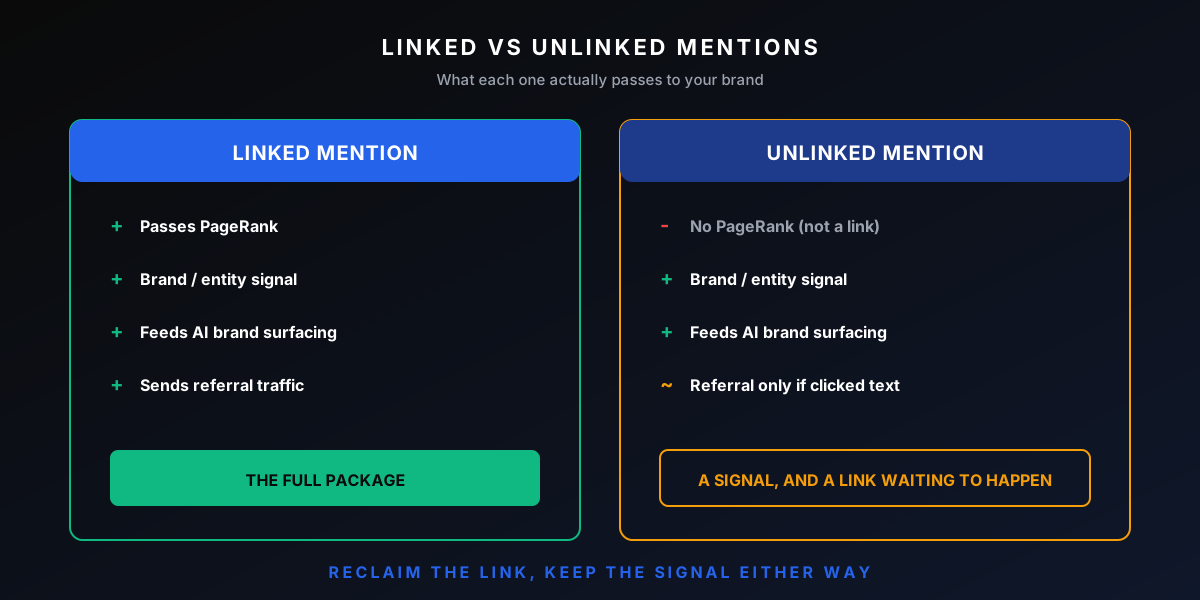
That is why an unlinked mention is best treated as a link waiting to happen and a signal that already exists. The reclamation upside is real, but even the mentions that never convert are doing quiet work on the brand's footprint. You lose nothing by the mention existing; you only gain less than a link would give.
How To Find Unlinked Brand Mentions
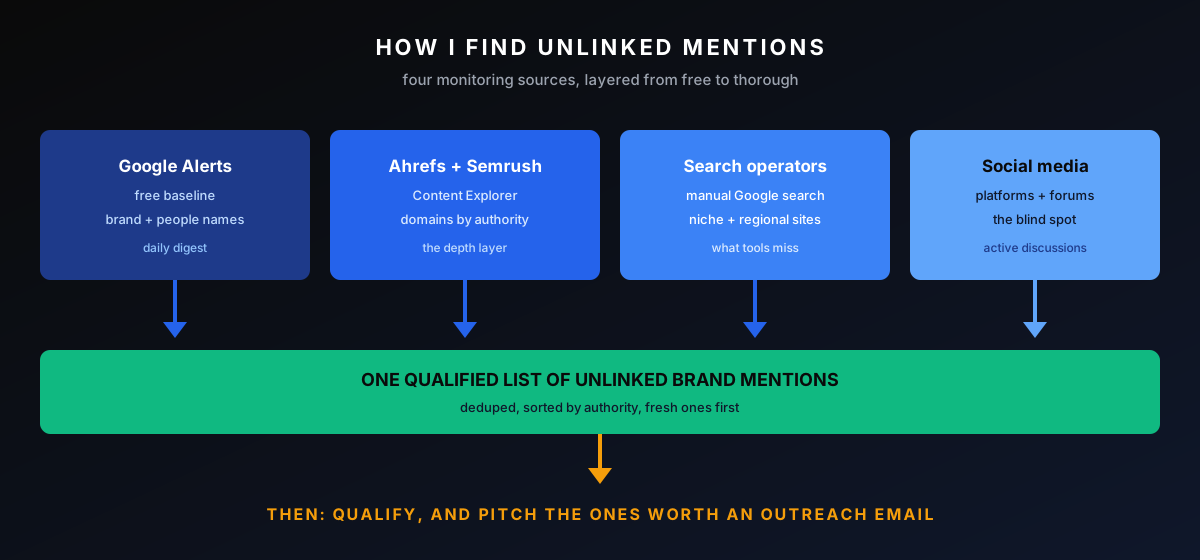
Finding them is a monitoring job. Track the brand name, product names, and key people across the web with mention-monitoring tools, plus a content-search index to catch references that never trigger an alert. The same surfacing step feeds the unlinked mention reclamation workflow, where the find-qualify-pitch detail lives.
The point of monitoring is not vanity metrics. It is catching mentions while they are fresh, because a recent article is far easier to get a link added to than a piece from two years ago the author has forgotten writing.
Also watch for the mentions that matter beyond reclamation: a competitor comparison that leaves you out, a "best tools" list you should be on, an industry report that cites everyone but you. Those are positioning and content signals, not just link opportunities, and they often tell you more than the mentions you can convert.
Google Alerts for The Baseline
Google Alerts is the free starting point. Set alerts on the brand name, the product names, and key people, then let the daily digest surface fresh brand mentions. It misses plenty, but every monitoring setup earns its keep before paying for a tool.
Ahrefs Content Explorer and Semrush for Depth
For real coverage, run the brand name through Ahrefs Content Explorer, filtering for pages that mention the brand with no link back to the site. Semrush brand monitoring does the same job when the brand already pays for it.
Both surface the domains that named the brand, ranked by domain authority, so you can see which unlinked brand mentions are worth chasing for quality backlinks and which sit on low-value sites to skip.
Search Operators for What The Tools Miss
Manual Google search with operators catches the rest. A query for the brand name in quotes, minus the brand's own domain, surfaces unlinked mentions on niche and regional websites that never trip an automated alert.
Social Media and Forums
Social media is the blind spot most monitoring tools only half cover. Track the brand across social platforms and community threads, because a mention inside an active discussion often carries more reach than a buried backlink would.
Reclaim or Leave It
Not every mention is worth a pitch. Run each one through three quick checks: is the source relevant and trusted enough that a link would pass real value, is there a reachable editor to ask, and is the context positive rather than a complaint or a competitor roundup. All three yes, reclaim it. Any no, leave it.
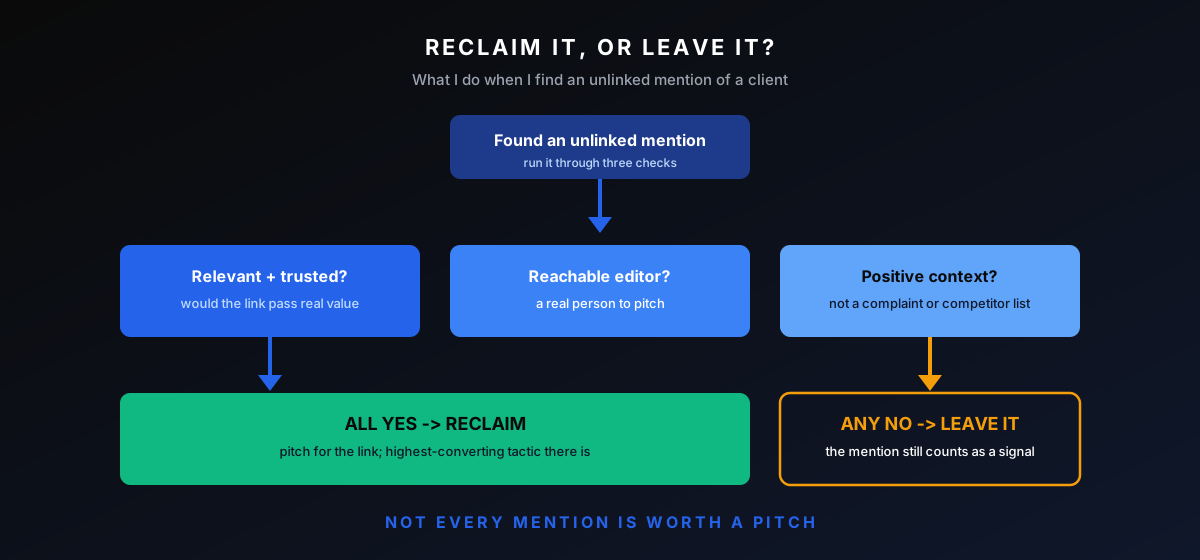
Leaving a mention alone is not a loss. It still counts as a signal, and the time saved goes into chasing the mentions that will convert. Reclamation is the highest-converting link tactic Mojo Links runs, but only because the team is selective about which mentions get the pitch.
How To Run The Outreach
Qualified unlinked brand mentions go into a short outreach round. Email the author or editor, point to the exact line where the brand is named, and ask whether they would add a link to the most relevant page. The pitch is two sentences, never a templated blast.
The process converts well because the editor already wrote about the brand. Most replies land inside two weeks, and a yes turns an existing mention into one of the cheapest backlinks in link building to earn.
Reclamation is one tactic inside a broader link building strategy, not a standalone marketing channel. Track which mentions convert, so the next outreach round focuses on the publishers and domains most likely to say yes and the backlinks most worth having.
How To Earn More Brand Mentions
If mentions are now their own goal, the work is the same work that earns links: give people a reason to talk about you. Original data, a genuinely useful tool, expert commentary a journalist can quote, and digital PR for link building that puts your brand in front of writers all generate mentions, the linked ones and the unlinked ones together.
Consistency helps as much as volume. The same brand name, described the same way, across many relevant sources builds a clearer entity than scattered, inconsistent references. Being easy to quote, with a clean one-line description of what you do, makes writers more likely to name you, and name you correctly.
The brands that get mentioned are the ones that do or say something worth referencing. That is the unglamorous truth under all of this: you earn mentions the way you earn links, by being a source worth citing. The AI shift just means the unlinked ones now pull more weight than they did.
Common Misconceptions
The overclaim is that unlinked mentions are a direct ranking factor that quietly boosts your pages. They are not; there is no mention-to-PageRank pipeline, and treating one as a substitute for links will leave you wondering why rankings did not move.
The underclaim is that a mention without a link is worthless. That was closer to true a few years ago and is wrong now. Between the two sits the operator view: reclaim what is worth reclaiming, earn more mentions on purpose, and count the entity signal as part of the return.
Frequently Asked Questions
Are Unlinked Mentions a Google Ranking Factor?
Not a direct one. An unlinked mention passes no PageRank, and Google's representatives have said a mention without a link is not a link. It can contribute indirectly through entity recognition and off-site reputation, which do influence rankings, but it is not a switch that lifts a page the way a quality backlink can.
What Is An Implied Link?
An implied link is a reference to a brand or resource without an actual hyperlink, a term from a Google patent that contrasts it with an "express link." The patent describes counting implied links as a signal. A patent is not confirmation Google uses it today, but it shows mentions have long been considered as a possible ranking input.
Do Unlinked Mentions Help with AI Search?
Yes, more than they help classic SEO. AI engines surface brands by how often and how consistently they are mentioned across the web, not only by backlinks. A brand referenced frequently in relevant, trusted content is more likely to appear in AI answers, whether or not those mentions include a link. The deliberate version of that is getting your brand mentioned in AI search on purpose.
Should I Always Try To Convert An Unlinked Mention To a Link?
No. Reclaim mentions from relevant, trusted sources with a reachable editor and positive context. Skip mentions on low-value sites, in negative context, or where no one will respond. The unconverted mention still counts as a signal, so leaving it costs you nothing and saves time for the ones that convert.
How Do I Track Brand Mentions?
Use a mention-monitoring tool to alert on your brand, product, and people names, backed by a content-search index to catch references that do not trigger alerts. Track fresh mentions especially, since recent articles are far easier to get a link added to than older ones the author has moved on from.
Want Mojo Links To Turn Mentions into Authority?
Most brands are mentioned far more than they realize and reclaim almost none of it. We monitor, qualify, and convert the mentions worth pursuing, and build the kind of brand footprint that earns more of them, with links backed by a 120-day replacement guarantee. A video walkthrough includes a read on where your brand is being mentioned and not linked.

About Bart Magera
Bart Magera is the founder of Mojo Links. Ten years across YMYL verticals (legal, medical, finance, supplements, crypto, gambling). Trained under Koray Tuğberk Gübür's Topical Authority framework. Author of two SEO books and international speaker.
Want this kind of analysis on your site?
Get a free video walkthrough within 48 hours covering technical health, backlinks, content gaps, and AI visibility.
Related posts
Keep reading on adjacent topics.
- Link Building
 Bart Magera10 min read
Contextual Backlinks: What They Are, Why They Win, and How To Earn Them
A contextual backlink sits inside the body of an article, surrounded by relevant text, not in a footer or author bio. That placement is what gives it weight. Here is what contextual backlinks are, what makes one high quality, how to earn them, and how to spot the cheap fakes.
- Link Building
 Bart Magera12 min read
What Is White Hat Link Building? Techniques That Work in 2026
The Problem: Why Most Link Building Fails Your SEO You wrote great content. It’s relevant. It’s useful. It even has infographics. But guess what? Crickets. Nobody’s linking. Google’s not ranking. And your “ultimate guide” is buried somewhere on page 7 under a recipe blog and a…
- Link Building
 Bart Magera10 min read
Tiered Link Building: How It Works and How To Do It Safely
Tiered link building layers weaker links behind your strongest ones to pass more authority to your money pages. Here is how the pyramid works, how to build one, which links are worth tiering, the risk SpamBrain introduced, and the lower-risk path I use on client sites.