

Tiered Link Building: How It Works and How To Do It Safely
Listen to this article
Browser-native voice. No account required.
Tiered link building is one of the oldest ways to get more out of a backlink. Instead of pointing every link straight at your site, you layer them, so weaker links strengthen your stronger ones.
It still gets used, and done carefully it can still move rankings. Done crudely, it gets neutralized and carries real risk. Here is how the pyramid works, how to build one, and how to keep it on the safe side.
What Is Tiered Link Building?
Tiered link building is a backlink pyramid. Tier 1 links point at your site. Tier 2 and tier 3 links point at the tier above to strengthen it. The goal is to pass more authority up the layers so your tier 1 links carry more weight to your money pages.
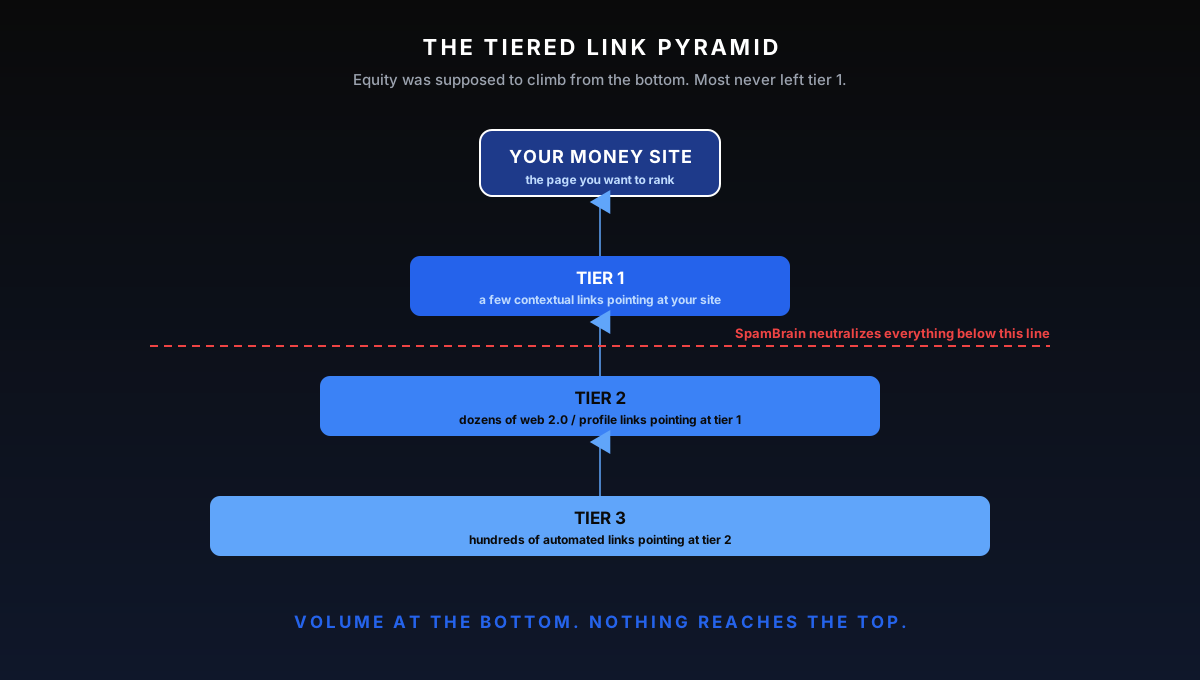
The logic is leverage. A single strong link is expensive. Tiering lets a cheaper set of links reinforce the good one, so more authority reaches the page you actually want to rank. That is the theory the whole tactic rests on.
The idea comes out of the private blog network era of SEO, when cheap links were everywhere and layering them was a standard link building strategy. It is less common now, but it never fully went away, and plenty of vendors across the SEO industry still sell it.
How Does Tiered Link Building Work?
Tiered link building works by layering links from weakest to strongest. Tier 1 holds your best links, pointing at your site. Each lower tier points directly at the tier above, feeding it equity. The link juice flows up the pyramid toward your main money pages.
The Three Tiers Explained
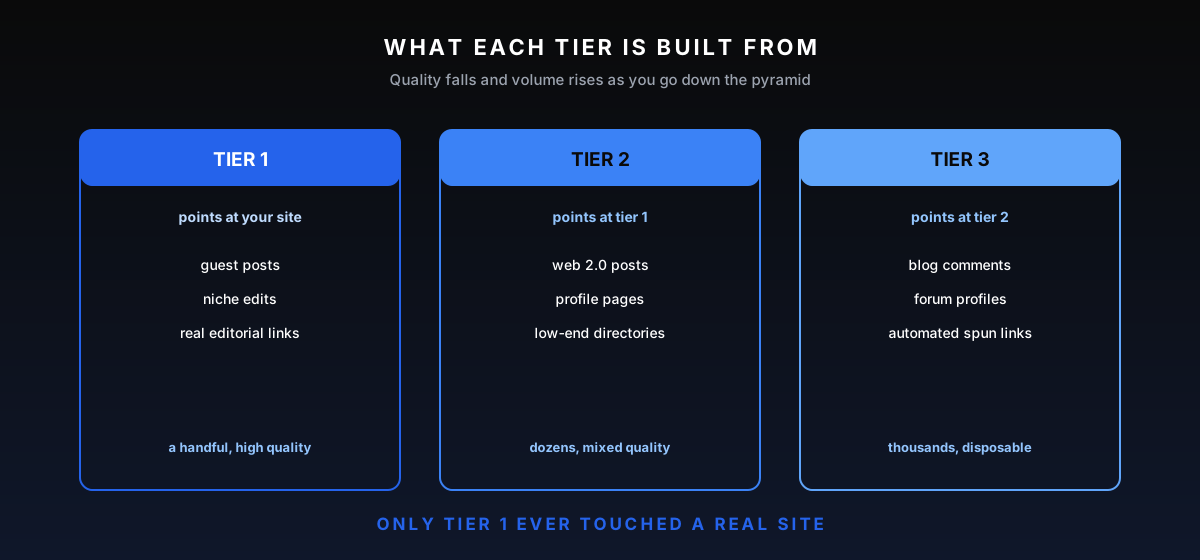
Each tier is built from different material, and the quality drops as you go down.
Tier 1. A handful of contextual links on real sites, pointing directly at your main money pages. A guest post or a niche edit sits here.
Tier 2. Links that point at your tier 1 links: web 2.0 posts, profile pages, and mid-quality blogs that strengthen the layer above.
Tier 3. Bulk links pointing at tier 2: blog comments, forum profiles, and directories, often built to index the tier above.
How Link Juice Flows Up The Pyramid
Link juice is the informal name for link equity, the ranking value a page passes along its links. In a tiered structure, each layer is meant to hand some of its equity up to the layer above, so tier 1 arrives at your site stronger than it started.
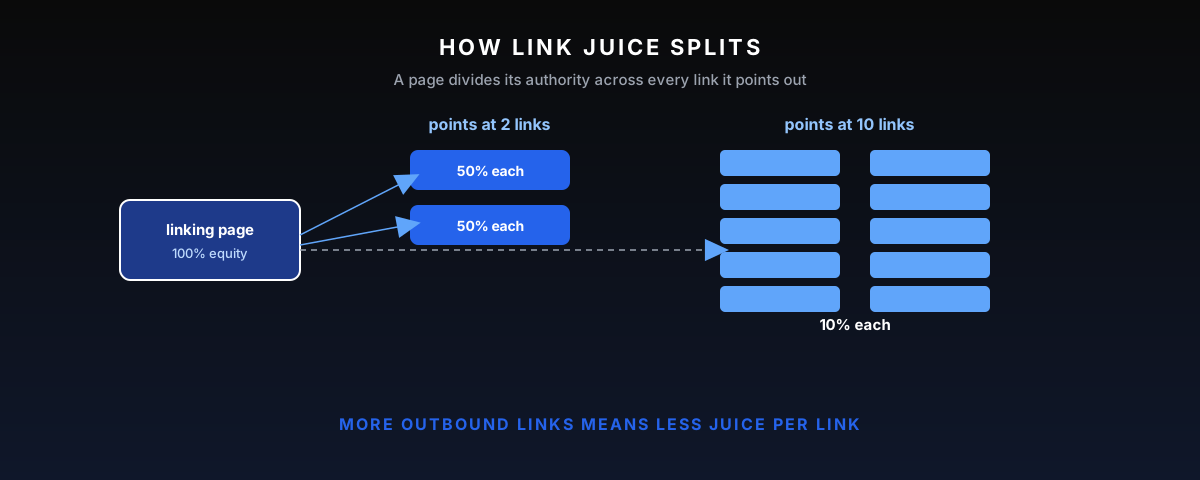
The catch is math. Every page divides its authority across the links it points out, so a page with a hundred outbound links passes almost nothing to each one. That is why crude tiers, stuffed with automated links, leak most of their value before it climbs.
How To Build a Tiered Link Structure?
You build a tiered link structure from the top down. Start with strong, high authority tier 1 links on real sites, then add quality tier 2 links pointing at those, and keep each layer relevant and natural. The build order matters more than the volume.
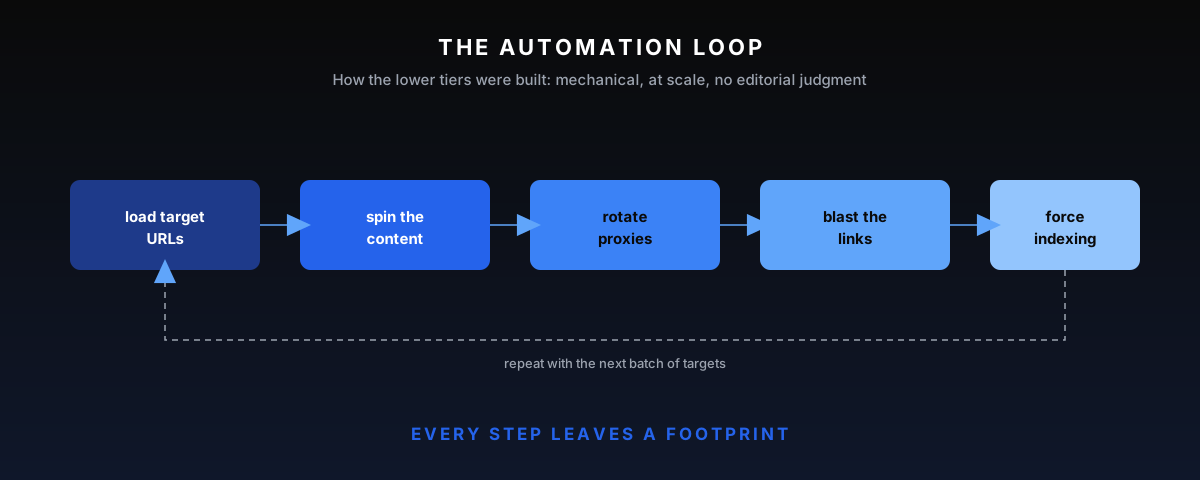
The Build, Step by Step
This is the sequence to follow if a tiered campaign is on the table for a site.
Place strong tier 1 links first. Earn a guest post or niche edit on a relevant website. Nothing below matters if tier 1 is weak.
Add relevant tier 2 links. Point a small set of quality links at each tier 1 URL, with varied anchor text and real content.
Keep tier 3 light or skip it. Bulk tier 3 is where most link building strategies pick up footprints. Less is safer.
Vary everything. Different anchors, different content, different platforms. Patterns are what a spam system detects.
Index deliberately. A link that never gets crawled passes nothing, so the lower tiers only help if they are found.
Which Links Are Worth Tiering?
Only your best links are worth tiering. Point tiers at genuine tier 1 placements on real sites, the ones already passing value, so the extra layers amplify something real. Tiering weak or spammy links just multiplies the footprint without adding authority.
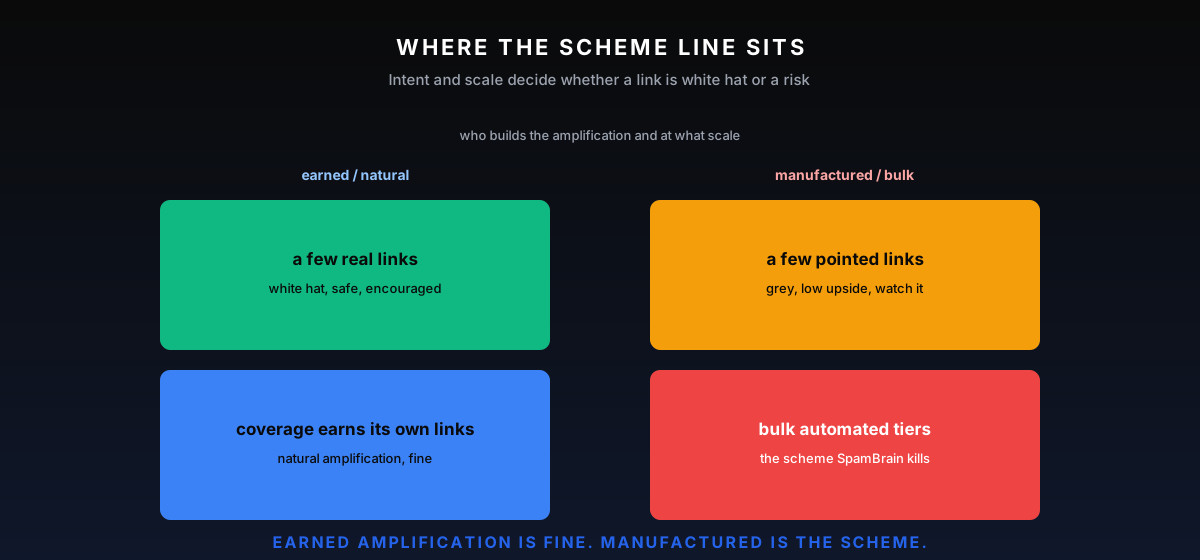
The dividing line is intent and quality. Pointing a few strong links at a genuine editorial placement looks natural because it is. Pointing thousands of automated links at low quality pages is the pattern Google treats as a link scheme. Stay on the first side of that line.
Is Tiered Link Building Risky?
Yes, tiered link building carries real risk, and the size depends on how you build it. Careful tiers on genuine links are low risk with modest upside. Crude automated tiers get neutralized by SpamBrain and can trigger a manual penalty. The tactic is not free of downside.
For most websites, tiered links work best as a supplement to a broader SEO strategy, not the foundation of it. Treat it as one tool among many, and the risk math gets a lot easier.
What SpamBrain Changed
Google's 2012 Penguin webspam algorithm first put "link schemes" on notice, saying it would "decrease rankings for sites that we believe are violating Google's existing quality guidelines." A decade of refinements followed.
Then in the December 2022 link spam update, Google said it was "leveraging the power of SpamBrain to neutralize the impact of unnatural links on search results." That is the shift: obvious tiers get discounted, so the equity never arrives.
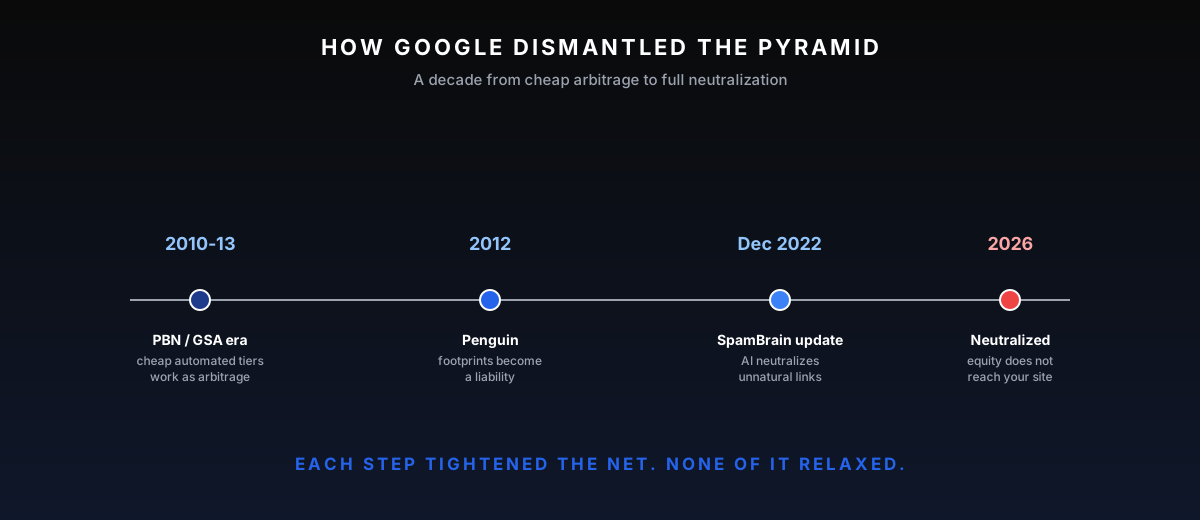
This is why the tactic works less well than it did in 2015. The lower tiers leave footprints, identical anchor text, spun content, shared proxies, unnatural velocity, and a machine is trained to spot them. If you want the detail, Mojo Links broke down how SpamBrain detects links separately.
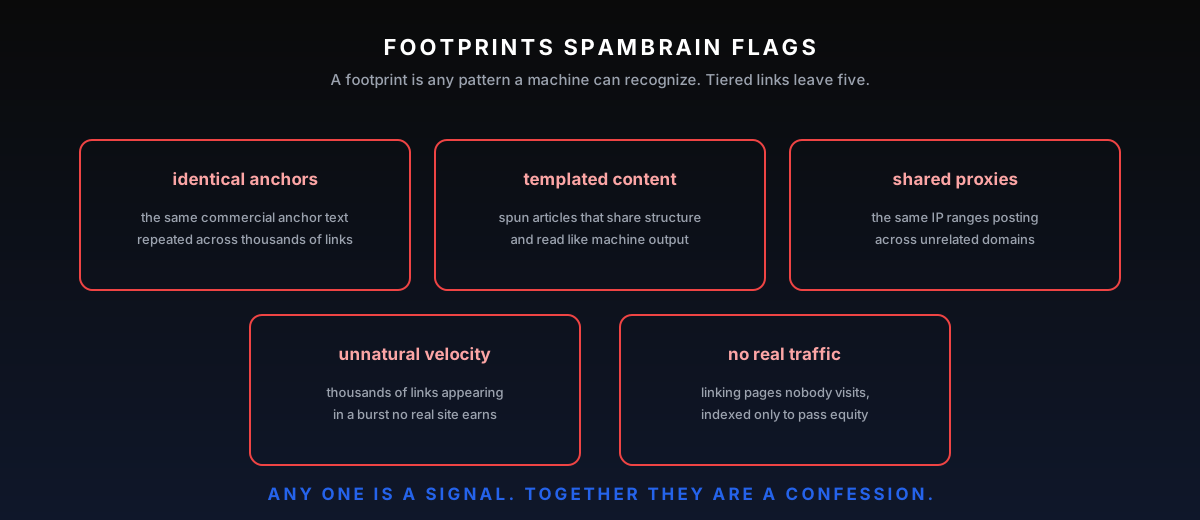
How The Equity Actually Decays
Even when the links survive, the authority thins out on the way up. Each tier keeps most of its value and passes a fraction upward, so by the time anything reaches your site, it is a trickle, not a flood.
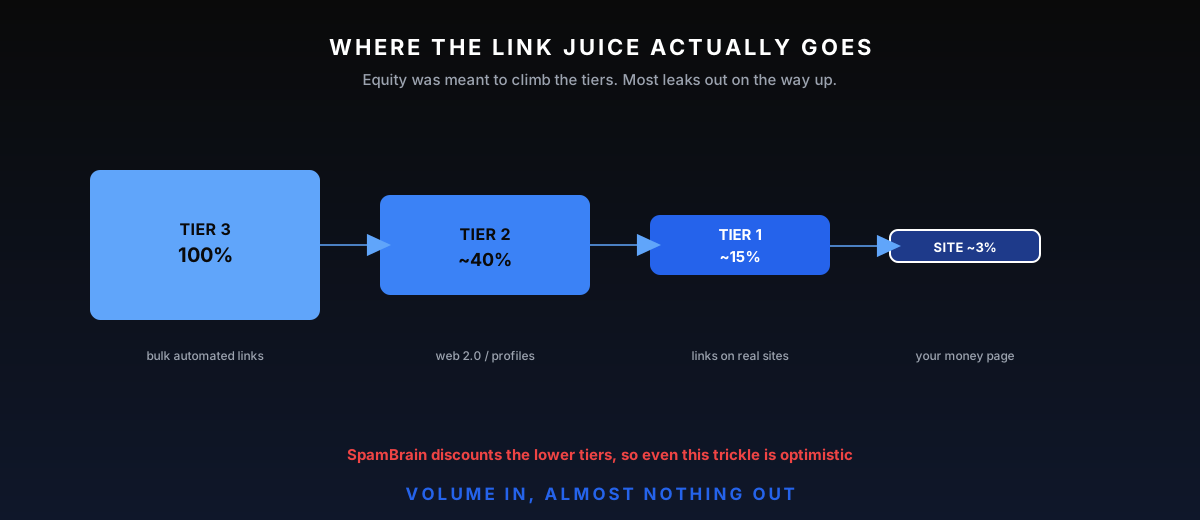
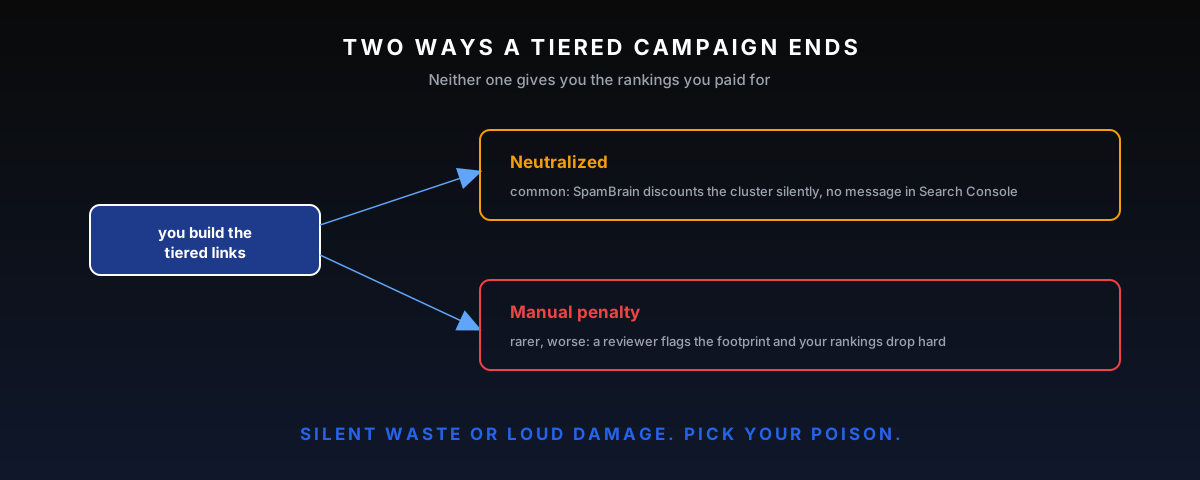
And there are two ways a crude campaign ends. Usually the links get neutralized quietly, so you spent money for nothing. Occasionally a reviewer flags the footprint and issues a manual penalty. Neither returns the rankings you paid for.
How Do You Build Tiers More Safely?
You build tiers more safely by keeping every layer close to what a natural link profile looks like. Tier only strong pages, use real content, vary the anchors, avoid automation footprints, and keep the volume low. The safer you make it, the smaller but more durable the gain.
Tier only genuine links. If tier 1 is not a real editorial placement, do not bother reinforcing it.
Use real content. Spun articles are the fastest footprint. If a human would not read it, neither should Google.
Keep anchors natural. Branded and generic anchors on the lower tiers, not exact-match commercial phrases.
Go slow. A natural profile grows over time. A thousand links overnight is the signal you want to avoid.
Point the lower tiers at high quality pages, keep the anchor text on-brand, and your website looks like it earned the links rather than manufactured them. That is the whole game: stay on the natural side of every signal a reviewer or a search engine would check.
What Is The Difference Between Tier 2 Backlinks and Tiered Link Building?
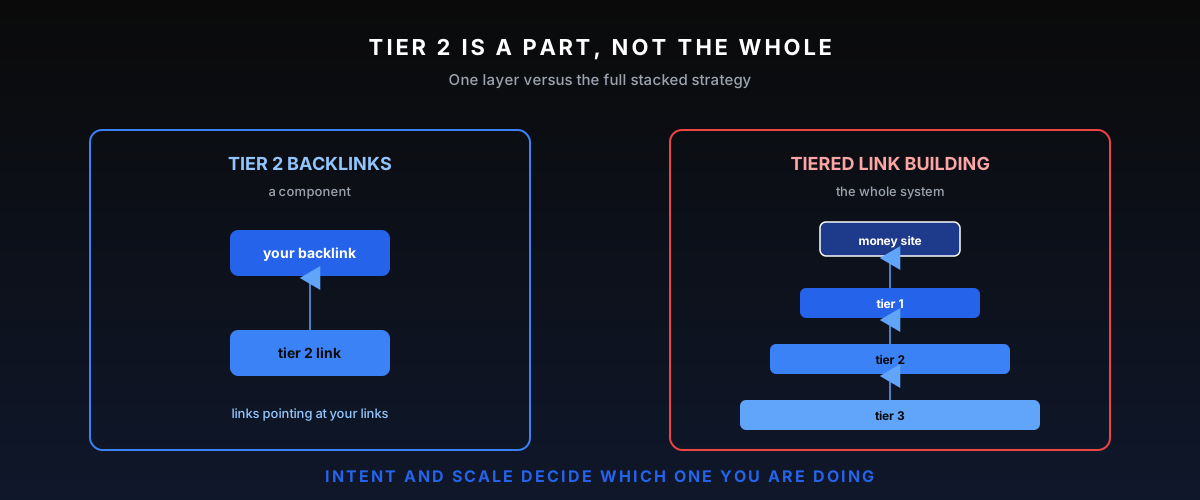
Tier 2 backlinks are one layer: links that point at your existing backlinks instead of at your site. Tiered link building is the whole pyramid strategy of stacking those layers. Tier 2 is a component; tiered link building is the system built around it.
Pointing a few quality links at a page that already links to you is not inherently spam. Building thousands of automated ones is. The difference is intent and scale, which is the same line Google's link schemes guidance draws.
What Is The Safer Alternative To Tiered Link Building?
The safer alternative is earning fewer, stronger links and distributing them internally. One editorial link on a real website survives SpamBrain and passes durable authority. Then internal links spread that authority across your site, which is the job the lower tiers were trying to fake.
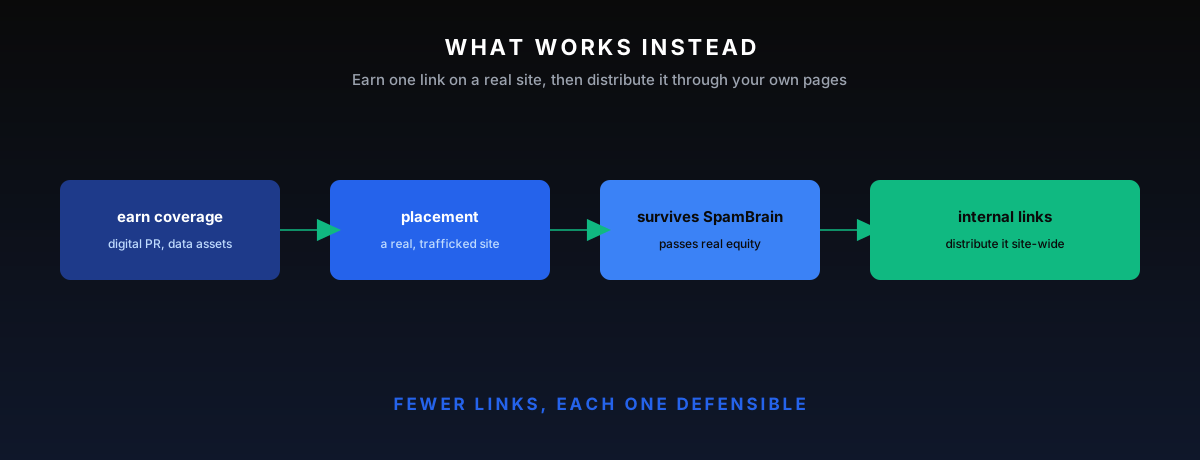
This is the model behind Mojo Links' link-building campaigns. Modern link building strategies focus on high quality placements, not volume: digital PR, guest posts, original-data assets, and outreach to sites with real traffic. Fewer links, each one defensible.
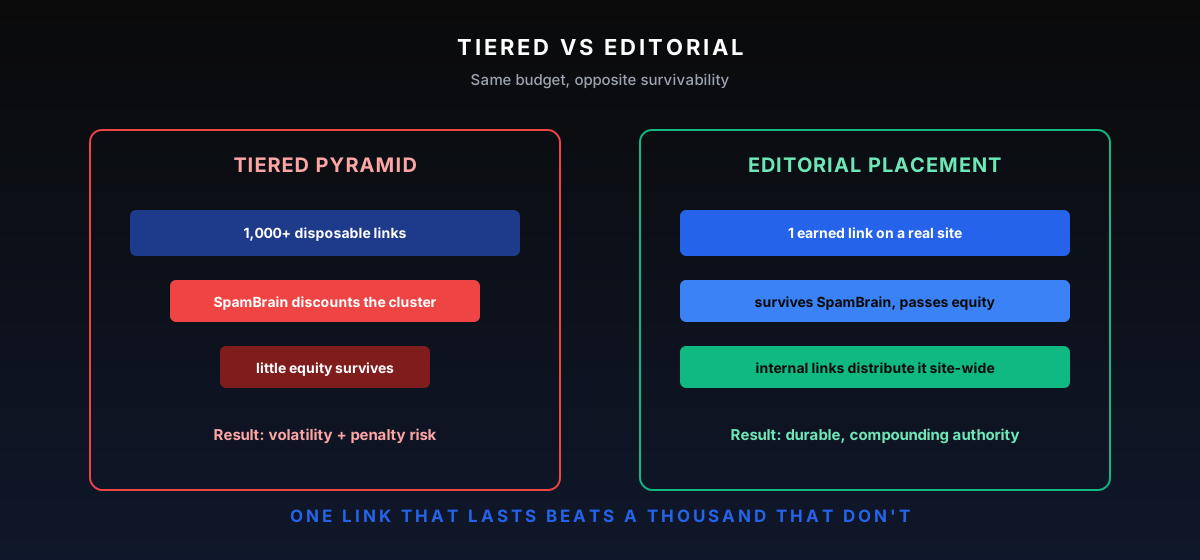
It is the white hat side of the same instinct. The link building industry sells tiered packages because they are cheap to produce, but a black hat or grey hat shortcut that gets neutralized does worse than a slower, honest one. A guest post you earned outlasts any pyramid.
Focus your SEO budget on links that rank better over the long term, and tiered building stays a small, optional part of the main strategy rather than the whole plan.
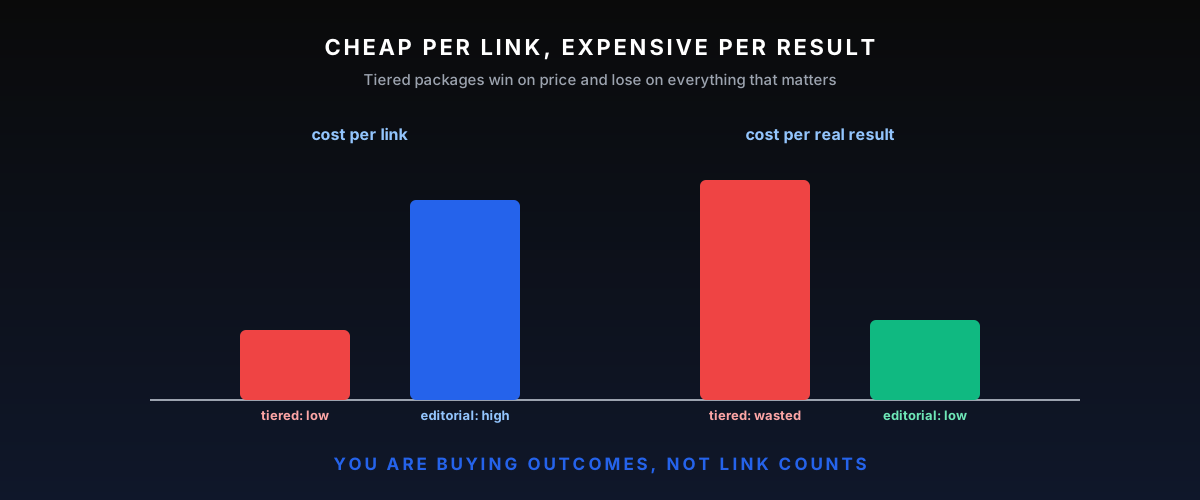
The trade is honest. Editorial links cost more per link and far less per result, because they survive and compound over the long term. A tiered pyramid is cheaper to build and easier to lose. On real websites, owning ten links that do better over years beats a thousand that vanish in a month.
How Do You Measure Tiered Link Building Results?
You measure tiered link building by the money pages the pyramid points at, not the tier links themselves. Track the target keywords, the organic traffic to those pages, and the referring domains that stick. If the numbers do not move, the tiers did nothing.
The real test is whether a ranking boost shows up at all. A tiered campaign can add hundreds of links and produce no change, because the search engine never counted them. Real movement on the main money pages is the only signal worth trusting.
Which Tools To Track With
Lean on the same tools used for any SEO campaign. Ahrefs shows which tier 1 links are indexed and which referring domains survive. Google Search Console shows whether the target pages are climbing. If both stay flat after the links land and your website saw no boost, the pyramid failed, and no amount of tier 3 volume will fix it.
One more habit worth keeping: note where your links come from. If the referring domains are low quality sites nobody visits, creating more of them will not move a modern website, no matter how many tiers you stack behind them.
Frequently Asked Questions
Does Tiered Link Building Still Work in 2026?
It can, done carefully. Quality tier 2 links pointing at genuine tier 1 placements still pass some value. Crude automated tiers get neutralized by SpamBrain and risk a penalty. The upside has shrunk, so it works best as a supplement, not a foundation.
Is Tiered Link Building Safe?
It is safer the more natural it looks. Real content, varied anchors, strong tier 1 links, and low volume keep the risk down. Spun content, exact-match anchors, and bulk automated tiers are what trigger neutralization or a manual penalty.
Are Web 2.0 Backlinks The Same as Tiered Link Building?
Not identical, but related. Web 2.0 backlinks are posts on free hosted platforms, and they were the standard material for tier 2 and tier 3 of a pyramid. Used well they can support a tier; used as bulk spam they carry the usual footprint risk.
Can Tier 2 Links To Your Existing Backlinks Help?
Sometimes, in small amounts. A few quality links to a page that already links to you can help that page rank and pass a little more value along. Built at automated scale, it becomes the exact pattern SpamBrain is trained to discount.
How Much Does a Real Link-Building Campaign Cost Versus Tiered Packages?
A tiered package might advertise thousands of links for a few hundred dollars, which tells you what each link is worth. Editorial placements like guest posts cost more per link and far less per result, because they survive and compound. You are buying outcomes, not link counts.

About Bart Magera
Bart Magera is the founder of Mojo Links. Ten years across YMYL verticals (legal, medical, finance, supplements, crypto, gambling). Trained under Koray Tuğberk Gübür's Topical Authority framework. Author of two SEO books and international speaker.
Want this kind of analysis on your site?
Get a free video walkthrough within 48 hours covering technical health, backlinks, content gaps, and AI visibility.
Related posts
Keep reading on adjacent topics.
- Link Building
 Bart Magera10 min read
Contextual Backlinks: What They Are, Why They Win, and How To Earn Them
A contextual backlink sits inside the body of an article, surrounded by relevant text, not in a footer or author bio. That placement is what gives it weight. Here is what contextual backlinks are, what makes one high quality, how to earn them, and how to spot the cheap fakes.
- Link Building
 Bart Magera12 min read
What Is White Hat Link Building? Techniques That Work in 2026
The Problem: Why Most Link Building Fails Your SEO You wrote great content. It’s relevant. It’s useful. It even has infographics. But guess what? Crickets. Nobody’s linking. Google’s not ranking. And your “ultimate guide” is buried somewhere on page 7 under a recipe blog and a…
- Link Building
 Bart Magera14 min read
Link Building Canada: How To Earn Links for Canadian Brands
Canada is a two-language search market sitting next to the largest English-speaking one on earth, and most link builders treat it like a province of the United States. That is the mistake. Here is how link building actually works for a Canadian brand, what shapes the cost, and how to choose someone to run it.