

Google SpamBrain: How Google's AI Detects Manipulative Links
Listen to this article
Browser-native voice. No account required.
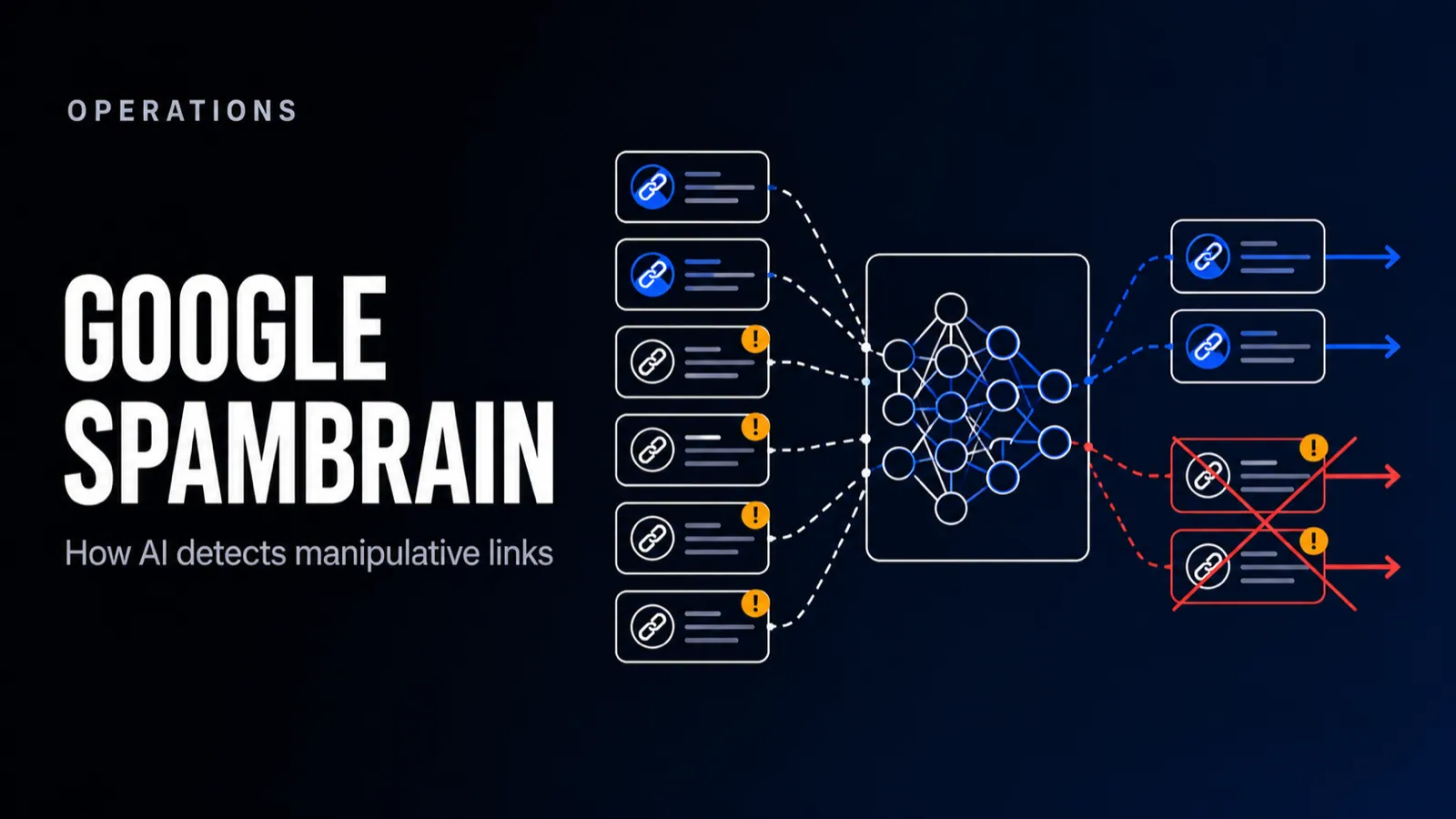
Google's spam detection stopped being a list of rules a while ago. It is machine learning now, and the system has a name: SpamBrain. That shift quietly changed link building, because you cannot reverse-engineer a neural network the way you could game a rule.
SpamBrain is why the cheap link tactics that worked for a season stop working and then quietly stop counting at all. This is what it is, how it appears to detect manipulative links, what actually happens when it catches you, and how to build link profiles that survive it. It is the detection side of everything in the link building playbook.
What Is Google SpamBrain?
Google SpamBrain is Google's machine-learning-based spam-prevention system, introduced around 2018 and expanded since. It identifies spam by learning patterns from data rather than following hand-written rules, and Google has confirmed it powers its spam updates. Its spam updates documentation is the official reference for how these systems affect sites.
The important word is learning. A rules-based filter checks boxes a spammer can read and avoid. A machine-learning system infers what spam looks like from millions of examples, including patterns no engineer explicitly programmed, which is exactly why it is harder to dodge.
How Does SpamBrain Detect Manipulative Links?
SpamBrain appears to detect manipulative links by recognizing patterns across a whole link profile rather than judging links one at a time. It weighs how the linking sites relate to each other, how good those sites are, whether the link fits its context, and how the links were acquired over time. A single link is rarely the signal; the pattern is.
A caveat worth stating plainly: Google does not publish SpamBrain's internal signals. What follows is informed inference from what Google has said, what the link spam updates targeted, and what Mojo Links observes across audited link profiles. Treat anyone claiming exact SpamBrain mechanics with suspicion, this page included.
From Rules To Machine Learning
The old model was Penguin: a rules-based, periodically-run filter that hunted specific link-scheme signatures. SpamBrain replaced that logic with continuous machine learning, and the December 2022 link spam update used it to neutralize unnatural links across the web. Google's link spam policy still defines what counts as manipulation; SpamBrain is the system that now enforces it.
The practical difference is that you can no longer optimize against a known rule. ML generalizes, so a footprint you invent to look natural still resembles thousands of other manufactured profiles it has already seen. The harder you engineer it, the more it looks engineered.
The shift pushes SEO toward genuine quality rather than detectable tricks, because the system is now built to recognize the difference at scale. That is less a threat to good link building than a tax on the bad kind.
What SpamBrain Targets
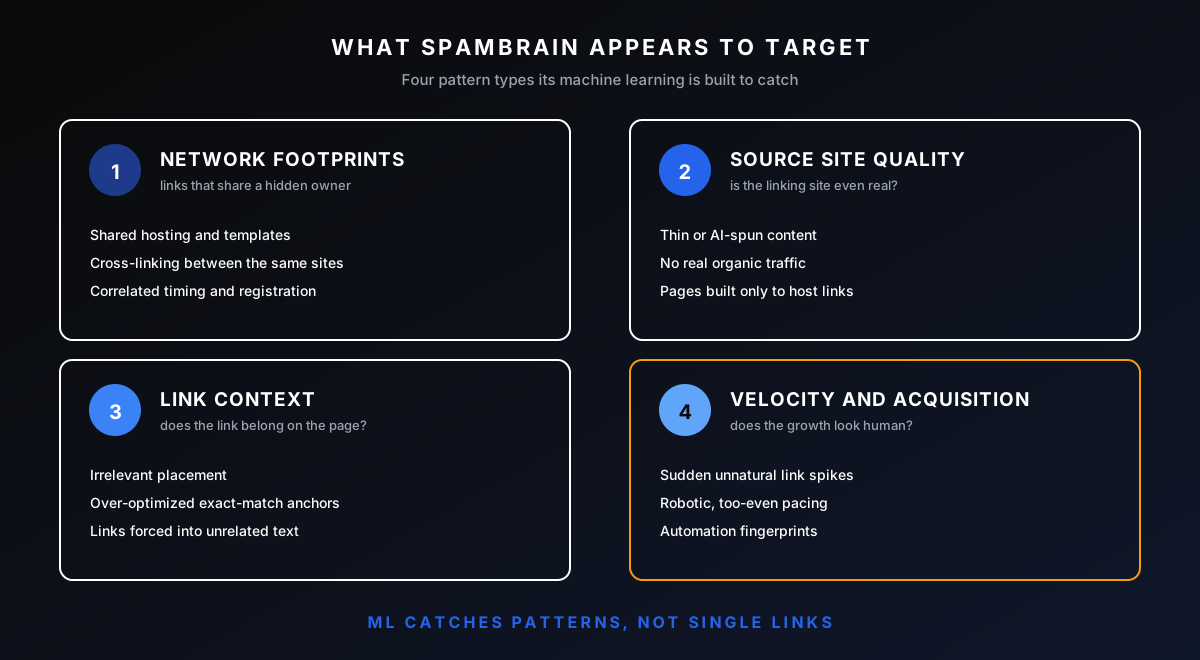
Based on the link spam updates and observed behavior, SpamBrain appears to weigh four pattern categories. None is a single-link test; each is about how the profile looks as a whole.
Network and Footprint Patterns
The clearest target is links that share a hidden owner: common hosting, recycled templates, cross-linking between the same sites, and correlated registration or timing. This is the PBN problem, and pattern-matching across a network is exactly what machine learning is good at. One PBN link looks fine; the network it belongs to does not.
Source Site Quality
SpamBrain appears to weigh whether the linking site is a real, useful site at all. Thin or AI-spun content, no genuine organic traffic, and pages that exist only to host links are signals that the source is a link vehicle, not a publisher. A link from a site real people never visit carries the fingerprint of a link built, not earned.
This is the category that quietly devalued whole link-selling business models. A site that sells links to anyone, on any topic, accumulates exactly the quality signals a model learns to distrust, no matter how clean its domain rating looks on a toolbar. The metric can stay high while the value goes to zero.
Link Context and Anchors
Whether a link belongs on its page matters. Irrelevant placement, over-optimized exact-match anchors, and links forced into unrelated text are classic manipulation markers, and they are easy patterns to learn. The same backlink quality criteria that make a link valuable are the ones that make it look natural to the system.
Velocity and Acquisition Patterns
How links arrive over time is a pattern too. Sudden unnatural spikes, robotic too-even pacing, and the fingerprints of automated tools all suggest acquisition rather than earning. Natural link growth is uneven and gradual; a graph that looks manufactured invites a closer look.
Real brands earn links in bursts tied to real events: a launch, a study, a news mention, then quiet stretches. A profile that adds the same number of links every week, forever, is describing a subscription, not a reputation, and that regularity is itself a tell.
What Happens When SpamBrain Catches You
The most important and least understood point: SpamBrain usually neutralizes manipulative links rather than penalizing the site. The links stop counting, so the ranking boost you paid for quietly evaporates, often with no notice and no message in Search Console. It is not a punishment so much as a deletion of the gain. The cleanup that follows is covered in toxic backlinks.
A manual penalty is a separate thing. If a human reviewer looks and confirms a link scheme, that becomes a manual action with a Search Console notice, which is recoverable through manual penalty recovery. SpamBrain mostly works silently; the manual layer is what comes with a warning.
How To Build SpamBrain-Resistant Link Profiles
The defense is almost boringly simple: build links that would pass a human reviewer reading them one by one, and the machine has nothing to catch. There is no clever evasion, because evasion is the pattern. The goal is a profile that is indistinguishable from one earned honestly, because it was.
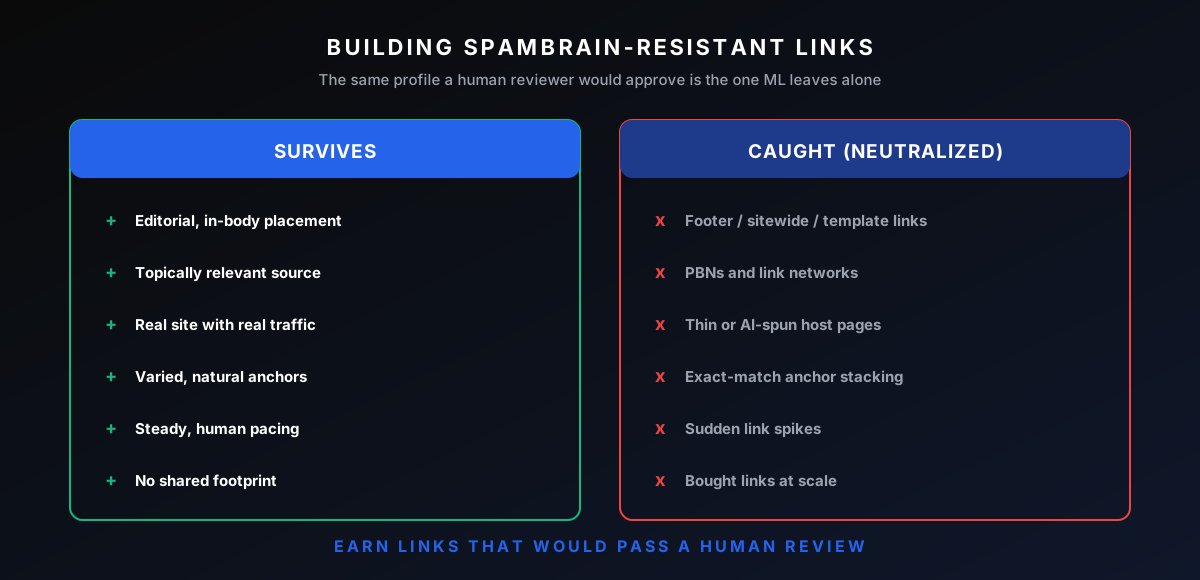
In practice that means relevant, editorial links from real sites with real traffic, varied and natural anchors, steady human pacing, and no shared footprint across the profile. Each of those is also just what a good link is, which is the point: the link-building that survives SpamBrain is the same link-building that was always worth doing.
The mindset shift is to stop thinking about beating a detector and start thinking about earning a vote. When the question is "would a real editor add this link, on this page, to this site," the answer also predicts what the machine does. Build for the editor and the algorithm takes care of itself.
SpamBrain and The AI Era
SpamBrain is one half of a bigger shift. AI is now reading the web to decide what to surface and what to suppress, and SpamBrain is the suppression side: the same machine intelligence that decides which brands show up in AI answers is, in a different form, deciding which links to ignore. Manufactured signals lose on both fronts.
That convergence is the strategic takeaway. The web is increasingly judged by systems that reward genuine authority and discard manufactured signals, whether the output is a ranking, an AI citation, or a neutralized link. Building something real is no longer the slow option; it is the only one that compounds.
Common Misconceptions
The first misconception is that SpamBrain is a penalty. Usually it is not; it is silent neutralization, which is why a site can lose rankings with no warning and no manual action to appeal. People go hunting for a penalty that was never issued.
The second is that you can trick it with the right footprint or disavow your way back to where you were. You cannot reverse-engineer a neural network from a Discord tip, and disavowing links you should not have built recovers nothing once the boost is already gone. The only durable move is to earn links that never needed hiding.
Frequently Asked Questions
Is SpamBrain a Penalty?
Usually not. SpamBrain most often neutralizes manipulative links, meaning they stop passing value, so rankings slip with no notice rather than through a formal penalty. A manual action is a separate, human-issued penalty that does come with a Search Console notice. Many sites blamed for a "SpamBrain penalty" simply had their link boost quietly removed.
How Do I Know If SpamBrain Affected My Site?
There is rarely a clear signal, which is the hard part. A ranking drop that coincides with a link spam update, has no manual action in Search Console, and traces back to low-quality or bought links is the usual pattern. Because neutralization is silent, you diagnose it by elimination, not by a notification.
Can You Recover from SpamBrain?
You recover by changing what you are doing, not by appealing. Since neutralization removes the value of bad links rather than penalizing you, the path back is to earn genuine, relevant links that actually count. Disavowing manipulative links can help if a manual review is involved, but it does not restore a boost that was already discounted.
What Triggers SpamBrain?
Patterns, not single links. Network footprints, low-quality source sites, irrelevant or over-optimized placements, and unnatural acquisition velocity are the categories that appear to draw scrutiny. A profile that looks manufactured across these dimensions is the trigger, far more than any one link in isolation.
Are Bought Links Safe Now?
No safer than before, and arguably less. Machine learning is better at spotting the patterns paid links leave than the old rules were, and the usual outcome is that the links simply stop counting, wasting the spend. If a link would not survive a human reviewer reading the page, do not pay for it.
Want Mojo Links To Keep Your Links SpamBrain-Safe?
The link building that survives machine-learning spam detection is the kind that was always worth doing: relevant, editorial, earned. That is the only kind we build. If you suspect past links are being neutralized or want a profile that holds up, start with a growth audit and we will read your profile for the patterns that draw scrutiny.

About Bart Magera
Bart Magera is the founder of Mojo Links. Ten years across YMYL verticals (legal, medical, finance, supplements, crypto, gambling). Trained under Koray Tuğberk Gübür's Topical Authority framework. Author of two SEO books and international speaker.
Want this kind of analysis on your site?
Get a free video walkthrough within 48 hours covering technical health, backlinks, content gaps, and AI visibility.
Related posts
Keep reading on adjacent topics.
- Link Building
 Bart Magera10 min read
Contextual Backlinks: What They Are, Why They Win, and How To Earn Them
A contextual backlink sits inside the body of an article, surrounded by relevant text, not in a footer or author bio. That placement is what gives it weight. Here is what contextual backlinks are, what makes one high quality, how to earn them, and how to spot the cheap fakes.
- Link Building
 Bart Magera12 min read
What Is White Hat Link Building? Techniques That Work in 2026
The Problem: Why Most Link Building Fails Your SEO You wrote great content. It’s relevant. It’s useful. It even has infographics. But guess what? Crickets. Nobody’s linking. Google’s not ranking. And your “ultimate guide” is buried somewhere on page 7 under a recipe blog and a…
- Link Building
 Bart Magera10 min read
Tiered Link Building: How It Works and How To Do It Safely
Tiered link building layers weaker links behind your strongest ones to pass more authority to your money pages. Here is how the pyramid works, how to build one, which links are worth tiering, the risk SpamBrain introduced, and the lower-risk path I use on client sites.