

Toxic Backlinks: How To Identify and Remove Them
Listen to this article
Browser-native voice. No account required.
Most "toxic backlink" advice on the web is wrong. Audit tools flag thousands of links as toxic based on simple thresholds (low DR, suspicious anchor patterns, foreign-language domains). Disavowing all of them rarely improves rankings, often hurts them, and almost always wastes hours. This post covers how to actually identify toxic links during audits, which signals matter, which signals produce false positives, and when toxic identification justifies remediation.
What Is a Toxic Backlink?
A toxic backlink is one that demonstrably contributes to algorithmic ranking suppression or manual action exposure. The definition is operational, not theoretical. A link is toxic if removing or disavowing it produces a measurable improvement, or if its continued presence prevents recovery from an existing penalty. Most low-quality links do not meet this bar. They are ignored by Google rather than scored against the site.
Toxic backlink identification is one phase of the broader backlink audit workflow. The audit produces a 5-bucket classification; the toxic bucket (typically buckets 3 and 4) gets the focused attention this post describes.
Why Does Toxic Backlink Identification Matter in 2026?
Three reasons. First, Google's spam-detection systems became dramatically better between 2019 and 2024, which means most clearly-spammy links are already discounted and not scored against the site. Aggressive disavow on these links has no impact. Second, manual actions are still issued, and recovery requires demonstrating that the operator understood which links caused the action. Third, the 2024 Google API leak confirmed the existence of trust-flow and link-spam signals that operate at the page level. Identifying which specific links trigger those signals is a real ranking concern, not a tool-vendor invention.
What Signals Identify a Toxic Backlink?
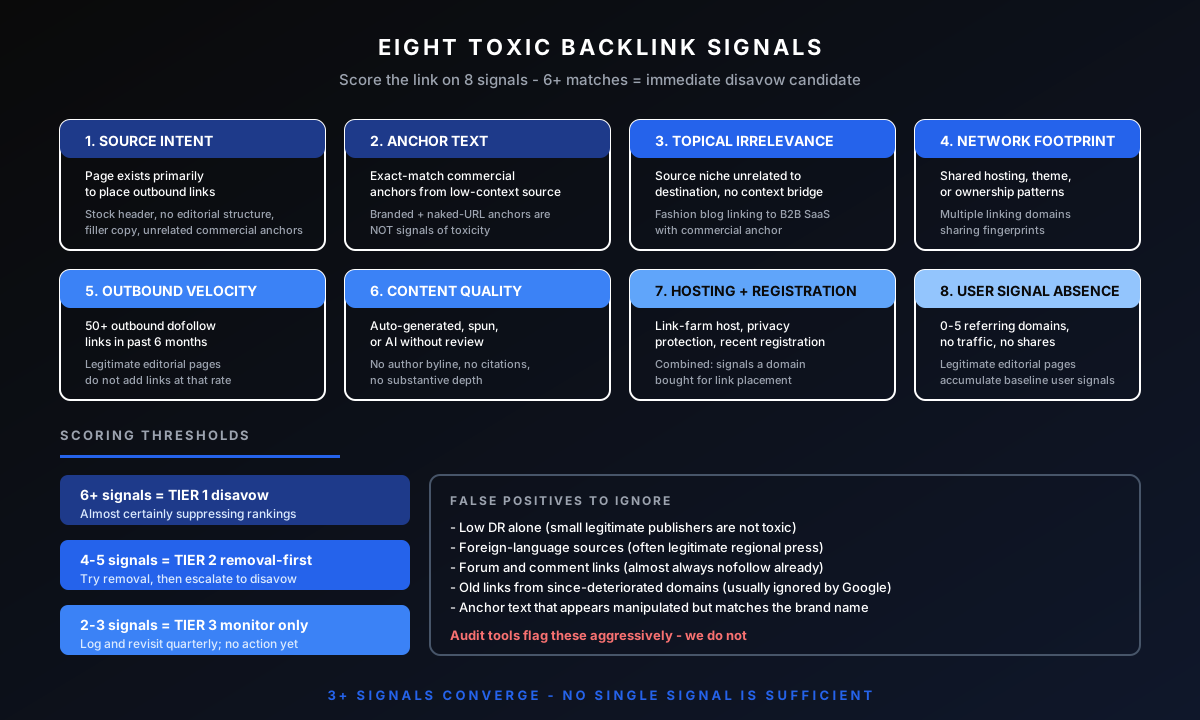
Eight signals get weighted during scoring. No single signal is sufficient. At least three signals must converge before a link is classified as toxic.
Signal 1: Source Intent
The source page exists primarily to place outbound links. Indicators: keyword-rich anchors to multiple unrelated commercial destinations, generic stock-photo header, no editorial structure, copy that reads as filler. Real editorial pages link sparingly and with topical purpose. Link farms link constantly and at random.
Signal 2: Anchor Text on The Inbound Link
Exact-match commercial anchors ("best [niche] services", "buy [product]") are signals when they appear from low-context sources. Branded and naked-URL anchors are not signals of toxicity even from low-DR sources.
Signal 3: Topical Irrelevance
The source niche and the destination niche are unrelated, and the source page does not discuss the destination topic. A fashion blog linking to a B2B SaaS marketing tool with exact-match anchor is a structural signal.
Signal 4: Network Footprint
The source domain shares hosting, ownership, theme template, or footer pattern with multiple other domains that also link to the site. Private blog network identification is a network-level signal, not a single-link signal.
Signal 5: Outbound Link Velocity
The source page accumulated 50+ outbound dofollow links in the past 6 months. Legitimate editorial pages do not add outbound links at that rate.
Signal 6: Content Quality
The source page content is auto-generated, spun from other sources, or AI-generated without editorial review. Verifiable through brief inspection. Quality content has author bylines, recent dates, internal citations, and substantive depth.
Signal 7: Hosting and Registration Patterns
The source domain is hosted on a known link-farm hosting provider, registered with privacy protection, and registered within the past 12 months. Combined, these signal a domain bought for link placement.
Signal 8: User Signal Absence
The source page has 0-5 referring domains itself, no traffic, no social shares, no indexed status. Legitimate editorial pages accumulate some baseline of user signals over time.
What Signals Produce False Positives?
Five signals routinely flag legitimate links as toxic in audit tools. Treat them as warnings, not verdicts.
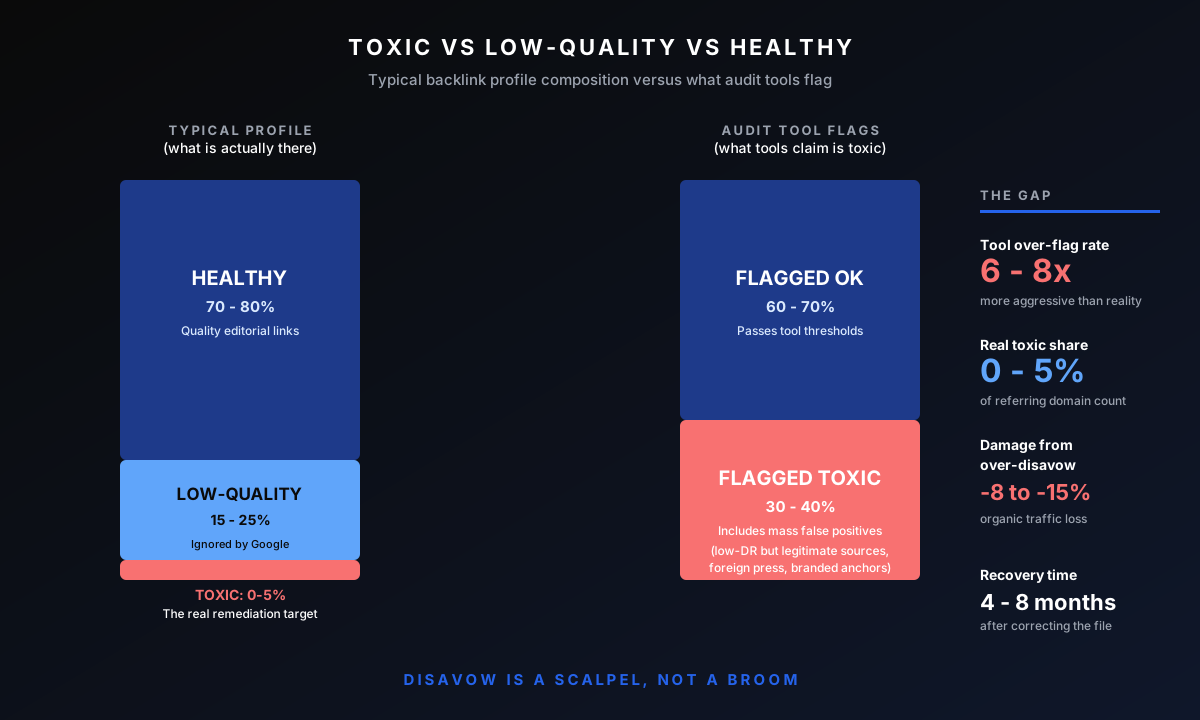
Low domain rating alone. DR 10-25 sources can be perfectly legitimate small-publisher links. The tool dashboards flag them aggressively; this framework does not.
Foreign-language sources. A Spanish-language editorial mention from a Mexico-based publication is legitimate even when audit tools flag it as suspicious.
Forum and comment links. Most are nofollow by default and pass no equity either way. Disavow accomplishes nothing.
Old links from since-deteriorated domains. A 2018 link from a now-spammy domain that was reputable in 2018 is usually still ignored by Google rather than scored against the site.
Anchor text that appears manipulated but is not. Branded anchors that happen to include a commercial keyword (because the brand name contains it) get flagged by anchor-pattern tools. Manual inspection clears these. The full audit framework that surfaces these distinctions sits in the backlink audit guide.
How Do You Score Toxic Backlinks for Remediation Priority?
Three priority tiers govern what gets remediated and how aggressively.
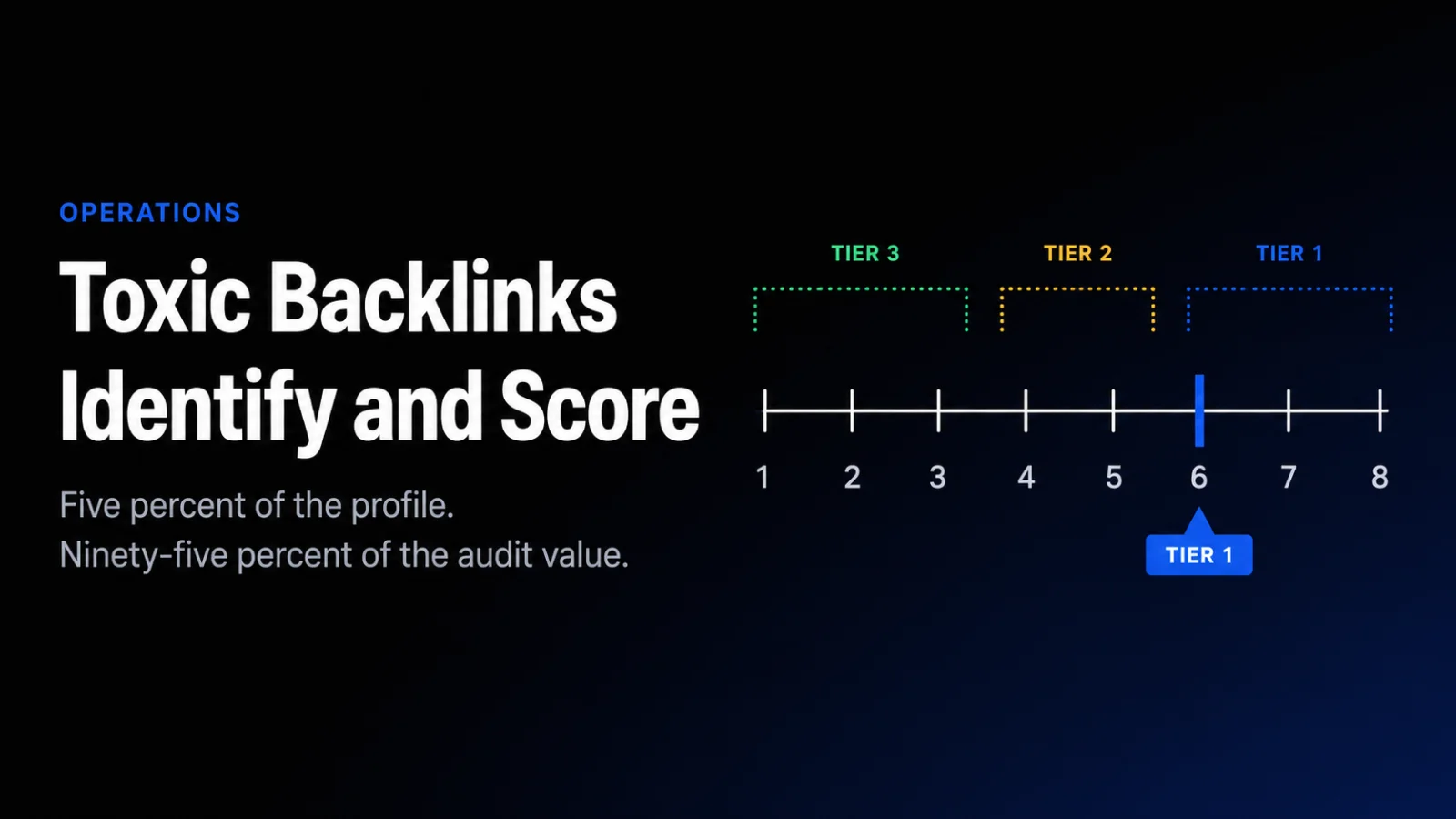
Tier 1: Immediate Disavow Candidates
Links scoring 6+ signals from the eight-signal framework. These are almost certainly contributing to suppression and warrant inclusion in the next disavow file submission. Typically 0-5% of the total profile. The free disavow tool turns that shortlist into an upload-ready file.
Tier 2: Removal-First Candidates
Links scoring 4-5 signals from a domain with a discoverable webmaster. Try removal first (14-day window). If removal fails, escalate to Tier 1 disavow. Typically 5-10% of the profile.
Tier 3: Monitor-Only Candidates
Links scoring 2-3 signals. Marginal cases. Log and monitor these quarterly rather than acting. Often resolved through natural attrition (the source domain deteriorates further, gets de-indexed, or recovers and ceases to be a concern).
Links scoring 0-1 signals do not enter the toxic queue at all. They appear in audit reports as low-quality but harmless, and do not warrant remediation cycles. The disavow execution follows the workflow in the disavow guide.
When Does Toxic Backlink Remediation Actually Help Rankings?
Three scenarios produce measurable ranking improvement after toxic remediation.
Active manual action recovery. Google issued an "unnatural links to your site" notification. Disavow plus reconsideration request is required to clear the action. This is the textbook case.
Recovery from a documented algorithmic discount. Rankings dropped sharply, the audit identifies a recent influx of clearly-toxic links, removal or disavow correlates with subsequent recovery. Causation is hard to prove but the pattern is recognisable across enough campaigns.
Pre-emptive cleanup before a major content push. Toxic remediation sometimes runs as part of backlink cleanup before scaling acquisition, to prevent existing toxicity from compounding with new placements.
Outside these three scenarios, toxic remediation rarely produces ranking lift on its own. The reason: SpamBrain has already discounted the links, and removing them changes nothing about how the site is currently scored. Search Engine Land's guide to toxic links and disavows reaches the same conclusion: most third-party toxicity scores are noise, and aggressive disavow on already-discounted links accomplishes nothing.
How Did Mojo Links Develop This Toxic Identification Framework?
The eight-signal framework above evolved across Mojo Links backlink audits from 2022 to 2025. The original signal set was 14 items. We dropped six signals after empirical analysis showed they correlated only with audit-tool flags, not with actual ranking outcomes after remediation. The remaining eight signals are the ones that produced measurable changes when acted upon. The 2024 Google API leak provided independent confirmation that several of these signals (network footprint, source intent, anchor patterns) correspond to internal Google signal names.
Frequently Asked Questions About Toxic Backlinks
How Many Toxic Backlinks Does a Typical Site Have?
Most sites have 0-5% genuinely toxic links by referring domain count. Audit tools routinely flag 15-40% as toxic, which is the source of most over-disavow disasters.
Can Negative SEO Attacks Create Toxic Backlinks?
Yes, occasionally. Negative SEO is rare but real. The detection signature is a sudden influx of clearly-spammy links within a 2-4 week window. The remediation is the same disavow workflow as for organic toxic links.
Should You Check Toxic Backlinks Every Month?
Quarterly is enough for most sites. Monthly is overkill except during active manual-action recovery. The total link profile changes slowly; toxic identification benefits from larger time windows for pattern detection.
Do AI-Generated Content Farms Count as Toxic Sources?
Often, but not always. AI-generated content with no editorial review is a strong signal of low value. AI-assisted content with human editorial review can be legitimate. Inspect manually rather than disavowing all AI-flagged sources.
What Happens If You over-Disavow Non-Toxic Links?
You lose the link equity those links were passing. Mojo Links has seen sites lose meaningful organic traffic after aggressive disavow campaigns that included low-DR but legitimate sources. Recovery takes months once the disavow file is corrected, and not all traffic returns.
Want Us To Audit Your Backlink Profile for Toxic Links?
Toxic backlink identification is one phase of every link building campaign we run. The audit uses the eight-signal framework above to produce a tiered remediation list. Book a slot to discuss your profile.

About Bart Magera
Bart Magera is the founder of Mojo Links. Ten years across YMYL verticals (legal, medical, finance, supplements, crypto, gambling). Trained under Koray Tuğberk Gübür's Topical Authority framework. Author of two SEO books and international speaker.
Want this kind of analysis on your site?
Get a free video walkthrough within 48 hours covering technical health, backlinks, content gaps, and AI visibility.
Related posts
Keep reading on adjacent topics.
- Link Building
 Bart Magera10 min read
Contextual Backlinks: What They Are, Why They Win, and How To Earn Them
A contextual backlink sits inside the body of an article, surrounded by relevant text, not in a footer or author bio. That placement is what gives it weight. Here is what contextual backlinks are, what makes one high quality, how to earn them, and how to spot the cheap fakes.
- Link Building
 Bart Magera12 min read
What Is White Hat Link Building? Techniques That Work in 2026
The Problem: Why Most Link Building Fails Your SEO You wrote great content. It’s relevant. It’s useful. It even has infographics. But guess what? Crickets. Nobody’s linking. Google’s not ranking. And your “ultimate guide” is buried somewhere on page 7 under a recipe blog and a…
- Link Building
 Bart Magera10 min read
Tiered Link Building: How It Works and How To Do It Safely
Tiered link building layers weaker links behind your strongest ones to pass more authority to your money pages. Here is how the pyramid works, how to build one, which links are worth tiering, the risk SpamBrain introduced, and the lower-risk path I use on client sites.