

How To Run a Backlink Audit: The Step-by-Step Workflow

Listen to this article
Browser-native voice. No account required.
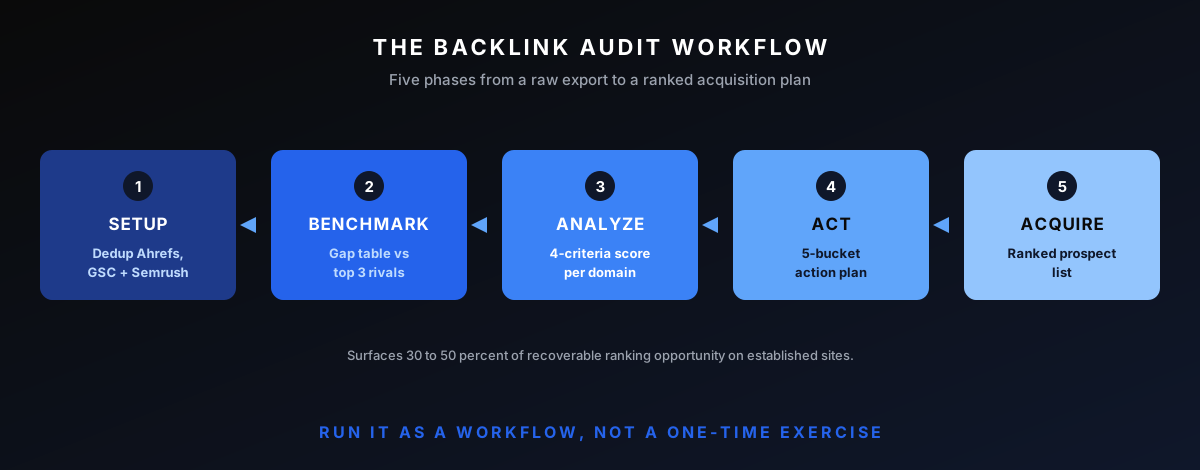
A backlink audit identifies which inbound links are helping your rankings in search engines, which are hurting them, and which need direct action. Run as a workflow rather than a one-time exercise, an audit surfaces 30 to 50 percent of recoverable ranking opportunities on sites already established in their niche. This guide covers the exact procedure Mojo Links runs in regulated and competitive verticals.
What Is a Backlink Audit?
A backlink audit is the diagnostic process of pulling a site's full backlink profile, classifying every referring domain by quality and risk, and producing a prioritized action list. The audit is the diagnostic step in the broader cleanup workflow; it does not itself remove or disavow links. The deliverable is a 5-bucket classification: keep, monitor, contact for removal, disavow, ignore.
A complete audit answers four questions:
Quality: which inbound links carry positive ranking weight?
Risk: which inbound links risk algorithmic devaluation or manual action?
Opportunity: where is the link gap vs top three SERP competitors?
Action: what specific moves does each finding require?
A backlink audit is one input into the broader backlink cleanup workflow. The audit identifies; the cleanup acts on the findings. For the technical disavow procedure, see how to disavow backlinks safely in Google.
When Should You Run a Backlink Audit?
Run a backlink audit on three triggers: after an unexplained ranking drop, after a Google algorithm update flips the SERP, or as a recurring quarterly process for active sites. New site owners should run an audit within the first 30 days of taking over a domain to inherit a clean baseline. Sites in YMYL niches need tighter cadence than non-YMYL sites.
Specific situations that demand an immediate audit:
Manual action notification in Search Console
Ranking drop of 10+ positions on multiple commercial queries within 7 days
Sudden referring domain spike from low-trust sources (negative SEO indicator)
Post-merger or acquired domain (inherited backlink profile)
Suspect a competitor is running paid-link campaigns you cannot match
How Do You Set Up a Backlink Audit?
A backlink audit setup requires three inputs: a primary backlink checker or analytics tool (Ahrefs Site Explorer or Semrush Backlink Analytics), Google Search Console access for the target property, and a defined classification framework. Setup without the framework produces a 10,000-row spreadsheet nobody acts on. Setup with the framework produces a 200-prospect action list. The intelligence picks here sit inside the wider link building tools stack.
The three setup steps:
Tool selection. Ahrefs Site Explorer is the primary source for external link discovery. Semrush Backlink Analytics provides second-opinion data. Google Search Console confirms which links Google itself attributes to the site.
Export the Referring Domains report (not the Backlinks report). One referring domain represents one source site. Backlink reports inflate by counting multiple links from the same source.
Define classification criteria before reviewing any link. Use the 4-criteria filter (organic traffic, topical relevance, indexation, placement context) covered in the analysis section below.
Cross-tool deduplication is critical. Ahrefs and Semrush index different long-tail publishers; a single-tool export typically misses 15 to 25 percent of live placements. Export from both, deduplicate by domain, classify the merged list.
How Do You Benchmark a Backlink Profile?
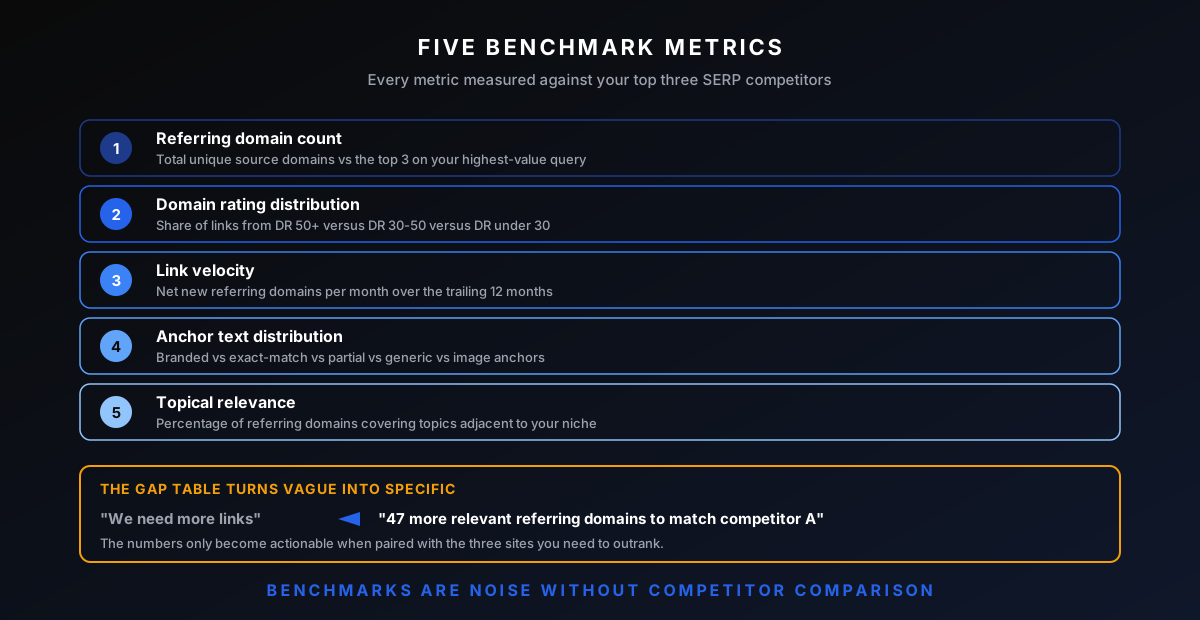
Benchmarking compares the audited site against the top three SERP competitors on five metrics: referring domain count, domain rating, link velocity (new domains acquired per month), anchor text distribution, and topical relevance percentage. The benchmark output is a numeric gap table that converts "we need more links" into "we need 47 more relevant referring domains to match competitor A."
Five benchmarks every audit produces:
Referring domain count. Total unique source domains. Compare against top 3 SERP competitors on your highest-value query.
Domain rating distribution. What percentage of inbound links come from DR 50+ sources vs DR 30-50 vs DR under 30?
Link velocity. Net new referring domains per month over the trailing 12 months. Compare against competitor velocity.
Anchor text distribution. Percentage breakdown across branded, exact-match, partial-match, generic, and image anchors. Over-optimization on exact-match commercial terms is a red flag. The free anchor text checker classifies every anchor and flags the over-optimized ones.
Topical relevance. What percentage of referring domains cover topics adjacent to your niche?
Benchmarks without competitor comparison are noise. The numbers only become actionable when paired with the three sites you actually need to outrank.
How Do You Analyze Backlinks for Ranking Impact?
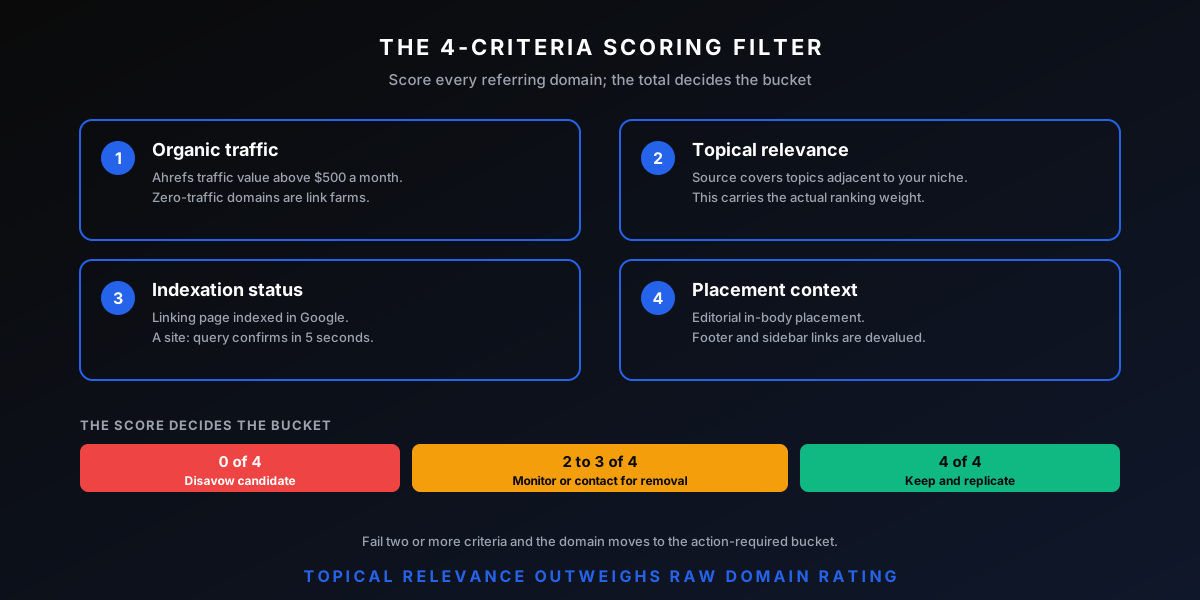
Backlink analysis scores every referring domain against a 4-criteria filter: organic traffic, topical relevance, indexation status, and placement context. Domains scoring 4 of 4 are keepers and replication targets. Domains scoring 0 of 4 are toxic candidates for disavow. The middle range gets monitored or contacted for removal depending on the specific failure pattern.
Domain Rating, and the equivalent authority score Domain Authority from Moz, is a 0-100 logarithmic score weighted by referring-domain quantity and quality. Use it for fast sorting during audits but never as the only signal: topical relevance carries the actual ranking weight.
The 4-criteria filter applied across audits:
Organic traffic. Source domain has measurable monthly organic traffic (Ahrefs traffic value above $500/month). Zero-traffic domains are link farms or expired domains regardless of DR.
Topical relevance. Source covers topics adjacent to your niche. A DR 70 site outside your topic produces less ranking lift than a DR 40 site inside it.
Indexation status. Linking page is indexed in Google and other search engines. A site:domain.com/page query confirms in 5 seconds. Non-indexed pages do not pass ranking signals to the search engine.
Placement context. Editorial in-body placement. Footer, sidebar, and widget placements are systematically devalued in 2026 ranking signals.
Analyze and score every domain. Sites failing two or more criteria move to the action-required bucket. Sites passing all four move to the keep/replicate bucket. The middle range gets monitoring or removal-contact action depending on which criteria failed and why.
How Do You Act on Backlink Audit Findings?
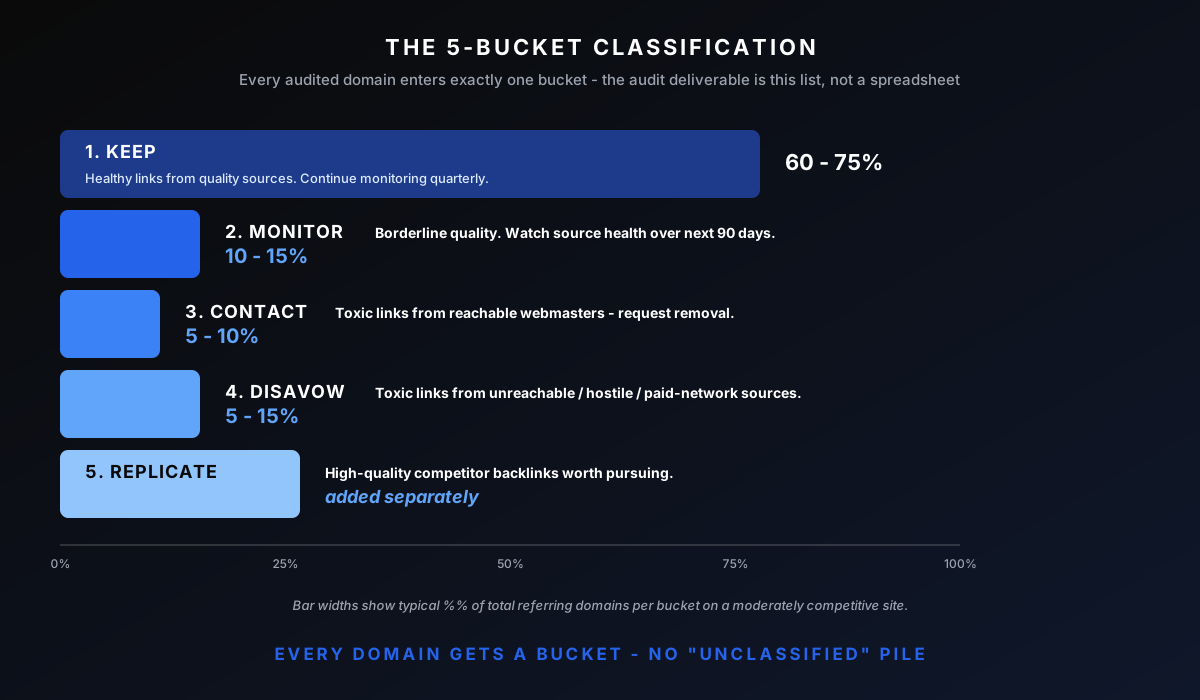
Audit findings drive five distinct actions: keep (do nothing, monitor over time), monitor (watch for changes), contact for removal (toxic but recoverable), disavow (toxic and unreachable), and replicate (high-quality competitor link to pursue for your own profile). Treating every bad link the same way wastes outreach hours and risks over-disavowing legitimate sources. The disavow bucket goes straight into the free disavow file generator.
The 5-bucket action plan:
Keep (60-75% of profile typically). Healthy links from quality sources. Continue monitoring quarterly.
Monitor (10-15%). Borderline quality. Watch for changes in source domain health over the next 90 days.
Contact for removal (5-10%). Toxic links from sources with reachable webmasters. Outreach with specific removal requests. See the full cleanup workflow for the procedure.
Disavow (5-15%). Toxic links from unreachable, hostile, or paid-network sources. Add to the disavow file. See how to disavow backlinks safely for the file format and upload procedure.
Replicate (added separately). High-quality competitor backlinks worth pursuing for your own profile. See how to find competitor backlinks for the replication tactics.
How Do You Find Link Gaps with a Competitive Backlink Audit?
A competitive backlink audit identifies referring domains linking to two or more of your top SERP competitors but not to you. Use the Link Intersect feature in Ahrefs or Backlink Gap in Semrush. The resulting list is the highest-leverage acquisition target on a competitive audit: sources that have already proven they link to sites in your niche.
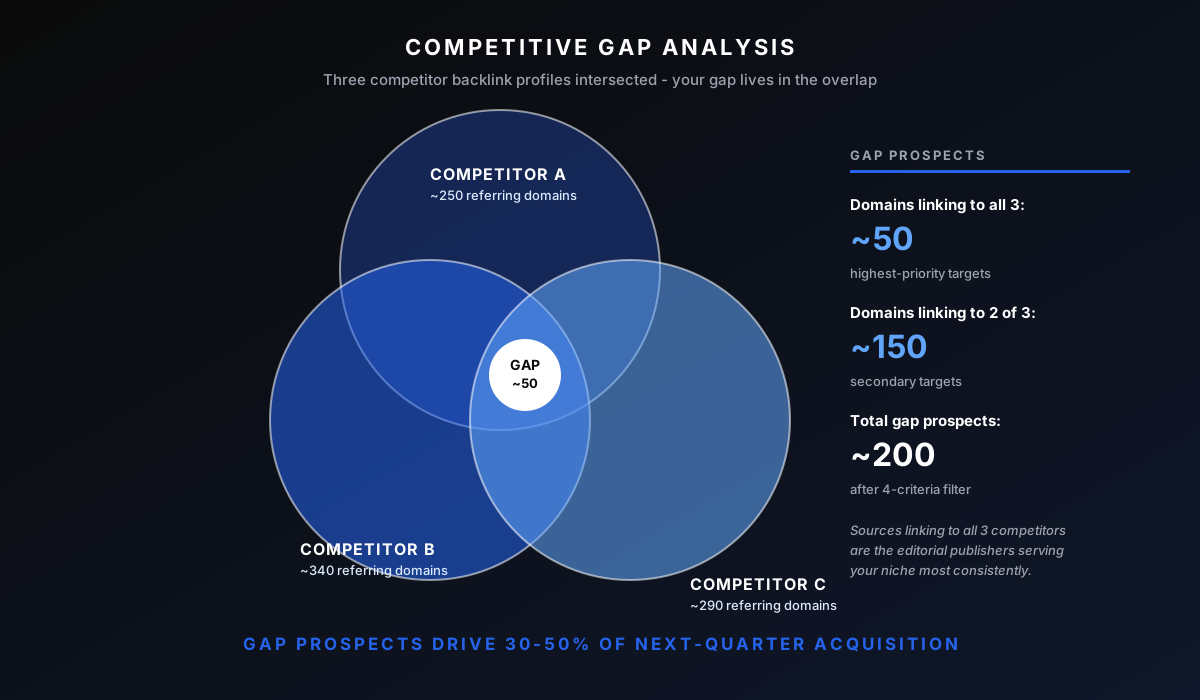
Gap analysis procedure:
Identify your top 3 SERP competitors (not business competitors) on your highest-value commercial query
Run Link Intersect or Backlink Gap with your domain as the excluded property
Filter the output by the 4-criteria filter (above)
Prioritize sources linking to all 3 competitors before sources linking to only 1
Expected output: 30 to 150 high-priority prospects per competitive audit. This single deliverable typically drives 30 to 50 percent of new link acquisitions in the following 90 days.
How Do You Turn Audit Insights into a Link Acquisition Plan?
Audit insights become a link acquisition plan through three steps: prioritize the gap-analysis prospects, pair each prospect with a replication tactic (guest post, niche edit, digital PR, broken link), and assign outreach owners with specific deadlines. The plan is a spreadsheet with at minimum 30 ranked prospects, each tagged by tactic, with conversion rate expectations baked in.
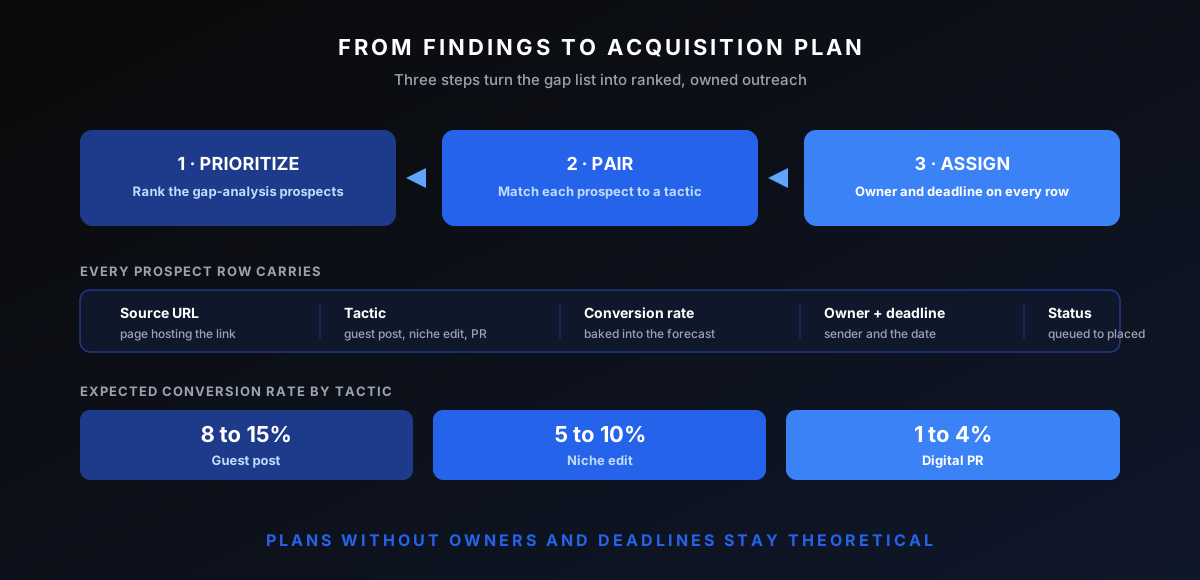
Each prospect row carries:
Source domain + URL (the specific page hosting the planned link)
Tactic (guest post, niche edit, digital PR, broken link)
Expected conversion rate (8-15% guest post, 5-10% niche edit, 1-4% digital PR)
Outreach owner + deadline (whoever sends the first email + the date)
Status (queued, contacted, in negotiation, placed, dead)
Acquisition plans without ownership and deadlines stay theoretical. For pre-built campaign templates and managed acquisition, see the link building campaigns service.
How Often Should You Run a Backlink Audit?
Run a full backlink audit every 90 days for active sites and monthly for sites in rapid acquisition phases or recovery from a manual action. Quarterly cadence matches the 6 to 8 week window Google needs to fully index new placements and re-evaluate ranking signals. More frequent audits burn analyst hours without producing actionable deltas; less frequent audits let toxic patterns accumulate.
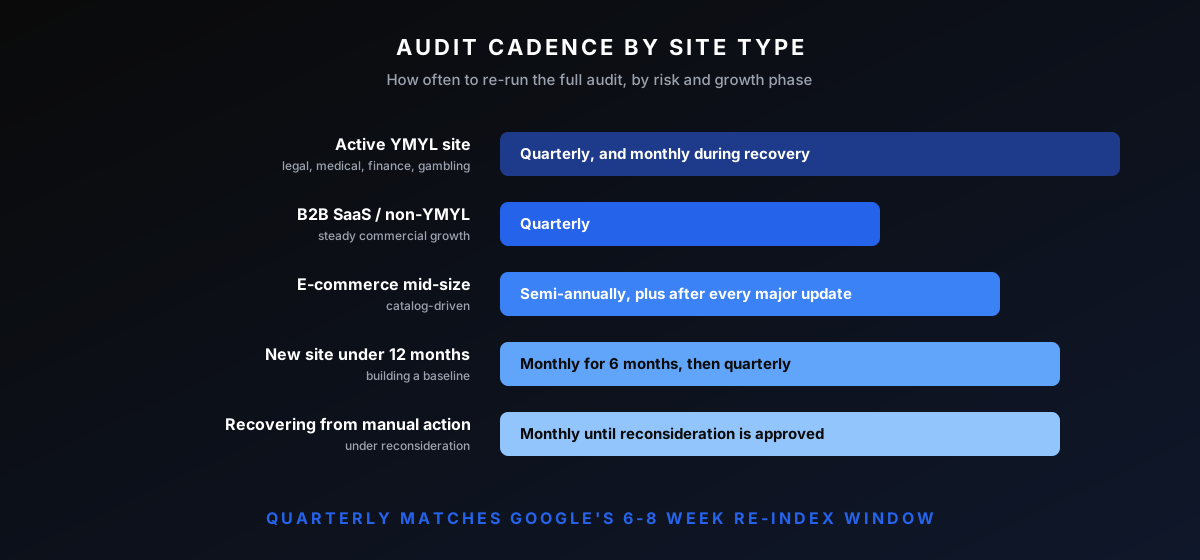
Audit cadence by site type:
Active YMYL site (legal, medical, finance, supplements, gambling): quarterly minimum, monthly during recovery
B2B SaaS / non-YMYL: quarterly
E-commerce mid-size: semi-annually + after every major Google update
New site under 12 months old: monthly for first 6 months, then quarterly
Site recovering from manual action: monthly until reconsideration approved, then quarterly
Who Should Run a Backlink Audit?
Agencies, in-house SEO teams, and founders each run backlink audits for different reasons, on different cadences, with different success metrics. The same workflow serves all three audiences, but the reporting layer changes based on who consumes the output. A backlink audit is one phase of a full SEO audit.
For Agencies: The Client Retention Angle
Agencies run quarterly audits as part of monthly retainer reporting to surface acquisition opportunities the client did not request. The audit positions the agency as proactive intelligence, not just an outsourced execution team. Lead metrics in client reviews: referring domain count delta vs top 3 competitors, gap-analysis prospect count, and recovery percentage on previous-quarter findings.
For in-House SEO Teams: The Budget Defense Angle
In-house teams run audits to defend the SEO budget against quarterly cuts. Showing the link gap between the team's domain and the top three SERP competitors converts abstract "we need more budget" into concrete "competitor A acquired 47 referring domains last quarter; we acquired 12; closing that gap requires this investment level." Audit reports go to the CMO, not the SEO team itself.
For Founders and Operators: The Do-It-Once-Yourself Angle
Founders running pre-revenue or early-stage projects can execute one full audit themselves in 6 to 10 hours. Cost: one month of Ahrefs Lite ($99) plus analyst time. Beyond month 6, the work should move to an in-house hire or agency. Audit findings on a small site (under 500 referring domains) are usually one of three patterns: no links worth defending, a few spam injections to disavow, or a clear gap vs competitors that points the acquisition plan.
What Mistakes Ruin a Backlink Audit?
Three mistakes destroy the ROI of a backlink audit: treating Domain Rating or Domain Authority as an absolute quality score, disavowing patterns the team cannot explain, and producing a raw spreadsheet without an action plan. Each of these is more common in beginner-led audits than the toxic-link patterns the audits are designed to find.
Link schemes that manipulate rankings are subject to algorithmic devaluation and manual action. The patterns above are the dominant triggers Mojo Links sees in audits. When a profile is already contaminated, Google's official disavow links documentation is the last-resort tool.
The traps in order of cost:
No action plan. A 10,000-row classification report with no prioritization and no ownership stays unread. Always produce the 5-bucket action plan as the audit deliverable, not the raw classification.
Disavowing patterns you cannot explain. Over-disavowing legitimate-but-low-trust links suppresses rankings more than the original profile would have. Disavow patterns, not outliers.
DR-as-absolute trap. A DR 75 site outside your topic produces less ranking lift than a DR 40 site inside it. The 4-criteria filter handles this; DR alone does not.
Skipping the competitive gap analysis. Audits that only catalog existing links miss the highest-leverage opportunity: which sources link to competitors but not you. Always run Link Intersect.
Ignoring placement context. Tools do not surface footer-vs-body distinction reliably. Manual review of the top 50 highest-value prospects catches placement issues automated scoring misses.
How Did Mojo Links Develop This Audit Workflow?
The 5-bucket classification and 4-criteria filter come from Mojo Links campaign data across 300+ engagements between 2019 and 2026. The benchmark percentages (60-75% keep, 5-15% disavow) reflect outreach and recovery campaigns we ran in regulated and competitive verticals: legal, medical, finance, supplements, crypto, gambling, and SaaS.
What that means for the numbers in this guide:
Bucket percentages (60-75% keep, 10-15% monitor, 5-10% contact, 5-15% disavow) reflect YMYL backlink profiles. Non-YMYL sites typically have 70-85% in the keep bucket.
Conversion rates for replication (8-15% guest post, 5-10% niche edit) match our internal campaign data on filtered prospect lists.
Cadence guidance (quarterly minimum) reflects the 6 to 8 week window Google needs to fully index and re-evaluate.
Where numbers in this guide come from public industry studies (Backlinko, Ahrefs, Authority Hacker), see our link building statistics 2026 guide for the source data.
For sites where the backlink profile is healthy but rankings still underperform, the next layer is a semantic SEO audit that maps topical authority gaps and entity coverage.
For the decision framework on nofollow link attribution - including the per-niche nofollow distribution targets - see our nofollow links guide.
Frequently Asked Questions About Backlink Audits
How Long Does a Backlink Audit Take?
A full backlink audit takes 6 to 15 analyst hours depending on profile size. Sites with under 500 referring domains complete in 6 to 8 hours. Sites with 500 to 5,000 referring domains take 10 to 15 hours. Sites with 5,000+ referring domains require sampling rather than full review and typically take 12 to 20 hours focused on the top 1,000 highest-value sources.
What Is The Difference Between a Backlink Audit and a Backlink Check?
A backlink check is a one-time data pull from a tool. A backlink audit is a workflow that combines the data pull with classification, competitive comparison, and action planning. The check produces a list. The audit produces a 5-bucket action plan. Most backlink checker tools call themselves "backlink audits" but only do the check step.
Can You Do a Backlink Audit Without Paid Tools?
Yes, but with severe coverage gaps. Google Search Console provides Google's own attribution but misses 30 to 50 percent of backlinks third-party tools surface. Free backlink checker tiers (Moz Link Explorer, Ubersuggest free) cap queries at 10 to 25 per day. For audits beyond a single small site, paid SEO tools (Ahrefs or Semrush) are the practical baseline.
How Much Does a Professional Backlink Audit Cost?
Professional backlink audit pricing ranges from $500 for small sites to $5,000+ for enterprise YMYL profiles. The price depends on profile size (referring domain count), competitive depth (number of competitors benchmarked), and deliverable format (raw classification vs full action plan with outreach templates). Mojo Links pricing tiers are listed on the service pages.
What Deliverables Should a Backlink Audit Produce?
Every backlink audit should produce at minimum: a 5-bucket classification spreadsheet (keep, monitor, contact, disavow, replicate), a competitive gap analysis (Link Intersect output with the top 3 SERP competitors), a benchmark table comparing your profile to those competitors on the five core metrics, and a prioritized set of acquisition opportunities with ownership and deadlines. Audits without all four deliverables are checks, not audits.
The audit is phase one of a six-phase link-building workflow. For the end-to-end program this fits into, see the complete link building workflow.
Want Us To Run The Audit for You?
A Mojo Links backlink audit produces the full deliverable set: classification, gap analysis, benchmark table, and prioritized acquisition plan. Turnaround: 5 business days for sites under 1,000 referring domains. We work across regulated verticals (legal, medical, finance, supplements, gambling, crypto). For a free 20-minute audit covering link risk, content gaps, and AI visibility, book a growth session. Senior strategist on the call. No junior PMs.

About Bart Magera
Bart Magera is the founder of Mojo Links. Ten years across YMYL verticals (legal, medical, finance, supplements, crypto, gambling). Trained under Koray Tuğberk Gübür's Topical Authority framework. Author of two SEO books and international speaker.
Want this kind of analysis on your site?
Get a free video walkthrough within 48 hours covering technical health, backlinks, content gaps, and AI visibility.
Related posts
Keep reading on adjacent topics.
- Link Building
 Bart Magera10 min read
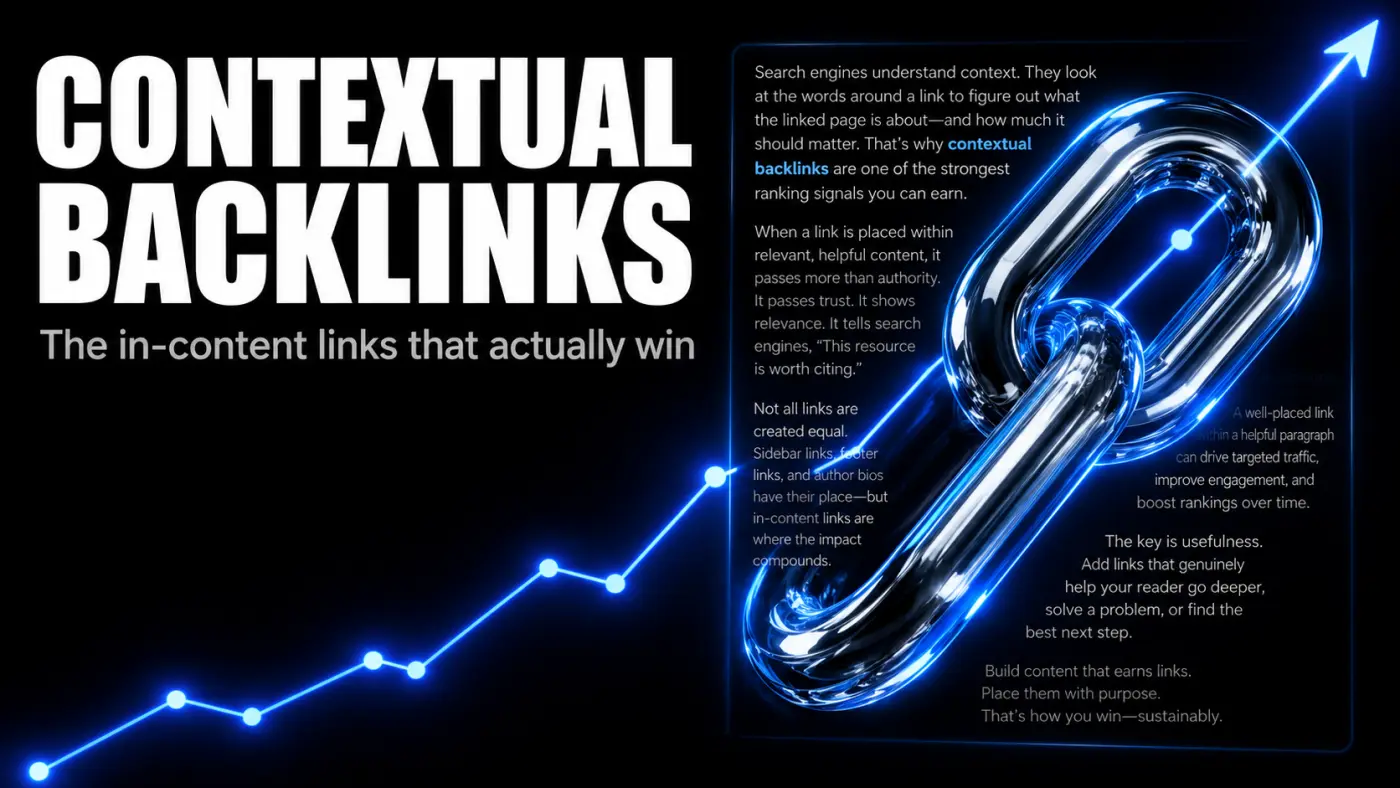
Contextual Backlinks: What They Are, Why They Win, and How To Earn Them
A contextual backlink sits inside the body of an article, surrounded by relevant text, not in a footer or author bio. That placement is what gives it weight. Here is what contextual backlinks are, what makes one high quality, how to earn them, and how to spot the cheap fakes.
- Link Building
 Bart Magera12 min read
What Is White Hat Link Building? Techniques That Work in 2026
The Problem: Why Most Link Building Fails Your SEO You wrote great content. It’s relevant. It’s useful. It even has infographics. But guess what? Crickets. Nobody’s linking. Google’s not ranking. And your “ultimate guide” is buried somewhere on page 7 under a recipe blog and a…
- Link Building
 Bart Magera10 min read
Tiered Link Building: How It Works and How To Do It Safely
Tiered link building layers weaker links behind your strongest ones to pass more authority to your money pages. Here is how the pyramid works, how to build one, which links are worth tiering, the risk SpamBrain introduced, and the lower-risk path I use on client sites.