Link Building for SEO: The Complete Guide
Listen to this article
Browser-native voice. No account required.
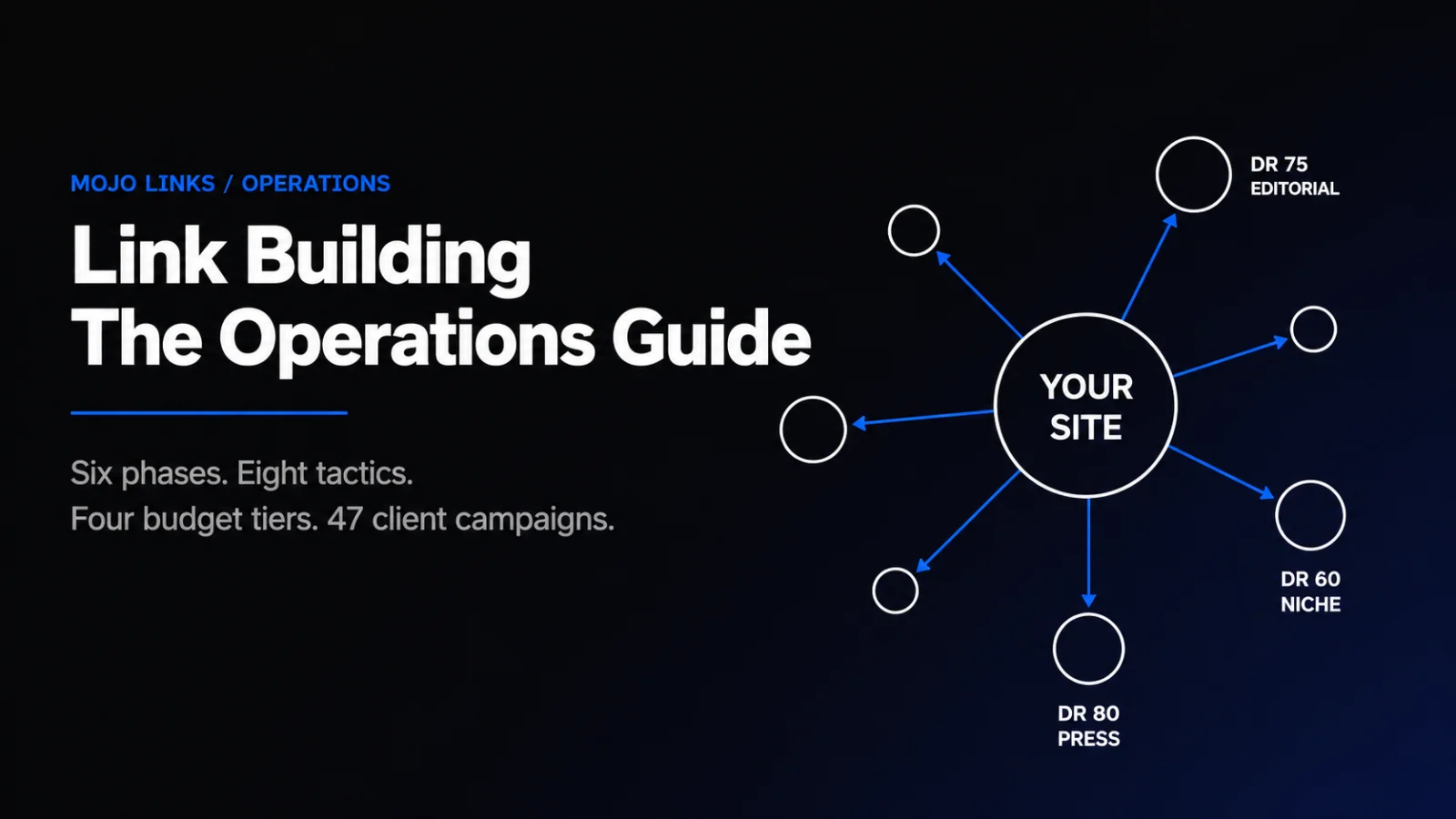
Link building looks simple on paper. Earn a link from a relevant site, pass authority, move up rankings. In practice it is the most operationally complex discipline in SEO. This guide is the complete workflow: refined across engagements in regulated verticals (supplements, crypto, finance, FMCG, real estate), through three Google core updates, and handed to every new SEO lead at Mojo Links. Edited here for public consumption.
This guide does not explain the concept. It explains the execution: how to audit existing profiles, how to qualify prospects, how many hours each phase takes, what each tier of budget actually buys, where penalty risk creeps in, which KPIs belong in monthly reports and which ones to ignore.
It is long. Read it in sections.
What Is Link Building?
Link building is the editorial process of earning hyperlinks from third-party websites back to yours. Each link is a vote of confidence Google's ranking systems weigh against page authority, topical relevance, and content quality to determine search position.
The discipline goes by several names. Off-page SEO, backlink acquisition, link acquisition, off-site authority building. Operationally they all describe the same work: identify a relevant source, create a reason for that source to link to you, secure the placement, verify it is live and indexed.
How Is Link Building Different from Broader SEO?
Link building sits inside off-page SEO. On-page covers your own pages: copy, schema, internal architecture. Technical SEO covers crawlability, render performance, and structured data. Off-page covers the signals you cannot directly control on your own domain, and backlinks are the largest of those signals by an order of magnitude.
Confuse the disciplines and the calendar slips. In-house teams pour six months into on-page polish, then notice rankings have not moved, then realise the page has four referring domains while the top three competitors have 280. That gap is a link gap. Polish does not close it.
Why Does Link Building Still Matter in 2026?
Backlinks remain a top-3 ranking factor in 2026. A Backlinko analysis of 11.8 million Google search results found pages in the top 10 have on average 3.8x more backlinks than lower-ranked pages. Google's crawl-and-index economy still runs on a graph of citations between web pages. AI Overviews and SGE features quote pages that already rank, and pages that already rank still need links to get there.
Anyone who claims AI killed link building is reading the wrong tea leaves.
How Does Google Evaluate The Backlinks You Build?
Google evaluates backlinks across four dimensions: source authority (PageRank inherited from the linking domain), topical relevance (semantic match between source and destination), placement context (in-body editorial versus footer or sidebar), and anchor text distribution (branded versus exact match versus partial).
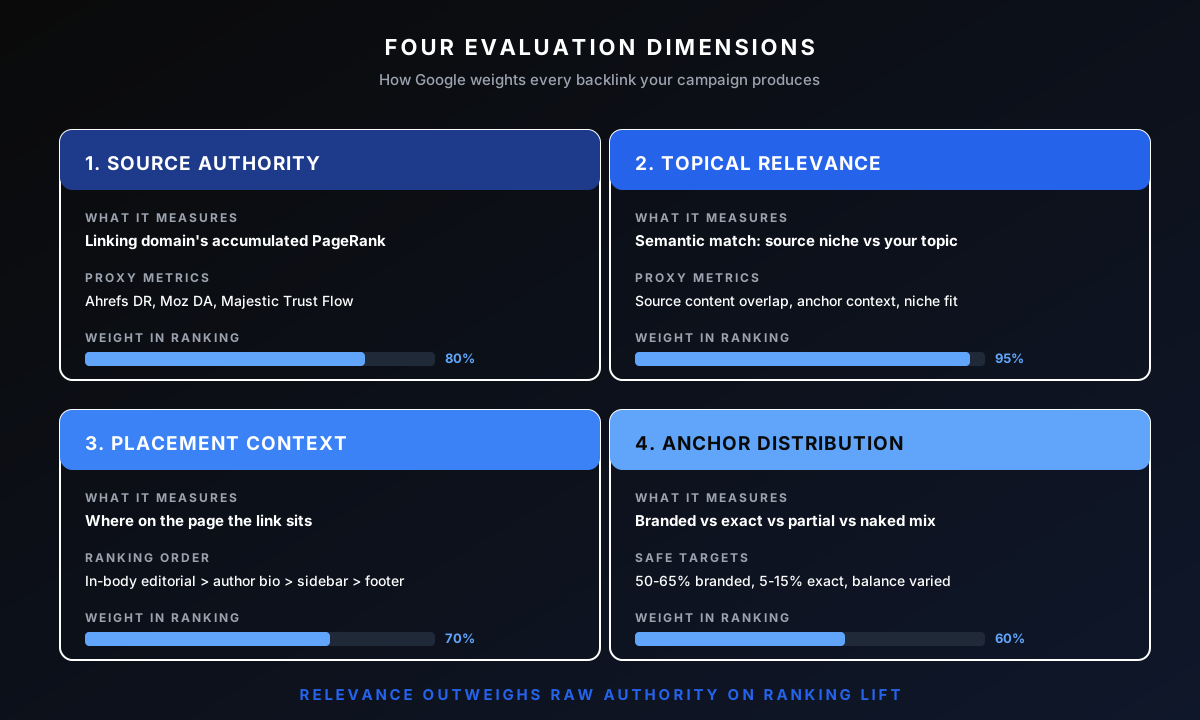
Understanding the four dimensions is what separates campaigns that compound from campaigns that flatline. A profile that scores well on three but fails on one will struggle to move rankings, no matter how many new links land each month.
What Role Does PageRank Still Play?
PageRank is alive, just renamed and rewrapped. The original 1998 algorithm gave every page a numeric score, then distributed that score to pages it linked to. Google now layers dozens of refinements on top: trust-flow, anchor weighting, link-spam discounting, topical proximity. The underlying graph traversal is still PageRank. That is why a link from techcrunch.com still moves rankings while a link from a 2024-bought private blog network does not.
How Do Topical Relevance and E-E-a-T Reweight Raw Link Counts?
Two pages can have identical referring domain counts and rank in opposite halves of the SERP. The difference is usually relevance reweighting. Google's E-E-A-T framework (Experience, Expertise, Authoritativeness, Trustworthiness) was made operational through the 2023 helpful content updates and applies double-strength in YMYL niches. A link from a same-niche specialist (one of the niche-relevant backlinks) outperforms a link from a same-DR generic source by 2.5 to 4x on ranking lift.
Which Link Attributes Does Google Actually Measure?
Four attributes carry the bulk of the signal. Source authority (the linking domain's accumulated PageRank), topical relevance (semantic match at source-domain and source-page level), placement context (in-body editorial paragraph vs sidebar widget vs footer), and the anchor text itself. The anchor text dimension is covered in detail in the anchor text guide, including the distribution ratios to target for safety.
The rel attribute is the other under-discussed signal. A link with dofollow attribution passes PageRank in full. A nofollow link, since Google's 2020 update, is treated as a hint the crawler may or may not weight.
What Does An End-To-End Link Building Workflow Look Like?
A complete link building workflow runs six phases: backlink audit, prospect research, asset creation, personalised outreach, placement QA, and quarterly measurement. Each phase has gates that prevent campaign drift and ensure every published link is on-topic and editorially earned.
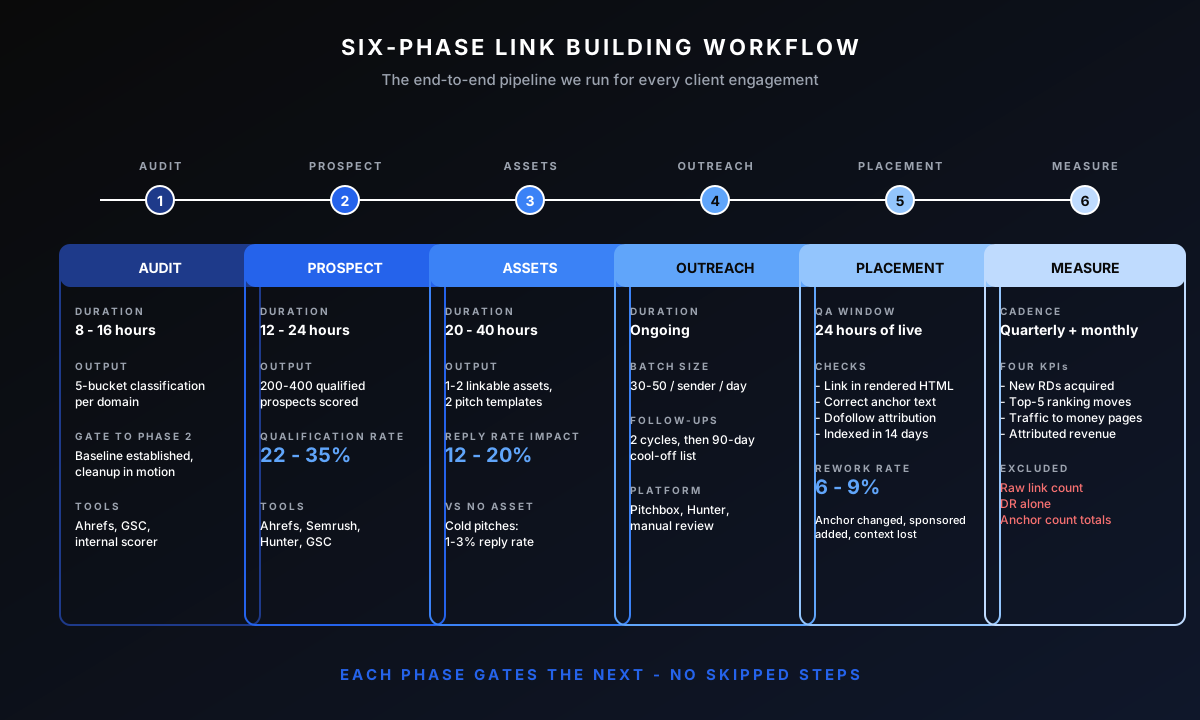
Skip a phase and the campaign breaks. Skip the audit and you scale acquisition onto a profile that already has problems. Skip qualification and you waste outreach hours on prospects that will never convert. Skip QA and 6-9% of placements quietly fail without anyone noticing for months.
Phase 1: Audit and Benchmarking
Before acquiring a single new link, run a backlink audit on the existing profile. The audit produces a 5-bucket classification: keep, monitor, contact for removal, disavow, replicate. Without the audit, every new link is statistically likely to land on a profile that already has issues, boosting a problem instead of fixing it. Typical audit runs 8 to 16 hours on a moderately complex site.
Phase 2: Prospecting and Qualification
With baseline established, link prospecting runs next. Build a target list using competitor backlink pulls (Ahrefs, Semrush), niche-specific publisher databases, and editorial-fit filters. Every prospect gets scored on five signals before it enters outreach: topical match, linked-page context, editorial signals, audience overlap, and link neighborhood. Most prospects do not qualify. A typical qualification rate is 22 to 35%, which is intentionally low. The cost of pursuing a bad fit is higher than the cost of skipping it.
Phase 3: Asset Creation
Outreach without a reason to link is wasted. Build the asset before pitching: a data study, an original calculator, a definitive long-form guide, a quote-able stat roundup. Editors respond to value. Generic "we wrote a blog post" pitches get 1 to 3% reply rates. Asset-backed pitches with a clear hook hit 12 to 20% reply rates in Mojo Links' 2024-2025 outreach data.
Phase 4: Outreach and Negotiation
Personalised outreach gets sent in batches of 30 to 50 per sender. Two follow-up cycles, then prospects move to a 90-day cool-off list. Use Pitchbox for sequencing, Hunter for verification, and direct human eyes on every opener. Templated openers do not survive editorial scrutiny in 2026. Negotiation covers three points: anchor text, placement position (in-body paragraph mandatory), and any author or disclosure requirements the publisher applies.
Phase 5: Placement, Qa, and Indexation
Every confirmed placement gets a QA pass within 24 hours of going live. Verify: link present in rendered HTML, correct anchor text, dofollow attribution, no unexpected sponsored markup, page indexed by Google within 14 days. Roughly 6 to 9% of placements need rework. Wrong anchor, sponsored disclosure added without notice, or a paragraph rewritten by an editor in a way that removed the link's context.
Phase 6: Measurement and Reporting
Quarterly, re-pull referring domains, anchor distribution, and target-keyword positions from GSC and Ahrefs. Every engagement gets a single dashboard showing four numbers: new RDs acquired, top-5 ranking moves, organic revenue change versus baseline, and tactic-mix performance. Reporting on raw link count alone rewards the wrong behaviour.
Which Link Building Tactics Actually Work in 2026?
Eight tactics deliver editorial links at scale in 2026: guest posts, niche edits, digital PR, broken link building, unlinked mention reclamation, resource page outreach, the Skyscraper Technique, and HARO. Mix three to five. Never depend on one footprint.
Each tactic has its own conversion rate, cost band, and risk profile. The full tactic taxonomy and operational details live in the manual link building workflow. The summaries below are enough to choose where to start.
Editorial Guest Posts
Guest posts remain the workhorse of agency link building. The model: pitch a publisher with an original article in their topic area, and the published byline includes a contextual in-body link. Cost ranges $250 to $1,200 per placement at DR 40-70. Conversion rate from cold pitch to live placement is 8 to 15% on properly qualified prospects. The operational comparison is covered in guest posts versus niche edits.
Niche Edits / Link Insertions
Niche edits insert a link into an existing already-indexed article. Faster than guest posts (1 to 2 weeks vs 4 to 8), often cheaper ($150-$800), and the inserted link inherits the host article's existing topical context and PageRank. The risk: existing high-traffic articles have editorial gravity. A bad insertion gets pulled within weeks if traffic drops.
Digital PR and Journalist Outreach
Digital PR pitches a data study or news angle to journalists at major publications. Conversion rate is 1 to 4% (much lower than guest posts) but the placements earn DR 70-95 sources and often natural follow-on links. The model: build an original data asset, pitch via HARO and direct journalist contacts, follow up tightly. A single Wall Street Journal mention can produce 20 to 40 secondary links over the next 60 days.
Broken Link Building
Identify dead resources that have inbound links, build a replacement, pitch the webmaster of every linking page. Conversion rate is 5 to 12% on relevant prospects. The work is volume-intensive: expect 200-400 outreach emails to land 10-20 confirmed replacements. Tools: Ahrefs broken-backlink reports, Sitebulb dead-page crawls, manual page-by-page verification.
Unlinked Brand Mention Reclamation
The highest conversion rate of any tactic in this guide, at 25 to 40%. The editor already mentioned the brand. You just ask for the link. Setup requires monitoring tools (Google Alerts, Mention, Ahrefs Web Explorer) to surface mentions, then a polite outreach sequence to convert mention to link. Lowest cost per placement and almost zero penalty risk.
Resource Page Link Building
Find pages titled "Best X resources" or "Recommended X tools" in the target niche, pitch the curator with your asset. Conversion rate is 3 to 7%, mostly because curators receive heavy outreach volume. Works best when the asset genuinely belongs on the resource page (a free tool, a definitive guide, a free template). Forced fits get ignored or pushed to the bottom of the list.
Skyscraper Technique
The original Brian Dean Skyscraper playbook: find a piece of high-link-count competitor content, build a meaningfully better version, then pitch the backlinks of the original to switch their reference. Conversion rate is 5 to 10% on well-executed pitches. The technique works but is widely used now. Run it selectively, only when the competitor asset has obvious gaps (outdated data, missing case studies, weaker visuals) you can fill.
HARO and Expert-Source Platforms
HARO (now Connectively), Qwoted, Featured, ProfNet. Journalists post requests, sources respond with quotes. Conversion to live placement is 4 to 8% on substantive responses. Placements land in publications including New York Times, Forbes, Inc, and dozens of trade titles. Setup time is low. Daily response time investment is moderate (20-40 minutes for a sustainable pace).
What's The Difference Between White Hat, Grey Hat, and Black Hat Link Building?
White hat link building follows Google's Spam Policies on link schemes entirely. Grey hat operates in policy-ambiguous zones (paid niche edits, sponsored posts without disclosure). Black hat violates policy outright (PBNs, comment spam, cloaking). Penalty exposure increases monotonically across the spectrum, and the gap between grey and black narrows every algorithm update.
Which Tactics Fall into Each Category?
White hat: editorial guest posts, digital PR, broken link replacement, unlinked mention reclamation, HARO. Grey hat: paid niche edits, paid guest posts without disclosure, expired domain rebuilds, mid-tier private network domains. Black hat: PBN networks, mass comment spam, hacked-site link injections, link-farm participation, automated tools that produce links without human editorial review. Full coverage of operational white hat boundaries lives in the white hat link building guide.
What Is Google's Published Policy on Link Schemes?
Google's Spam Policies prohibit "any links intended to manipulate PageRank or a site's ranking in Google search results." The policy lists buying or selling links that pass ranking credit, excessive link exchanges, large-scale article marketing campaigns with keyword-rich anchor text, and using automated programs to create links. Penalties range from algorithmic discounting (invisible in GSC) to manual actions (visible as "unnatural links to your site" notifications).
How Do You Choose Between in-House, Freelance, and Agency Link Building?
Choose in-house when you have a senior SEO and content team plus 30+ hours per month of dedicated outreach capacity. Choose an agency when you need specialised vertical access, faster ramp, or established publisher relationships you cannot build internally. Freelancers sit in the middle and work best for specific tactic execution (HARO, guest-post-only) rather than full programs.
When Does in-House Make Sense?
In-house works when the operating cost adds up: at least one mid-level SEO ($90-130K loaded), 30+ hours per month of dedicated outreach, content production capacity for assets and guest posts, and tooling subscriptions (Ahrefs Standard, Pitchbox or Buzzstream, Hunter, GSC). Break-even is roughly $15K per month in fully-loaded cost. Below that, freelance or agency is more efficient. Above that, in-house gives more strategic control.
When Does An Agency Make Sense?
Agencies are right when you need ramp speed, specialised vertical access, or publisher relationships that take 18-24 months to build cold. Mojo Links works primarily with founders and CMOs in regulated verticals who need 20 to 40 placements per month from sources that have legitimate domain authority and topical relevance. The link building service is built for this exact case: senior strategist contact, operator-led delivery, no junior account-manager layer between you and execution.
What Should You Expect To Pay Per Tier?
Pricing varies widely. Below $2,000 per month you are buying junior outreach with templated pitches, and the placements show it. The $3-5K range buys boutique agencies running 4 to 8 links per month at DR 20-50. The $8-25K range buys full programs (audit, prospecting, asset creation, outreach, reporting) at 10 to 30 links per month from DR 40-80 sources. Enterprise tiers $30K+ buy specialist vertical access, dedicated strategists, and publisher relationships that produce DR 70-95 placements.
How Much Should You Budget for Link Building in 2026?
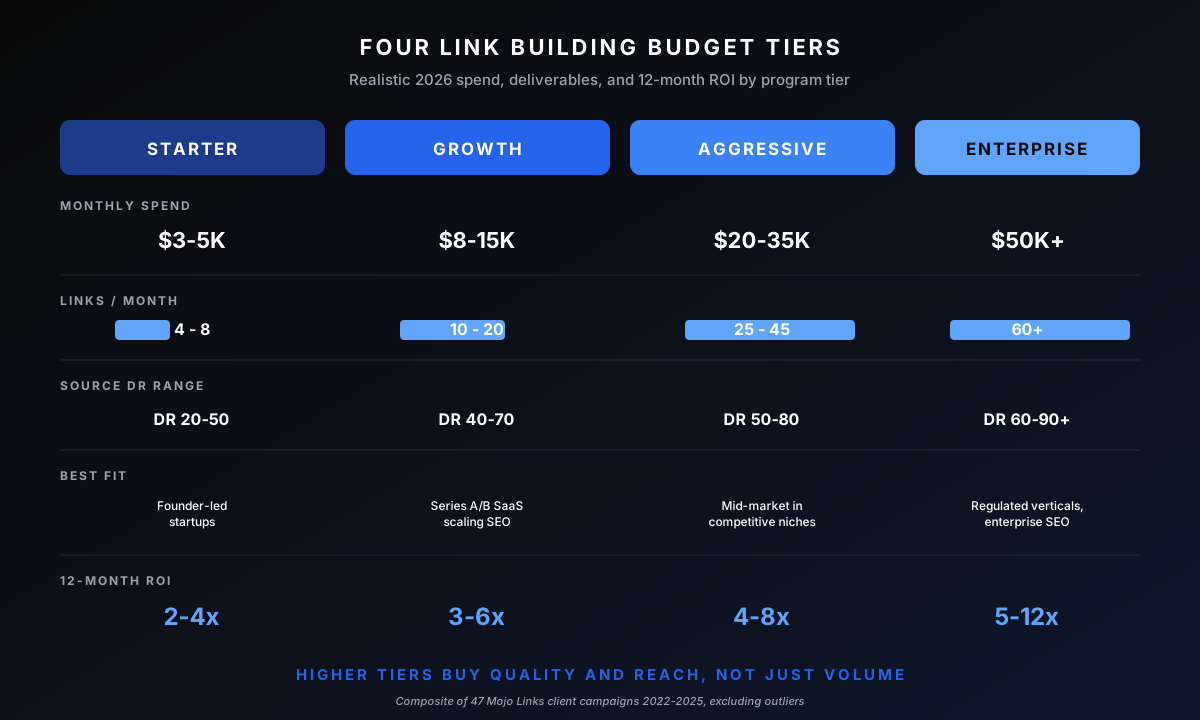
Realistic 2026 monthly budgets span four tiers: Starter ($3-5K, 4-8 links), Growth ($8-15K, 10-20 links), Aggressive ($20-35K, 25-45 links), Enterprise ($50K+, 60+ links). Higher tiers buy higher DR sources and tighter topical fit, not just volume.
What Are Realistic Monthly Budget Tiers?
The four-tier model maps to company maturity. Starter fits founder-led startups validating channel performance. Growth fits Series A and B companies scaling SEO as a primary acquisition channel. Aggressive fits mid-market and enterprise teams in competitive niches. Enterprise tier is the right move when your target keywords have top-3 competitors averaging 200+ referring domains and you need to close the gap in 12-18 months.
How Many Links Should Each Tier Deliver?
Volume scales sub-linearly with budget. Doubling spend from $5K to $10K does not double link count from 6 to 12. It buys 10 to 12 placements but at higher DR, tighter topical relevance, and stronger anchor flexibility. Volume is not the primary lever above the Growth tier. Quality, relevance, and source-specific reach become the operating constraints.
What Is The Typical 12-Month ROI Per Tier?
Starter typically returns 2-4x on rolling 12-month organic revenue. Growth returns 3-6x. Aggressive returns 4-8x. Enterprise returns 5-12x when run by a team with vertical-specific publisher reach. These ranges come from Mojo Links' internal campaign data (2022-2025, excluding outliers) and they line up with the cost-vs-impact pattern in the 2026 link building statistics post.
Which Industries Need The Most Aggressive Link Building?
Regulated verticals (legal, medical, finance, crypto, supplements, gambling) demand 3-5x the backlink investment of unregulated B2B. SERP top-3 pages in these niches average 380-820 referring domains versus 85-290 for local services or e-commerce.
Why Do Regulated Verticals Demand 3-5x The Investment?
Google's E-E-A-T scrutiny is stricter in YMYL (Your Money or Your Life) niches. The 2018 Medic update was the first explicit signal of this pattern. Every core update since has refined it further. Regulated-vertical SERPs are dominated by sites with deep editorial trust signals: long author bios, citation density, third-party verification. Backlinks are one of the few external trust signals Google can verify cheaply, so the threshold to compete moves up. The how many backlinks should a website have post breaks down the niche-by-niche benchmarks.
What Does Mojo Links Do Differently in These Verticals?
We do not run a generic playbook against legal, medical, or crypto SERPs. Each vertical has its own editorial gatekeepers, its own compliance constraints, and its own preferred placement formats. Legal placements need attorney-byline-friendly editors. Medical placements need clinically-reviewed publishers. Crypto placements need outlets that have not been burned by 2022-2023 scam coverage. We maintain vertical-specific publisher lists and pitch templates per niche.
How Do You Measure Link Building ROI?
Measure link building ROI by tracking organic revenue lift against campaign spend over a rolling 12-month window. Surrounding KPIs (referring domains, organic sessions, ranking positions on tracked keywords) explain the curve. Revenue is the test of whether the program pays back.
Which KPIs Matter (referring Domains, Traffic, Revenue)?
Four KPIs sit on every monthly client report. Net new referring domains (acquisition volume), tracked-keyword position changes (rankings), organic sessions to money pages (traffic), and attributed organic revenue (the test). Referring domain growth predicts ranking changes by 30 to 60 days. Ranking changes predict traffic changes by 0 to 30 days. Traffic changes show up in revenue depending on conversion rate. Each metric explains the next.
Which KPIs Are Vanity (raw Link Count, DR Alone)?
Raw link count tells you nothing without source quality. A campaign that produces 60 links from DR 10-20 sources is worse than a campaign that produces 12 links from DR 60-80 sources. DR alone is similarly misleading. A high-DR domain can host a footer link with zero topical context and no PageRank flow. Anchor count totals, link-to-domain ratios, and "link velocity scores" from various tool dashboards are decorative. Strip them out of monthly reporting.
How Long Until Link Investment Shows in Rankings?
Plan for 8 to 26 weeks for first measurable ranking movement on competitive keywords. Lower-difficulty queries (KD 10-30) move in 4 to 12 weeks. Mid-difficulty (KD 30-60) needs 8 to 20 weeks. High-difficulty (KD 60+) often needs 16 to 30 weeks of sustained acquisition before the curve breaks. Anyone who promises faster results is either selling unsustainable tactics or operating in non-competitive niches. The link building fundamentals post covers the velocity-vs-budget tradeoff in detail.
What Mistakes Ruin a Link Building Campaign?
Five mistakes ruin campaigns: buying cheap PBN links, over-optimising anchor text, bursty acquisition velocity, chasing DR while ignoring topical relevance, and scaling acquisition before completing a backlink audit. Each mistake is correctable in isolation. Combined, they trigger algorithmic discounts that take 6-12 months to recover from.
Buying Cheap Links and PBNs
Private Blog Networks are domains bought for the explicit purpose of placing links to money sites. They look legitimate from the outside, but Google has spent 12+ years building detection: hosting patterns, ownership graphs, content footprints, link-out behaviour. PBN links that worked in 2018 are detected and discounted within 6-18 months in 2026. The backlink cleanup workflow covers identification and remediation.
Over-Optimised Anchor Text Profiles
When more than 15% of inbound anchors are exact-match commercial keywords, Google's spam detection flags the profile as manipulated. The fix is to dilute with branded, naked URL, and partial-match anchors over 60 to 90 days of acquisition. Severe cases need a disavow file to deprioritise the worst offenders.
Bursty Velocity Instead of Steady Acquisition
Acquiring 60 links in one month then zero for the next two is a manipulation signal. Steady growth (10 to 20 new RDs per month across a 12-month window) tracks how legitimate sites accumulate links. Bursty velocity is one of the cheapest signals for Google to detect, which is why low-budget operators trigger it accidentally.
Ignoring Topical Relevance for DR
Operators new to link building chase DR. The mistake costs them ranking lift every time. A DR 75 link from a generic technology blog beats a DR 75 link from an unrelated lifestyle site, but a DR 45 link from a specialised in-niche publisher beats both. Topical fit outperforms raw DR by 2.5 to 4x on ranking impact.
Skipping Audit Before Scaling Acquisition
Building new links onto a profile with existing toxicity is like adding renovation to a building with a foundation crack. Do not start acquisition campaigns until the audit baseline is established and any cleanup is in motion. Sequencing matters more than speed at the program-start phase.
How Did Mojo Links Develop This Link Building Methodology?
We built it the slow way: engagements across 2022-2025, three Google core updates, regulated verticals including supplements, crypto, finance, FMCG, real estate, plus medical and legal SaaS work led by our founder before Mojo Links. The framework synthesises operational data with two upstream methodology sources. First, the topical authority and semantic SEO research Bart published at bartmagera.com, which informs how we score topical relevance during prospecting and qualification. Second, our own placement-tracking dataset, which informs how we evaluate the editorial context that predicts whether a link actually moves rankings. Neither source is a link-building doctrine on its own. The synthesis is what produces the workflow we publish here.
Frequently Asked Questions About Link Building
How Long Until Link Building Shows Results?
Plan for 8 to 26 weeks for first ranking movement on competitive keywords. Lower-difficulty queries move in 4 to 12 weeks. High-difficulty queries can take 16 to 30 weeks of sustained acquisition before the ranking curve breaks. Anyone promising faster results is operating in non-competitive niches or selling unsustainable tactics.
Are Backlinks Still a Top-3 Ranking Factor in 2026?
Yes. Backlinks remain one of Google's three primary off-page ranking signals, alongside topical authority and brand search volume. AI Overviews, SGE, and helpful content updates have changed how rankings present, but the underlying graph of citations between web pages still drives the ranking floor in every commercial vertical.
Can You Do Link Building Without Writing Content?
Partially. Unlinked mention reclamation, broken link replacement, and HARO responses can produce links without new long-form content. Beyond those tactics, asset-backed pitches outperform content-free pitches by 4-10x on conversion rate. Most sustainable campaigns include some asset creation.
Is Link Building Worth It for Small Businesses?
Yes, at the right tier. The Starter tier ($3-5K per month, 4-8 links) produces 2-4x return on rolling 12-month organic revenue for most small businesses in moderately competitive niches. Below $2,000 per month the math usually does not work because the agency or freelancer cannot fund qualification properly.
What Is The Minimum Monthly Budget That Produces Results?
$3,000 per month is the realistic floor for a managed link-building program that produces measurable ranking lift in 6-12 months. Below that, the agency or freelancer cannot afford to do the qualification and outreach work properly, and the placements will reflect it.
Want Us To Run Your Link Building Program?
We run link building programs for SEO teams, founders, and agency partners in regulated verticals. Our link building service includes the full workflow from audit through quarterly reporting, with a 120-day replacement guarantee on every placed link. Book a slot to discuss your campaign scope.

About Bart Magera
Bart Magera is the founder of Mojo Links. Ten years across YMYL verticals (legal, medical, finance, supplements, crypto, gambling). Trained under Koray Tuğberk Gübür's Topical Authority framework. Author of two SEO books and international speaker.
Want this kind of analysis on your site?
Get a free video walkthrough within 48 hours covering technical health, backlinks, content gaps, and AI visibility.
Related posts
Keep reading on adjacent topics.
- Link Building
 Bart Magera10 min read
Contextual Backlinks: What They Are, Why They Win, and How To Earn Them
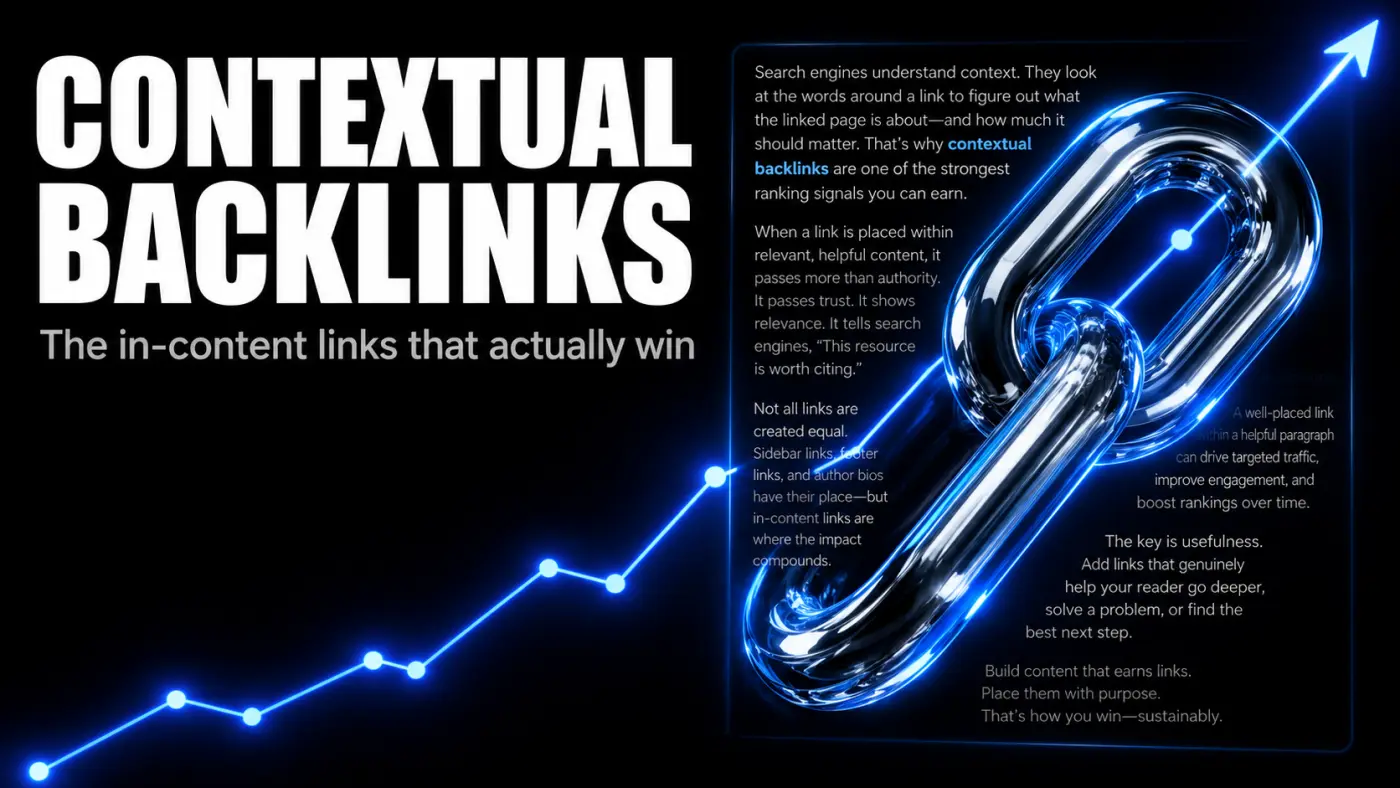
A contextual backlink sits inside the body of an article, surrounded by relevant text, not in a footer or author bio. That placement is what gives it weight. Here is what contextual backlinks are, what makes one high quality, how to earn them, and how to spot the cheap fakes.
- Link Building
 Bart Magera12 min read
What Is White Hat Link Building? Techniques That Work in 2026
The Problem: Why Most Link Building Fails Your SEO You wrote great content. It’s relevant. It’s useful. It even has infographics. But guess what? Crickets. Nobody’s linking. Google’s not ranking. And your “ultimate guide” is buried somewhere on page 7 under a recipe blog and a…
- Link Building
 Bart Magera10 min read
Tiered Link Building: How It Works and How To Do It Safely
Tiered link building layers weaker links behind your strongest ones to pass more authority to your money pages. Here is how the pyramid works, how to build one, which links are worth tiering, the risk SpamBrain introduced, and the lower-risk path I use on client sites.