

Real Estate SEO: How Agents and Brokerages Win Clients from Search
Listen to this article
Browser-native voice. No account required.
Most home buyers start on a portal. They scroll Zillow or Realtor.com, save a few listings, and only then look for an agent, often by searching a neighborhood, a school district, or "realtor in [town]." The agent who owns those searches gets the call.
Real estate SEO is the work of being that agent or brokerage at each step, and it is two games at once: showing up locally, and owning the hyperlocal content the portals do not bother with. This is how it actually works, what moves it, and how to tell a real approach from a packaged one. It is a vertical Mojo Links runs link building in, and the results are documented in the real estate SEO case study.
What Is Real Estate SEO?
Real estate SEO is the practice of optimizing an agent's or brokerage's online presence so it appears when local buyers and sellers search for property, neighborhoods, or an agent. It spans the website's content and listing pages, the Google Business Profile, reviews, and local authority, with the goal of turning searches into buyer and seller leads. It is local SEO and content SEO working together.
Unlike a plumber who mostly needs the map pack, an agent competes on two fronts: the local searches for an agent, and the much larger pool of buyers researching neighborhoods, prices, and listings long before they pick anyone.
Why Does Real Estate SEO Matter for An Agent or Brokerage?
Real estate SEO matters because a single transaction is worth thousands in commission, and the buyers and sellers searching now choose the agent who shows up with answers. Owning the hyperlocal searches in your market compounds into a steady lead pipeline that does not reset when an ad budget runs out.
It is also defensible. The portals own the listing keywords, but they cannot be the local expert for every neighborhood. An agent who builds genuine hyperlocal authority owns ground the portals and out-of-town agents cannot easily take.
How Real Estate SEO Is Different
Real estate SEO is two jobs at once. One is local: showing up for "realtor near me" and agent searches through the Google Business Profile and reviews. The other is content: ranking the neighborhood, market, and buyer-guide pages that capture people long before they choose an agent.
It is also the only vertical where you are competing with portals. Zillow, Realtor.com, and Redfin dominate the listing and head terms, and an individual agent will not outrank them there. The winning move is to ignore that fight and own the hyperlocal content the portals treat as an afterthought.
It is a longer game than a service business. A plumber wins the moment with the map pack and a phone number; an agent wins by building content authority for a market over months, so the work compounds more slowly but defends a bigger territory once it lands.
And it is personal. Buyers and sellers choose someone they trust with the biggest transaction of their lives, so reviews, a real local presence, and content that shows genuine market knowledge carry more weight than slick design.
How Buyers and Sellers Find An Agent
The path is longer than in most verticals and it usually starts on a portal. A buyer browses listings on Zillow for weeks, searches neighborhoods and school districts on Google, reads market and how-to content, and only then searches for an agent or reaches out to one whose name keeps appearing.
Sellers behave differently but search just as much. They look up their home's value, "how to sell a house in [area]," and local agents' reviews before they ever call. The agent whose content answered those questions has already earned trust by the time the call happens.
The common thread is that the decision is researched, not impulsive. SEO wins by being present and helpful across that long research path, not just at the final "near me" moment.
Real Estate SEO Ranking Factors
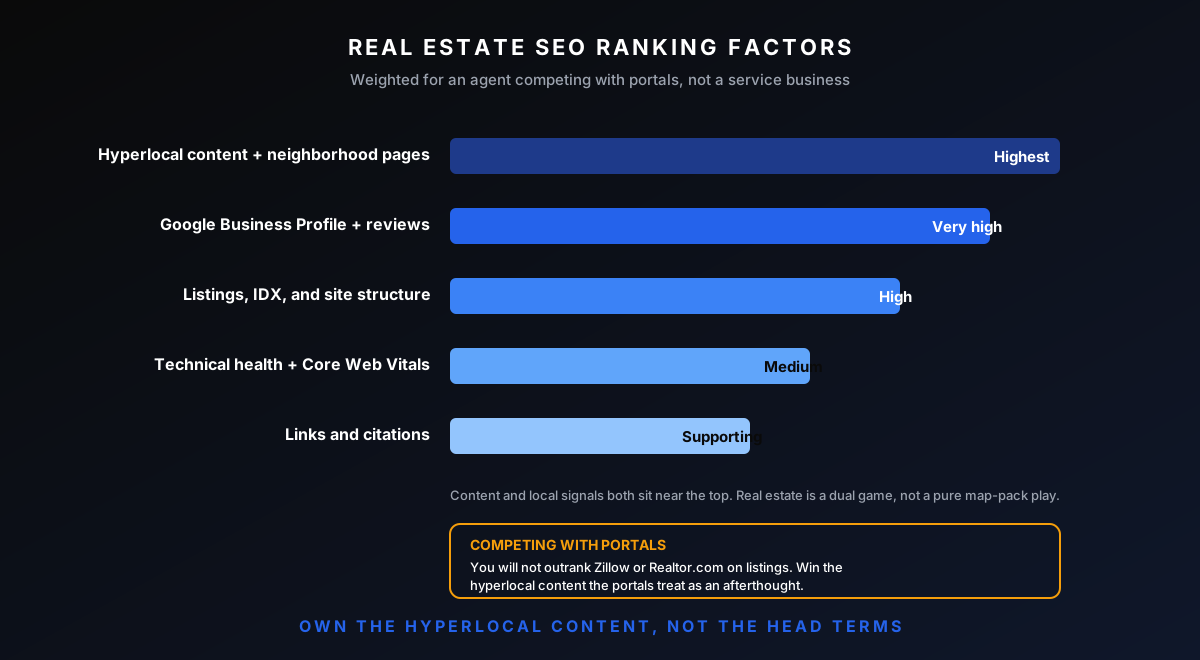
The factors that move real estate rankings are weighted differently than both general SEO and the local trades. Content and local signals both sit near the top, with technical health and links supporting. Here is the order to work them in.
Hyperlocal Content and Neighborhood Pages
The biggest lever in real estate SEO is hyperlocal content. Dedicated pages for each neighborhood, community, and market you serve, with real local detail on prices, schools, and lifestyle, are what rank for the searches buyers actually run. Generic city pages and thin listing feeds do not.
This is also where you beat the portals. Zillow can show every listing, but it cannot write a genuinely useful guide to a specific neighborhood the way a local agent can. That content gap is the whole opportunity, and most agents never fill it.
Google Business Profile and Reviews
For the local "realtor near me" searches, the Google Business Profile and reviews do the work. Google's local-ranking signals come down to relevance, distance, and prominence, and the National Association of Realtors' technology research shows how much of the real estate search now starts online. For an agent, reviews are also the social proof behind the biggest decision a client will make.
Listings, IDX, and Site Structure
Most agent and brokerage sites run on IDX feeds that pull MLS listings, and how that is built matters. Clean, indexable listing and area pages help; thin, duplicate, or auto-generated pages that mirror the portals hurt. The site structure should make the hyperlocal pages, not the raw feed, the thing that ranks.
Technical Health and Core Web Vitals
Real estate sites are often heavy, image-rich, and slow, which quietly caps rankings. Fast load times, clean mobile rendering, and solid Core Web Vitals matter more here than in lighter verticals, because buyers browse listings on their phones and abandon slow sites fast.
Links and Citations
Links and consistent local citations build the authority that helps the hyperlocal pages rank. The same authority building fundamentals apply, and in real estate, local press, community sponsorships, and genuine local relationships are some of the most natural sources. Consistent name, address, and phone details across listings support the local side.
Where Agents Can Beat The Portals
The single most useful frame in real estate SEO is knowing which fights you can win. The head terms belong to the portals; the hyperlocal long-tail belongs to whoever does the local content work. Picking the right battle is most of the strategy.
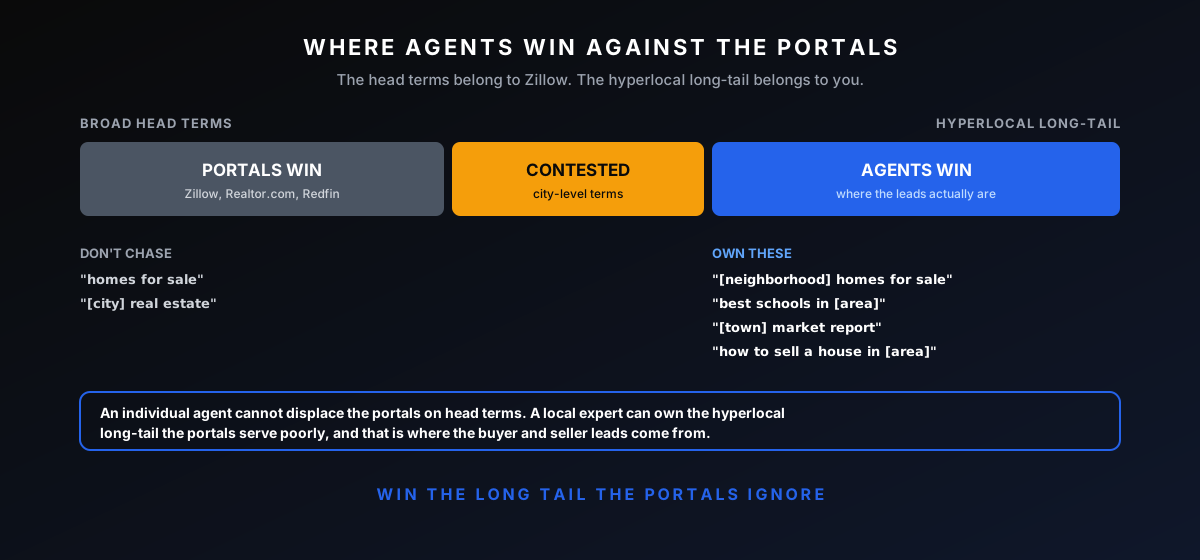
Head terms like "homes for sale" or "[city] real estate" are dominated by Zillow, Realtor.com, and Redfin, and no individual agent will displace them. Chasing those terms burns budget for nothing.
The long-tail is different. "[Neighborhood] homes for sale," "best schools in [area]," "[town] market report," and buyer and seller guides are searches the portals serve poorly, and a local agent with real knowledge can own them. That is where the leads actually come from.
Real Estate SEO by Segment
Real estate SEO looks different depending on who is doing it, and the priorities shift with the segment. Each has its own best use of content and local signals.
Solo agent. Win on personal brand, reviews, and a focused set of neighborhood pages rather than trying to cover a whole metro.
Team. More content capacity; split neighborhoods and niches across the team and build a deeper local library.
Brokerage. Site structure and scale matter; agent pages, office locations, and a large hyperlocal content base kept from cannibalizing each other.
Buyer-focused. Neighborhood guides, listings, and school and lifestyle content that capture buyers early.
Seller-focused. Home-value, "how to sell," and market-report content that reaches sellers researching before they list.
Most agents should start narrow, owning a few neighborhoods completely, before expanding. Trying to rank a whole city at once loses to focused local depth.
Real Estate SEO and AI Search
AI is starting to answer "what is [neighborhood] like" and "who is a good agent in [area]" directly, pulling from the same local content, reviews, and trusted mentions that drive search. An agent with genuine hyperlocal content and strong reviews is the one these answers surface, and the path mirrors what gets a page cited.
There is no separate AI strategy. The hyperlocal expertise and local trust that win search are the same signals the AI answers lean on. Do that work and you show up in both.
How Long Real Estate SEO Takes
Real estate SEO is slower than the local trades because content has to be built and earn authority. Local profile and review wins can come in weeks, but the hyperlocal content that drives the real pipeline takes several months to rank, with results compounding from there.
The timeline depends on the market and the starting point. A focused agent in a mid-size market can see traction in a few months; competing in a major metro against established agents and brokerages takes longer. Anyone promising fast page-one results for competitive terms is describing ads.
Common Real Estate SEO Mistakes
The most common mistake is chasing the head terms the portals own instead of the hyperlocal long-tail. Trying to rank for "homes for sale" against Zillow wastes the budget that could have owned ten neighborhoods.
The other recurring errors: thin IDX pages that duplicate the portals; one generic "areas we serve" page instead of real neighborhood content; neglecting the Google Business Profile and reviews; and a slow, heavy site that buyers abandon. Most agents also skip local link building tactics entirely, which leaves easy local visibility on the table.
The deeper mistake is publishing content with no genuine local knowledge. Real estate SEO rewards real expertise, and generic neighborhood pages with no real detail do not rank or convert. Tie the work to leads and transactions, not rankings, because that is what pays.
Choosing a Real Estate SEO Approach
An agent or brokerage has three options: do it in-house, hire a generalist, or work with someone who knows real estate. In-house can work for reviews and a few neighborhood pages if someone owns it. A generalist often chases the wrong terms. A specialist knows to skip the portal fight and build hyperlocal authority.
Whichever you choose, judge it on leads and transactions, not vanity rankings, and insist on transparency. The work runs through managed SEO and, where authority is the gap, managed campaigns. Be wary of anyone guaranteeing rankings for competitive head terms or selling a fixed package with no audit first.
Frequently Asked Questions
How Much Does Real Estate SEO Cost?
It varies by market and scope, typically a few hundred to a few thousand dollars a month for ongoing work. The right spend depends on how competitive your market is and how much hyperlocal content you are building. Be cautious of cheap packages that spin generic neighborhood pages; that content does not rank. Judge cost against transaction value.
How Long Until a Real Estate Agent Sees Results?
Local profile and review wins can come in weeks, but the hyperlocal content that drives leads takes several months to rank and compound. Most agents see meaningful traction in four to six months in a focused market, longer in a competitive metro. The starting point and how narrowly you focus set the pace.
Can a Real Estate Agent Outrank Zillow?
Not on listing or head terms, and trying is a waste; the portals own those. But an agent absolutely can outrank them on hyperlocal content, neighborhood guides, market reports, and local questions the portals serve poorly. That long-tail is where the leads are, and it is winnable.
Do Reviews Matter for Real Estate SEO?
Yes, on both fronts. Reviews feed local ranking through prominence and are decisive social proof for clients choosing who to trust with a major transaction. Star rating, volume, recency, and your responses all matter. A steady flow of recent reviews outperforms a stale collection.
Is Content or Local SEO More Important for Real Estate?
Both, and that is what makes real estate different. Local SEO wins the "realtor near me" moment, but hyperlocal content captures the much larger pool of buyers and sellers researching earlier. Most agents underinvest in content, so it is usually where the biggest gains are.
Work with Mojo Links
Real estate SEO rewards agents who build genuine local authority instead of fighting the portals, which is the work we run for clients in competitive local verticals. We start with the neighborhoods and searches that actually produce leads, then build the content and local signals to own them. A free personalized audit includes a read on your local visibility, your content gaps, and where a competitor is winning the long-tail.

About Bart Magera
Bart Magera is the founder of Mojo Links. Ten years across YMYL verticals (legal, medical, finance, supplements, crypto, gambling). Trained under Koray Tuğberk Gübür's Topical Authority framework. Author of two SEO books and international speaker.
Want this kind of analysis on your site?
Get a free video walkthrough within 48 hours covering technical health, backlinks, content gaps, and AI visibility.
Related posts
Keep reading on adjacent topics.
- SEO
 Bart Magera9 min read
Brand Mentions for SEO: Linked, Unlinked, and AI Citations
Most SEO budgets still treat a mention without a link as a failed pitch. That math is out of date. The same editorial naming that builds your entity in Google now decides whether AI engines name you in answers. Here is the value model behind linked, unlinked, and AI-cited mentions, and the three lanes for earning more of them.
- SEO
 Bart Magera12 min read
AI Visibility Tools: 9 Trackers Ranked and Compared
Nine AI visibility tools, one yardstick: engines covered, what gets measured, competitor tracking, and price. Every page-one comparison of these trackers is written by a vendor ranking its own product first. This one is not. Here is where each tool fits, from a $29 entry plan to enterprise quotes, and the one thing none of them can do.
- SEO
 Bart Magera10 min read
ChatGPT Brand Mentions: How To Track and Earn Them
When a buyer asks ChatGPT for the best option in a category, it names a few brands inside the answer. Those ChatGPT brand mentions, not the linked citations beneath them, are what get you recommended. Here is how to track them and how to earn them.