

Local Link Building: The Tactics That Move The Map Pack
Listen to this article
Browser-native voice. No account required.
Local rankings are not won the way national rankings are. A local business does not need a huge backlink profile; it needs the right local links and consistent citations that tell Google it is a real, trusted business in a specific place. Relevance and locality beat raw domain rating here. The same locality-first logic drives link building for Australian businesses, where a relevant .com.au link outweighs a bigger foreign domain.
Local link building is the work of earning those links, and it is a different game from chasing high-authority editorial placements. This is how it actually works, the tactics that move the map pack, and how the playbook changes by industry. It is the local application of the broader link building Mojo Links runs at scale.
What Is Local Link Building?
Local link building is the practice of earning backlinks that strengthen a local business's visibility in the map pack and local organic results. The links come from local and locally-relevant sources: news outlets, community organizations, event pages, industry associations, and directories. The goal is to signal that the business is established and trusted in its area.
It differs from national link building in what counts as a good link. A mention in the local paper or a sponsorship listing on a community site can outperform a high-authority national link, because Google weighs local relevance heavily for local queries.
Does Local Link Building Still Work?
Yes, and it is one of the few local SEO levers that still moves competitive markets. The Google Business Profile and reviews get a business into contention, but in a crowded map pack, links and citations are often what separate the top three from everyone below. They feed the prominence signal Google uses to rank local results.
It is also durable and hard to copy. A competitor can buy a better website overnight, but real local links come from relationships, sponsorships, and press that take time to build, which is exactly why they hold their value.
How Local Link Building Is Different
The biggest difference is what makes a link valuable. In national SEO, source authority does most of the work; in local, relevance and locality lead. A link from a mid-authority local news site or a relevant community page often beats a high-authority link with no local or topical connection, which is the same reason to weight niche-relevant links above raw metrics. The same locality-first logic decides link building in Canada, where a relevant .ca link outweighs a bigger foreign domain.
The second difference is the target. Local links support the map pack and the localized organic results, not a national keyword. That means a smaller number of genuinely local, relevant links can move rankings that a pile of generic links never would.
The third is that the best sources are rooted offline. Sponsorships, local events, community involvement, supplier relationships, and local press are where the strongest local links come from, which makes local link building as much a real-world activity as a digital one.
Local Citations vs Local Backlinks
These get confused constantly, and they do different jobs. A citation is any mention of your business name, address, and phone number online, with or without a link. A backlink is a clickable link that passes relevance and authority. You need both, but they are not the same thing.
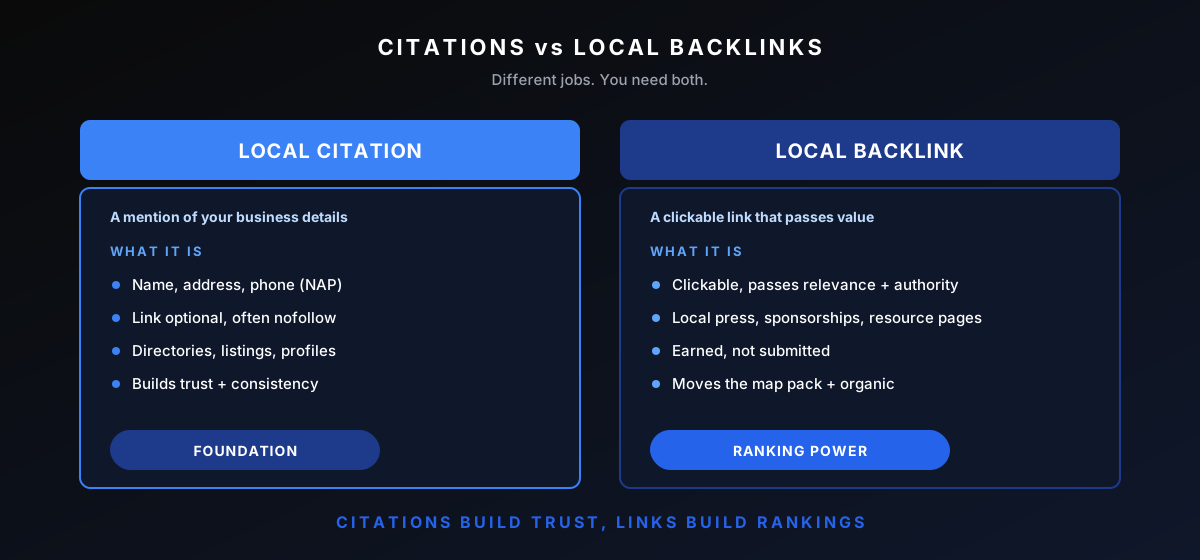
Citations are foundational: they confirm your details are consistent everywhere, which Google uses to trust the business. Backlinks go further by passing relevance and authority. Many local directory listings are citations first and links second, which is why they belong as a base layer, the same way as other backlink sites.
Local Link Building Tactics That Work
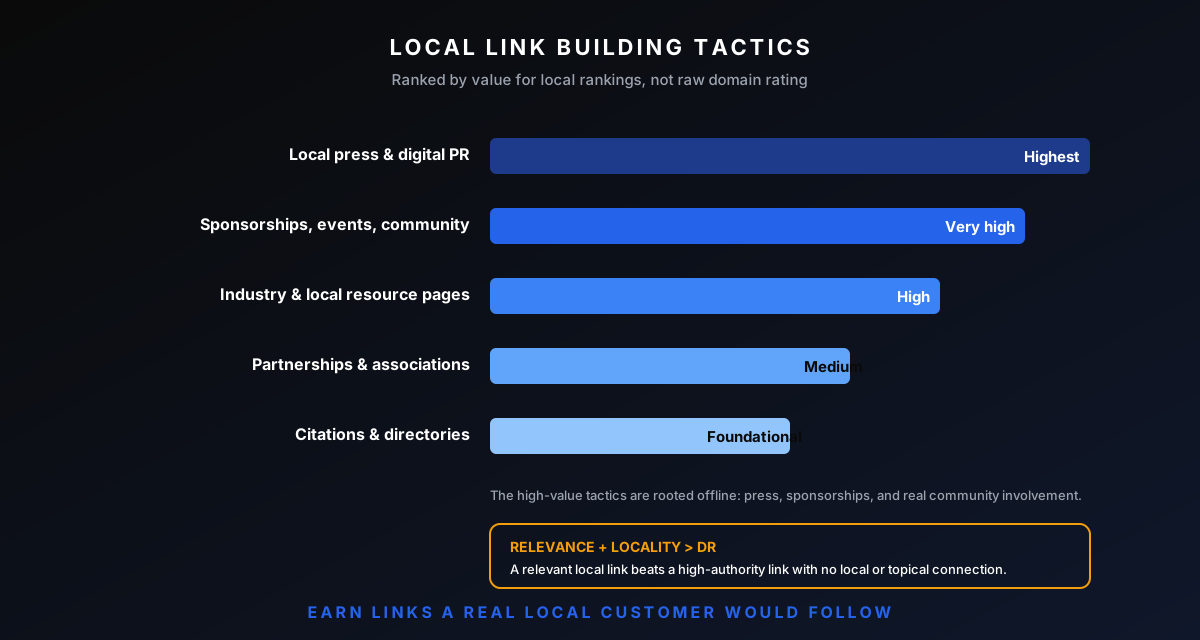
Here are the tactics that actually move local rankings, in priority order. The pattern is consistent: the highest-value local links come from genuine local relevance and real-world involvement, not from submission forms.
Local Press and Digital PR
A link or mention from a local news outlet is one of the strongest local signals you can earn. Pitch genuine stories: a new location, a community initiative, local data, an expert comment on a local issue. This is digital PR aimed at local publications rather than national ones, and it compounds because local journalists reuse sources.
Sponsorships, Events, and Community
Sponsoring a local team, charity, or event almost always earns a link from the organization's site, and those links are local and relevant by definition. Hosting or speaking at local events does the same. The cost is usually modest and the link is one a competitor cannot easily replicate.
Local Business Directories and Citations
Claim the foundational listings first: Google Business Profile, then the major data aggregators and any reputable directory your customers actually use. Local ranking comes down to relevance, distance, and prominence, and Moz's Local Search Ranking Factors research consistently ranks citation signals among the factors feeding relevance and prominence. Quality and relevance only; mass directory submissions do nothing.
Industry and Local Resource Pages
Resource pages, "best of [city]" lists, and local guides are editorial by nature and relevant when they match your area or industry. Earning a spot on one is a strong, durable local link. Pitch the curator with a genuine reason your business belongs there, not a generic request.
Partnerships, Suppliers, and Associations
Suppliers, partners, and the trade associations you belong to will often link to you from a members or partners page. These links are relevant, trusted, and frequently overlooked. Chambers of commerce and local business groups fall in the same category and are worth joining where they are active.
Local Link Building by Industry
The tactics are the same, but the best sources and the competition shift by industry. Here is how local link building changes across the verticals Mojo Links works in, each with its own deeper guide.
Medical and dental practices. Health directories, local health press, and community sponsorships; trust signals matter most for dental practices and clinics.
Home services. Supplier and manufacturer links, local sponsorships, and trade associations work well for HVAC companies, plumbers, roofers, and electricians.
Real estate. Local news, neighborhood guides, and community partnerships fit real estate agents and brokerages, alongside their hyperlocal content.
Law firms. Legal directories, bar associations, sponsorships, and local press carry weight for law firms and personal injury practices.
Chiropractic and wellness. Local health and sports-community links plus directories suit chiropractors and med spas.
The through-line is relevance. Whatever the industry, the links that move local rankings are the ones a real local customer or partner would actually follow.
Common Local Link Building Mistakes
The most common mistake is treating directories as the whole strategy. Foundational citations matter, but stopping there leaves the high-value local press and community links, the ones that actually move the map pack, on the table.
The other recurring errors: inconsistent name, address, and phone details across listings, which undercut every citation; chasing high-DR national links with no local relevance; and buying cheap local link packages that are really the same mass directory submissions in a different wrapper.
The deeper mistake is impatience. Real local links come from relationships and press that take months to build, so the businesses that win treat local link building as an ongoing program, not a one-time push.
How To Measure Local Link Building
Measure local link building on the outcomes that matter: map-pack visibility for your core terms, local organic rankings, and the calls and direction requests that follow. Referring-domain growth is a useful leading indicator, but the goal is local visibility, not a link count.
Tie the work to booked calls and customers, not vanity metrics. A handful of genuine local links that lift you into the map pack is worth more than dozens of directory listings that change nothing.
Local Link Building and AI Search
AI answers to "best [business] near me" lean on the same local signals as the map pack: reviews, profiles, citations, and trusted local mentions. The local press and community links that win local search also feed the sources these answers cite, so the work pays off in both places.
There is no separate AI tactic for a local business. Earn relevant local links and keep citations consistent, and you build the trust that both Google and the AI engines reward.
Frequently Asked Questions
What Is The Best Local Link Building Tactic?
Local press and digital PR, followed by sponsorships and community involvement. They produce links that are local, relevant, and hard for competitors to copy. Directories are foundational but will not move a competitive map pack on their own.
Do Citations Count as Local Backlinks?
Not exactly. A citation is a mention of your business details, with or without a link; a backlink is a clickable link that passes authority. Many directory listings are citations first. Both matter, and consistency of your name, address, and phone across them is what makes citations work.
How Many Local Links Do I Need?
Fewer than you think, if they are relevant. A small number of genuine local and locally-relevant links often moves the map pack more than dozens of generic directory listings. Quality and relevance beat volume in local SEO.
Are Local Directory Links Worth It?
The reputable, relevant ones, yes, as a foundation. Google Business Profile, major aggregators, and directories your customers actually use are worth claiming. Mass submission to hundreds of generic directories is busywork that signals manipulation.
How Long Does Local Link Building Take To Work?
Citation and directory fixes can help within weeks; the high-value press and community links take months to earn and compound from there. Local link building is an ongoing program, not a one-time campaign, which is also why it holds its value.
Work with Mojo Links
Local link building rewards businesses that earn relevant local links instead of chasing raw authority, and that is the work we run for local clients. We start with the citations and the local press and community links that actually move the map pack. The work runs through managed campaign retainers, and a complimentary site audit includes a read on your local link profile and where a competitor is pulling ahead. The real estate SEO case study shows that compounding for a multi-location real estate group.

About Bart Magera
Bart Magera is the founder of Mojo Links. Ten years across YMYL verticals (legal, medical, finance, supplements, crypto, gambling). Trained under Koray Tuğberk Gübür's Topical Authority framework. Author of two SEO books and international speaker.
Want this kind of analysis on your site?
Get a free video walkthrough within 48 hours covering technical health, backlinks, content gaps, and AI visibility.
Related posts
Keep reading on adjacent topics.
- Link Building
 Bart Magera10 min read
Contextual Backlinks: What They Are, Why They Win, and How To Earn Them
A contextual backlink sits inside the body of an article, surrounded by relevant text, not in a footer or author bio. That placement is what gives it weight. Here is what contextual backlinks are, what makes one high quality, how to earn them, and how to spot the cheap fakes.
- Link Building
 Bart Magera12 min read
What Is White Hat Link Building? Techniques That Work in 2026
The Problem: Why Most Link Building Fails Your SEO You wrote great content. It’s relevant. It’s useful. It even has infographics. But guess what? Crickets. Nobody’s linking. Google’s not ranking. And your “ultimate guide” is buried somewhere on page 7 under a recipe blog and a…
- Link Building
 Bart Magera10 min read
Tiered Link Building: How It Works and How To Do It Safely
Tiered link building layers weaker links behind your strongest ones to pass more authority to your money pages. Here is how the pyramid works, how to build one, which links are worth tiering, the risk SpamBrain introduced, and the lower-risk path I use on client sites.