

Link Building Services Australia: How To Earn Links for Australian Brands

Listen to this article
Browser-native voice. No account required.
Australian businesses compete in a search market most link builders treat as an afterthought. The .com.au results have their own publishers, their own directories, and their own rules about who even qualifies for a domain.
This guide covers how link building works for Australian businesses: what it costs, where the links come from, and how to pick someone to run it.
What Link Building Looks Like for An Australian Business
Link building for an Australian business means earning relevant backlinks to a .com.au or .au domain from sites Google already trusts. The craft is the same as anywhere. The pool of genuinely Australian publishers it draws from is smaller, and the search intent behind it is usually local.
Link building services in Australia all sell the same promise. Judge them on the relevance of the search results they can actually move, not the size of the package.
A backlink is a link from another website to yours, and Google reads it as a vote of relevance and trust. Earn enough of them from the right places and your pages climb.
Most Australian SERPs mix three result types: national brands, local operators, and the occasional global site that outranks both on raw authority. Link building decides which of those a .com.au domain can sit beside. The execution is what Mojo Links packages as a managed link building campaign.
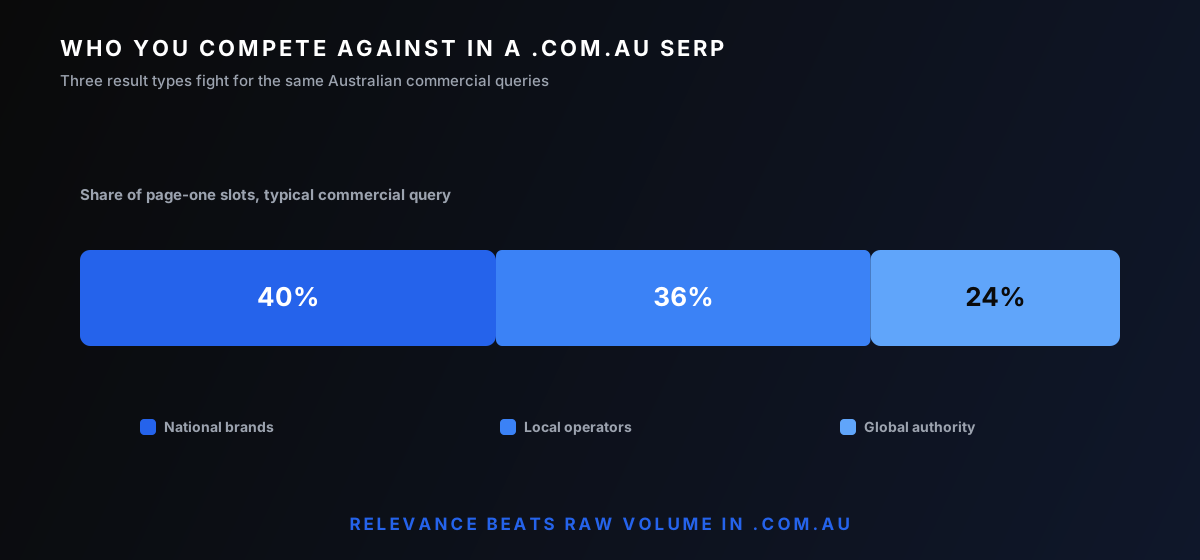
The macro picture is settled. Pages with more referring domains pull more organic traffic, and pages with none tend to pull nothing. That pattern has held across a decade of Australian and offshore campaigns, often enough to bet real budgets on it.
Why .com.au Sites Compete in a Different Link Market
A .com.au domain is not open to anyone, and that single rule shapes the whole link market. Australian eligibility narrows the pool of local publishers, which makes a relevant .com.au link scarcer and more valuable than a generic .com one.
The registry sets the gate. auDA's licensing rules require a verified Australian presence, an ABN, ACN, or registered business name, before a .com.au domain is allocated. Every .com.au you earn a link from is a real Australian entity, not an anonymous registration.
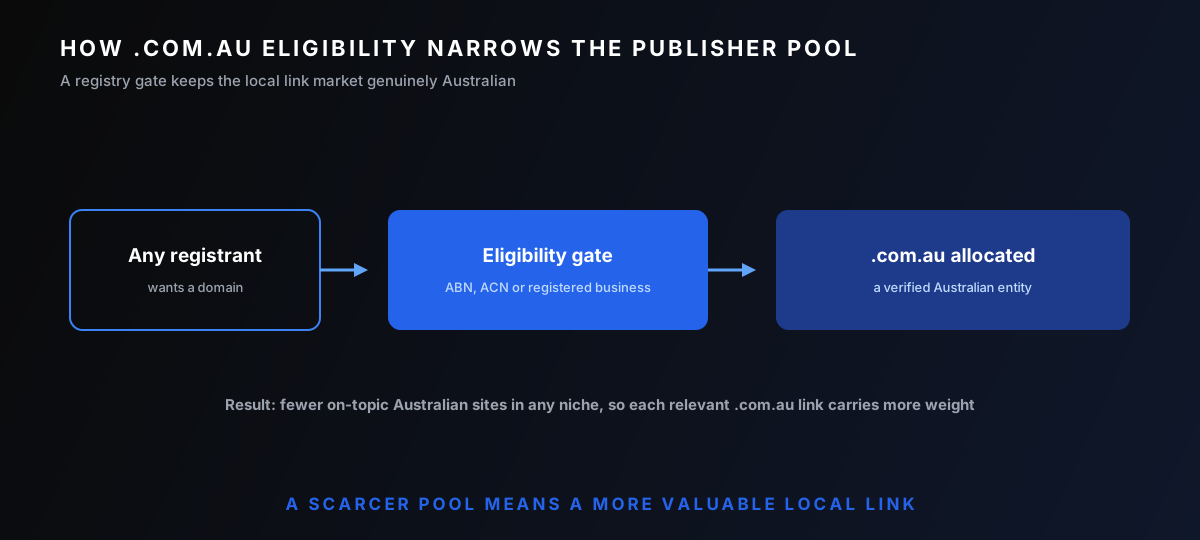
That scarcity cuts both ways. Relevance is harder to source, because there are fewer on-topic Australian sites in any given niche. But a link from a trusted .com.au carries a local signal that an international domain cannot fake.
So the math changes. In a large American niche you can find forty relevant publishers without trying. In the Australian equivalent you might find eight, and three of those already link to your competitor. The work is finding the rest. The Canadian version runs the same arithmetic, which is the whole challenge of link building for Canadian brands.
Who Actually Needs Link Building in Australia
Link building helps any Australian business whose buyers start on Google and whose competitors already rank. That covers regulated verticals, local service trades, and national ecommerce brands fighting for the same commercial keywords.
Legal is the sharpest example. I ran SEO for Sprintlaw, an Australian online law firm, where the link market is brutally competitive and every firm in the category is chasing the same handful of publishers. The same pressure shows up in any niche where the lifetime value of a client justifies a real budget, which is the case I make in my work on legal SEO campaigns.
Trades and home services sit at the other end. A plumber in Brisbane or an electrician in Perth competes inside the local pack, where citations and regional links matter more than national authority. That is the territory of local link building.
Ecommerce and finance fall in between. They need both: local .com.au relevance to signal an Australian audience, and high-authority editorial links to compete on head terms. Who needs what depends on whether the buyer is around the corner or across the country.
How To Run a Link Building Campaign for An Australian Brand
Every Australian campaign runs as four steps: prospecting, qualification, outreach, then placement. The country changes the publisher list and the relevance bar. It does not change the method.
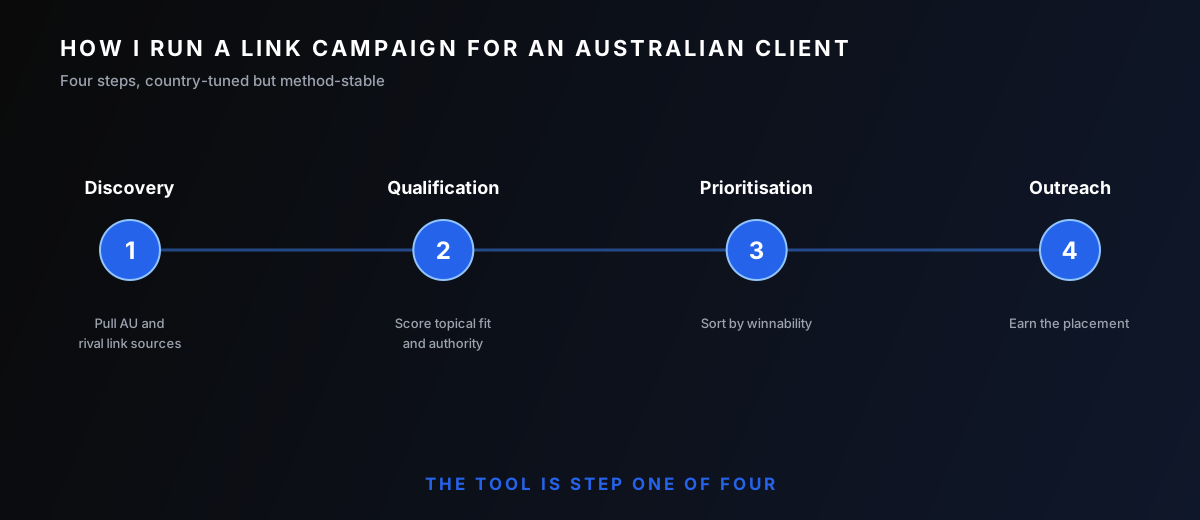
Prospecting builds the candidate pool. Pull link sources from Australian competitors, relevant .com.au publishers, and the international sites that already rank for the brand’s terms. Then qualification cuts it down, scoring each domain for topical relevance, real authority, anchor text, and whether it links editorially or just sells slots. That scoring is the qualification scorecard that runs before a single email goes out.
Placement uses the format that fits the target. Editorial guest post placements earn a contextual link inside a brand-new article, which suits a page that needs fresh relevance. The alternative is a link on a page that already ranks and already has readers.
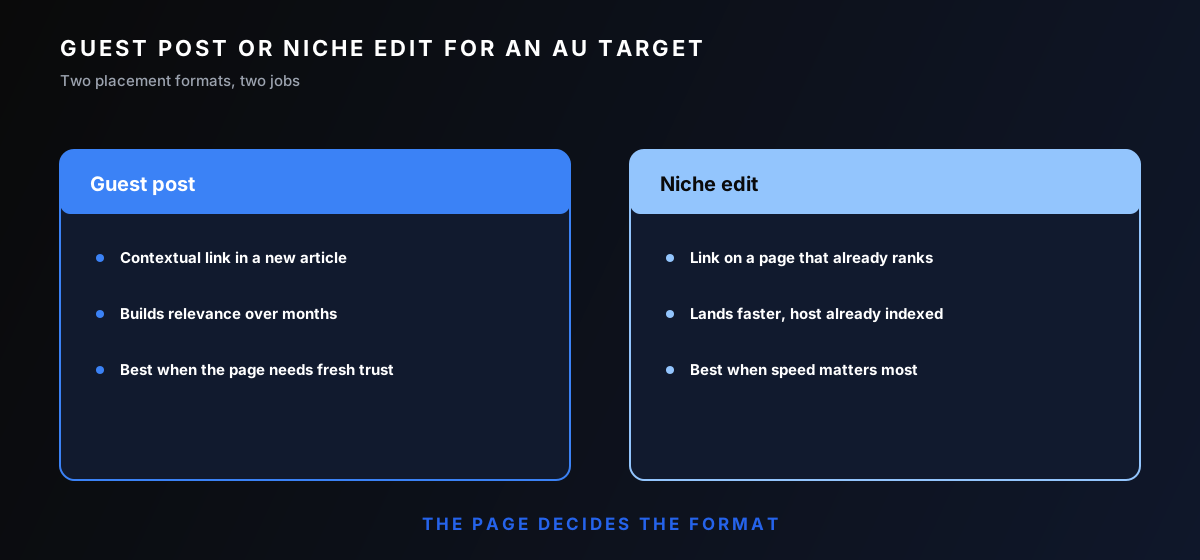
That alternative is a niche edit, and it usually lands faster because the host page is already indexed and trusted. Neither is universally better. Which format wins depends on the target, a trade broken down in guest posts versus niche edits.
Digital PR sits on top for brands that can support it. A data study or an expert comment pitched to Australian media earns the kind of high-authority link no outreach template can buy. It is slower and less predictable, so it belongs where the brand has a genuine story, not as the whole program.
Where Australian Links Actually Come From
Australian links come from four sources: local .com.au publishers, industry and association sites, regional directories and citations, and Australian media. Each carries a different signal, and a healthy profile uses all four.
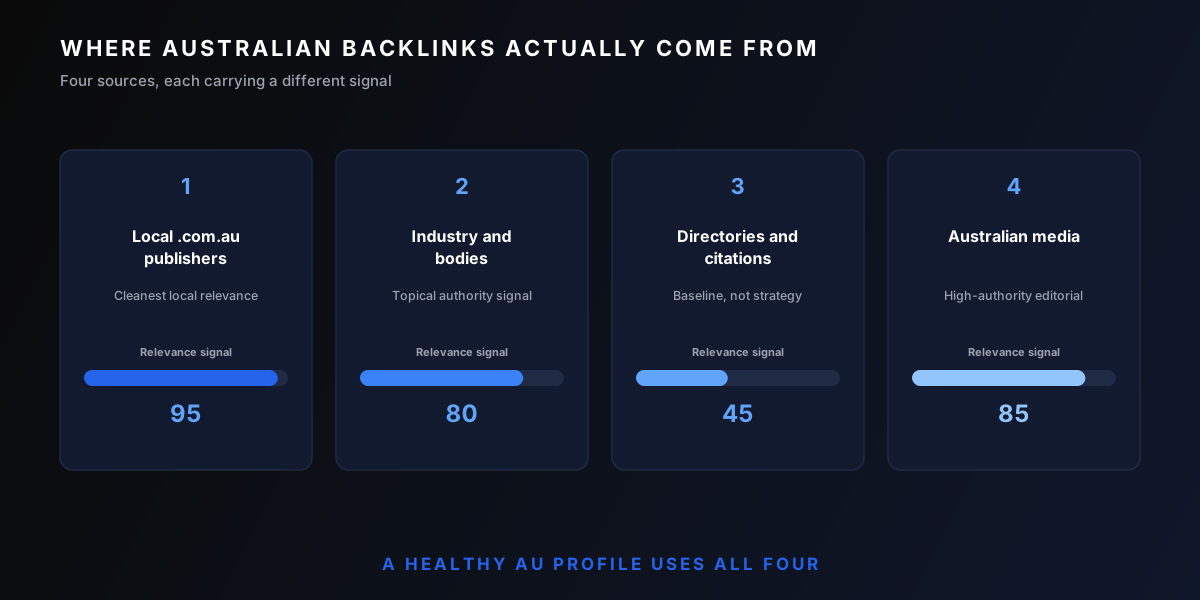
Local publishers and industry bodies give the cleanest relevance. A link from an Australian trade association, a state-based industry directory, or a respected .com.au blog tells Google the site belongs to its market. These are the placements to chase first for a regional brand.
Citations are the baseline, not the strategy. Listings on Australian business directories and mapping services confirm a business exists at an address, which supports local rankings. They rarely move competitive head terms on their own, so treat them as table stakes and spend the real budget on editorial links.
International authority fills the gap local supply leaves. When the Australian pool runs dry, a relevant link from a high-authority US or UK publisher still passes power to a .com.au target. The trick is keeping the profile anchored in Australian relevance so it never reads as a foreign link farm. The reverse holds for a UK link campaign, where local supply is deep but American authority still backstops the head terms.
Local Link Building Versus National Authority
Local link building targets the map pack and regional rankings. National authority targets head terms across the country. An Australian business usually needs a deliberate split between the two, weighted by how its customers actually search.
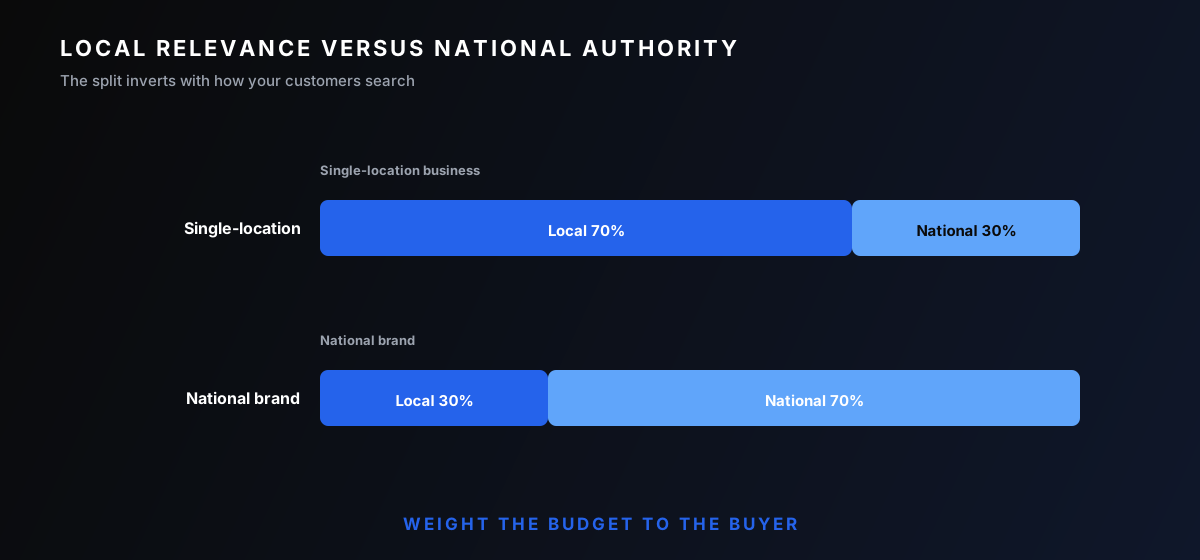
So which do you actually need? It depends on where your customers stand when they search. A single-location business leans local. Regional citations, sponsorships, local news, and links from nearby relevant sites move the rankings that matter, because the buyer is searching with a suburb or city in mind. Spending that budget on national editorial links is a slower path to the same call.
A national brand inverts it. The map pack matters less, and the fight is on commercial keywords where authority decides the order. There the budget goes to high-relevance editorial links, with citations kept current as hygiene rather than as the growth lever.
How To Choose a Link Building Provider in Australia
Choose an Australian link building provider on process and transparency, not on price or promised volume. The right partner shows you the publisher qualification, reports the links it earns, and stands behind them. The wrong one sells a number.
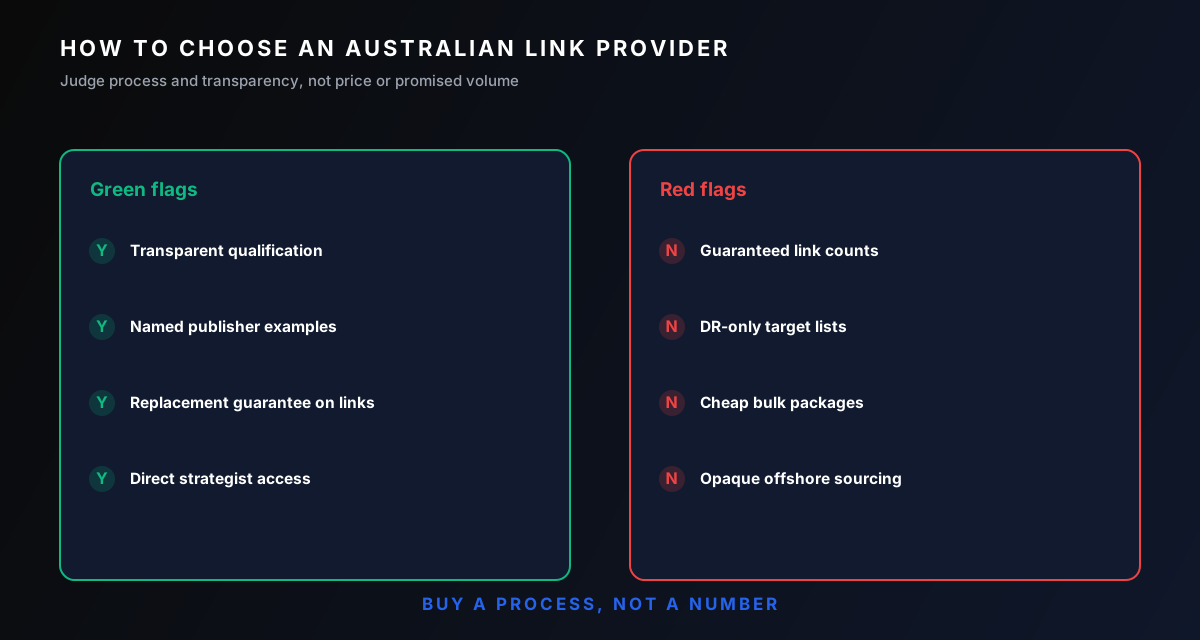
Ask how they qualify a link before they build it. A provider worth hiring scores prospects for relevance and real authority, not just domain rating, because what makes a link relevant is the whole game once you move past raw metrics. If the answer is a spreadsheet of high-DR domains with no topical logic, walk.
Local versus offshore is the question every Australian buyer asks. Plenty of agencies badged as Australian outsource the actual link building to offshore link farms, then mark it up. What matters is less where the team sits and more whether the placements are real, editorial, and relevant. A transparent offshore-supported agency beats an opaque local one.
Look for the signals that cost an agency something to offer. Named publisher examples, a replacement guarantee on links that drop, direct access to the strategist instead of an account manager, and reporting you can hand to a CFO. Those are hard to fake, which is exactly why they matter.
The "buy Backlinks Australia" Trap
Buying cheap bulk backlinks in Australia is the fastest way to get a site penalised. The sellers behind "50 .com.au backlinks" offers run private blog networks, and Google has spent years learning to detect exactly that pattern.
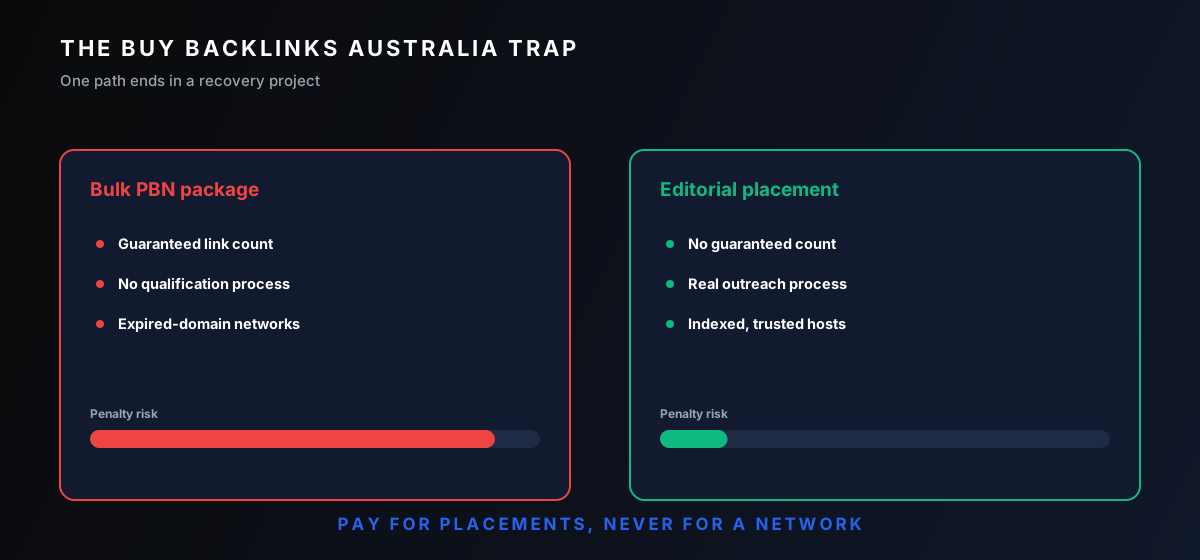
A private blog network is a stable of expired domains stuffed with thin content, built to sell links that look authoritative and are not. Anyone selling fifty .com.au backlinks for the price of a coffee is selling you a PBN. The coffee is the better investment.
There is a safe way to pay for links, and it is not that. Paying a real publisher for an editorial placement, or an agency for the outreach that earns one, is normal and defensible. Buying a bulk package from a network is the version that ends in a recovery project, which is the line drawn in the guide to buying backlinks safely.
The tell is always the same. Real link building sells you a process with no guaranteed count. A PBN sells you a guaranteed count with no process. Price follows that split, and so does risk.
What Results Look Like, and How Long They Take
Australian link campaigns move on the same timeline as everywhere: ranking shifts in 60 to 120 days, with compounding authority over the quarters after. Indexation and referral traffic can show within days of a placement going live.
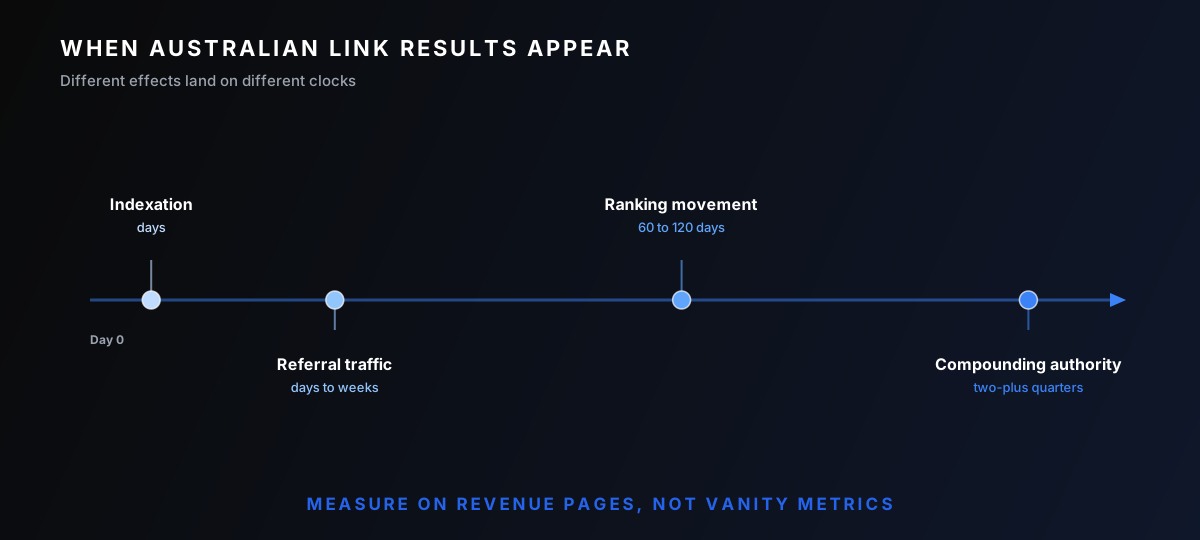
Pages already sitting in striking distance move first. A .com.au page ranking at positions 8 to 20 tends to respond fastest when relevant links land, because it already deserves to rank and just needs the push. Brand-new pages and saturated commercial terms take longer, sometimes two quarters before the trend is clear.
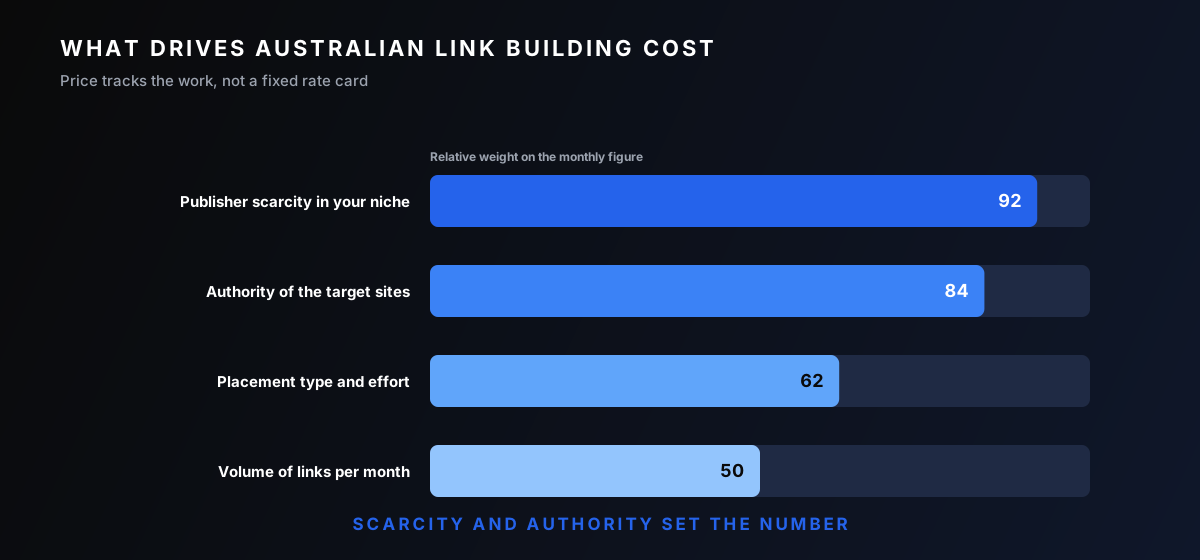
Budget in Australia tracks the work, not a fixed rate card. A small local program and a national campaign in a competitive vertical sit at very different monthly numbers [Bart: confirm current AUD ranges]. The honest input to that number is your starting profile, which is what the free growth audit reads before anyone quotes a campaign.
Measure the program on revenue pages, not vanity metrics. A higher domain rating is a proxy. Movement on the pages that take a booking or a contact form is the result you are paying for, and the only one worth reporting.
Frequently Asked Questions
How Much Does Link Building Cost in Australia?
Australian link building is priced by the work, not a flat rate. Small local programs and competitive national campaigns sit at very different monthly figures, driven by how many relevant publishers exist in your niche and how hard they are to earn. Be wary of any fixed per-link price far below market, which usually signals a private blog network.
Do I Need .com.au Links, or Are International Links Fine?
You want both. Relevant .com.au links carry a local signal that helps Australian rankings, while high-authority international links add ranking power the smaller Australian pool cannot always supply. A healthy profile anchors in Australian relevance and uses international links to compete on head terms.
Is Buying Backlinks in Australia Safe?
Paying a real publisher or agency for an editorial placement is safe and normal. Buying bulk packages of cheap .com.au backlinks is not, because those almost always come from private blog networks that Google penalises. The difference is whether you are paying for a process or a guaranteed count.
How Long Until Link Building Moves My Rankings?
Most pages show movement 60 to 120 days after relevant links land. Pages already ranking in positions 8 to 20 respond fastest, while new pages and saturated keywords take longer. Indexation and referral traffic can appear within days, but durable ranking gains are measured in months.
Should I Hire a Local Australian Agency or An Offshore One?
Judge the provider on transparency and placement quality, not the team’s location. Many agencies badged as Australian outsource link building offshore anyway. A provider that shows you its qualification process, names real publishers, and reports the links it earns beats one that simply has a local address.

About Bart Magera
Bart Magera is the founder of Mojo Links. Ten years across YMYL verticals (legal, medical, finance, supplements, crypto, gambling). Trained under Koray Tuğberk Gübür's Topical Authority framework. Author of two SEO books and international speaker.
Want this kind of analysis on your site?
Get a free video walkthrough within 48 hours covering technical health, backlinks, content gaps, and AI visibility.
Related posts
Keep reading on adjacent topics.
- Link Building
 Bart Magera10 min read
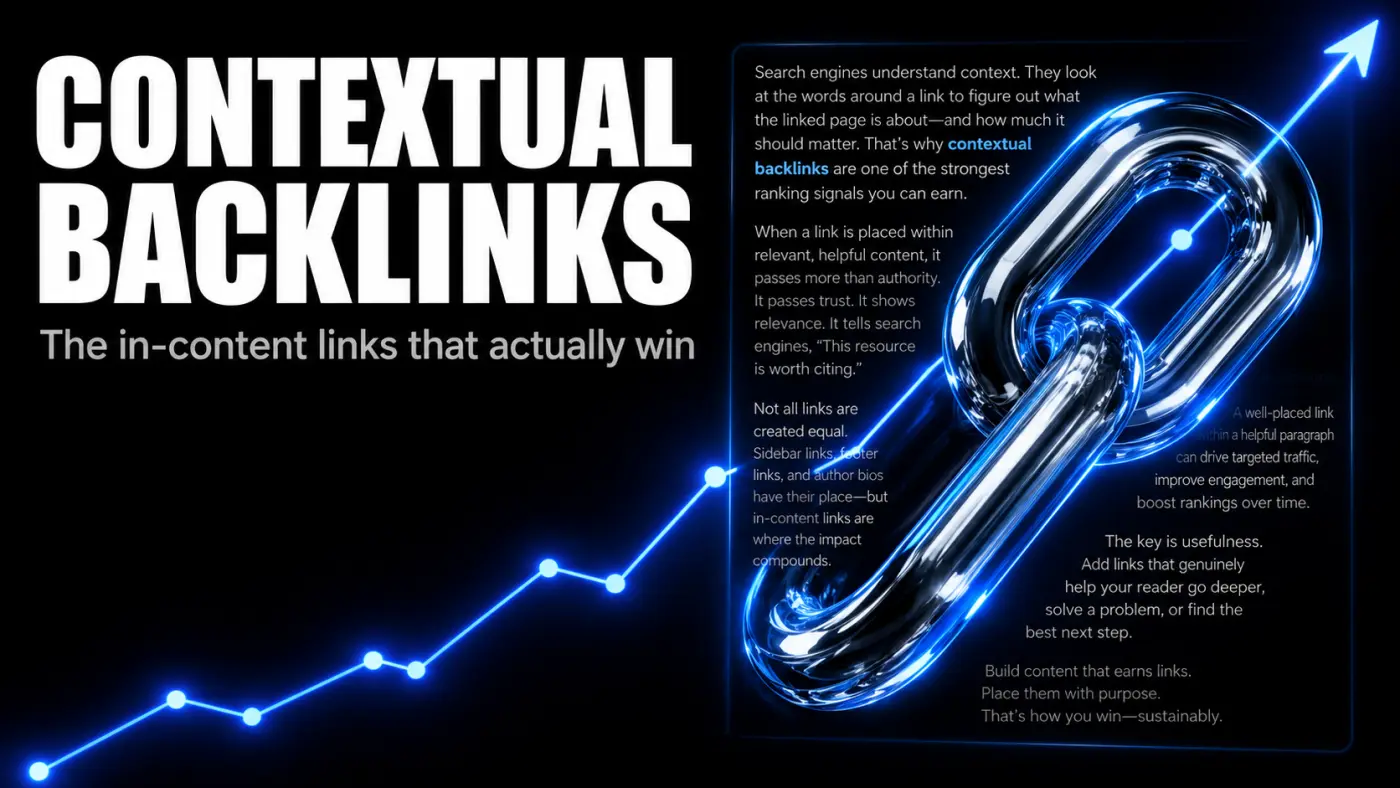
Contextual Backlinks: What They Are, Why They Win, and How To Earn Them
A contextual backlink sits inside the body of an article, surrounded by relevant text, not in a footer or author bio. That placement is what gives it weight. Here is what contextual backlinks are, what makes one high quality, how to earn them, and how to spot the cheap fakes.
- Link Building
 Bart Magera12 min read
What Is White Hat Link Building? Techniques That Work in 2026
The Problem: Why Most Link Building Fails Your SEO You wrote great content. It’s relevant. It’s useful. It even has infographics. But guess what? Crickets. Nobody’s linking. Google’s not ranking. And your “ultimate guide” is buried somewhere on page 7 under a recipe blog and a…
- Link Building
 Bart Magera10 min read
Tiered Link Building: How It Works and How To Do It Safely
Tiered link building layers weaker links behind your strongest ones to pass more authority to your money pages. Here is how the pyramid works, how to build one, which links are worth tiering, the risk SpamBrain introduced, and the lower-risk path I use on client sites.