

Link Building Services Uk: How To Earn Links for British Brands

Listen to this article
Browser-native voice. No account required.
Anyone can register a .co.uk in minutes, from anywhere on earth, so the domain itself tells Google nothing. What decides British rankings is harder to buy: links from publishers the UK actually trusts, where a saturated supply of cheap placements collides with a tiny pool of real authority.
This guide covers how British link building really works: where the authority sits, what a campaign costs, and how to choose a team to deliver one.
What Link Building Looks Like for a UK Business
Link building for a UK business means earning relevant backlinks to your site from publishers Google already trusts in Britain. The craft is universal. What changes is the bar: the British market is large and mature, so the supply of links is huge and the supply of authoritative ones is not.
Link building services across the UK all pitch the same outcome. Judge them on whether they can earn placements on publishers a real reader would recognise, not on how many links the package promises.
A backlink is a link from one website to another, and Google treats it as a signal of relevance and trust. The signal is only as strong as the source, which is why a single editorial link can outweigh dozens of throwaway ones.
A typical British SERP for a commercial term stacks national brands, established sector players, and the odd global site that beats both on raw authority. Where a challenger forces its way into that stack is decided largely by links, and turning that into a repeatable program is what Mojo Links delivers as a managed link building campaign.
The broad relationship is no longer in doubt. Pages standing on more genuinely authoritative referring domains pull more organic traffic, while thin-profile pages tend to flatline. That pattern has repeated across British and international work for years, consistently enough to build budgets on the back of it.
Why a .co.uk Domain Proves Nothing on Its Own
The .co.uk and .uk extensions are open to anyone, anywhere, with no UK presence required. Registration runs through Nominet under a delegation from IANA, and the only real test is whether the name is available. A .co.uk is therefore not a relevance signal in itself.
This flips the usual country-domain story. Some national extensions gate registration behind a local-presence rule, which makes every domain a verified local entity. Britain does not. A .co.uk can sit behind a genuine London business or behind an offshore reseller spinning up throwaway sites, and the extension alone will not tell them apart. Canada's gated .ca market is the clearest example, where the registry verifies a Canadian presence before the domain is allocated.
So the supply of British-looking links is effectively unlimited, which is exactly the problem. When anyone can own a .co.uk and slap a blog on it, the domain extension stops carrying weight, and the work shifts entirely to proving the publisher behind the link is real, read, and relevant.
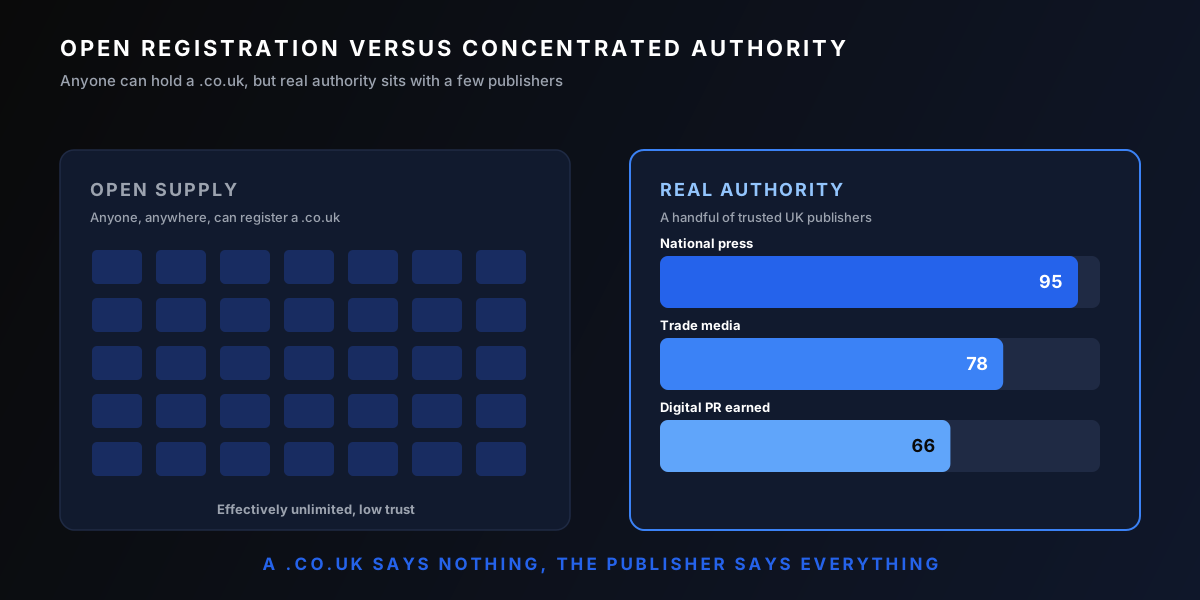
That is the line to draw on every UK campaign. Do not chase .co.uk links for the sake of the extension. Chase links from British publishers with an audience, an editorial standard, and a reason to mention the brand, because those are the ones that move a ranking.
Where British Link Authority Actually Lives
Real UK link authority concentrates in three places: the national press, sector and trade media, and the digital-PR ecosystem that feeds both. Everything else is supply, not authority. A profile that wins in Britain is anchored to that concentrated core.
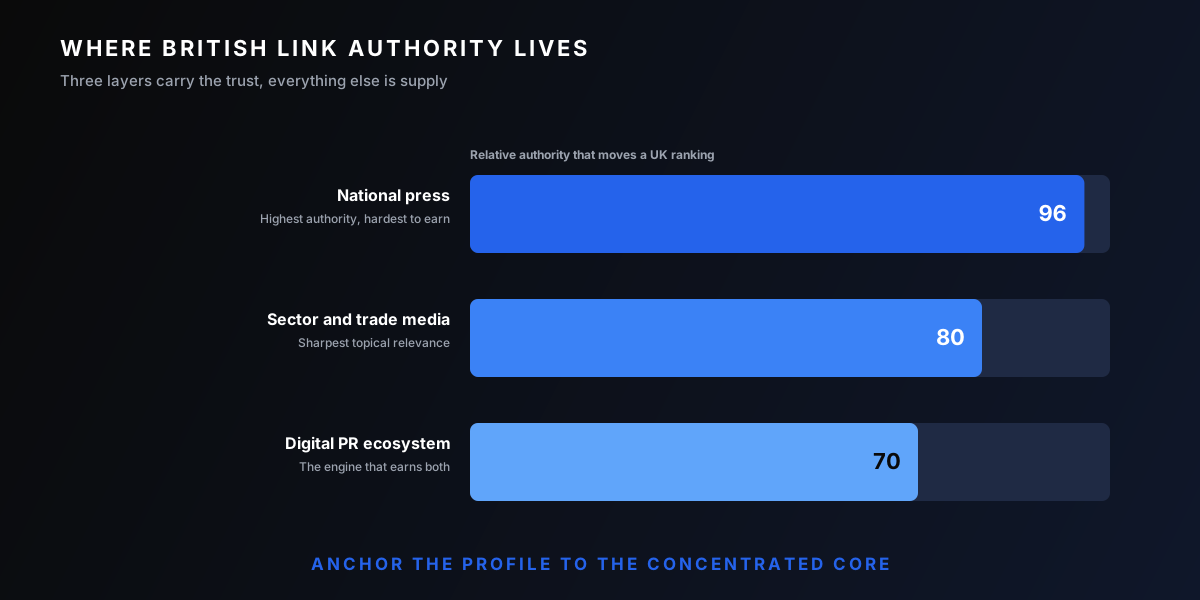
The national press sits at the top. Titles like the broadsheets and the major news sites command domain authority that almost nothing else in the market touches, which is why a single earned mention in one can outweigh a quarter of outreach elsewhere. They are also the hardest to reach, and they do not respond to templated pitches.
Trade and sector media form the relevance layer beneath. A link from a respected legal, fintech, construction, or retail title tells Google the site belongs in its category, often with sharper topical signal than a general news mention. These are the publishers to chase first for most brands.
Digital PR is the engine that earns both. The British market runs a sophisticated digital-PR scene, where data studies, surveys, and expert commentary are pitched to journalists who link back to the source. That is the modern path into the national press, and the mechanics are covered in the guide to digital PR for link building.
Who Actually Needs Link Building in The UK
Any British business that wins clients through search and faces ranked competitors benefits from link building. In practice that means regulated professions, trades that live on local enquiries, and the national ecommerce and finance names slugging it out over the most valuable commercial terms.
The pressure is sharpest in regulated, high-value categories. I handled multi-market SEO at Paradox for a brand whose footprint included a .co.uk site, and the British results were a knife fight, with every rival circling the same short list of publishers worth earning. Wherever a single customer is worth a serious sum, that fight repeats, and it is the argument I lay out in my work on legal SEO.
Smaller regional operators play a different game entirely. A builder in Manchester or a clinic in Leeds is fighting for the local pack, where a sponsorship of the right community site or a mention in regional news outweighs anything a national headline would do. Those tactics belong to local link building.
Ecommerce and finance brands straddle the middle and usually need a foot in both camps. They want national-grade authority for the head terms, but also enough British relevance signal that Google reads them as a domestic operation and not an offshore shop that happened to grab a .co.uk.
How To Run a Link Building Campaign for a UK Brand
Every UK campaign runs through the same four steps: prospecting, qualification, outreach, then placement. Britain swaps in its own publisher list and lifts the relevance bar higher than most markets. The underlying method stays put.
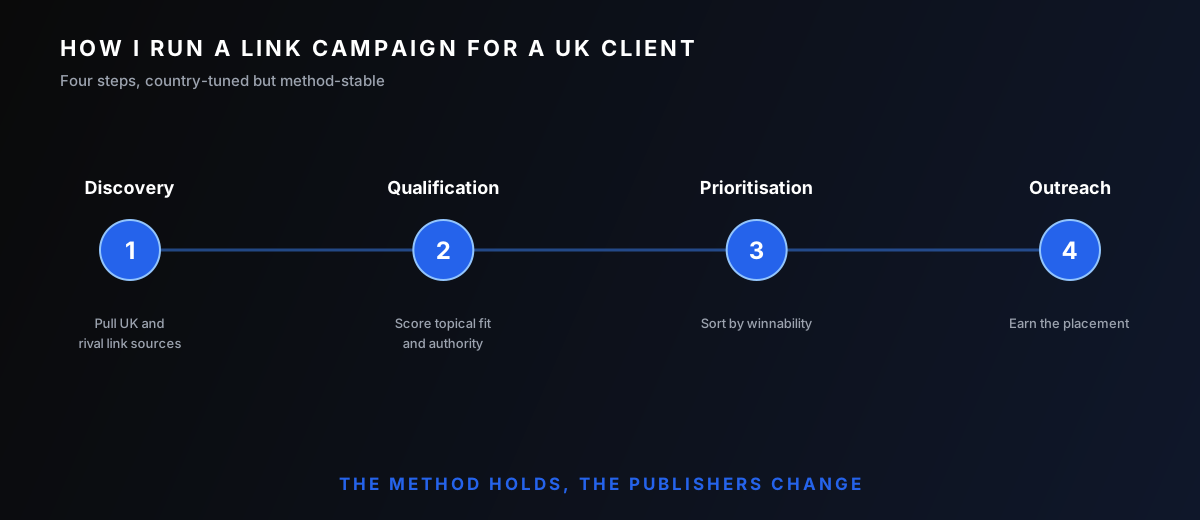
Prospecting fills the funnel. Harvest candidates from the link profiles of UK rivals, the British publishers that already cover the niche, the relevant trade titles, and the global sites ranking for the same terms. Qualification then thins that list hard, grading every domain on topical fit, real authority, anchor health, and the question that decides everything: does it link because an editor chose to, or because someone paid for the slot. That grading runs through the qualification scorecard long before any outreach starts.
At placement, match the format to what the page actually needs. An editorial guest post placement drops a contextual link into a brand-new article, which is the move when a page needs fresh context built around it. The opposite play is slotting a link into a piece that is already ranking and already pulling readers.
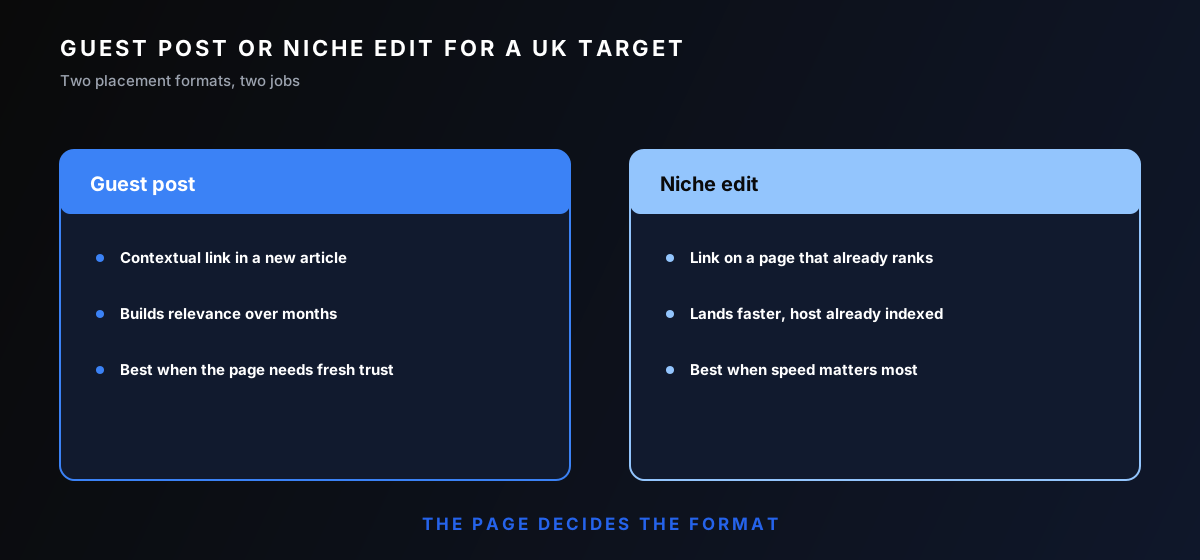
That opposite play is the niche edit, and it tends to register sooner because the host page is already crawled, indexed, and trusted. There is no default winner between the two; the right call depends on the target page, a decision unpacked in guest posts versus niche edits.
Digital PR sits on top for brands that can support it. In Britain it is not a bolt-on, it is often the only realistic route into the national press, so a competitive UK budget should weight more toward it than in a thinner market. It is slower and less predictable, so it belongs where the brand has a genuine story worth a journalist reading.
Why Volume Loses To Editorial Relevance Here
In a market this crowded, link volume is the easiest thing to fake and the least thing that matters. Ten links from publishers a British reader would recognise beat a hundred from a network nobody reads. The competitive math rewards relevance, not count.
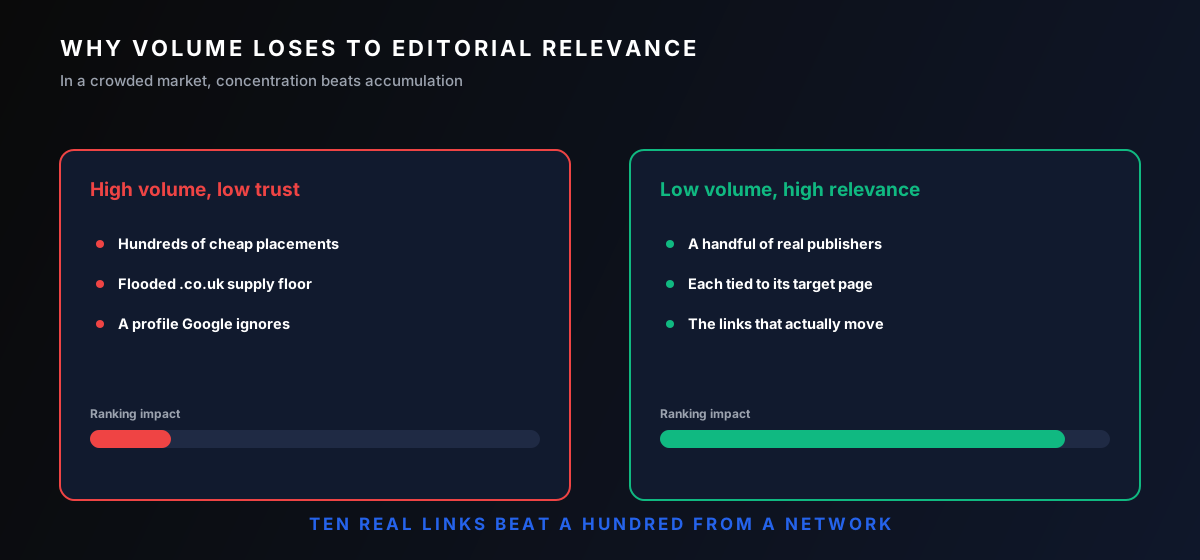
The reason is supply. Because anyone can own a .co.uk and sell links from it, the floor of the market is flooded with cheap, low-trust placements, and Google has spent years learning to ignore exactly that pattern. Pour budget into volume and you buy a profile that looks busy and ranks nothing.
Editorial relevance is the scarce input, so that is where the spend should go. A handful of placements on real UK publishers, each topically tied to the page it points at, shifts rankings that a thousand directory links never will. The whole game is concentration, not accumulation.
Local Link Building Versus National Authority
One job is to win the local map and regional results. The other is to compete on head terms across the whole country. Most British businesses need a deliberate mix of the two, set by how their customers actually go looking.
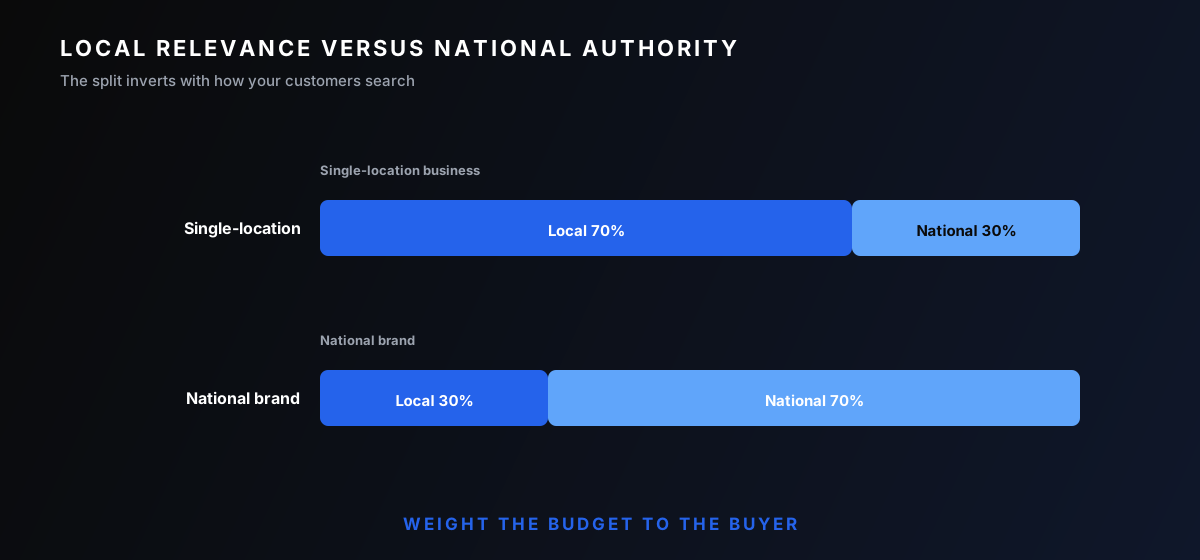
Which way you lean comes down to the searcher behind the query. A one-location business pulls toward the local end, because the person typing has a town or postcode in their head, and the levers that move them are regional citations, a community sponsorship, coverage in the local paper, and links from nearby relevant sites. Throwing budget at London-centric national outreach is the long way round to the same phone call.
A national operator flips that picture. The map pack barely registers, and the contest is on commercial keywords where authority sets the running order, so the money goes into high-relevance editorial links and digital PR. Citations stay on the books as housekeeping, not as the lever you pull for growth.
How To Choose a Link Building Provider in The UK
Pick a British provider on how they work and what they will show you, never on the headline price or a promised number of links. A partner worth keeping walks you through how it vets a publisher, reports back the links it actually earned, and owns them afterwards. The one to avoid quotes a figure and bets you will never audit the sources.
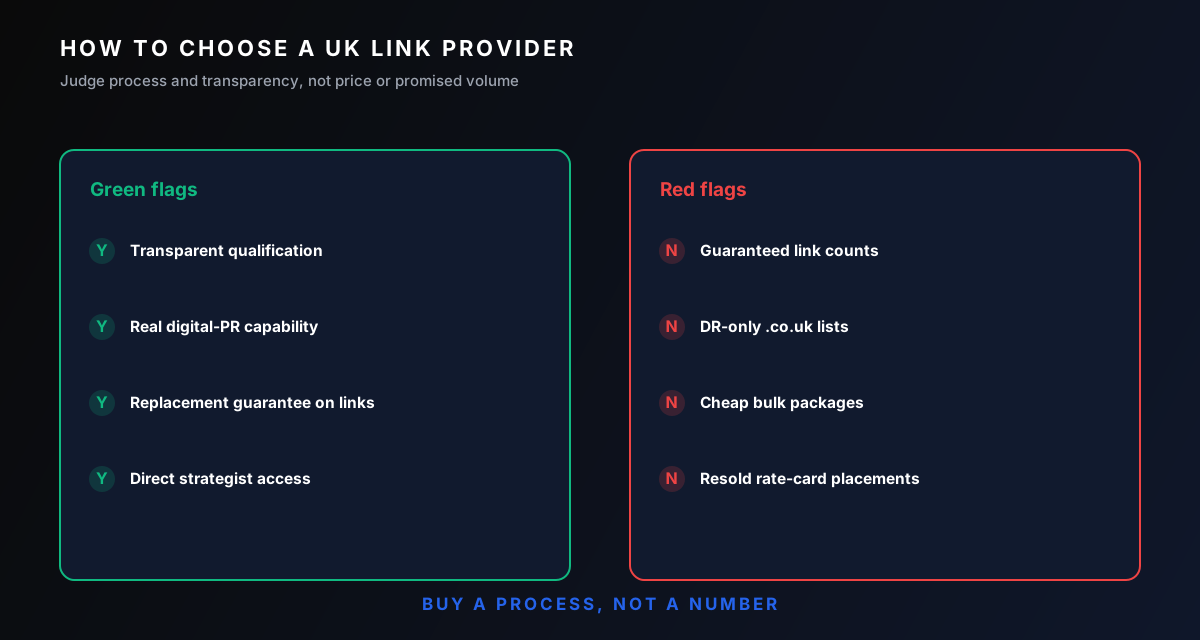
Start by asking how a link gets qualified before anyone builds it. The good ones grade prospects on relevance and real authority rather than domain rating alone, because what makes a link relevant is the entire contest once you get past surface numbers. If what comes back is a list of high-DR .co.uk domains with no topical thread running through it, end the call.
Then press on whether they genuinely run digital PR or simply resell placements. In Britain the firms that can land national-press and trade coverage operate at a different level from the ones working off a rate card. One is building authority for you; the other is renting you the look of it.
After that, hunt for the proof points an agency cannot fake cheaply. Real publisher names, a replacement guarantee when a link drops, a line straight to the strategist instead of an account handler, and a report you would be happy to put in front of a finance director. Those cost something to stand behind, which is precisely why they tell you who is serious.
The "buy Backlinks Uk" Trap
Nothing torches a UK site faster than a cheap bulk backlink package. Whoever is advertising "50 .co.uk backlinks" is running a private blog network, and the very thing that makes a .co.uk trivial to register is what makes those networks so cheap to assemble in the first place.
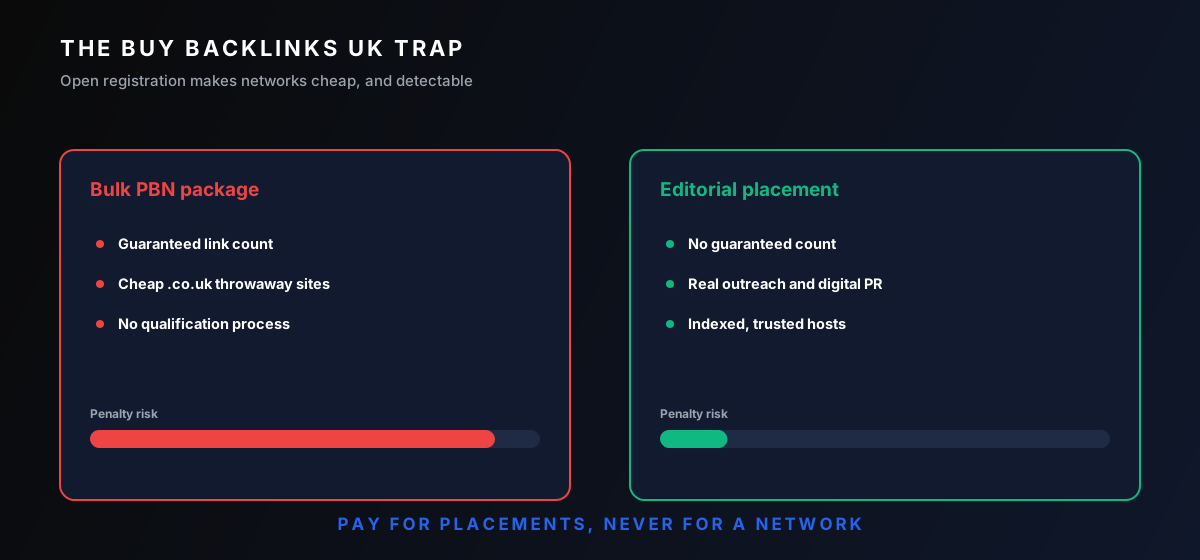
A private blog network is a stockpile of expired or freshly bought domains padded with throwaway content, existing only to sell links that wear the costume of authority. Open .co.uk registration pours petrol on the fire: a reseller spins up a hundred British-looking sites for little more than the registration fees and brands it a network. The links carry no weight, and the footprint is something Google has learned to spot.
Paying for links can be done safely, just not like that. Handing a real publisher money for an editorial placement, or paying an agency for the outreach and digital PR that earns one, is ordinary and defensible work. It is the bulk-package-from-a-network route that ends in a cleanup job, the distinction spelled out in the guide to buying backlinks safely.
The giveaway is always identical. Genuine link building sells you a process and refuses to promise a count. A network sells you a count and shows you no process. Price splits along that same line, and so does the risk you are taking on.
What Results Look Like, and How Long They Take
British campaigns run on the same clock as anywhere else: rankings start shifting somewhere in the 60-to-120-day window, and authority keeps compounding through the quarters that follow. Indexation and a trickle of referral traffic can land within days of a placement going live, and faster still when it comes from a high-traffic UK title.
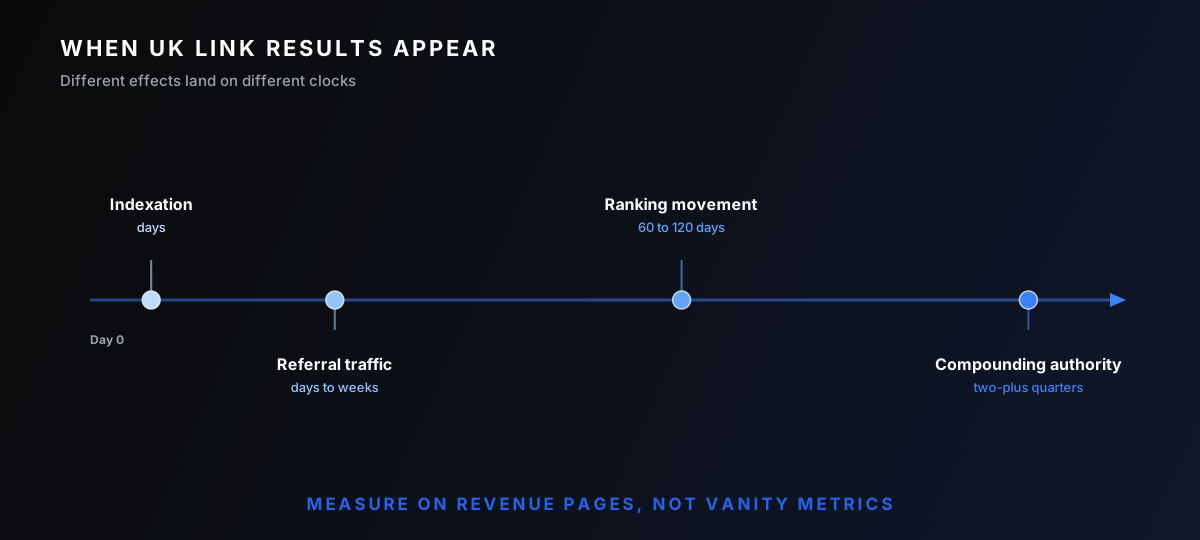
The pages sitting on the edge of page one move first. Anything parked around positions 8 to 20 reacts quickest once relevant links arrive, since it has already earned its place and only wants a nudge. Fresh pages and bloated, saturated UK commercial terms take their time, often a couple of quarters before the line clearly bends, simply because the difficulty here outstrips most other markets.
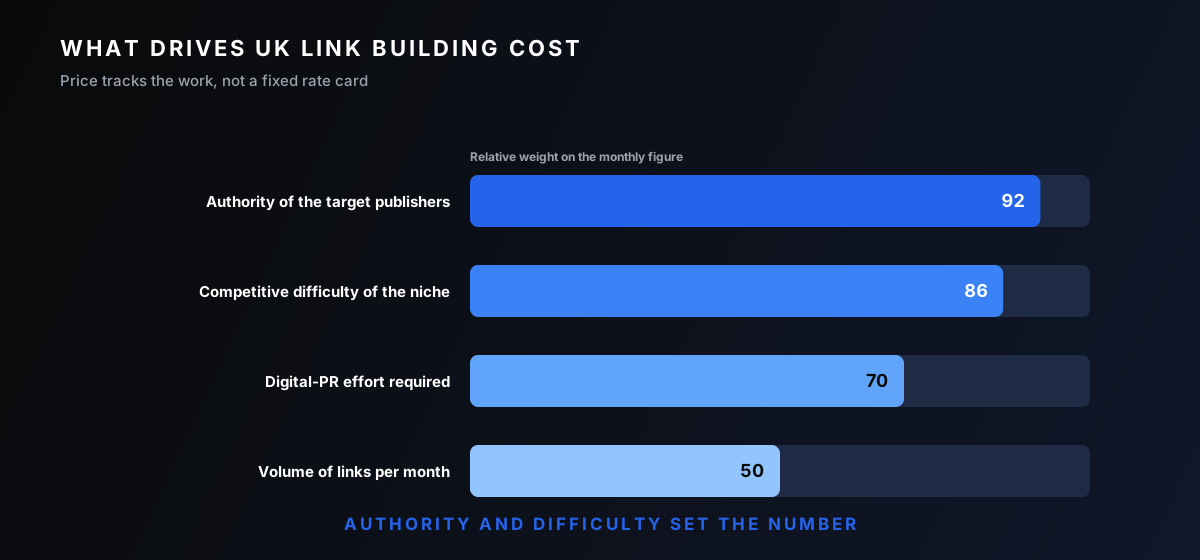
Cost follows the work, never a printed rate card. A modest regional push and a full national campaign in a contested vertical land at wildly different monthly numbers, and British difficulty drags the serious end upward more than a thinner market ever would [Bart: confirm current GBP ranges]. The honest starting point for that figure is the profile you are walking in with, which is exactly what the free growth audit assesses before anyone puts a campaign price on the table.
Hold the program to revenue pages, not vanity scores. A climbing domain rating is only a stand-in. What you are actually buying is movement on the pages that capture a booking, a quote request, or a filled-in contact form, and that is the only number worth putting in a report.
Frequently Asked Questions
How Much Does Link Building Cost in The Uk?
There is no flat rate; the figure follows the difficulty of the work. What separates a small regional retainer from a national campaign is how authoritative the target publishers are and how stubborn they are to earn. Because Britain is a harder market than most, treat any fixed per-link price sitting well under the going rate as a warning sign of a private blog network.
Does a .co.uk Domain Help My UK Rankings?
By itself, no. The .co.uk and .uk extensions are open to anyone with no UK presence required, so holding one proves nothing to Google. What moves the needle is links from genuinely authoritative British publishers, backed by a clear UK address, UK-facing content, and a real British audience. The extension is table stakes, not a ranking factor.
What Is Digital PR and Why Does It Matter so Much in Britain?
Digital PR wins links by putting data studies, surveys, and expert comment in front of journalists who then cite the source. It carries so much weight in the UK because the national press owns most of the real authority and ignores templated outreach outright, leaving digital PR as the only dependable way in. It works slower than paying for placements, but the authority it earns sticks around.
Is Buying Backlinks in The UK Safe?
Paying a genuine publisher or an agency for an editorial placement is perfectly safe and routine. Buying bulk batches of cheap .co.uk links is not, since they almost always trace back to private blog networks, which open registration makes unusually cheap to spin up. It comes down to whether your money buys a process or just a guaranteed number.
How Long Until Link Building Moves My UK Rankings?
Expect movement roughly 60 to 120 days after relevant links go live. Pages already holding positions 8 to 20 turn first, while brand-new pages and saturated British keywords lag because the competition is fiercer here. You may see indexation and referral traffic within days, but the durable ranking gains play out over months.
Do I Need a UK Link Building Strategy, or Just More Links?
You need a strategy, not a pile of links. A UK link building strategy starts from the keywords that make you money, maps the publishers that can move them, and earns quality backlinks in a sequence rather than all at once. Volume without a plan is how a profile fills with low quality links that improve nothing and can drag a site down. The brands that win here run a deliberate strategy, not a monthly quota.
How Do Quality Backlinks Improve UK Search Rankings?
Search engines read links as signals of trust and relevance. When high quality links from publishers a British reader recognises point at a page, they tell a search engine the page deserves to rank, which is what improves its visibility for UK queries. The signal strength tracks the source, so one editorial link from the national press beats a dozen low quality directory links.
Will UK Link Building Increase Organic Traffic?
Done right, it should. As relevant links move a page up the search engine results, it earns more clicks from organic search, and that increase compounds as the authority settles. The honest measure is movement on the pages that take a sale or an enquiry, so report on the rankings and organic traffic that change, not the count of links or brand mentions earned along the way.

About Bart Magera
Bart Magera is the founder of Mojo Links. Ten years across YMYL verticals (legal, medical, finance, supplements, crypto, gambling). Trained under Koray Tuğberk Gübür's Topical Authority framework. Author of two SEO books and international speaker.
Want this kind of analysis on your site?
Get a free video walkthrough within 48 hours covering technical health, backlinks, content gaps, and AI visibility.
Related posts
Keep reading on adjacent topics.
- Link Building
 Bart Magera10 min read
Contextual Backlinks: What They Are, Why They Win, and How To Earn Them
A contextual backlink sits inside the body of an article, surrounded by relevant text, not in a footer or author bio. That placement is what gives it weight. Here is what contextual backlinks are, what makes one high quality, how to earn them, and how to spot the cheap fakes.
- Link Building
 Bart Magera12 min read
What Is White Hat Link Building? Techniques That Work in 2026
The Problem: Why Most Link Building Fails Your SEO You wrote great content. It’s relevant. It’s useful. It even has infographics. But guess what? Crickets. Nobody’s linking. Google’s not ranking. And your “ultimate guide” is buried somewhere on page 7 under a recipe blog and a…
- Link Building
 Bart Magera10 min read
Tiered Link Building: How It Works and How To Do It Safely
Tiered link building layers weaker links behind your strongest ones to pass more authority to your money pages. Here is how the pyramid works, how to build one, which links are worth tiering, the risk SpamBrain introduced, and the lower-risk path I use on client sites.