

Contextual Backlinks: What They Are, Why They Win, and How To Earn Them
Listen to this article
Browser-native voice. No account required.
Two links can point at the same page from the same website and be worth wildly different amounts. One sits inside a paragraph that is actually about your topic. The other sits in the footer, on every page, ignored.
That first link is a contextual backlink, and it is the one every credible study and every search engineer points to as the link worth earning. Here is what makes it different, what makes one good, and how Mojo Links earns them at scale.
What Is a Contextual Backlink?
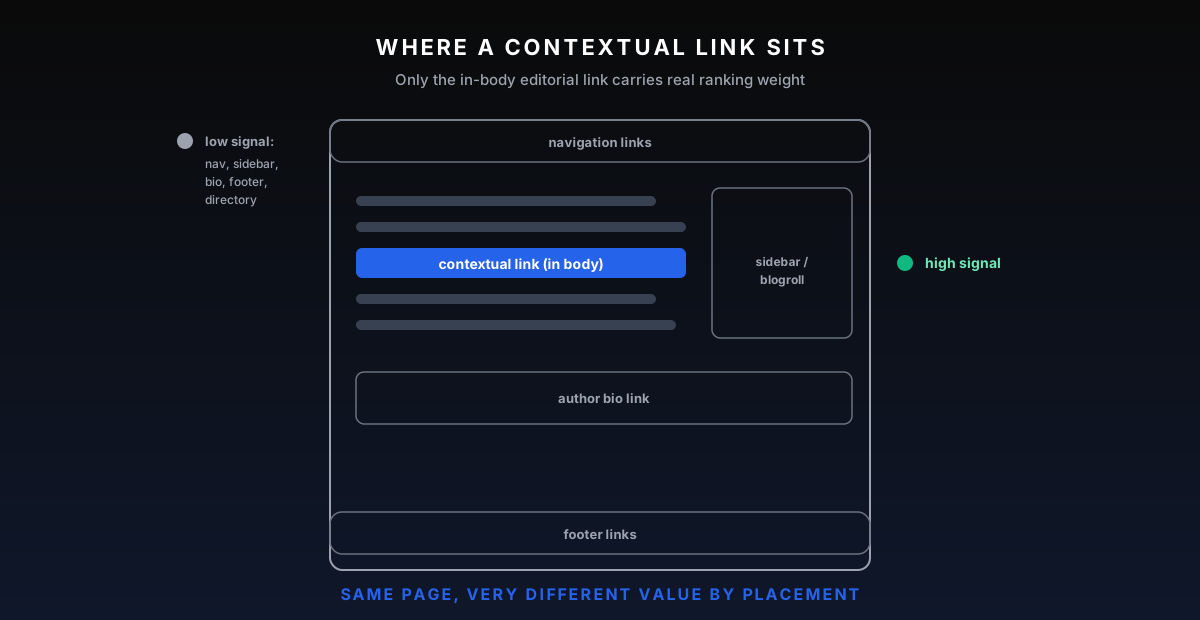
A contextual backlink is a link placed inside the body of an article, surrounded by relevant text that explains where it points. It sits inside the body content, not in a footer, sidebar, author bio, or directory, which is what gives it weight.
Start with the basics. If you are still fuzzy on what a backlink is, a backlink is any link from one website to another. A contextual backlink is a specific kind: one embedded in the running text of a page, where a reader would actually come across it and click.
The word doing the work is contextual. The link has context around it, a sentence that mentions the topic, a paragraph that relates to the destination. That context is the signal.
How Contextual Links Differ from Footer, Sidebar, and Author-Bio Links
Most links on the web are not contextual. They sit in templated areas that repeat across a whole site, which strips them of topical meaning. The types of backlinks break down roughly like this:
Contextual (in body). Inside an article, surrounded by relevant text. The one that carries weight.
Footer links. Sitewide, boilerplate, low editorial signal. Google discounts them heavily.
Sidebar and blogroll. Templated placement, not tied to any single piece of content.
Author bio links. Attached to a byline, not to the topic of the article.
Directory links. A plain listing, with no surrounding context.
You probably assume a link is a link. It is not. The same URL earns a fraction of the value from a footer that it earns from a paragraph.
Why Do Contextual Backlinks Matter for SEO?
Contextual backlinks carry more ranking value than other placements because the surrounding content tells Google what the link is about and signals a genuine vote of confidence to search engines. They pass topical relevance and authority, drive real referral traffic, and are hard for competitors to replicate cheaply.
Think about what a link is supposed to represent. A vote from one page to another, cast because the linked page is worth citing. A contextual link looks exactly like that. A boilerplate link looks like a template.
There is a mechanical reason too. Google can only pass value through a link it can crawl, and its guidance on keeping links crawlable spells out that a real link is an anchor element with an href, with wording a search engine can read and that describes the destination. Contextual links are almost always built that way. Many templated widgets are not.
So the value is not magic. It is relevance, real placement, and a crawlable link that search engines can follow, all in one valuable spot.
What Makes a Contextual Backlink High Quality?
A high-quality contextual backlink sits on a topically relevant page with real traffic, inside genuine in-content placement, with natural anchor text and a link a reader would click. Relevance and placement matter more than raw domain rating or domain authority, which is where most buyers get it wrong.
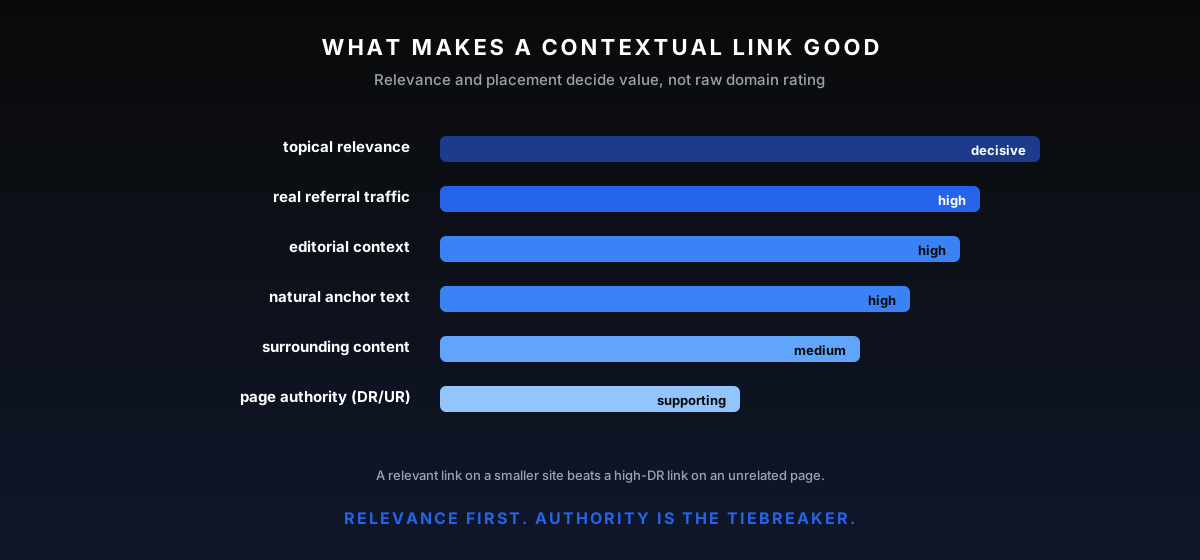
This is the same evaluation to run on every link before accepting it, the one in the backlink quality criteria. Topical fit decides most of it. A link from a mid-sized website in your niche does more than a low-quality link from a huge website with nothing to do with your topic.
Relevance is why niche relevant backlinks outperform generic high-authority ones. The page has to be about something close to your subject for the context to mean anything.
You probably think the highest DR link wins. It does not. A relevant link on a smaller, trafficked website beats a high-DR link buried on an unrelated one, every time Mojo Links has measured it.
Anchor Text for in-Content Links
Anchor text on a contextual link should read the way a real writer would phrase it. Mostly branded or partial-match, varied across placements, and never the same exact-match commercial phrase on every link. Natural anchors are the tell search engines use to separate earned links from bought ones.
A quick rule: if every link to a page uses the exact keyword you want to rank for, the profile looks manufactured. Real contextual links say your brand name, the article title, or a plain phrase like "this guide." Mix it up.
How Do You Get Contextual Backlinks?
You earn contextual backlinks through guest posts, niche edits into existing articles, digital PR, resource-page outreach, and HARO. Each one places a link inside relevant in-content spots on a real site. There is no version that skips the editorial step and still counts.
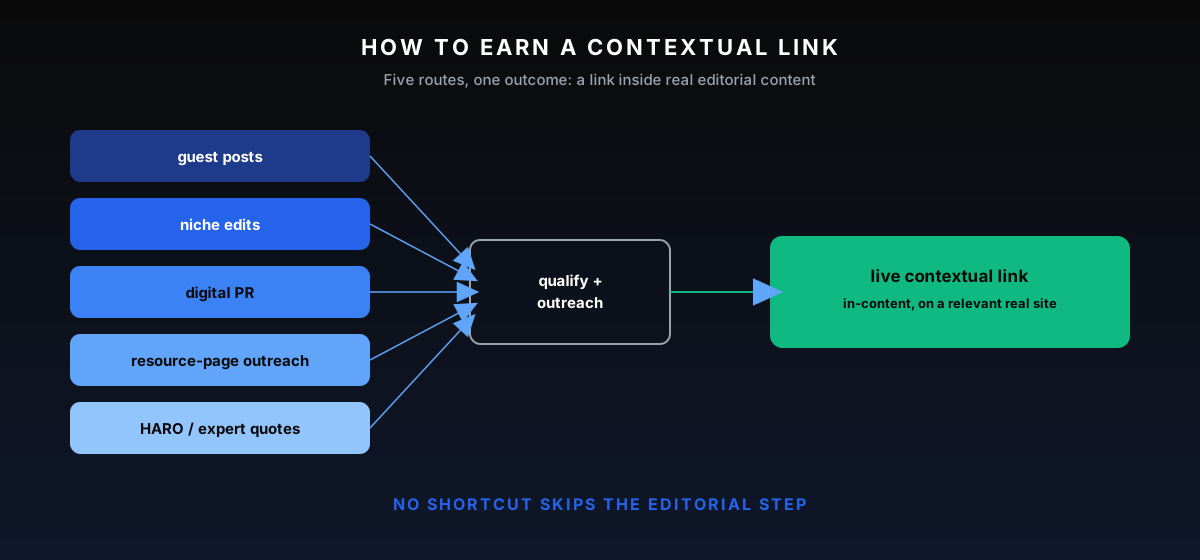
So how do you actually get one? Each route earns the same outcome, a link inside real content, but the effort and speed differ.
Guest posts. You write a guest post for a relevant site; the link sits in your content.
Niche edits. An editor adds your link into an existing, already-indexed post. Fastest, usually.
Digital PR. A story or data study earns coverage, and journalists link to the source in their piece.
Resource-page outreach. You get listed inside a curated resource list, in context, not in a bare directory.
HARO and expert quotes. You provide a quote a writer uses, and the attribution links back to you.
Broken Link Building as a Route To Contextual Links
There is a sixth route worth its own note: broken link building. You find a dead link on a relevant page, then suggest your own content as the replacement. Done right, broken link building earns a contextual link inside an article that already exists and already ranks.
It works because you are solving a real problem for the editor. A broken link hurts their page; your working link fixes it, and the swap drops you into the running text where the old link sat.
How Mojo Links Places Contextual Links in Live Campaigns
On a link-building campaign, Mojo Links qualifies the target page first: is it relevant, does it have traffic, does it already rank for related terms. Only then does outreach start. The link goes into a paragraph that already fits, or into new content written around it.
No proxies, no spun articles, no thousand-link blasts. Each placement is a real website a person edits. That is slower and it is the only version that survives.
How To Find Contextual Link Opportunities
Finding opportunities is a prospecting job, not a guessing one. Pull the sites that already rank for the target topic, then look for the ones that publish guest content, link out editorially, or maintain resource lists.
Competitor backlinks are the shortcut. If a rival earned a contextual link on a relevant blog, that blog is open to the topic, and it belongs on the list. One good source site often leads to five more.
How Long Does It Take To Earn Contextual Backlinks?
A single contextual backlink from targeted outreach usually takes two to six weeks from prospecting to live placement. Niche edits are fastest because the article already exists. Digital outreach can be quick when a story lands. A durable link profile is built over months, not days.
Anyone promising fifty contextual links next week is selling something else. Real placements move at the speed of the editors who approve them.
How Do Contextual Backlinks Fit into a Link Building Strategy?
Contextual backlinks are one part of a broader link building strategy, not the whole plan. You still need internal links, a healthy mix of external links and inbound links, and clean technical health. Contextual link building earns the topical links that internal and external links then support.
Think of contextual link building as the engine and internal links as the drivetrain. The engine brings authority in from other websites; internal linking moves it around your own site to the pages that need to rank. Neither strategy works well alone.
This is why Mojo Links never sells a link count in isolation. A handful of relevant contextual links, spread across a site with sound internal linking, does more than a thousand links dumped at one page. Modern link building strategies beat volume, every time.
What Results Do Contextual Backlinks Drive?
Done right, contextual backlinks drive higher rankings, real referral traffic, and brand credibility in your industry. Search engines and other websites read the relevant websites linking to you as votes of confidence, and readers who click through arrive already interested. The valuable links compound as the pages that host them keep ranking.
The rankings gain is the headline, but it is not the only one. A link in a respected industry article puts your brand in front of people who trust that source, which is credibility you cannot buy with an ad. A visitor from a relevant page converts better than a cold searcher, because the reader was already in your topic.
So what does that look like over time? The links that survive keep passing value, the host posts keep ranking and sending visitors, and your own authority climbs. That compounding is why contextual links belong in most link building strategies, costing more up front and returning more over the long run.
How Do You Spot Fake or Low-Quality Contextual Backlinks?
Fake contextual backlinks show up as cheap bulk gigs promising hundreds of niche relevant contextual links. The tells are thin or spun host content, irrelevant sites, exact-match anchors, no real traffic, and identical footprints across every buyer. Real contextual links cannot be mass-produced for a few dollars.
Anyone selling you 500 "niche relevant contextual backlinks" for $15 is selling you a footprint, not a link. The math does not work: a real editorial placement costs more than that on its own.
When auditing a suspicious profile, open the host URLs. If the articles read like spun gibberish, if the same paragraph shows up across unrelated sites, if the website has zero organic traffic, the links are worthless and possibly a liability.
Frequently Asked Questions
Are Contextual Backlinks Better Than Other Backlinks?
Yes, in most cases. A contextual link inside relevant in-content placement passes more value than a footer, sidebar, author-bio, or directory link, because the surrounding text gives it topical meaning. Placement and relevance are what make it worth more, not the label itself.
Are Contextual Backlinks Dofollow?
Usually, but not always. Most editorial links are dofollow and pass ranking value, though a natural profile includes some nofollow ones too. A healthy mix looks earned. An all-dofollow, all-exact-match profile looks manufactured.
How Many Contextual Backlinks Do I Need?
There is no fixed number. You need enough relevant links to compete with the pages already ranking for your target keyword, which varies by niche. A handful of strong, relevant contextual links usually beats hundreds of weak ones. Quality and relevance decide it.
Can You Buy Contextual Backlinks Safely?
You can pay for placement through legitimate channels like guest posts and niche edits, where a real editor controls a real article. What is not safe is buying bulk "contextual" packages that mass-place spun links. The first is how outreach works; the second is a footprint.

About Bart Magera
Bart Magera is the founder of Mojo Links. Ten years across YMYL verticals (legal, medical, finance, supplements, crypto, gambling). Trained under Koray Tuğberk Gübür's Topical Authority framework. Author of two SEO books and international speaker.
Want this kind of analysis on your site?
Get a free video walkthrough within 48 hours covering technical health, backlinks, content gaps, and AI visibility.
Related posts
Keep reading on adjacent topics.
- Link Building
 Bart Magera12 min read
What Is White Hat Link Building? Techniques That Work in 2026
The Problem: Why Most Link Building Fails Your SEO You wrote great content. It’s relevant. It’s useful. It even has infographics. But guess what? Crickets. Nobody’s linking. Google’s not ranking. And your “ultimate guide” is buried somewhere on page 7 under a recipe blog and a…
- Link Building
 Bart Magera10 min read
Tiered Link Building: How It Works and How To Do It Safely
Tiered link building layers weaker links behind your strongest ones to pass more authority to your money pages. Here is how the pyramid works, how to build one, which links are worth tiering, the risk SpamBrain introduced, and the lower-risk path I use on client sites.
- Link Building
 Bart Magera14 min read
Link Building Canada: How To Earn Links for Canadian Brands
Canada is a two-language search market sitting next to the largest English-speaking one on earth, and most link builders treat it like a province of the United States. That is the mistake. Here is how link building actually works for a Canadian brand, what shapes the cost, and how to choose someone to run it.