

Types of Backlinks: The Full Taxonomy Ranked by Value
Listen to this article
Browser-native voice. No account required.
There are not 25 types of backlinks worth knowing. There are about four tiers, and most of the types in the long listicles belong in the bottom one.
Knowing a link type exists is useless without knowing what it is worth. So instead of another flat list, here is the full taxonomy: the three ways a link gets categorized, then every common type sorted into value tiers with a verdict. It is the reference layer under the link building workflow.
What Are The Main Types of Backlinks?
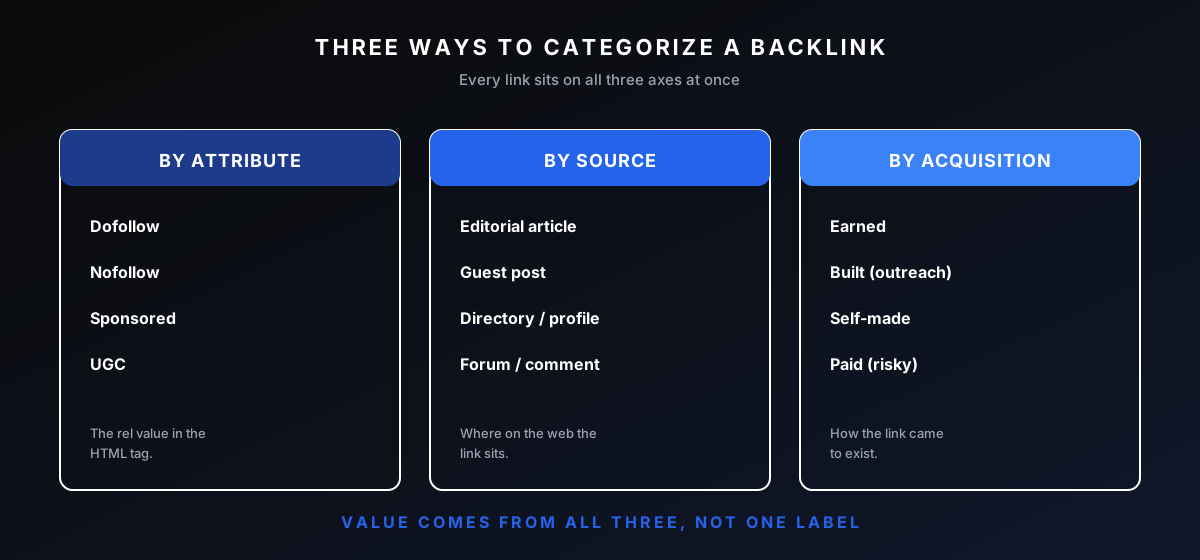
Backlinks are categorized three ways: by attribute (dofollow, nofollow, sponsored, UGC), by source (editorial, guest, directory, forum, profile, and so on), and by how they were acquired (earned, built, self-made, or paid). Any single link carries a value from all three at once. The type label alone never tells you what a link is worth.
That is the flaw in every "25 types" listicle. It lists sources as if each were a distinct strategy, when most are just low-value variations of the same idea. The useful question is not how many types exist. It is which ones earn rankings, judged against what a backlink is in the first place.
Which Types of Backlinks Are Worth Chasing?
Editorial and contextual links from relevant, trafficked sites are worth chasing. So are niche guest links, digital PR placements, and relevant links from high-trust domains. These earn rankings because they combine relevance, authority, and an editorial decision by a human, the same pattern Semrush uses to break down the main backlink types.
Everything else is either situational or a waste of time. Directories, forums, and profile links fill a profile but rarely move it. The skill is not collecting types; it is knowing which few to spend effort on.
Three Ways To Categorize a Backlink
Before the tiers, the three axes. Every backlink sits on all of them at once, and value comes from the combination, not any single label.
By Link Attribute
The rel attribute in the HTML tells Google how to treat the link. Dofollow passes PageRank and does the ranking work, covered in dofollow backlinks. Nofollow, sponsored, and UGC are hints that cap direct equity, covered in nofollow links. A natural profile carries a mix of all four.
Since 2019 Google treats nofollow as a hint rather than a strict instruction, so even a nofollow link can carry some weight. The attribute sets the ceiling on direct equity. It does not decide the link's real value on its own.
By Source
Source is where the link physically sits: an editorial article, a guest post, a directory listing, a forum thread, a business profile, a comment. Source is the axis the listicles obsess over, because it produces the longest list. It is also the axis where most of the low-value types cluster.
Source is a strong hint about value but not a verdict. An editorial link on a relevant site is excellent; the same editorial format on an irrelevant content farm is worthless. The label tells you the shape of the link, not what it is worth.
By How It Was Acquired
Acquisition is how the link came to exist: earned without asking, built through outreach, self-made in a profile or comment, or paid for. Earned and built links are assets. Self-made links are mostly noise. Paid follow links are a liability, regardless of how good the source looks.
This axis is the one Google cares about most, because it maps directly onto manipulation. Earned and outreach-built links look natural. A profile dominated by self-made and paid links looks engineered, which is exactly the pattern its spam systems hunt for.
High-Value Types
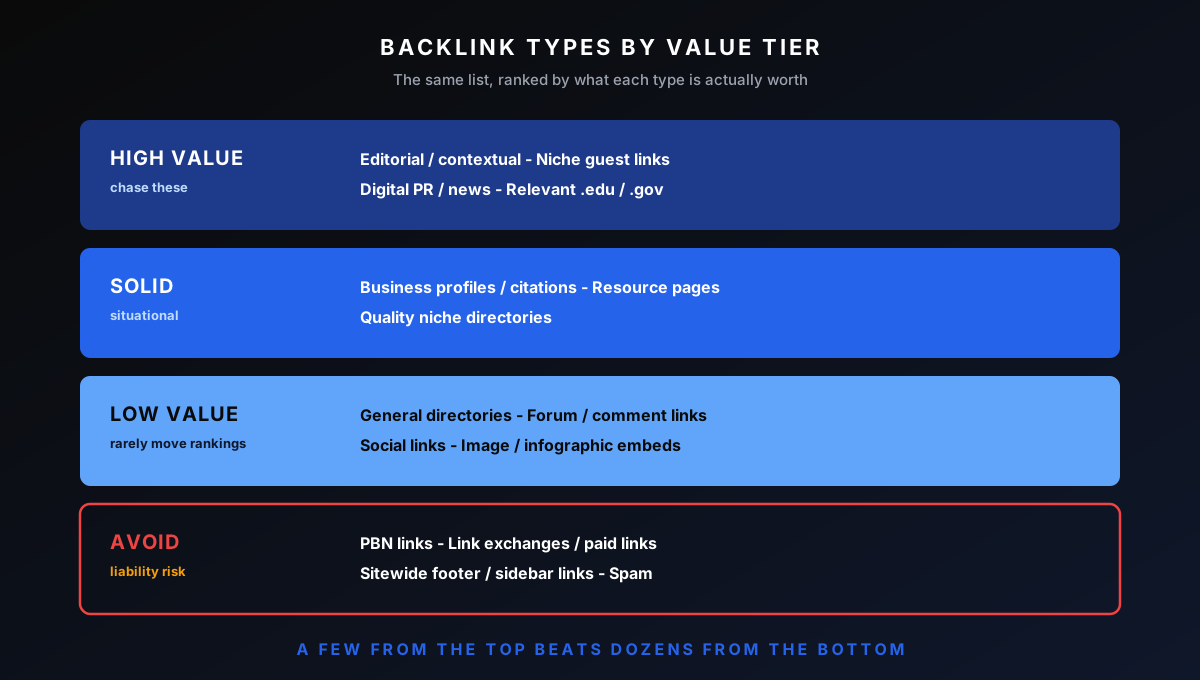
These are the links that earn rankings. If a campaign is working, most of its effort goes here. Each one combines relevance, authority, and a genuine editorial decision.
Editorial and Contextual Links
A link placed inside the body of a relevant article, by choice, is the gold standard. It signals a real editorial endorsement and passes full equity. Every other type on this page is measured against this one. When link builders say "build links," this is the type they mean.
A practical example: a SaaS analytics tool cited inside an industry blog's "how we track X" article. The link sits in context, the surrounding text is relevant, and a human chose to add it. That is the combination no low-value type can fake.
Niche-Relevant Guest Links
A link in a genuinely useful guest article on a relevant site is a strong, repeatable type. The value lives in the relevance and the editorial quality of the host, not in the guest format itself. A guest link on an off-topic site is just a low-value link wearing a respectable label.
The failure mode is the guest-post network: hundreds of thin articles on unrelated sites, all selling the same links. Google devalues those as a pattern. One guest link on a site that actually serves your audience is worth more than fifty from a content mill.
Digital PR and News Links
Links from news outlets and major publications carry heavy authority and trust. They are the highest-ceiling type and the hardest to earn, usually requiring original data or a genuine story. One placement in a tier-one outlet can outweigh months of smaller links.
The trade-off is conversion rate. Digital PR has the lowest pitch-to-placement rate of any tactic and the highest value per placement, so it only makes sense at real budget. Below a certain spend, the asset development alone eats the whole campaign.
Relevant .edu and .gov Links
Links from education and government domains carry structural trust, but only when they are topically relevant and genuinely editorial. The old idea that any .edu link is magic is a myth; a scholarship-page link farm is still spam. Whether the link belongs is decided by the same backlink quality criteria as any other type.
Solid, Situational Types
These types have real value in the right context. They will not carry a campaign on their own, but they round out a natural profile and occasionally punch above their weight in local or niche cases.
Business Profiles and Local Citations
A Google Business Profile, an industry association listing, or a consistent local citation matters for local SEO and profile completeness. The link value is modest; the trust and consistency signals are the real point. Essential for local businesses, near-irrelevant for most others.
Resource Page Links
A link from a curated resource or "best of" page is editorial and relevant by nature, which makes it a solid type when the page is genuinely maintained. The catch is that good resource pages are selective, so these take real outreach to earn. Worth the effort in the right niche.
Niche Directory Links
A directory specific to your industry, the kind real customers actually use, passes modest value and relevance. A lawyer in a respected legal directory is fine. The distinction is between a curated niche directory and a general "submit your URL" dump, which belongs in the next tier.
Low-Value Types
These types rarely move rankings. They are not dangerous in small amounts, just mostly a waste of effort. A profile full of them is the calling card of a campaign that confused activity with progress.
General Directories
Generic "submit your site" directories pass almost nothing. They were a tactic in 2010 and have been devalued for over a decade. A handful do no harm; chasing hundreds is busywork that signals manipulation more than authority, which is why Mojo Links keeps a curated list of the backlink sites actually worth using.
The tell is whether a real person would ever use the directory to find a business. A respected niche directory, yes. A 50,000-listing "free SEO directory" that exists only to sell links, no. The second kind is where automated link packages dump their volume.
Forum and Comment Links
Links dropped in forum signatures and blog comments are almost always nofollow and almost always ignored. A genuinely useful forum contribution can drive referral traffic, which has its own value, but the link itself does little. As a ranking tactic, it is dead.
Social and Image Embed Links
Social media links are nofollow and do not pass equity, though they help discovery and brand signals. Image and infographic embeds can earn real links when someone uses your visual, but the link comes from the embed, not the image type. Useful for reach, marginal for ranking on their own.
Treat social as distribution, not link building. A post that gets your asset in front of the people who do link, journalists and bloggers, is doing its job. Counting the social links themselves as a ranking tactic is measuring the wrong thing.
Types To Avoid
These types are not low value, they are negative. Google's link spam policy names most of them directly, and building them risks a manual action or a quiet devaluation that takes months to recover from.
PBN Links
Private blog network links come from sites built only to pass link equity. They can work until they do not, and when Google catches the footprint, every link in the network gets devalued at once. The short-term gain is never worth the cleanup. Treat any PBN footprint as a hard no.
The footprints are easy to spot once you know them: shared hosting, recycled themes, thin content, and outbound links pointing at unrelated commercial sites. If a vendor sells "private" links cheaply and at scale, you are buying into a network that will eventually get caught.
Link Exchanges and Paid Links
Systematic "you link me, I link you" arrangements and unmarked paid follow links both violate Google's guidelines. A listicle of 30 backlink types is mostly padding, and the paid-link entries are where it quietly tips into advice that gets sites penalized. If a follow link is bought, it is a liability with a delay.
Sitewide Footer and Sidebar Links
A link repeated in the footer or sidebar across every page of a site is one vote, heavily devalued, not thousands. When the placement is also paid or templated, it reads as a scheme. The exception is a genuine partner or developer credit; even then, keep it nofollow.
Value Tier Summary
Sorted by what they are worth rather than what they are called, the types collapse into a simple picture. A few high-value types do almost all the ranking work. A middle band helps situationally. A large low-value band is mostly busywork, and a small avoid band is actively dangerous.
During my time at Paradox Marketing, I inherited a health-vertical site carrying roughly 7,000 backlinks from the bottom two tiers that had to be disavowed before it could recover. That is the real cost of chasing types by count instead of value: the wrong ones are not neutral, they are a bill you pay later.
How Many Types Do You Actually Need?
Far fewer than the listicles imply. In practice, Mojo Links builds maybe six types on purpose: editorial, guest, digital PR, resource page, the occasional high-trust domain link, and local citations for local campaigns. The rest either accumulate naturally or do not matter.
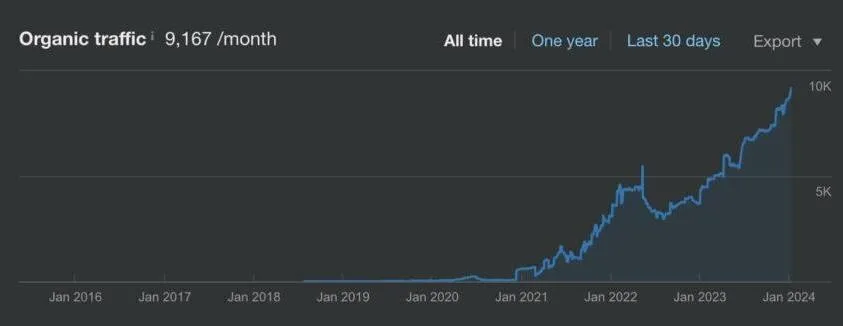
For bspin.io, a full SEO engagement in a brutally competitive vertical, the profile that drives 9,167 organic visits a month and an estimated $17,330 in monthly traffic value was built on roughly 200 links concentrated in the top tiers. Not a spread across every type. A concentration in the few that matter.
Frequently Asked Questions
What Is The Best Type of Backlink?
An editorial, contextual link from a relevant, trafficked site. It is earned rather than placed, sits in body content, and combines relevance with authority. Every other type is judged against it. If you could build only one type, this is the one that moves rankings most reliably.
Are Nofollow Backlinks Worth Anything?
Yes, in a supporting role. Google treats nofollow as a hint rather than a strict directive, and a natural profile includes nofollow links from social, news, and forums. They rarely move rankings alone, but an all-dofollow profile looks engineered. They also drive referral traffic and brand signals.
Which Backlink Types Are Most Dangerous?
PBN links, unmarked paid follow links, and systematic link exchanges. All three violate Google's spam policies and can trigger a manual action or devaluation. Sitewide footer links from paid placements are close behind. The danger is the pattern, which Google detects, more than any single link.
How Many Types of Backlinks Should I Build?
About six, built deliberately: editorial, guest, digital PR, resource page, high-trust domain, and local citations where relevant. The rest accumulate on their own or add little. Concentrating effort on a few high-value types beats spreading it thin across every type in a listicle.
Do All Backlinks Help SEO?
No. Many do nothing, and some actively hurt. Low-value types like generic directories and forum links rarely move rankings, while PBN and paid links can earn a penalty. A backlink only helps when it is relevant, from a trusted source, and editorially placed. Type alone does not decide it, and the same caution applies to buying backlinks, where the cheap end is mostly risk.
Want Mojo Links To Build The Right Types?
Knowing which types matter is one thing; earning them consistently is another. We build the high-value types for clients, editorial, guest, and digital PR placements, with every link backed by a 120-day replacement guarantee. If you want a read on which types your current profile is missing, start with a personalized Loom video.

About Bart Magera
Bart Magera is the founder of Mojo Links. Ten years across YMYL verticals (legal, medical, finance, supplements, crypto, gambling). Trained under Koray Tuğberk Gübür's Topical Authority framework. Author of two SEO books and international speaker.
Want this kind of analysis on your site?
Get a free video walkthrough within 48 hours covering technical health, backlinks, content gaps, and AI visibility.
Related posts
Keep reading on adjacent topics.
- Link Building
 Bart Magera10 min read
Contextual Backlinks: What They Are, Why They Win, and How To Earn Them
A contextual backlink sits inside the body of an article, surrounded by relevant text, not in a footer or author bio. That placement is what gives it weight. Here is what contextual backlinks are, what makes one high quality, how to earn them, and how to spot the cheap fakes.
- Link Building
 Bart Magera12 min read
What Is White Hat Link Building? Techniques That Work in 2026
The Problem: Why Most Link Building Fails Your SEO You wrote great content. It’s relevant. It’s useful. It even has infographics. But guess what? Crickets. Nobody’s linking. Google’s not ranking. And your “ultimate guide” is buried somewhere on page 7 under a recipe blog and a…
- Link Building
 Bart Magera10 min read
Tiered Link Building: How It Works and How To Do It Safely
Tiered link building layers weaker links behind your strongest ones to pass more authority to your money pages. Here is how the pyramid works, how to build one, which links are worth tiering, the risk SpamBrain introduced, and the lower-risk path I use on client sites.