

Nofollow Links: When They Help, When They Hurt, and How To Use Them
Listen to this article
Browser-native voice. No account required.
Nofollow links are not the dead-end signal most SEOs were taught. In 2026, Google treats the rel="nofollow" attribute as a hint rather than a strict directive, which means nofollow backlinks pass partial ranking signal, contribute to brand mentions, and drive referral traffic that compounds into organic visibility. The 2020 attribute split (nofollow + sponsored + ugc) added nuance most outreach teams still ignore. This guide covers when nofollow helps, when it hurts, and how to use each variant correctly. That 2020 reclassification is also what ended nofollow-based link sculpting.
What Is a Nofollow Link?
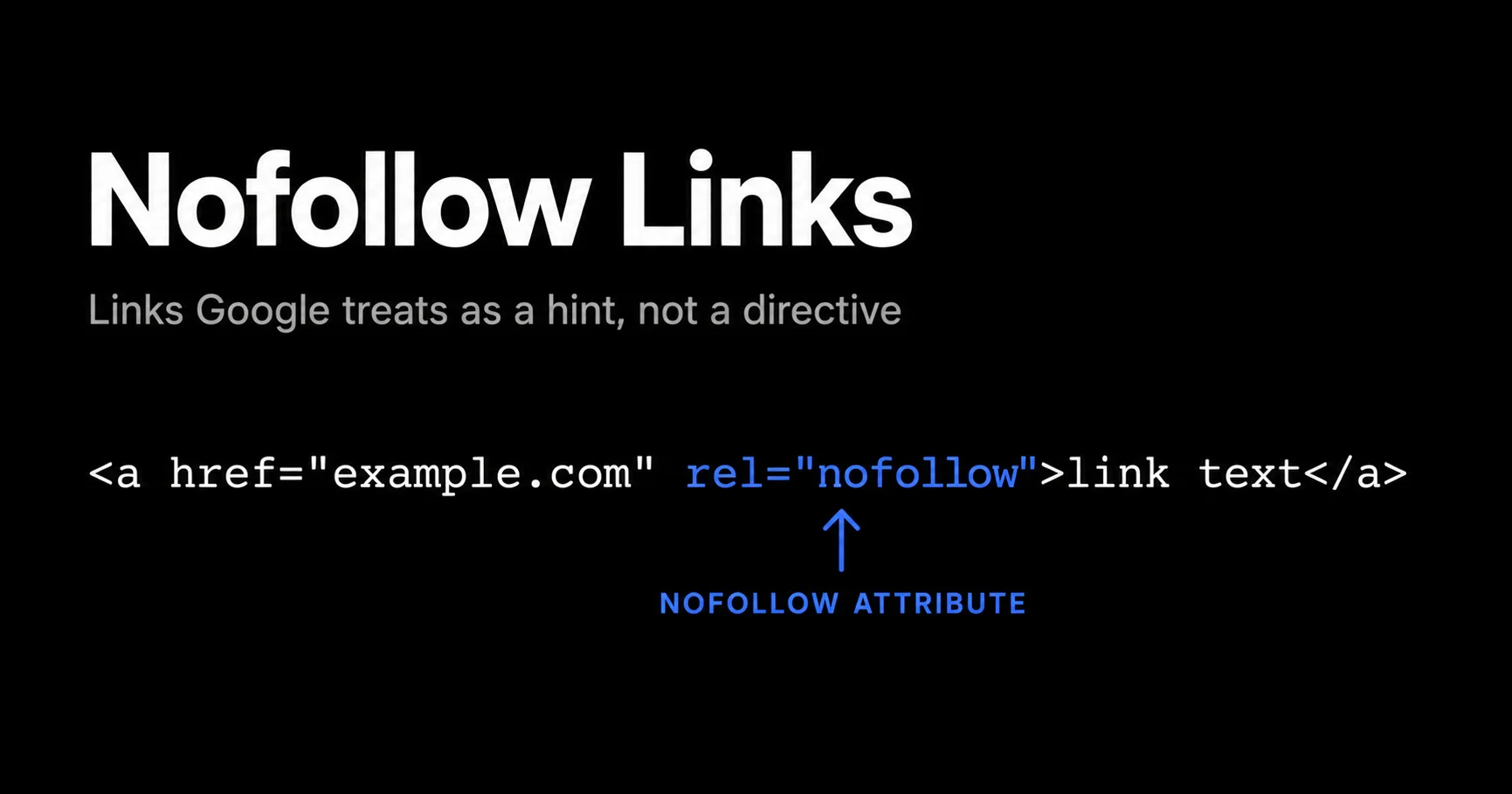
A nofollow link is a hyperlink that carries the rel="nofollow" attribute in its HTML, signaling to Google that the link should not be counted as a standard ranking endorsement from the source page to the target page. Google introduced the attribute in 2005 as a way for publishers to disclose sponsored content, mark untrusted user-generated content, and avoid passing link equity through comment-section spam. In 2026, the attribute remains in active use but Google now treats it as a hint rather than a strict directive.
The HTML structure looks like this:
Standard link: <a href="https://example.com">link text</a>
Nofollow link: <a href="https://example.com" rel="nofollow">link text</a>
Sponsored link (paid): <a href="https://example.com" rel="sponsored">link text</a>
User-generated content link: <a href="https://example.com" rel="ugc">link text</a>
How Is Nofollow Different from Dofollow, Sponsored, and UGC Attributes?
Dofollow is the default behavior - any link without a rel attribute is implicitly dofollow and passes full ranking signal. Nofollow tells Google not to use the link for ranking purposes by default. Sponsored explicitly discloses paid placement. UGC explicitly discloses user-generated content (comments, forum posts). All three non-default attributes (nofollow, sponsored, ugc) are now treated as hints rather than directives, meaning Google reserves the right to count them when context warrants.
Per Google's documentation on qualifying outbound links, rel="sponsored" and rel="ugc" were introduced in 2020 as more precise alternatives to nofollow. All three are now treated as hints rather than directives, which is what makes attribution accuracy matter.
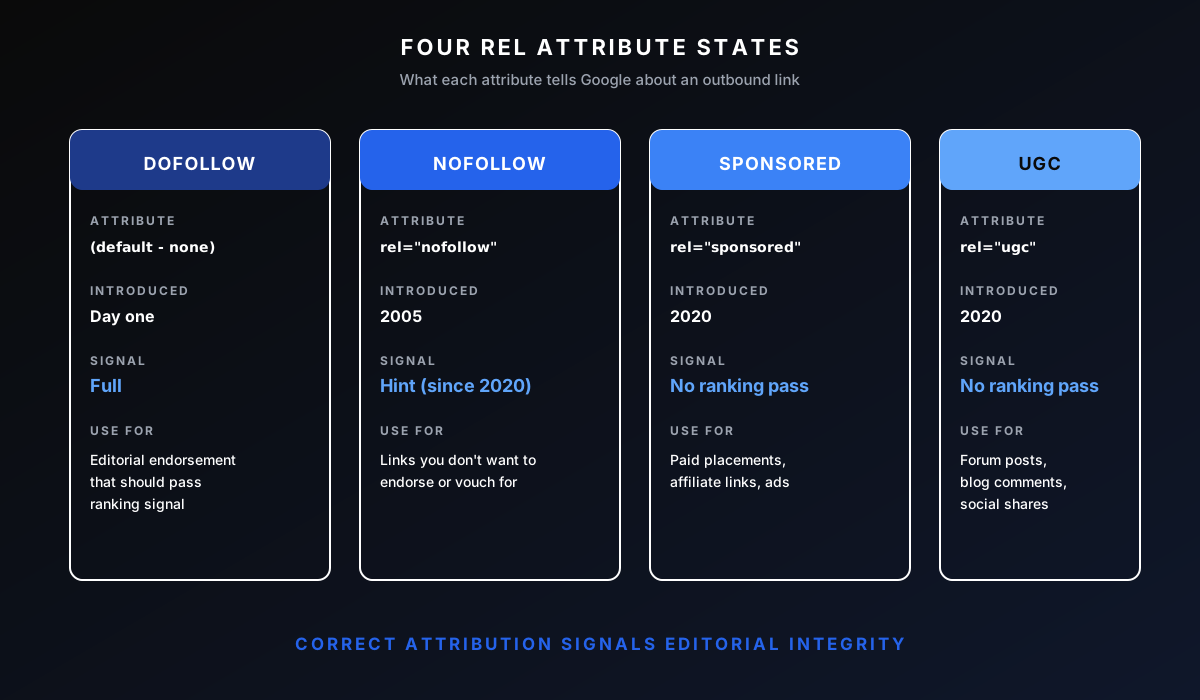
The four attribute states:
Dofollow (default): passes full ranking signal. No rel attribute needed.
rel="nofollow": introduced 2005. Original purpose was comment spam mitigation. Now a hint.
rel="sponsored": introduced 2020. Required for paid placements and affiliate links under Google guidelines.
rel="ugc": introduced 2020. For user-generated content (forum posts, blog comments, social shares).
For the counterpart on the dofollow side, see the dofollow backlinks guide.
Do Nofollow Links Still Influence Rankings in 2026?
Yes. Nofollow links influence rankings in 2026 through three indirect mechanisms: referral traffic (visitors clicking the link signal genuine interest to Google), brand mention association (Google tracks unlinked and nofollow-linked brand references as trust signals), and the 2020 "hint" reclassification (Google may count nofollow links when context warrants, particularly from high-authority publishers). 89.1 percent of practicing SEOs report nofollow links influence rankings indirectly.
Three measurable mechanisms behind nofollow ranking impact:
Referral traffic. Visitors clicking nofollow links generate behavioral signals (time on site, pages per session, return visits) that feed Google's ranking model.
Brand association. Google's entity-graph processing tracks brand mentions across the web. Nofollow links are still mentions.
Algorithmic hint application. Google's 2020 announcement explicitly stated nofollow becomes a hint rather than a directive, meaning the algorithm chooses when to honor it.
For the broader benchmark data behind these numbers, see the link building benchmark data.
When Should You Use The Rel="nofollow" Attribute on Outbound Links?
Use rel="nofollow" on outbound links to untrusted sources, comment sections, forum posts, and any link where you cannot vouch for the destination site's editorial standards. Use rel="sponsored" on paid placements, affiliate links, and partner promotions. Use rel="ugc" on user-generated content. Use no rel attribute (default dofollow) on editorial links you genuinely endorse - this is the most undermanaged outbound link decision on most sites.
The 2026 decision framework for outbound links:
Editorial endorsement (you genuinely recommend the source): default dofollow, no rel attribute
Paid placement, affiliate link, sponsored content: rel="sponsored" (required under Google guidelines)
Comment section, forum post, user submission: rel="ugc"
Untrusted source, low-confidence link, mass-comment-section content: rel="nofollow"
Outbound link inside a guest post you wrote: depends on agreement with publisher; default dofollow if you control the page, sponsored if the publisher considers it paid
When Does Google Reclassify Nofollow as a Hint Rather Than a Directive?
Google announced in 2019 (effective 2020) that all three non-default rel attributes (nofollow, sponsored, ugc) are treated as hints rather than directives. The algorithm reserves the right to count any of these links for ranking, indexing, or both when context suggests the link adds value. In practice, nofollow links from high-authority publishers (NYT, Forbes, Wikipedia, .edu, .gov) get the "hint" interpretation more often than nofollow links from low-trust sources.
Patterns where Google likely applies the hint interpretation:
Nofollow links from high-authority publishers (DR 80+ news, .edu, .gov sources)
Editorial nofollow placements in long-form articles by named authors
Brand citation contexts where the target site is clearly the entity being referenced
Wikipedia citations (all Wikipedia links are nofollow, yet they pass measurable signal)
Patterns where nofollow likely remains a hard skip:
Comment-section links on any site
Forum post links from unverified accounts
Sitewide footer or sidebar widget links
Mass-comment-spam patterns Google has already identified
Should You Build Nofollow Backlinks Deliberately?
Yes, in measured volumes. Deliberate nofollow acquisition serves three goals: profile diversity (a 100 percent dofollow profile reads as manipulative to Google's naturalness models), brand citation signal (nofollow brand mentions on high-authority sites count toward entity-graph weighting), and referral traffic from journalism and high-traffic sources where nofollow is the default. Target 10-30 percent nofollow as a healthy profile composition.
Three deliberate nofollow acquisition channels:
Journalist outreach and digital PR. Most tier-1 publications (NYT, WSJ, Forbes, Bloomberg) nofollow all outbound links by default. Pursue them anyway for brand signal.
Wikipedia citations. All Wikipedia outbound links are nofollow but feed entity-graph signal heavily.
HARO and Qwoted expert placements. Most expert-quoted placements carry nofollow links. Worth pursuing for authority signal.
How Do Nofollow Links Compare To Dofollow Links for Ranking Impact?
Dofollow links pass full ranking signal directly through PageRank-style equity transfer. Nofollow links pass partial signal indirectly through referral traffic, brand mention attribution, and Google's 2020 "hint" reclassification. Per-link, dofollow links from equivalent sources produce 3 to 7 times more ranking lift than nofollow links from the same sources. But a high-authority nofollow link can outperform a low-authority dofollow link in absolute ranking impact.
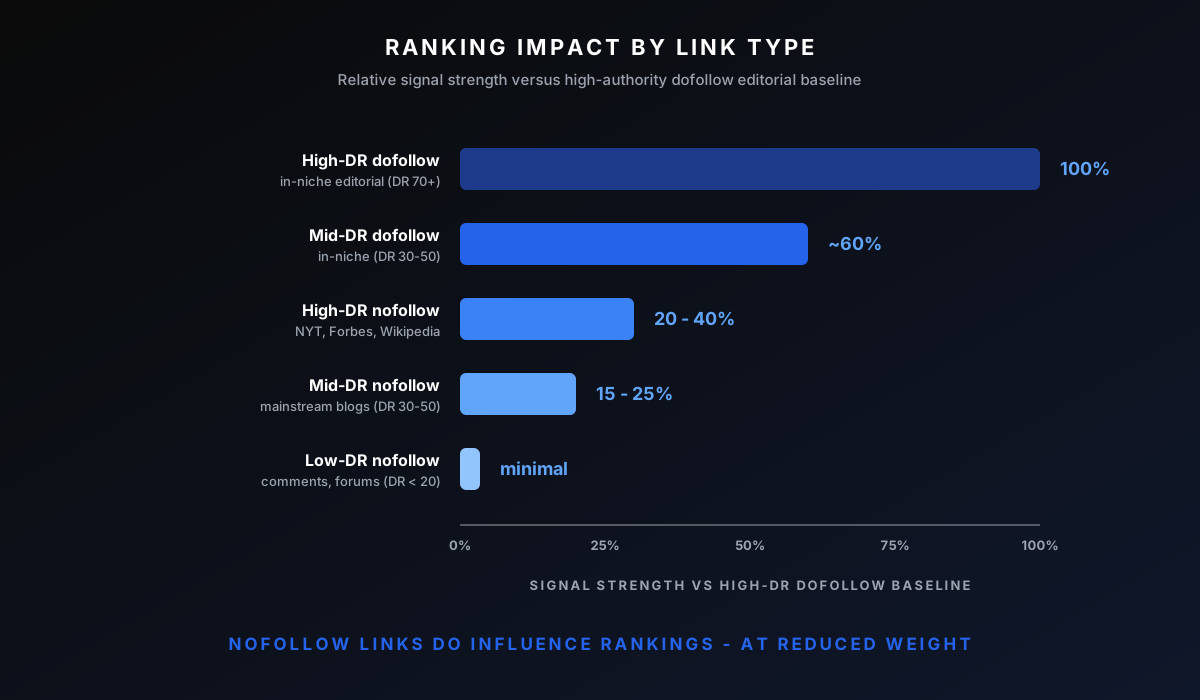
Direct comparison by ranking weight:
High-authority dofollow (DR 70+ editorial in-niche): strongest ranking signal available
High-authority nofollow (NYT, Forbes, Wikipedia): 20-40 percent of equivalent dofollow signal, plus referral traffic
Mid-authority dofollow (DR 30-50 in-niche): solid ranking signal, primary acquisition target
Mid-authority nofollow (DR 30-50 mainstream blogs): 15-25 percent of equivalent dofollow signal
Low-authority nofollow (DR under 20, comment sections): minimal direct signal, possible referral traffic
What Percentage of a Healthy Backlink Profile Should Be Nofollow?
A healthy 2026 backlink profile contains 10 to 30 percent nofollow links. The exact range shifts by niche: YMYL sites with heavy press coverage trend higher (20-30 percent) because tier-1 journalism nofollows by default. B2B SaaS sites trend lower (10-15 percent) because their organic placements skew editorial dofollow. E-commerce sites sit at 15-20 percent due to product-review nofollow patterns. Profiles outside the range warrant investigation - 0 percent nofollow signals artificial acquisition, 50+ percent nofollow signals weak overall acquisition.
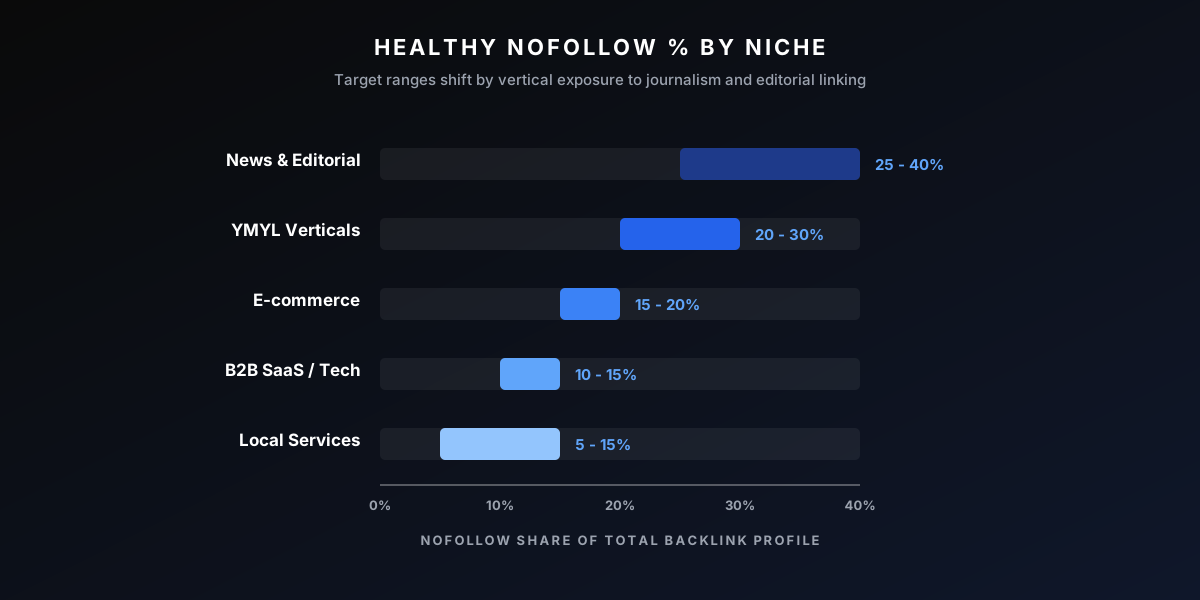
Per-niche nofollow distribution targets:
YMYL verticals (legal, medical, finance, supplements, gambling): 20-30 percent
B2B SaaS and tech: 10-15 percent
E-commerce: 15-20 percent
News and editorial sites: 25-40 percent (heavy nofollow from peer publications)
Local services: 5-15 percent (lower journalism exposure)
How Do You Check If a Link Is Nofollow or Dofollow?
Check link attribution by inspecting the HTML source of the linking page. Right-click the link, select "Inspect" in any modern browser, and look at the <a> tag's rel attribute. Browser extensions like NoFollow (Chrome, Firefox) highlight nofollow links visually on every page. Backlink tools like Ahrefs and Semrush also classify links as follow/nofollow in their referring-domain reports, though tool classification occasionally lags Google's real-time attribution.
Three checking methods, ranked by precision:
View Source / Inspect Element (most accurate). Confirms what Googlebot actually sees in the static HTML.
Browser extensions (NoFollow, Strike Out NoFollow). Highlights nofollow links on the rendered page.
Backlink tool classification (Ahrefs, Semrush, Moz). Convenient for bulk audits but occasionally stale.
For the broader manual checking workflow, see the manual backlink checking guide.
How Do You Ask a Publisher To Remove The Nofollow Attribute?
Asking a publisher to remove the nofollow attribute is rarely worth the effort and frequently damages the relationship. Most publishers nofollow all outbound links as editorial policy (NYT, Forbes, Wikipedia), and changing the policy for one link sets a precedent they avoid. Reasonable cases to ask: a clear error where the publisher intended dofollow, an editorial article where the writer endorses your work explicitly, or a relationship where the publisher signals openness. In every other case, accept the nofollow and pursue the next placement.
When asking is reasonable:
You secured a guest post placement and the publisher applied nofollow by mistake
The article is an explicit editorial endorsement (named writer, specific praise) and the writer agrees
You have an established relationship with the publisher and the link is in a roundup context
When asking is wrong:
The publisher has a sitewide nofollow policy (every major news publication)
You acquired the link through cold outreach and it converted to a nofollow placement
The nofollow is on a paid placement (required by Google guidelines)
You are asking just because "dofollow is better" - not a sufficient business reason
Who Should Care Most About Nofollow Attribution?
Three audiences should monitor nofollow attribution carefully: site owners running paid placements (where rel="sponsored" is legally required under FTC guidelines and algorithmically required under Google guidelines), agencies doing digital PR campaigns (where most placements convert to nofollow and the profile composition matters), and any site at scale (where the 10-30 percent nofollow range becomes a real metric to track).
For Site Owners Running Paid Placements
Paid placements must carry rel="sponsored" or rel="nofollow" under Google guidelines. Skipping the attribution is the actual policy violation that triggers algorithmic devaluation, not the paid-link nature itself. Document attribution in the placement agreement to avoid disputes.
For Agencies Doing Digital PR
Digital PR campaigns produce nofollow placements as the default outcome. Track nofollow percentage as a campaign metric, not just total placement count. Mature campaigns target a 60/40 split between dofollow editorial and nofollow PR placements.
For Sites Running at Scale
Sites with 500+ referring domains need to monitor the dofollow/nofollow ratio quarterly. Sudden shifts (a quarter where nofollow drops to 5 percent or jumps to 60 percent) often indicate acquisition pattern changes worth investigating.
What Mistakes Do SEOs Make About Nofollow Links?
Five mistakes dominate SEO failures around nofollow attribution: treating nofollow as worthless, refusing to pursue tier-1 PR placements because they nofollow, requesting nofollow removal from publishers who will never remove it, mislabeling paid placements as dofollow, and obsessing over the dofollow/nofollow ratio while ignoring the bigger picture of profile health.
As the Ahrefs breakdown of nofollow links explains, paid placements without rel="sponsored" or rel="nofollow" read as a link scheme. The attribution choice is not optional for compliance: it is the difference between legitimate sponsorship disclosure and a link-scheme violation.
Treating nofollow as worthless. Misses referral traffic, brand signal, and the 2020 hint reclassification. Nofollow links from NYT or Forbes outperform most dofollow placements.
Refusing tier-1 PR because of nofollow. Skipping a Forbes mention because "they only nofollow" is one of the most expensive mistakes in SEO. The brand signal compounds across organic visibility.
Asking for nofollow removal. Burns publisher relationships. Reserved for genuine editorial mistakes only.
Mislabeling paid placements. Paid placements without sponsored or nofollow attribution are the actual policy violation. Google guidelines require disclosure.
Ratio obsession. A profile with 5 percent nofollow is not automatically problematic if the 95 percent dofollow comes from clean editorial sources. The ratio is a flag for investigation, not a hard target.
How Did Mojo Links Validate This Nofollow Framework?
The 10-30 percent profile range and per-niche distribution targets come from Mojo Links campaign data across 300+ engagements between 2019 and 2026. The "nofollow links influence rankings indirectly" claim was tested through three Google algorithm changes: the 2019 nofollow hint announcement (effective 2020), the 2022 link spam update, and the 2024 link spam update. Each change strengthened the case for treating nofollow as a profile-diversity signal rather than a binary ignore.
For the full data behind these benchmarks, see our link building statistics report. For the cluster sibling on dofollow attribution, see the dofollow backlinks guide.
Frequently Asked Questions About Nofollow Links
Do Wikipedia Links Count Toward SEO?
Yes, despite Wikipedia using rel="nofollow" on every outbound link. Wikipedia citations feed Google's entity-graph processing heavily and drive substantial referral traffic. Securing a Wikipedia citation in a relevant article is among the highest-value brand signals available to any site.
Should I Disavow Nofollow Backlinks?
No, almost never. Disavow is for genuinely toxic links (spam, manipulation, paid networks). Nofollow links from clean publishers pass minimal direct ranking signal but do no harm. Disavowing them removes the indirect signal (referral, brand association) for no recovery benefit.
How Do I Make My Own Outbound Links Nofollow?
Add rel="nofollow" inside the anchor tag: <a href="https://example.com" rel="nofollow">link text</a>. WordPress and most CMS platforms include a UI checkbox to add rel attributes to links during content editing. For sitewide nofollow on specific patterns (comments, sponsored sections), CMS plugins or HTML template edits handle it automatically.
Does The Rel="ugc" Attribute Pass Any Ranking Signal?
Yes, marginally. UGC follows the same "hint" classification as nofollow since 2020. Google may count UGC links when context warrants (high-quality forums, verified user accounts, editorial moderation), but the default treatment is closer to nofollow than dofollow. UGC primarily exists to help Google distinguish editorial content from user submissions.
Is It Bad If My Outbound Links Are All Dofollow?
No, not inherently. A site that only links out to high-quality editorial sources can legitimately have 100 percent dofollow outbound. The problem is when sites link out to untrusted sources (comment-section URLs, low-quality affiliates, paid sponsorships) without nofollow or sponsored attribution. The bad pattern is mislabeling, not high dofollow percentage.
Nofollow attribution is one of dozens of decisions an outreach campaign tracks. For the end-to-end program this fits into, see the complete link building workflow.
Want Us To Audit Your Link Attribution?
A Mojo Links audit reviews link attribution across the full inbound and outbound profile - flagging mislabeled paid placements, missing sponsored attribution, and the dofollow/nofollow distribution against per-niche targets. For a free 20-minute audit covering link risk, content gaps, and AI visibility, request a growth audit walkthrough. Senior strategist on the call. No junior PMs.

About Bart Magera
Bart Magera is the founder of Mojo Links. Ten years across YMYL verticals (legal, medical, finance, supplements, crypto, gambling). Trained under Koray Tuğberk Gübür's Topical Authority framework. Author of two SEO books and international speaker.
Want this kind of analysis on your site?
Get a free video walkthrough within 48 hours covering technical health, backlinks, content gaps, and AI visibility.
Related posts
Keep reading on adjacent topics.
- Link Building
 Bart Magera10 min read
Contextual Backlinks: What They Are, Why They Win, and How To Earn Them
A contextual backlink sits inside the body of an article, surrounded by relevant text, not in a footer or author bio. That placement is what gives it weight. Here is what contextual backlinks are, what makes one high quality, how to earn them, and how to spot the cheap fakes.
- Link Building
 Bart Magera12 min read
What Is White Hat Link Building? Techniques That Work in 2026
The Problem: Why Most Link Building Fails Your SEO You wrote great content. It’s relevant. It’s useful. It even has infographics. But guess what? Crickets. Nobody’s linking. Google’s not ranking. And your “ultimate guide” is buried somewhere on page 7 under a recipe blog and a…
- Link Building
 Bart Magera10 min read
Tiered Link Building: How It Works and How To Do It Safely
Tiered link building layers weaker links behind your strongest ones to pass more authority to your money pages. Here is how the pyramid works, how to build one, which links are worth tiering, the risk SpamBrain introduced, and the lower-risk path I use on client sites.