

Link Sculpting: What Died in 2009 and What Replaced It
Listen to this article
Browser-native voice. No account required.
Search "link sculpting" today and the top results are still arguing about a tactic Google neutralized in 2009. Half of them say it is dead. The other half say it secretly still works. Both are half right, and the gap between them costs sites rankings they have already paid for.
Here is the version from someone who redistributes internal authority for a living. The original link sculpting trick, using nofollow to hoard PageRank, has been pointless since 2009. The discipline behind it, deciding which of your pages get your site's authority, matters more now than it did then. The name survived. The method changed completely.
What Is Link Sculpting?
Link sculpting is the practice of controlling how authority, or PageRank, flows between the pages of your own website. The original technique used the nofollow attribute to withhold equity from low-value pages. The modern method uses internal link structure to steer it toward pages that earn revenue.
An internal link is any link from one page to another on the same domain, and its anchor text tells Google what the destination is about (the anchor text guide covers the ratios that keep it safe). Sculpting is doing that on purpose, across the whole site, so authority concentrates where it converts instead of spreading evenly across every page you happen to have published.
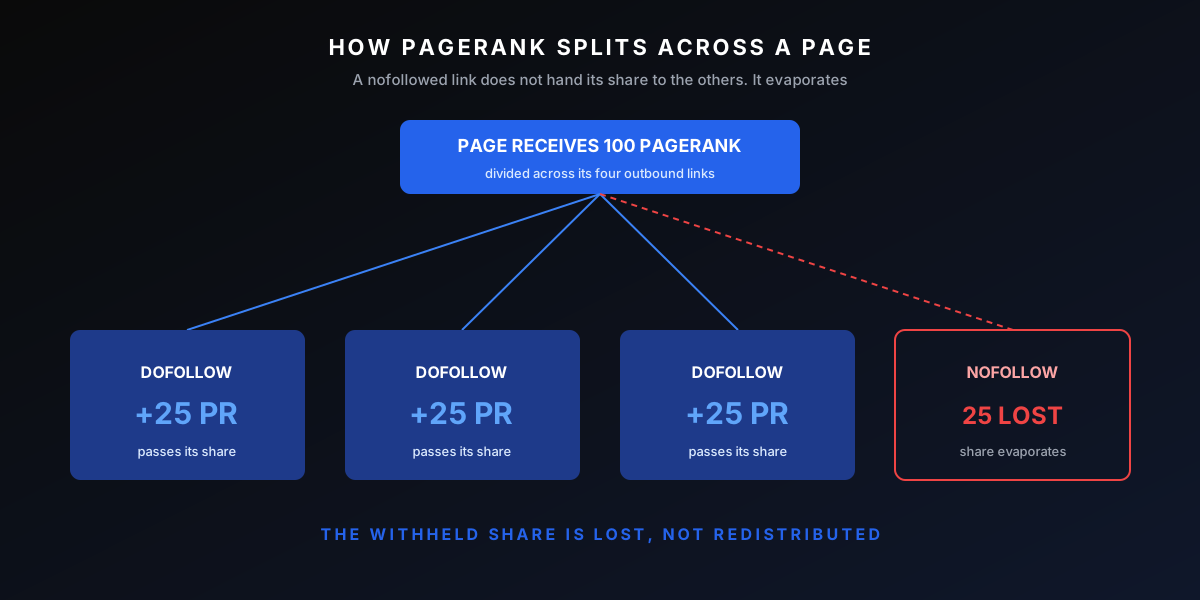
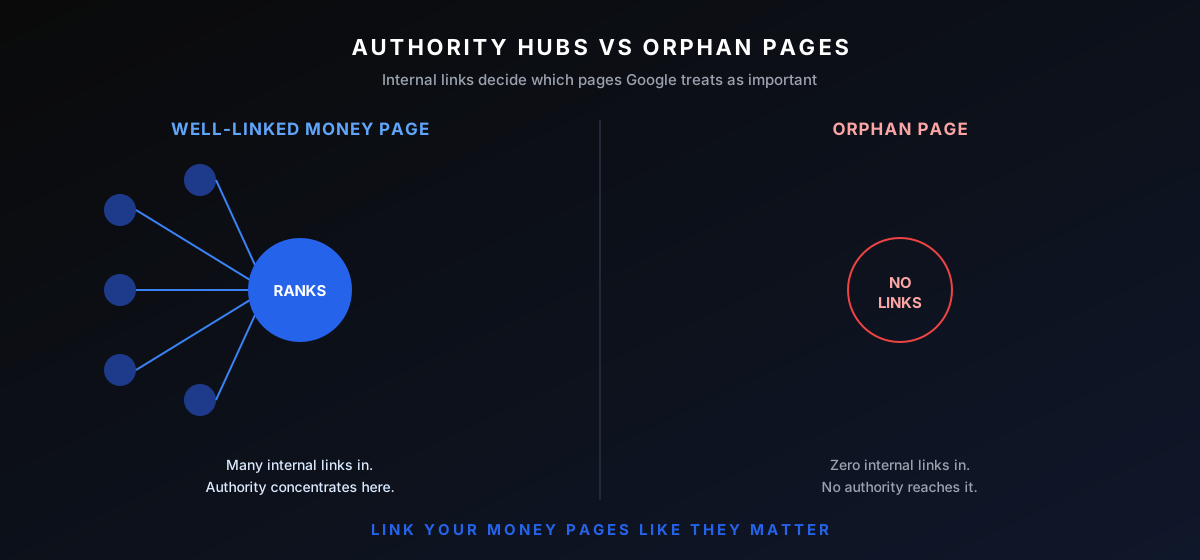
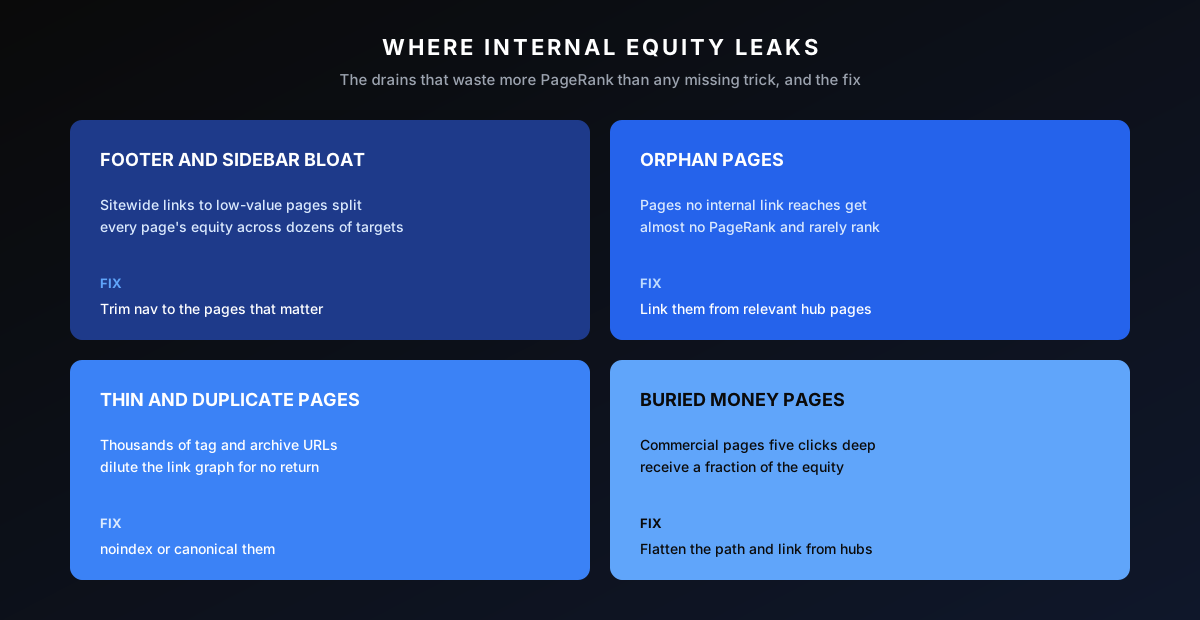
Two terms sit underneath the definition. Internal PageRank is the share of authority a page passes to the pages it links to. Link equity is the same idea in plainer language, the ranking value that travels along a link. Sculpting decides where that value lands, and the diagram below shows why the math matters.
What Did Matt Cutts Change in 2009?
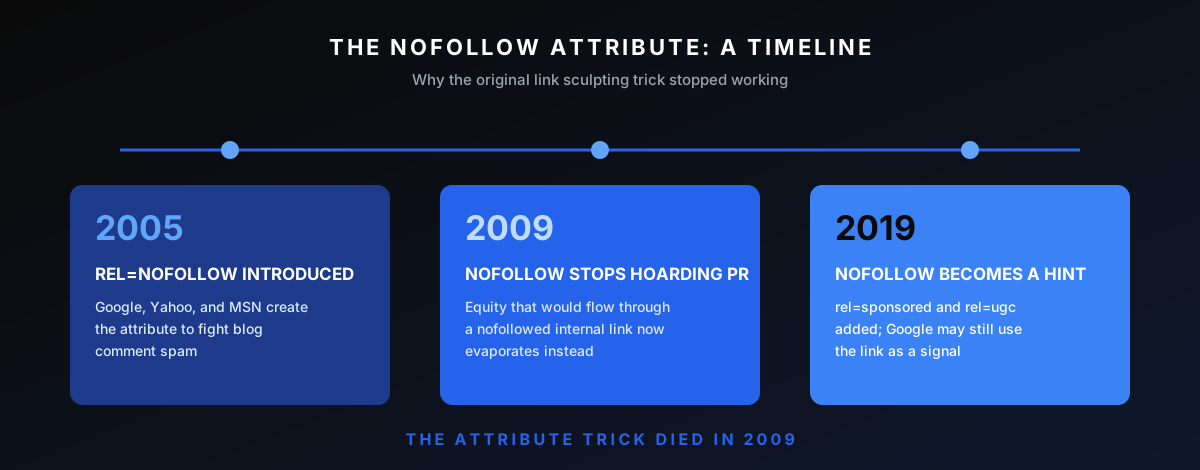
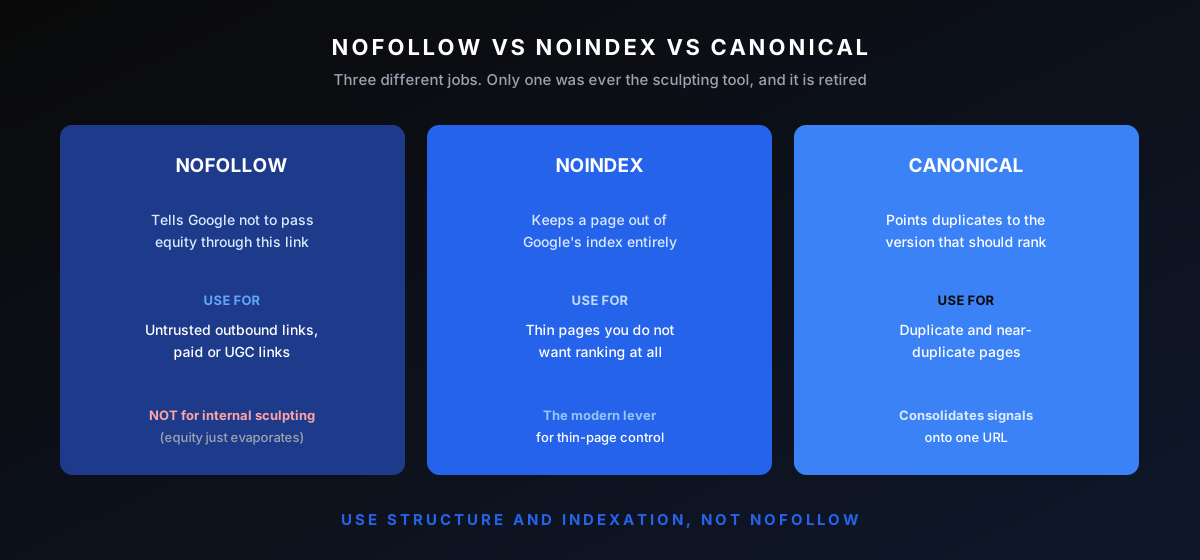
In 2009, Google stopped letting nofollow conserve PageRank. Before the change, you could nofollow internal links to logins, carts, and archives so more equity flowed to important pages. After it, that withheld PageRank evaporated instead of redistributing, which killed the tactic overnight.
Before 2009 the tactic was everywhere. You would add nofollow to the internal links you judged low value, the login, the cart, the print and archive pages, on the theory that the PageRank they would have absorbed got handed back to the pages you cared about. For a few years it genuinely worked, and sculpting nofollow across a template was standard practice.
The mechanism is the link graph. PageRank enters a page and divides across its outbound links. Matt Cutts's PageRank sculpting post, written when he led Google's webspam team, explains that adding nofollow does not hand that share to the remaining links. It drops out of the graph and disappears. So nofollowing ten of a page's twenty links no longer doubles the equity to the other ten. It just loses half.
Cutts confirmed the shift at the SMX Advanced conference in June 2009, and the industry spent the next decade catching up. Plenty of sites still carry nofollow on internal links today, left over from a tactic that stopped paying out before some of their pages existed.
Then in 2019 Google reclassified nofollow as a hint rather than a directive and introduced rel=sponsored and rel=ugc for paid and user-generated links, set out in its guidance on qualifying outbound links. None of that brought sculpting back. Nofollow still does not conserve PageRank on internal links. If anything, treating it as a hint made the old trick even less predictable.
Is Link Sculpting Dead?
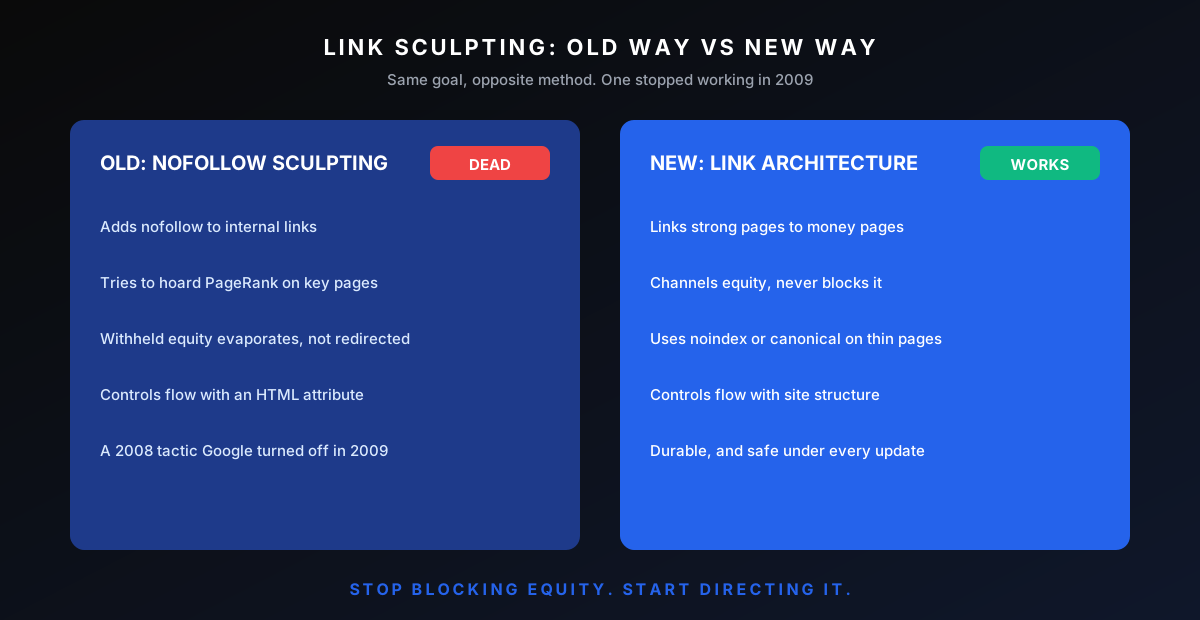
Nofollow-based link sculpting is dead. Adding nofollow to internal links no longer hoards PageRank; it wastes it. But the goal behind sculpting, directing your site's authority to the pages that matter, is alive and well, and you reach it through structure instead of attributes.
Across the sources that defined this debate, from Matt Cutts to Moz to Search Engine Land, the conclusion is identical: nofollow stopped conserving PageRank in 2009. The disagreement only exists because two different techniques share one name.
You have probably seen a recent post promising that link sculpting still works in 2026. It does, but not the way the headline wants you to read it. Anyone still selling a nofollow-based sculpting hack is charging you for a 2008 tactic Google switched off the year after.
What Replaced Nofollow Sculpting?
Internal link architecture replaced it. Instead of blocking equity with an attribute, you route it: link from your strongest pages to your money pages, keep those pages shallow in the structure, and use noindex or canonical to stop thin pages diluting the graph.
Moz called this link consolidation, the new PageRank sculpting, and the logic is simple. Every internal link on a page splits that page's link equity among its targets, so fewer, more deliberate links send more of the flow to each one. Concentrate the links pointing at a commercial page and you concentrate its authority.
This is where structure meets relevance. A deliberate internal map, the kind Mojo Links builds into every topical maps engagement, decides which pages are hubs and which feed them, so authority and topical signals move together instead of at random.
What Are The Modern Link Sculpting Techniques?
Modern link sculpting is a strategy built from structural techniques, not one attribute. You concentrate authority with contextual internal links, hub-and-spoke architecture, and a flat structure, then stop wasting it with noindex on thin pages, canonical on duplicates, and the pruning of orphans. Organising those pages by topic is the job of SEO silos.
Contextual internal links. Body-content links from relevant pages, with descriptive anchor text, carry far more weight than navigation or footer links.
Hub-and-spoke structure. Group related pages under a hub, link the hub to its spokes and back, so authority and relevance pool around the topic.
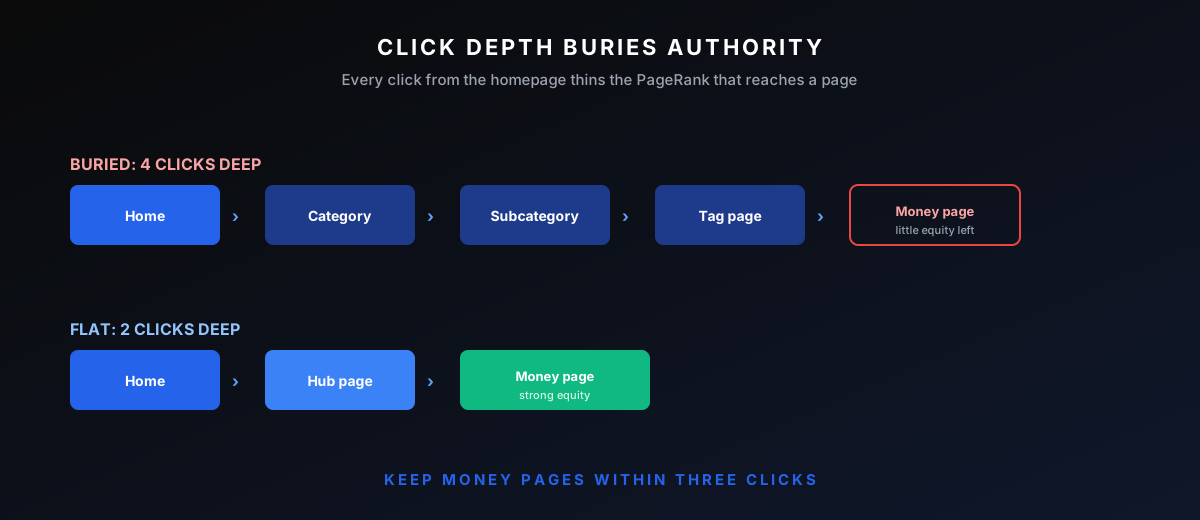
Flat architecture. Keep the pages that matter within about three clicks of the homepage so authority reaches them undiluted.
noindex on thin pages. Keep tag archives and thin pages out of the index so they stop splitting the link graph.
canonical on duplicates. Point near-duplicate pages at the version that should rank and consolidate their signals onto one URL.
Prune the orphans. Either link orphaned pages from a relevant hub or remove them. A page nothing links to earns nothing.
Notice what is missing from that list. No attribute trick, no plugin, no nofollow. Every technique is a decision about structure, which is exactly why it survives algorithm updates that punish manipulation. The better the content those pages hold, the more each internal link is worth passing along. For a related tactic worth understanding, see how tiered link building works.
How To Channel Internal PageRank To Money Pages
Map where authority pools and where it leaks, then redirect the flow. Crawl the site to see which pages hold the most internal links and which are orphaned, link deliberately from your strongest pages to your revenue pages, flatten the path to them, and prune the dead weight.
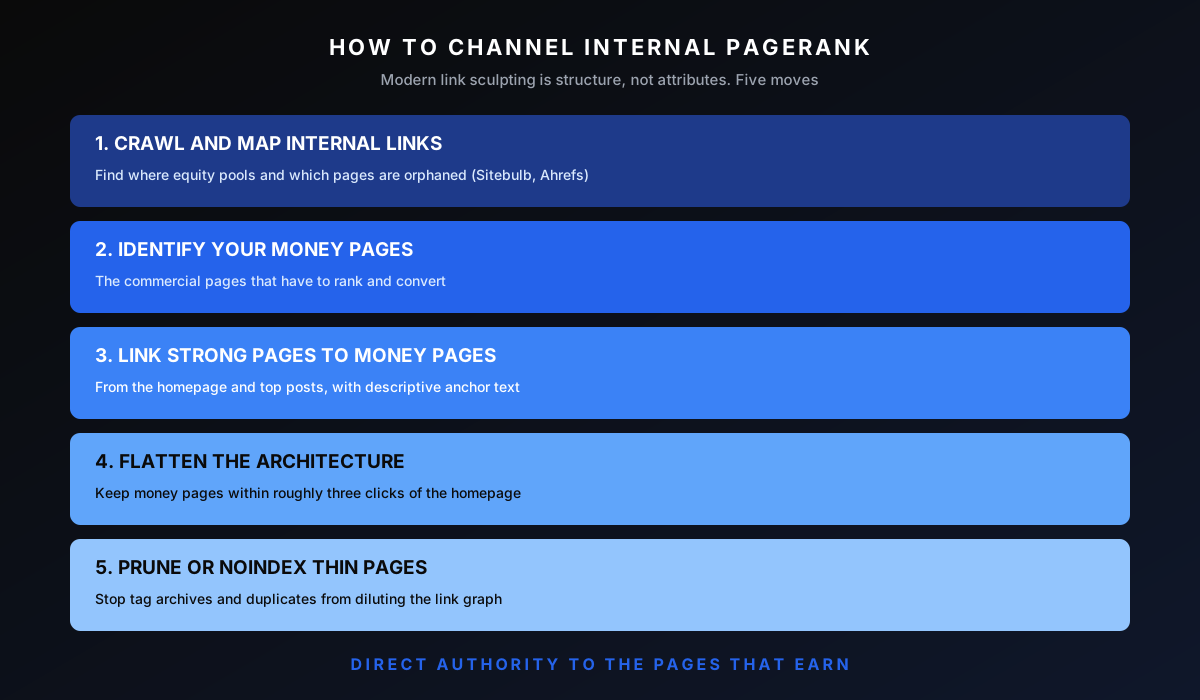
Crawl and map. Run Sitebulb or Ahrefs and look at internal links per page. The pages with the most are your authority hubs; the ones with none are orphans.
Pick the money pages. Usually service or product pages. These are the targets equity should converge on.
Link hubs to money pages. Add contextual links from the homepage and your best-performing, relevant posts straight to those pages, with anchor text that describes them.
Flatten the path. Keep money pages within about three clicks of the homepage. Depth buries authority.
Prune or noindex thin pages. Tag archives, thin categories, and near-duplicates split the graph for no return. noindex or canonical them.
Audits regularly turn up sites with four thousand internal links pointing at a privacy policy and two pointing at the page that pays the bills. That imbalance, not a missing attribute, is the real sculpting problem.
What Does Link Sculpting Look Like on a Real Site?
It usually starts as an audit finding, not a theory. A typical site has its highest-converting page buried four clicks deep, a handful of orphan pages, and a footer that links to thirty low-value URLs on every page. The fix is structural, and the gains compound.
Take a pattern that shows up most months. The homepage and a few strong blog posts hold almost all of the internal authority, but none of them link to the service page that actually sells. Meanwhile the footer points sitewide at the privacy policy, the terms page, and a dozen old category archives, so every page on the website spends part of its equity there.
The fix is not a plugin. You add contextual links from the strong pages and relevant content to the money page, cut the footer down to the links that matter, flatten the path so the money page sits two clicks from the homepage, and noindex the thin archives. Same content, same backlinks, more authority reaching the page that pays, because even great content is wasted when nothing internal links to it. That is link sculpting in 2026, and it is some of the highest-leverage SEO work a site can do.
What Still Wastes PageRank?
The biggest waste is not a missing trick; it is structure left on autopilot. Orphan pages no link reaches, money pages buried deep, thousands of thin pages indexed, and footer menus linking to everything all pull authority away from the pages that need it most.
So where does your equity actually go? On most sites, into navigation. Sitewide footer and sidebar links to low-value pages quietly drain every page they sit on. And nofollow on internal links still turns up in audits, a cargo-cult habit that now does nothing but evaporate the equity it touches.
Frequently Asked Questions
Does Link Sculpting Still Work in 2026?
The structural version works; the nofollow version does not. Directing internal authority to your money pages through real links and clean architecture still moves rankings. Using nofollow to hoard PageRank has done nothing since 2009 except waste it.
Should I Nofollow Internal Links?
No. Nofollow on internal links no longer conserves PageRank, so the equity that would have passed through just disappears. To keep a page out of the index, use noindex; to handle duplicates, use canonical. Reserve nofollow for untrusted external links.
Is PageRank Still Real?
Yes, internally. Google retired the public toolbar PageRank score in 2016, but the underlying link-based authority signal still operates inside the algorithm. You cannot see a number anymore, which is exactly why internal-link structure is how you influence it.
What Is The Difference Between Link Sculpting and Internal Linking?
Internal linking is the mechanism; link sculpting is the intent. Every site has internal links. Sculpting is linking deliberately so authority concentrates on the pages that rank and convert, rather than spreading evenly by accident.
Does Nofollow Conserve PageRank?
No, not since 2009. Before then, a nofollowed link withheld its share of PageRank for the page's other links. Google changed that so the share evaporates instead. Nofollow no longer redistributes equity anywhere on the site.
Is Link Sculpting White Hat or Black Hat?
Modern link sculpting is white hat. Structuring your own internal links to favour important pages is something Google's documentation actively encourages. The black-hat version, manipulating nofollow to game the link graph, is the part that stopped working in 2009 anyway.
Does Link Sculpting Work for a New Site?
Yes, and it matters more on a small site. With few pages and little authority, where each internal link points decides which pages rank at all. Get the structure right early and every link you build later flows to the right place.
How Many Internal Links Should a Page Have?
There is no fixed number, but every internal link divides the page's authority, so be deliberate. A focused page linking to ten relevant pages passes more to each than one buried under eighty navigation and footer links.
Work with Mojo Links
Internal authority is one of the cheapest levers in any SEO strategy, and one most sites neglect. We map it, fix the structure, and point it at the pages that make money as part of every monthly SEO engagement. Most clients are surprised how much ranking sits trapped in orphaned pages and bloated footers. The free growth audit includes a pass on where your internal equity pools and where it leaks, so you can see the dead weight before you commit to anything.

About Bart Magera
Bart Magera is the founder of Mojo Links. Ten years across YMYL verticals (legal, medical, finance, supplements, crypto, gambling). Trained under Koray Tuğberk Gübür's Topical Authority framework. Author of two SEO books and international speaker.
Want this kind of analysis on your site?
Get a free video walkthrough within 48 hours covering technical health, backlinks, content gaps, and AI visibility.
Related posts
Keep reading on adjacent topics.
- Link Building
 Bart Magera10 min read
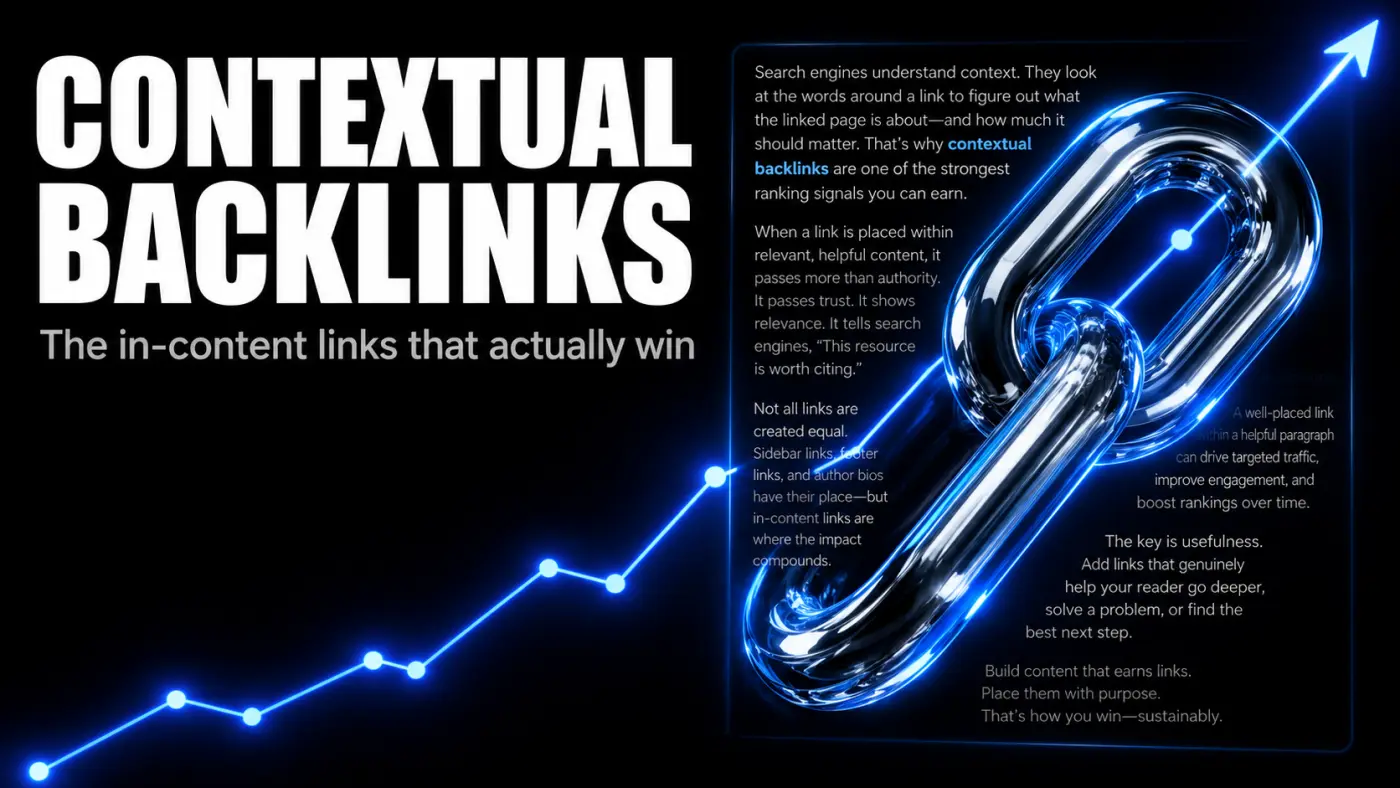
Contextual Backlinks: What They Are, Why They Win, and How To Earn Them
A contextual backlink sits inside the body of an article, surrounded by relevant text, not in a footer or author bio. That placement is what gives it weight. Here is what contextual backlinks are, what makes one high quality, how to earn them, and how to spot the cheap fakes.
- Link Building
 Bart Magera12 min read
What Is White Hat Link Building? Techniques That Work in 2026
The Problem: Why Most Link Building Fails Your SEO You wrote great content. It’s relevant. It’s useful. It even has infographics. But guess what? Crickets. Nobody’s linking. Google’s not ranking. And your “ultimate guide” is buried somewhere on page 7 under a recipe blog and a…
- Link Building
 Bart Magera10 min read
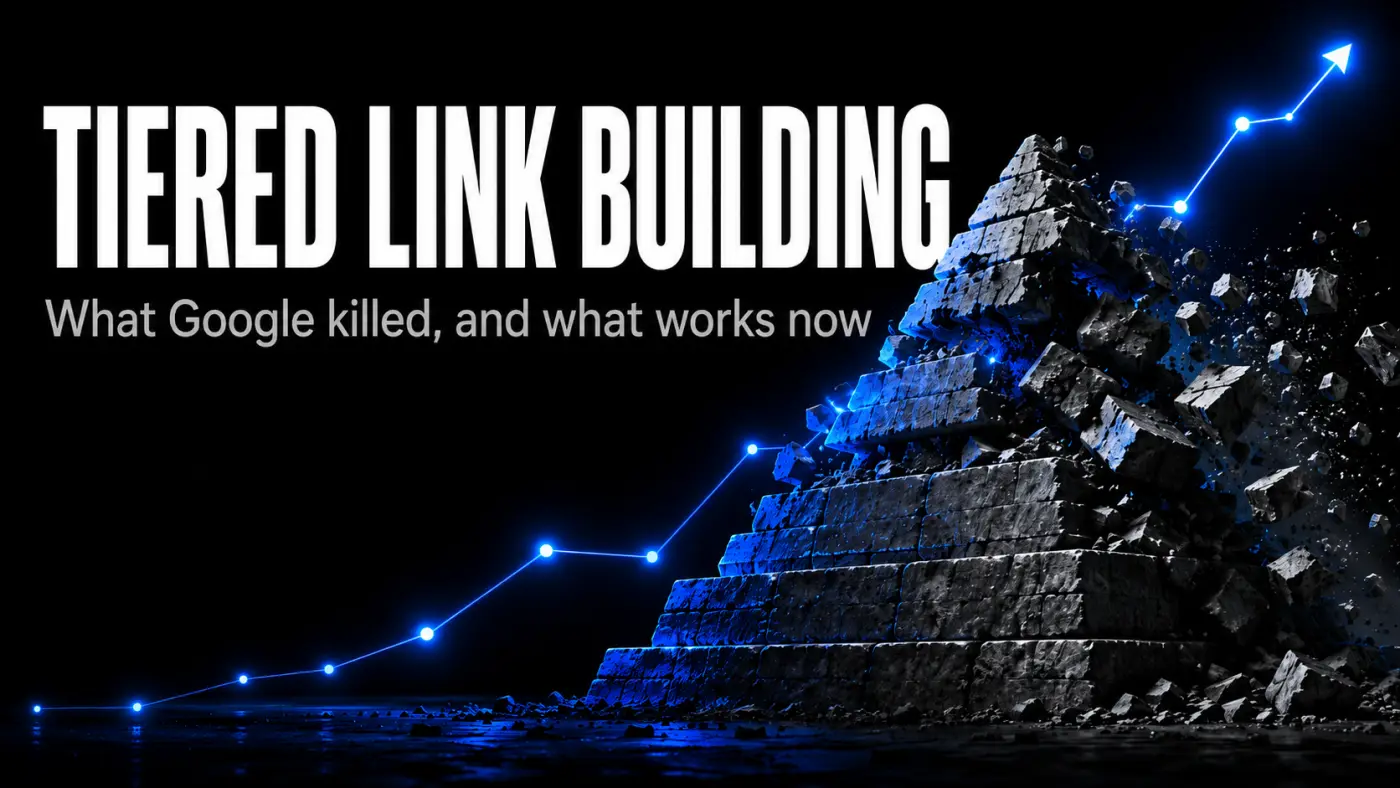
Tiered Link Building: How It Works and How To Do It Safely
Tiered link building layers weaker links behind your strongest ones to pass more authority to your money pages. Here is how the pyramid works, how to build one, which links are worth tiering, the risk SpamBrain introduced, and the lower-risk path I use on client sites.