

Anchor Text Distribution: Safe Ratios, Tactics, and Recovery
Listen to this article
Browser-native voice. No account required.
Anchor text is the single most undermanaged ranking signal in link building. Most campaigns track domain rating, referring domain count, and traffic - all of which matter - while ignoring the anchor distribution that decides whether the link profile reads as natural or manipulative to Google's 2026 algorithm. The distribution that compounds rankings looks different from the distribution that triggers algorithmic devaluation. This guide covers the exact numbers Mojo Links targets across YMYL and competitive verticals.
What Is Anchor Text?
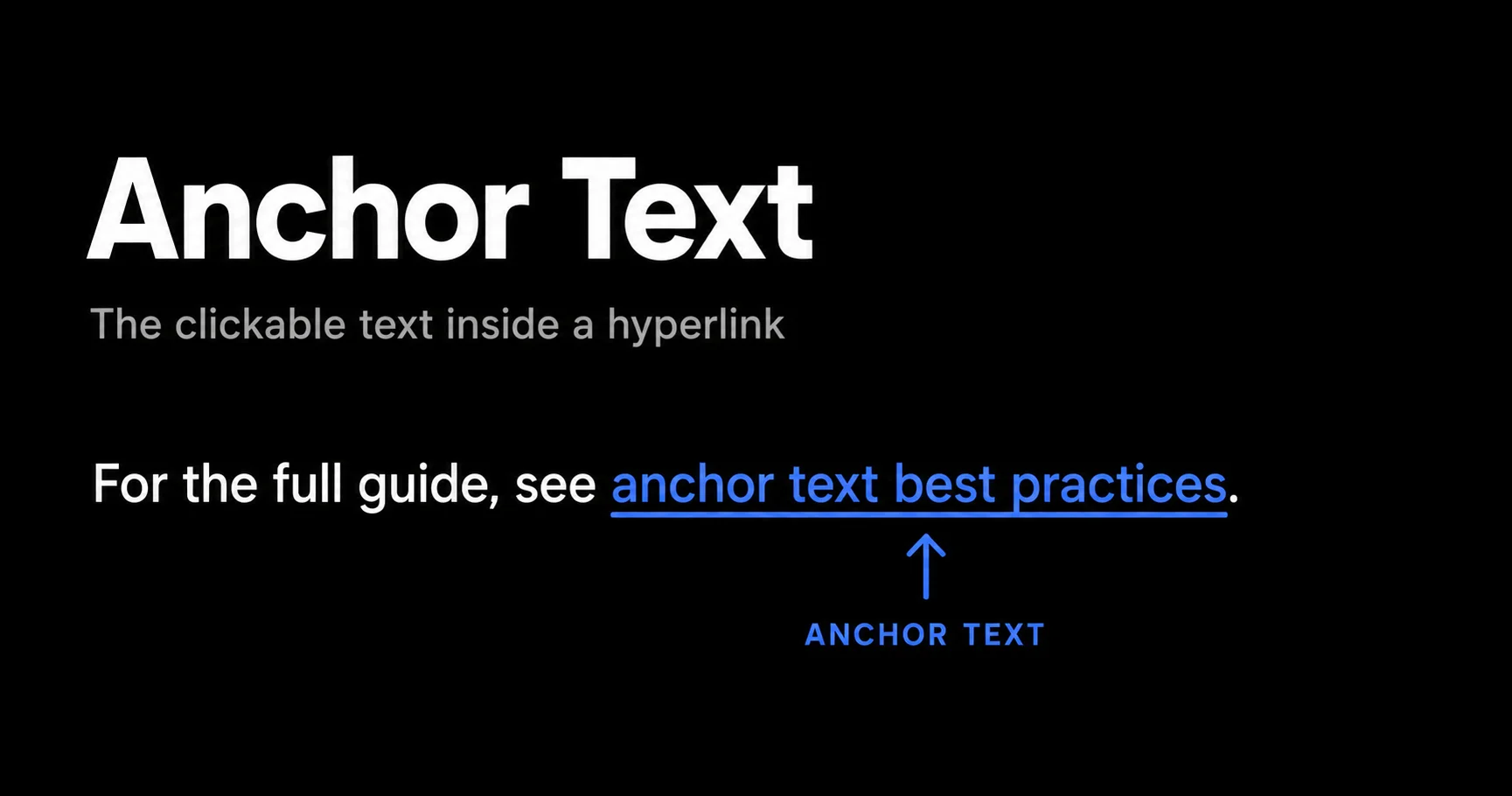
Anchor text is the visible, clickable text that hyperlinks one webpage to another. The HTML lives between the opening and closing <a> tags - the words a reader sees and clicks, plus the words Google reads to interpret what the linked page is about. Anchor text is one of the strongest contextual signals Google uses to understand a target page's topic and assign it ranking authority on specific queries.
Three layers of anchor text every campaign manages:
Visible text that readers click - the surface layer
Topical relevance signal that Google reads to assign ranking weight - the semantic layer
Distribution pattern across the full profile that signals natural vs manipulative acquisition - the algorithmic layer
Why Does Anchor Text Matter for SEO in 2026?
Anchor text matters because Google's 2026 ranking algorithm reads anchor distribution as a primary signal of acquisition authenticity. Natural link profiles show heavy branded skew, moderate partial-match coverage, and minimal exact-match commercial concentration. Manipulated profiles show inverted patterns - heavy exact-match commercial, light branded - and Google's machine-learning detection now flags those patterns automatically for algorithmic devaluation. The signal you control most directly in link acquisition is also the signal that triggers the most algorithmic risk.
Three forces strengthened the anchor-text signal in the 2022-2026 window:
Pattern-based devaluation (2024 link spam update) - entire link networks now devalue based on anchor footprints, not individual link signals
AI Overview citation weighting - generative search surfaces favor pages with editorial-aligned anchor profiles over commercial-heavy ones
Velocity-spike detection paired with anchor analysis - rapid acquisition with concentrated exact-match anchors triggers faster suppression than either signal alone
What Are The Main Types of Anchor Text?
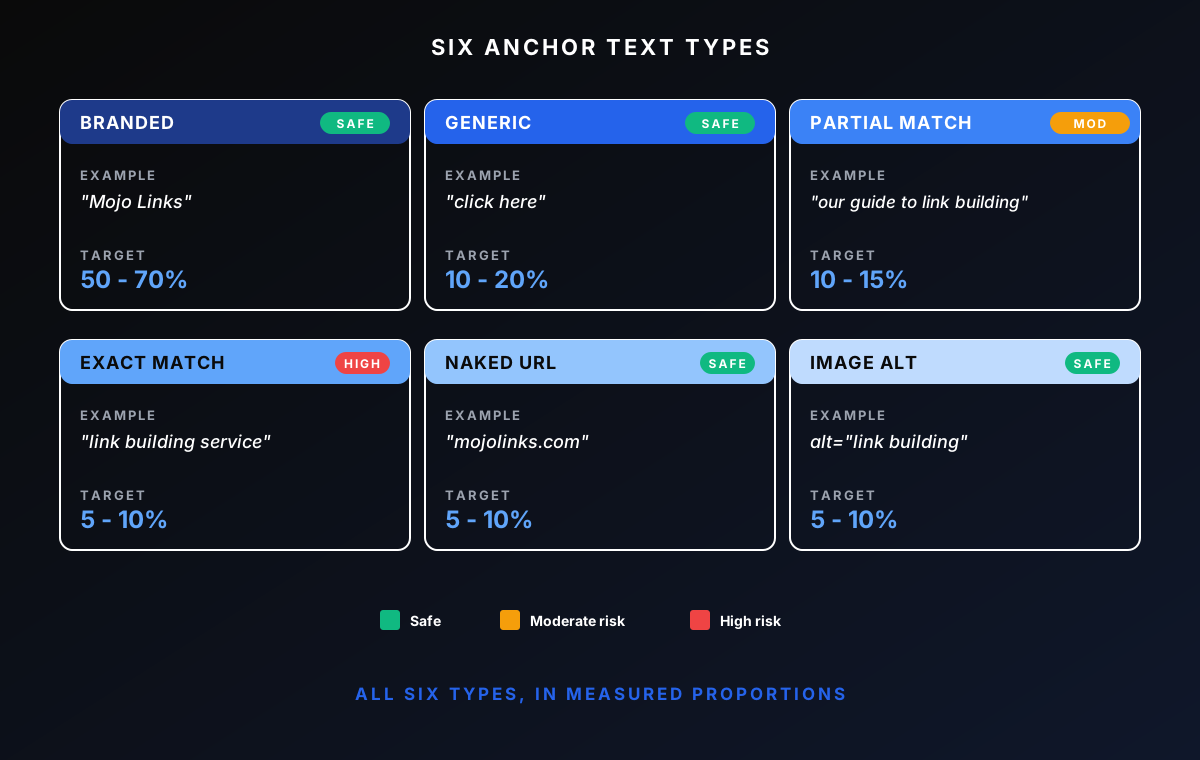
Anchor text falls into six distinct types, each carrying different ranking weight and risk profile. A healthy backlink profile contains all six types in measured proportions; an over-optimized profile concentrates 60+ percent in one type (usually exact-match commercial).
Branded Anchor Text
Branded anchors use the company or product name as the visible text - "Mojo Links", "mojolinks.com", "Mojo Links agency". Branded anchors are the safest type and should dominate the profile (50-70 percent of total). They carry topical signal indirectly through brand-topic association and do not trigger over-optimization filters at any volume.
Exact-Match Anchor Text
Exact-match anchors use the target query as the visible text - "link building service" pointing to a link building service page. Exact-match carries the highest ranking weight per link and the highest algorithmic risk. Cap exact-match at 5-10 percent of total profile across the site. Higher concentrations trigger algorithmic suppression even when each individual link comes from a clean source.
Partial-Match Anchor Text
Partial-match anchors include the target query within longer phrasing - "our guide to link building services" pointing to a link building service page. Partial-match carries moderate ranking weight at moderate risk. Target 10-15 percent of total profile. The structure passes topical signal without triggering exact-match concentration flags.
Generic Anchor Text
Generic anchors use non-descriptive phrases - "click here", "this resource", "learn more", "read this". Generic anchors carry minimal ranking weight but contribute to profile naturalness because real editorial linking includes them constantly. Target 10-20 percent of total profile.
Naked URL Anchors
Naked URL anchors use the bare URL as the visible text - "mojolinks.com" or "https://mojolinks.com/services/link-building-campaigns/". Carry low ranking weight but high naturalness signal because real editorial linking includes them frequently in citations. Target 5-10 percent of total profile.
Image Alt Anchors
Image alt anchors apply when a linked image carries an alt attribute - the alt text functions as the anchor for ranking purposes. Image-linked backlinks contribute to profile diversity. Target 5-10 percent of total profile and ensure every image link has a topically-relevant alt attribute.
What Does a Healthy Anchor Text Distribution Look Like?
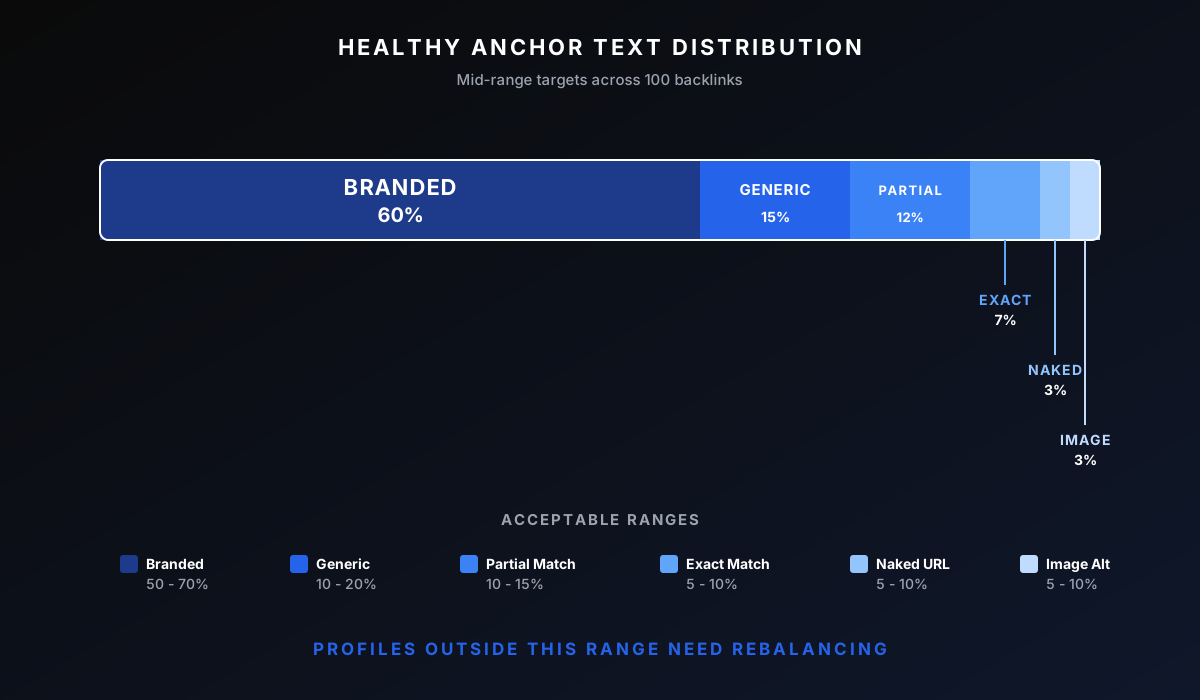
A healthy 2026 anchor text distribution targets 50-70 percent branded, 10-20 percent generic, 10-15 percent partial-match, 5-10 percent exact-match commercial, 5-10 percent naked URL, and 5-10 percent image alt. The exact percentages shift by niche (YMYL targets tighter branded ratios, B2B SaaS loosens), but the principle holds: branded dominates, exact-match commercial stays small, and every other type contributes diversity. Plug your live counts into the free anchor text ratio calculator to see where each type lands against these ranges.
As Ahrefs' anchor text guide explains, anchor text is the clickable text of a link and a distinct signal from domain-level authority. Two domains at the same DR can pass very different signals depending on the anchor distribution of their inbound profiles.
The baseline target distribution:
Branded: 50-70 percent
Generic: 10-20 percent
Partial-match: 10-15 percent
Exact-match commercial: 5-10 percent
Naked URL: 5-10 percent
Image alt: 5-10 percent
Profiles outside this range need active rebalancing. For the broader benchmark data behind these ratios, see the link building statistics report.
How Does Anchor Text Distribution Differ by Niche?
Anchor text distribution shifts by niche because Google applies stricter quality scrutiny to YMYL verticals (legal, medical, finance) than to non-YMYL sites. YMYL profiles need tighter branded ratios (60-70 percent) and smaller exact-match concentration (3-7 percent). B2B SaaS profiles loosen slightly (50-60 percent branded, 7-10 percent exact-match). E-commerce sits between the two with product-name anchor variants that blur the branded/partial-match line.
YMYL Verticals (legal, Medical, Finance, Supplements, Gambling)
YMYL profiles need: 60-70 percent branded, 8-12 percent partial-match, 3-7 percent exact-match commercial, 10-15 percent generic, 5-8 percent naked URL, 5-8 percent image alt. The tighter branded ratio reflects Google's heightened E-E-A-T scrutiny on YMYL queries - branded anchors signal real-brand acquisition over commercial manipulation.
B2b SaaS and Tech
B2B SaaS profiles target: 50-60 percent branded, 12-18 percent partial-match, 7-12 percent exact-match commercial, 12-18 percent generic, 5-8 percent naked URL, 5-8 percent image alt. The looser exact-match ceiling reflects B2B SaaS sites having more legitimate product-specific commercial anchors (integration names, API names, feature names).
E-Commerce
E-commerce profiles target: 55-65 percent branded, 10-15 percent partial-match (often product-name variants), 5-10 percent exact-match commercial, 10-15 percent generic, 5-8 percent naked URL, 8-12 percent image alt. The higher image alt allocation reflects e-commerce sites earning more product-image backlinks than other niche types.
How Does Anchor Text Vary by Acquisition Tactic?
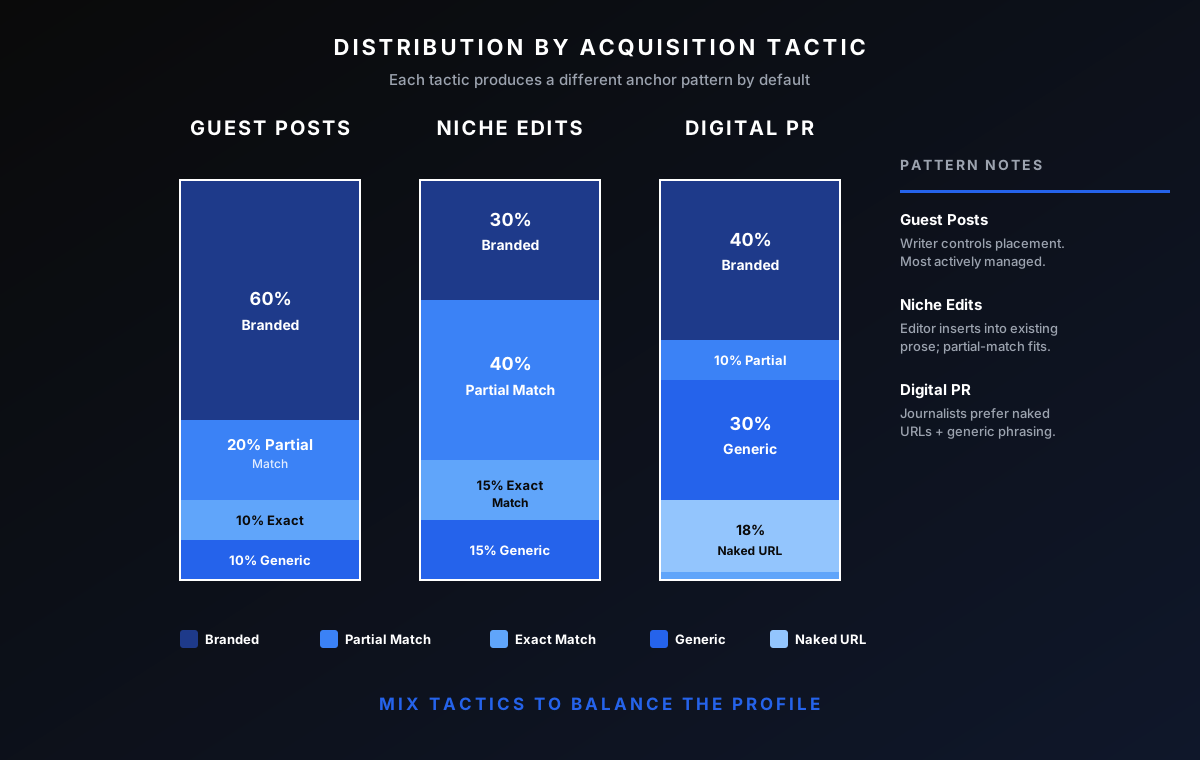
Each link acquisition tactic produces a different anchor text pattern by default. Guest posts skew toward branded and partial-match because the writer controls the placement narrative. Niche edits skew toward partial-match because the editor inserts your link into existing prose that needs natural fit. Digital PR skews toward generic and naked URL because journalists rarely use commercial anchors. Broken link replacement skews toward whatever pattern the original link used.
Guest Post Anchor Patterns
Guest posts produce ~60 percent branded, 20 percent partial-match, 10 percent exact-match, 10 percent generic. The writer (often you or your agency) controls the placement, which means anchor distribution is most actively managed inside guest post outreach. Use guest posts for branded-anchor coverage primarily.
Niche Edit Anchor Patterns
Niche edits produce ~30 percent branded, 40 percent partial-match, 15 percent exact-match, 15 percent generic. The editor inserts your link into existing prose that has its own topical context, so partial-match anchors fit more naturally than branded anchors. Use niche edits for partial-match coverage and topical relevance signal.
Digital PR Anchor Patterns
Digital PR produces ~40 percent branded, 10 percent partial-match, 2 percent exact-match, 30 percent generic, 18 percent naked URL. Journalists prefer naked URLs and generic anchors because their editorial standards discourage commercial-anchor language. Use digital PR for generic and naked-URL profile diversity.
Broken Link Replacement Patterns
Broken link replacement inherits the anchor pattern of the original (replaced) link. Variable distribution depending on what the original publisher used. Useful for filling pattern gaps - if your profile is short on naked URL anchors, target broken link replacements where the original was a naked URL.
For the operational workflow on running each of these tactics, see the manual link building workflow.
How Do You Recover from over-Optimized Anchor Text?
Anchor text over-optimization recovery takes 4 to 8 months and runs through three phases: stop the bleeding (halt acquisition of the over-optimized pattern), dilute the profile (acquire only branded and generic anchors for 90+ days), and verify rebalancing (monitor monthly until distribution returns to healthy ranges). Disavowing the over-optimized links is rarely the right move - it typically removes ranking signal you can recover instead.
Google's link spam policies treat anchor text patterns that signal manipulation as subject to algorithmic devaluation. The over-optimization threshold is the pattern signal, not any single anchor.
The 3-phase recovery sequence:
Phase 1 (weeks 1-2): Stop the bleeding. Halt acquisition of the over-optimized anchor type immediately. If exact-match commercial sits at 25 percent, do not acquire any more exact-match links until distribution rebalances.
Phase 2 (months 1-4): Dilute through branded acquisition. Acquire only branded and generic anchors for 90+ days. The math: adding 50 branded anchors to a profile with 200 total anchors moves exact-match from 25 percent to 20 percent without removing any links.
Phase 3 (months 4-8): Verify rebalancing. Monthly anchor distribution audits. Once distribution returns to healthy ranges, resume normal tactical mix with discipline on the previously-violated anchor type.
Recovery without disavow is usually the right path. For the cases where disavow is the right action (negative SEO patterns, paid-network anchors), see the disavow procedure.
What Are The Most Common Anchor Text Mistakes?
Five mistakes dominate anchor text failures: chasing exact-match commercial anchors for ranking lift, ignoring tactic-level anchor patterns, treating the homepage profile as the whole-site profile, scaling outreach without anchor planning, and disavowing into a recovery hole. Each one is more common than the toxic-link patterns SEOs usually look for.
Over-targeting exact-match. "Best [product] 2026" anchors at 25+ percent of profile is the single fastest path to algorithmic suppression. Cap at 5-10 percent.
Ignoring tactic-level patterns. Running 100 percent guest posts produces a heavily-branded profile. Running 100 percent niche edits produces a heavily-partial-match profile. Mix tactics to mix anchor types.
Homepage-only thinking. A site with healthy homepage anchors and over-optimized commercial-page anchors still suppresses. Audit per-page distribution, not just site-wide.
Outreach without anchor planning. Telling an outreach team "get me 50 links per month" without specifying anchor targets produces whatever anchors the publishers happen to use. The result is usually exact-match-heavy.
Disavowing into a hole. Disavowing over-optimized commercial anchors removes ranking signal and accelerates suppression. Dilute through branded acquisition instead, except in clear negative-SEO patterns.
Who Needs To Monitor Anchor Text Closely?
Three audiences need to monitor anchor text monthly rather than quarterly: sites in YMYL verticals (because Google applies stricter scrutiny), sites recovering from algorithmic suppression (because patterns compound faster than rankings move), and any site running active link acquisition at 10+ placements per month (because the cumulative anchor effect compounds invisibly between quarterly audits).
For YMYL Sites
YMYL verticals (legal, medical, finance, supplements, gambling, crypto) need monthly anchor distribution monitoring. The stricter YMYL scrutiny means patterns that would not flag on a B2B SaaS site can trigger suppression on a YMYL site at half the concentration.
For Sites in Recovery
Sites recovering from algorithmic suppression must monitor anchor distribution monthly until distribution returns to healthy ranges and rankings stabilize. Quarterly cadence during recovery is too slow - patterns can re-form within 30 days if acquisition discipline drifts.
For Active Acquisition Campaigns (10+ Placements/month)
Active campaigns at 10+ placements per month accumulate anchor signal faster than quarterly audits can catch. Monthly monitoring catches drift before it compounds into a pattern Google detects.
How Did Mojo Links Develop These Anchor Distribution Targets?
The distribution ratios and recovery workflow come from Mojo Links campaign data across 300+ engagements between 2019 and 2026. The framework was validated through three Google algorithm updates that punished exact-match-heavy profiles: the 2022 link spam update, the 2024 link spam update (machine-learning-based detection of cross-network anchor patterns), and the ongoing AI Overview citation algorithm that weights editorial-quality signals over commercial-anchor signals.
What that means for the percentages in this guide:
50-70 percent branded ratio reflects measured campaign data; tighter end (65-70%) applies to YMYL, looser end (50-55%) applies to B2B SaaS.
5-10 percent exact-match commercial ceiling reflects the threshold above which our internal monitoring flagged sites as at-risk in the trailing 6 months before algorithmic suppression events.
Tactic-level patterns (60 percent branded for guest posts, 40 percent partial-match for niche edits) reflect aggregate placement data across our campaign portfolio.
For the broader benchmark data behind these numbers, see our link building benchmark data guide. For the audit workflow that surfaces anchor concentration patterns, see our backlink audit guide.
Frequently Asked Questions About Anchor Text
How Often Should I Audit Anchor Text Distribution?
Monthly for active campaigns and sites in YMYL verticals. Quarterly for sites with steady-state link acquisition under 10 placements per month. Skipping monitoring beyond a quarter allows patterns to compound invisibly until they trigger algorithmic suppression - by which point recovery takes 4-8 months versus the 30 days a monthly catch would have required.
What Anchor Text Triggers a Google Penalty?
Manual actions are rare in 2026 - Google has shifted toward algorithmic devaluation instead. The patterns that trigger devaluation: exact-match commercial anchors above 15-20 percent of profile, sudden spikes in any one anchor type (negative SEO indicator), and matching anchor patterns across multiple sites in the same network (paid-link footprint).
Is Exact-Match Anchor Text Always Bad?
No. Exact-match carries the highest ranking weight per link when used at safe concentrations (5-10 percent of profile). The problem is over-use, not the anchor type itself. A small number of exact-match anchors from clean editorial sources accelerates rankings. A large number from any source triggers suppression.
Should I Optimize Anchor Text for AI Overview Citations?
Yes, indirectly. AI Overview citation patterns favor editorial-quality content, which correlates with editorial-quality anchor distribution (branded-heavy, low exact-match). Optimizing your anchor profile for organic rankings produces the same anchor distribution that AI Overviews favor for citations.
Can I Rebalance Anchor Text Without Acquiring New Links?
No. Anchor distribution is calculated as a percentage of total anchors, so the only way to move the percentages is to add anchors of the under-represented types. Removing over-optimized links via disavow is technically possible but usually removes ranking signal you can recover by dilution instead. Acquire branded anchors to dilute.
Anchor text distribution is one decision inside a longer link-building workflow. For the end-to-end program this fits into, see the link building operations guide.
Want Us To Plan Your Anchor Text Strategy?
A Mojo Links campaign manages anchor distribution at the placement level, not just at the campaign level. Every guest post, niche edit, and PR placement carries a target anchor type and follows the per-niche distribution plan. For a free 20-minute audit covering anchor risk, content gaps, and AI visibility, book a complimentary site audit. Senior strategist on the call. No junior PMs.

About Bart Magera
Bart Magera is the founder of Mojo Links. Ten years across YMYL verticals (legal, medical, finance, supplements, crypto, gambling). Trained under Koray Tuğberk Gübür's Topical Authority framework. Author of two SEO books and international speaker.
Want this kind of analysis on your site?
Get a free video walkthrough within 48 hours covering technical health, backlinks, content gaps, and AI visibility.
Related posts
Keep reading on adjacent topics.
- Link Building
 Bart Magera10 min read
Contextual Backlinks: What They Are, Why They Win, and How To Earn Them
A contextual backlink sits inside the body of an article, surrounded by relevant text, not in a footer or author bio. That placement is what gives it weight. Here is what contextual backlinks are, what makes one high quality, how to earn them, and how to spot the cheap fakes.
- Link Building
 Bart Magera12 min read
What Is White Hat Link Building? Techniques That Work in 2026
The Problem: Why Most Link Building Fails Your SEO You wrote great content. It’s relevant. It’s useful. It even has infographics. But guess what? Crickets. Nobody’s linking. Google’s not ranking. And your “ultimate guide” is buried somewhere on page 7 under a recipe blog and a…
- Link Building
 Bart Magera10 min read
Tiered Link Building: How It Works and How To Do It Safely
Tiered link building layers weaker links behind your strongest ones to pass more authority to your money pages. Here is how the pyramid works, how to build one, which links are worth tiering, the risk SpamBrain introduced, and the lower-risk path I use on client sites.