Manual Link Building: The Complete Workflow for Earning High-Quality Backlinks in 2026
Listen to this article
Browser-native voice. No account required.
Manual link building is the practice of acquiring backlinks one at a time through researched outreach, relationship work, and content placements - the opposite of automated tools that scrape, spam, and pray. In 2026, manual link building is no longer a stylistic choice. It is the only way to build backlinks that produce compounding rankings without triggering Google's spam-detection updates.
This guide covers how to get backlinks the manual way, the exact workflow Mojo Links runs in regulated and competitive verticals: how to prospect, how to score targets, how to sequence outreach, and what to measure.
What Is Manual Link Building?
Manual link building is the process of acquiring backlinks through one-by-one researched outreach to specific publishers, journalists, and content owners. Every prospect is identified by hand or through filtered tool exports, every email is personalised to the recipient, and every placement is negotiated individually. The opposite is automated link building - bulk outreach tools, paid-link networks, and scraped prospect lists that send the same template to thousands of recipients at once.
Three characteristics that define manual link building:
Researched prospects. Every target is reviewed against quality criteria before outreach. No scraped lists, no bought databases.
Personalised outreach. Subject lines, opening lines, and value propositions match the recipient's recent work or publication focus.
Individual negotiation. Placement terms (anchor text, content angle, link target) are agreed per placement, not by template.
Why Does Manual Link Building Still Work in 2026?
Manual link building still works in 2026 because Google's 2024 link spam update specifically devalues entire link networks through machine-learning pattern detection. Automated outreach, paid networks, and bulk-tactic campaigns now produce links that pass zero ranking signal regardless of source DR or domain authority. Manual placements - editorial, contextual, in-niche - remain the only acquisition tactic that compounds ranking signal over time.
The three forces that strengthened manual link building in the 2022-2026 window:
Algorithmic devaluation of patterns. Google no longer needs to penalize sites; it just stops counting the pattern-matched links.
AI Overview citations weight editorial signals. Generative search surfaces favour content with editorial-quality backlinks, not raw counts.
Email deliverability tightened. Mass-send tools land in spam folders at 60-80 percent rates, killing automated outreach economically.
What's The Difference Between Manual and Automated Link Building?
Manual and automated link building produce different ranking outcomes despite both increasing referring domain count. Manual placements pass editorial-quality signal that Google's algorithm credits toward rankings. Automated placements pass pattern-matched signal that the algorithm now systematically ignores. The referring domain counters in tool dashboards look similar; the actual ranking impact diverges by 5 to 10x.
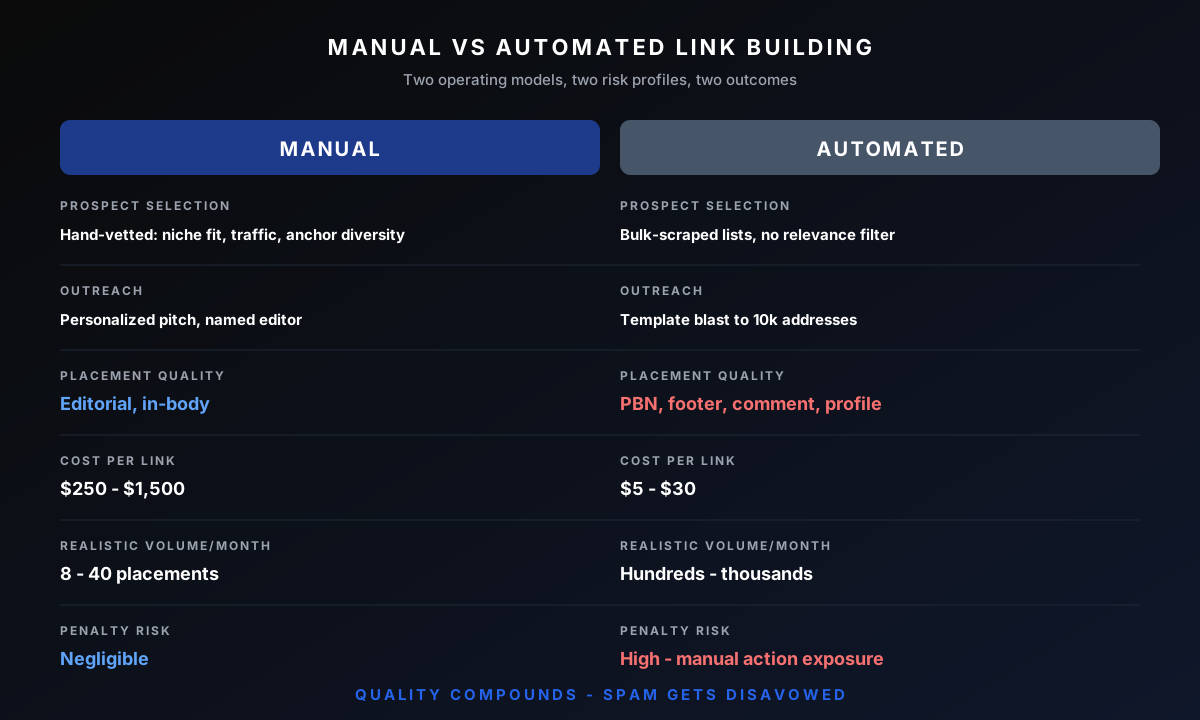
Comparison across five dimensions:
Prospect quality. Manual: filtered to 4-criteria threshold. Automated: scraped or purchased without filtering.
Outreach personalisation. Manual: per-recipient angle. Automated: variable-substitution templates.
Conversion rate. Manual: 4-15 percent on clean lists. Automated: 0.3-1 percent if not blocked outright.
Placement quality. Manual: editorial in-body context. Automated: footer/sidebar/widget placements that pass minimal signal.
Algorithmic safety. Manual: low risk. Automated: high risk of inclusion in pattern-devaluation cycles.
How To Get Backlinks: The Manual Link Building Tactics That Work in 2026
Five tactics produce 90 percent of manual link building ROI in 2026: guest posts on real-traffic publishers, niche edits inside indexed articles, digital PR via journalist outreach, broken link building, and unlinked brand mention reclamation. Each tactic delivers different ranking signals and runs at different conversion rates. A campaign using only one tactic underperforms a campaign using three to four.
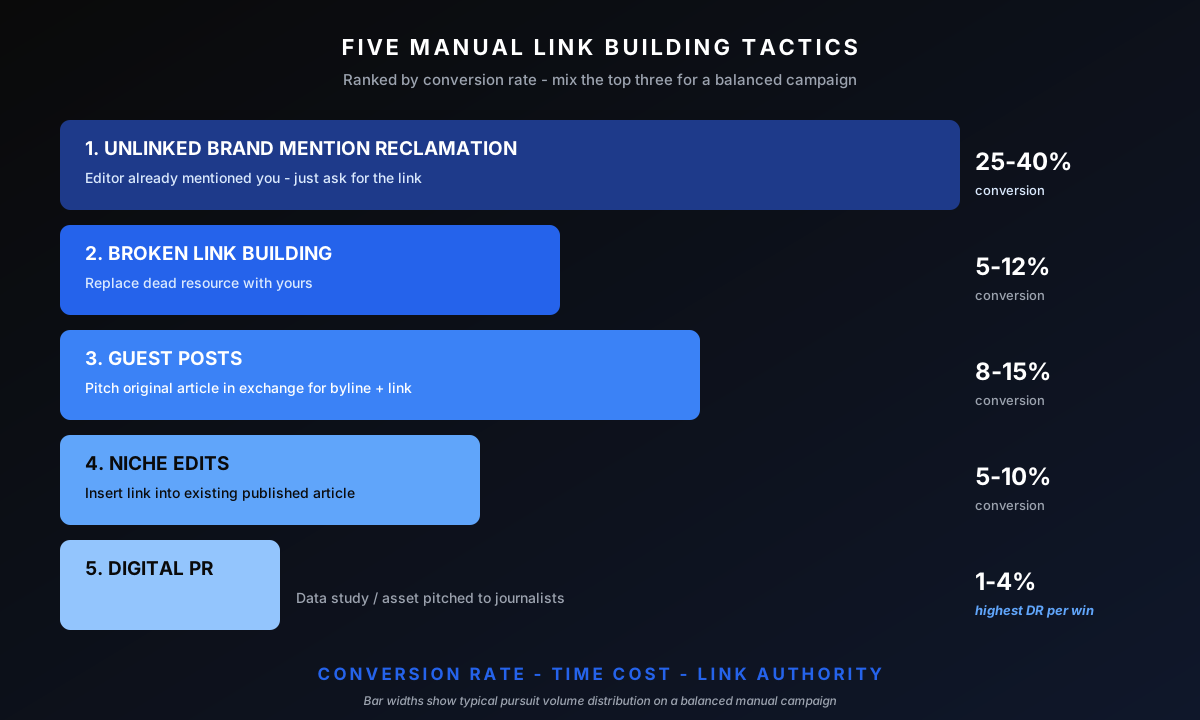
Guest Posts (8-15% Conversion)
Full articles published under your byline on a third-party publisher. Use for branded-anchor coverage and topical authority. See guest posts service for the placement workflow.
Niche Edits (5-10% Conversion)
Links inserted into existing indexed articles. Faster than guest posts because the host page is already ranking. See niche edits service for specifics.
Digital PR (1-4% Conversion, Highest Authority)
Tier-1 publication placements through journalist outreach, original research pitches, and HARO-style expert sourcing. Lowest conversion rate but highest placement quality. Best deployed when the site has unique data or original viewpoints worth pitching.
Broken Link Building (5-12% Conversion)
Identify broken outbound links on relevant publishers and resource pages, then pitch your replacement page. Higher conversion than cold guest-post outreach because you are solving an editor problem. Tools: Ahrefs Broken Link Checker, Check My Links, Screaming Frog.
Unlinked Brand Mention Reclamation (25-40% Conversion)
Existing brand mentions without a hyperlink. Found via Google Alerts, Brand24, or manual brand SERP search. Highest conversion of any manual tactic because the publisher already chose to mention you - they just forgot the link.
How Do You Build Relationships for Manual Link Acquisition?
Manual link acquisition rests on three relationship surfaces: target publishers (the sites you want links from), individual writers and journalists (the gatekeepers inside those sites), and industry experts (the people whose endorsement opens publisher doors). A campaign built on cold-only outreach plateaus quickly; a campaign built on warm relationships compounds.
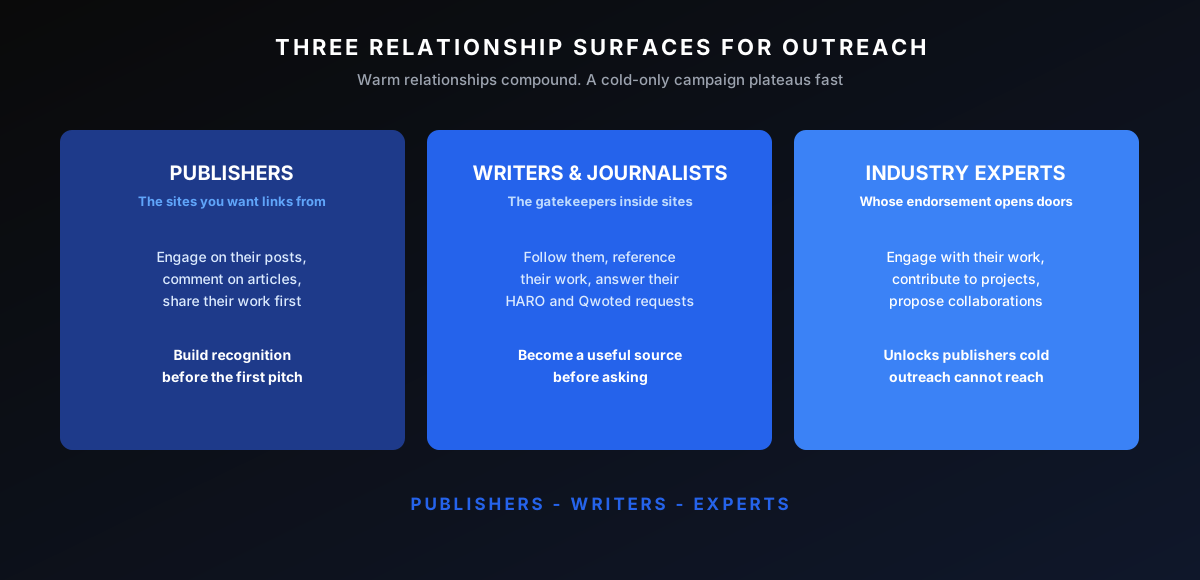
Three relationship surfaces and how to develop each:
Publishers. Long-form engagement on their social posts, comments on their articles, sharing their work with your audience. Build recognition before the first pitch.
Writers and journalists. Follow them on X/Twitter, reference their work in your content, respond to their HARO/Qwoted requests. Become a useful source before asking for placements.
Industry experts. Engage with their work consistently, contribute to their projects, propose collaborations. Expert endorsement unlocks publishers that cold outreach cannot reach.
Which Tools Support Manual Link Building?
Manual link building requires three tool categories: backlink discovery (Ahrefs, Semrush, Moz), email outreach with personalisation support (Pitchbox, BuzzStream, Hunter), and email-deliverability monitoring (Postmark, GlockApps). Generic mail-merge tools without deliverability features burn sender domains within 6 to 8 weeks regardless of personalisation effort. The full breakdown of the link building tools details each category and what Mojo Links actually pays.
The minimum tool stack Mojo Links uses across campaigns:
Backlink discovery: Ahrefs Site Explorer or Semrush Backlink Analytics (paid)
Email finder: Hunter, Snov.io, or RocketReach (paid, per-credit pricing)
Outreach platform: Pitchbox or BuzzStream (paid, integrates with prospect lists)
Deliverability monitoring: Postmark or GlockApps (paid, ensures emails reach inbox not spam folder)
CRM / pipeline: Notion, Airtable, or a CRM with custom outreach pipelines
How Do You Execute a Manual Link Building Campaign?
A manual link building campaign to get backlinks at scale runs through six phases: prospect research, prospect filtering, outreach sequencing, response handling, placement negotiation, and post-placement tracking. Skipping or shortcutting any phase produces a campaign that looks active on the surface but produces minimal ranking signal.
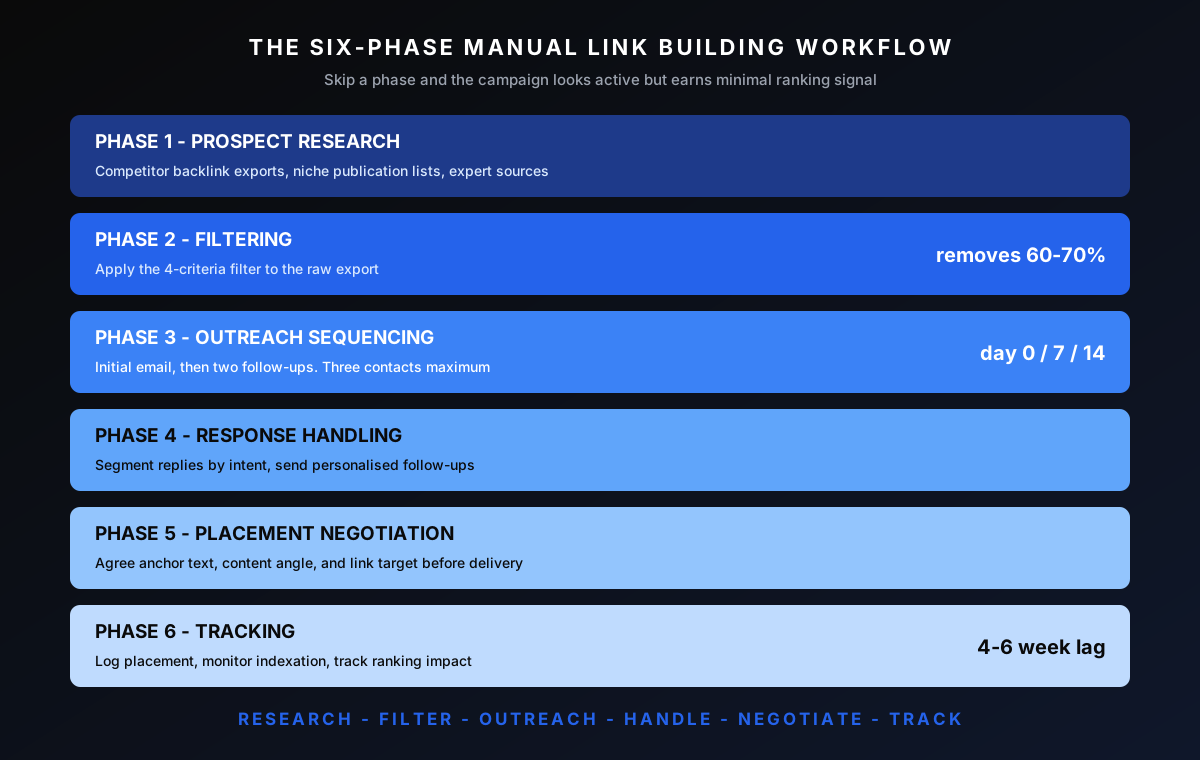
The six-phase workflow:
Prospect research: competitor backlink exports, niche publication lists, industry expert sources. See find your competitor backlinks for the research workflow.
Filtering: apply the 4-criteria filter (organic traffic, topical relevance, indexation, placement context). Removes 60-70 percent of raw exports.
Outreach sequencing: initial email day 0, follow-up day 7, final follow-up day 14. Three contacts maximum.
Response handling: segment replies by intent (interested, requesting info, declining, ignoring). Personalised follow-ups beat generic re-pitches.
Placement negotiation: agree anchor text, content angle, link target before submitting any content. Disagreements after delivery kill placements.
Tracking: log placement, monitor indexation (5-10 days), track ranking impact (4-6 weeks).
What Makes a High-Quality Manual Link?
A high-quality manual link satisfies four criteria simultaneously: source domain has measurable organic traffic, source covers relevant topics adjacent to your niche, the linking page is indexed in Google, and the link is a dofollow placement in editorial body content (not footer, sidebar, or widget). Links failing two of four criteria pass minimal ranking signal even when acquired through legitimate manual outreach.
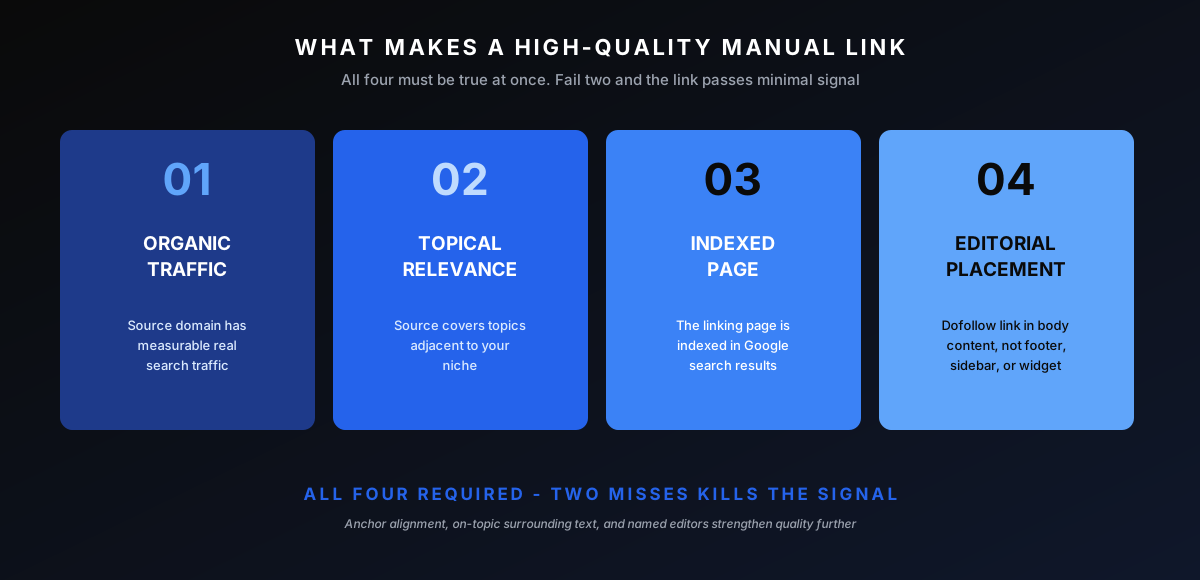
Beyond the 4-criteria filter, four secondary signals strengthen link quality:
Anchor-text alignment with niche vocabulary (not generic "click here")
Surrounding text on-topic with the linked page
Source publisher has named writers and editorial standards (mastheads, contact pages)
Link velocity at the source domain is steady (not a sudden spike followed by silence)
How Do You Measure Manual Link Building Success?
Manual link building success is measured at three levels: acquisition (referring domains acquired vs cost), ranking impact (90-day position changes on commercial queries), and revenue contribution (organic conversion attribution). Most campaigns stop at level 1, which produces vanity metrics. Level 3 is what justifies the budget against alternative acquisition channels.
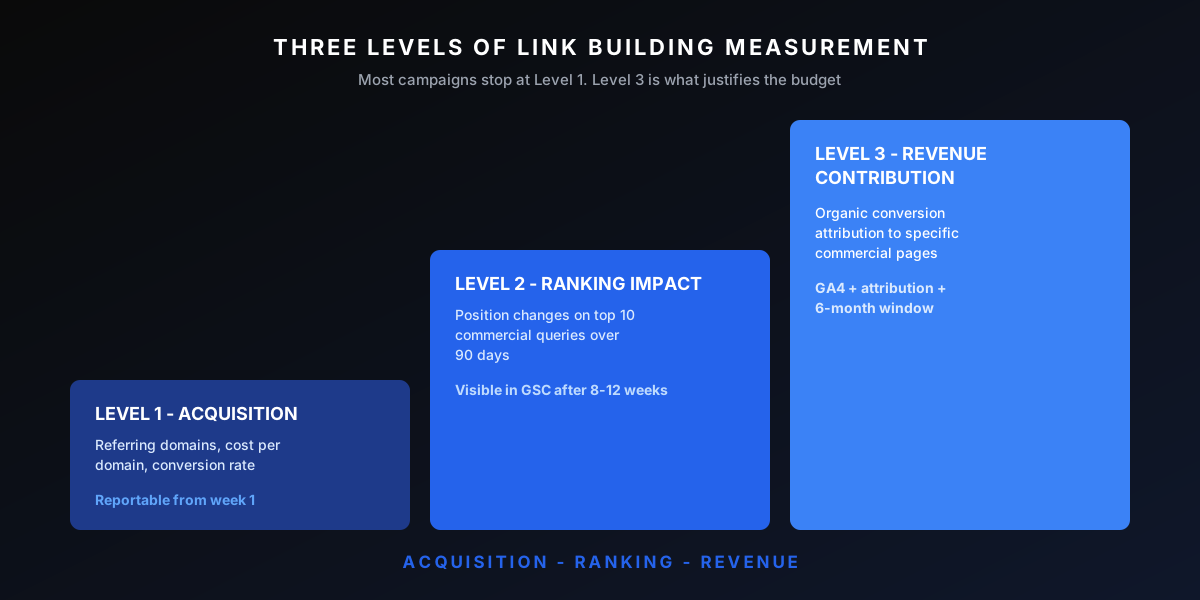
The three measurement levels:
Level 1 - Acquisition: referring domains per quarter, cost per referring domain, outreach conversion rate. Reportable from week 1.
Level 2 - Ranking impact: position changes on top 10 commercial queries over 90 days. Visible in GSC after 8-12 weeks.
Level 3 - Revenue contribution: organic conversion attribution to specific commercial pages. Requires GA4 + attribution tagging + 6-month evaluation window.
Who Should Run Manual Link Building Campaigns?
Manual link building campaigns require either an in-house outreach team or an agency partner. The work is too time-intensive for founders to run alongside other operational responsibilities at scale beyond 5 to 10 placements per month. Below that volume, founders can run campaigns themselves; above it, the math favors specialised teams. That agency partner is often a white label link building provider working behind the agency brand.
For in-House SEO Teams
In-house teams run manual link building when the niche requires deep industry knowledge for credible outreach (regulated verticals, technical SaaS, specialist B2B). One dedicated outreach analyst plus an SEO lead can sustain 10-20 placements per month on a focused tactical mix. For software companies, the asset-led approach in the SaaS link building guide carries most of the load.
For Agencies
Agencies run manual link building at the scale that makes specialised teams economic (30+ placements per month across multiple clients). Agencies amortize tool costs, sender-domain infrastructure, and personalisation systems across the client portfolio. Use an agency when in-house volume cannot reach 15 placements per month.
For Founders and Operators
Founders should run manual link building themselves only for the first 5 to 15 placements as a learning exercise. Beyond that, the time cost exceeds the value of in-house execution. Founders running pre-revenue or early-stage projects benefit more from outsourcing to a focused agency than from building outreach skills they will not use after the campaign matures.
What Mistakes Ruin a Manual Link Building Campaign?
Five mistakes destroy otherwise-sound manual link building campaigns: scaling outreach faster than personalisation can keep up, sending templates that read as templates, ignoring follow-ups, accepting low-quality placements because "the publisher said yes", and treating manual link building as separate from content strategy.
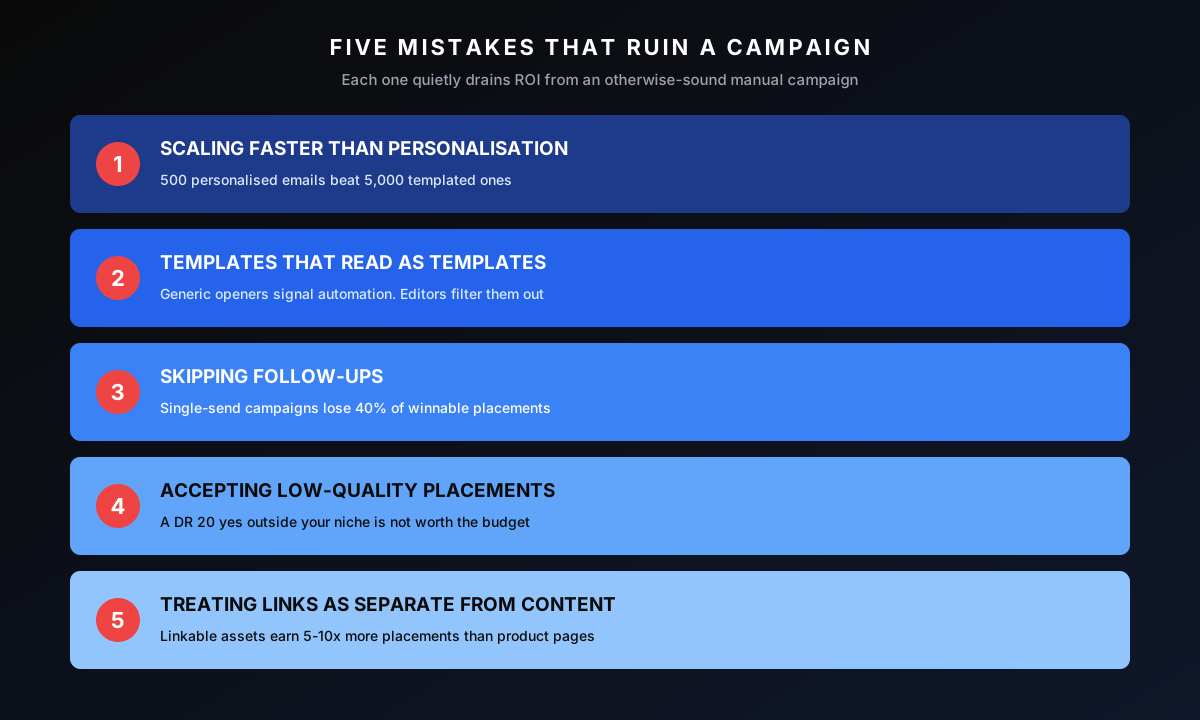
Scaling outreach without personalisation. 500 personalised emails/month outperform 5,000 templated emails. The math is straightforward.
Templates that read as templates. "I noticed your great article" openers signal automation. Editors filter them automatically.
Skipping follow-ups. Single-send campaigns lose 40 percent of placements that would have converted with one or two follow-ups.
Accepting low-quality placements out of desperation. A "yes" from a DR 20 site outside your niche is not worth the outreach budget. Decline politely; keep prospect quality.
Treating link building as separate from content. Linkable assets earn 5-10x more placements than product pages. Without a content layer feeding outreach, the campaign stays cold and expensive.
How Did Mojo Links Develop This Manual Link Building Methodology?
The six-phase workflow and 4-criteria filter come from Mojo Links campaign data across 300+ engagements between 2019 and 2026. The methodology was refined through three Google algorithm updates that punished automated outreach: the March 2024 link spam update (which devalued entire link networks via machine-learning pattern detection), the 2022 link spam update, and the ongoing AI Overview citation algorithm that weights editorial-quality signals over volume.
What that means for the numbers in this guide:
Conversion rates (8-15% guest post, 5-10% niche edit, 1-4% digital PR, 25-40% unlinked mention) reflect our internal campaign data.
6-8 week campaign timing reflects outreach sequencing plus the Google indexation window.
60-70 percent filter removal reflects YMYL backlink profiles. Non-YMYL niches typically remove 50-60 percent.
For the broader benchmark data behind these numbers, see our link building benchmark data guide. For the cluster siblings on competitor backlinks and audit workflows, see our competitor backlink guide and the audit workflow.
For the head-to-head breakdown between the two highest-volume tactics, see our guest posts vs niche edits comparison guide.
For the full breakdown on anchor distribution targets by niche and tactic, see our anchor text strategy guide.
Frequently Asked Questions About Manual Link Building
How Long Does a Manual Link Building Campaign Take To Show Results?
Initial ranking movement begins 6 to 8 weeks after the first placement goes live. Full ranking impact materializes over 3 to 6 months. Sites in YMYL verticals see longer lag (4 to 8 months) because Google is more conservative on YMYL ranking changes. Campaigns expecting results in 2 to 4 weeks are not seeing link building effects; they are seeing temporary SERP volatility.
What Is a Realistic Manual Link Building Budget?
A realistic monthly manual link building budget runs $1,500 to $3,000 for B2B/SaaS niches, $3,000 to $8,000 for non-YMYL competitive niches, and $8,000+ for YMYL verticals (legal, medical, finance, supplements, gambling). Below the minimum, link velocity falls below the threshold needed to outpace competitor acquisition.
How Many Manual Links Should I Build Per Month?
Target 8 to 25 manual referring domains per month depending on site maturity. New sites (under 12 months) should build 4-8 per month to avoid velocity-spike flags. Established sites can sustain 10-25 per month. Aggressive campaigns (50+ per month) require multi-person outreach teams and specialised infrastructure.
Can I Run Manual Link Building on a Tight Budget?
Yes, with constraints. Founders willing to invest 10-15 hours per week can run a credible manual link building campaign, leaning on free backlinks from unlinked mentions, on $300-500 per month of tooling (Ahrefs Lite, Hunter, basic email automation). The trade-off is time: solo manual outreach produces 3-8 placements per month at sustainable effort levels.
What Is The Minimum Technical Setup for Manual Outreach?
Minimum setup: dedicated sender domain (not your main domain), SPF/DKIM/DMARC records configured, email warming for 4-6 weeks before campaign launch, and an outreach platform with personalisation support. Skipping any of these lands emails in spam folders regardless of message quality.
Manual link building is one execution mode of a broader link building strategy and program. For the end-to-end program this fits into, see the link building pillar.
Want Us To Run Your Manual Link Building Campaign?
A Mojo Links manual link building engagement covers the full six-phase workflow across the tactical mix. We work across regulated verticals (legal, medical, finance, supplements, gambling, crypto, SaaS). For a free 20-minute audit covering link risk, content gaps, and AI visibility, book a complimentary growth audit. Senior strategist on the call. No junior PMs.
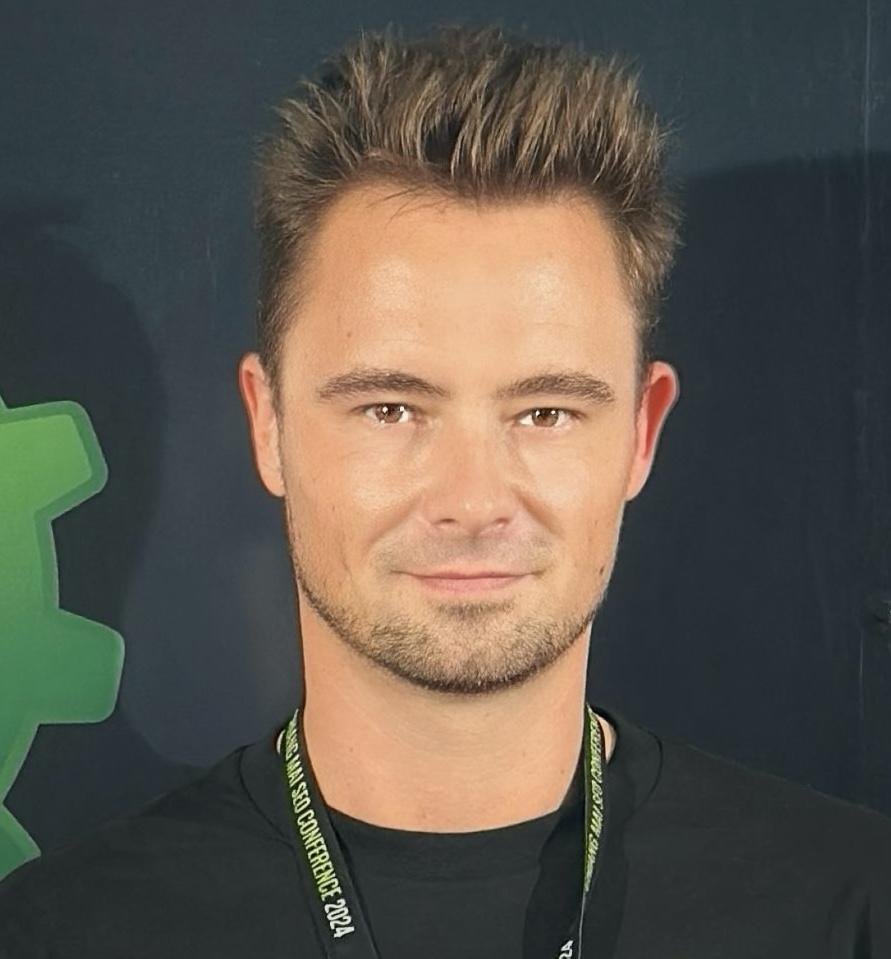
About Bart Magera
Bart Magera is the founder of Mojo Links. Ten years across YMYL verticals (legal, medical, finance, supplements, crypto, gambling). Trained under Koray Tuğberk Gübür's Topical Authority framework. Author of two SEO books and international speaker.
Want this kind of analysis on your site?
Get a free video walkthrough within 48 hours covering technical health, backlinks, content gaps, and AI visibility.
Related posts
Keep reading on adjacent topics.
- Link Building
 Bart Magera10 min read
Contextual Backlinks: What They Are, Why They Win, and How To Earn Them
A contextual backlink sits inside the body of an article, surrounded by relevant text, not in a footer or author bio. That placement is what gives it weight. Here is what contextual backlinks are, what makes one high quality, how to earn them, and how to spot the cheap fakes.
- Link Building
 Bart Magera12 min read
What Is White Hat Link Building? Techniques That Work in 2026
The Problem: Why Most Link Building Fails Your SEO You wrote great content. It’s relevant. It’s useful. It even has infographics. But guess what? Crickets. Nobody’s linking. Google’s not ranking. And your “ultimate guide” is buried somewhere on page 7 under a recipe blog and a…
- Link Building
 Bart Magera10 min read
Tiered Link Building: How It Works and How To Do It Safely
Tiered link building layers weaker links behind your strongest ones to pass more authority to your money pages. Here is how the pyramid works, how to build one, which links are worth tiering, the risk SpamBrain introduced, and the lower-risk path I use on client sites.