

HARO Link Building: How To Get Backlinks from Journalist Requests
Listen to this article
Browser-native voice. No account required.
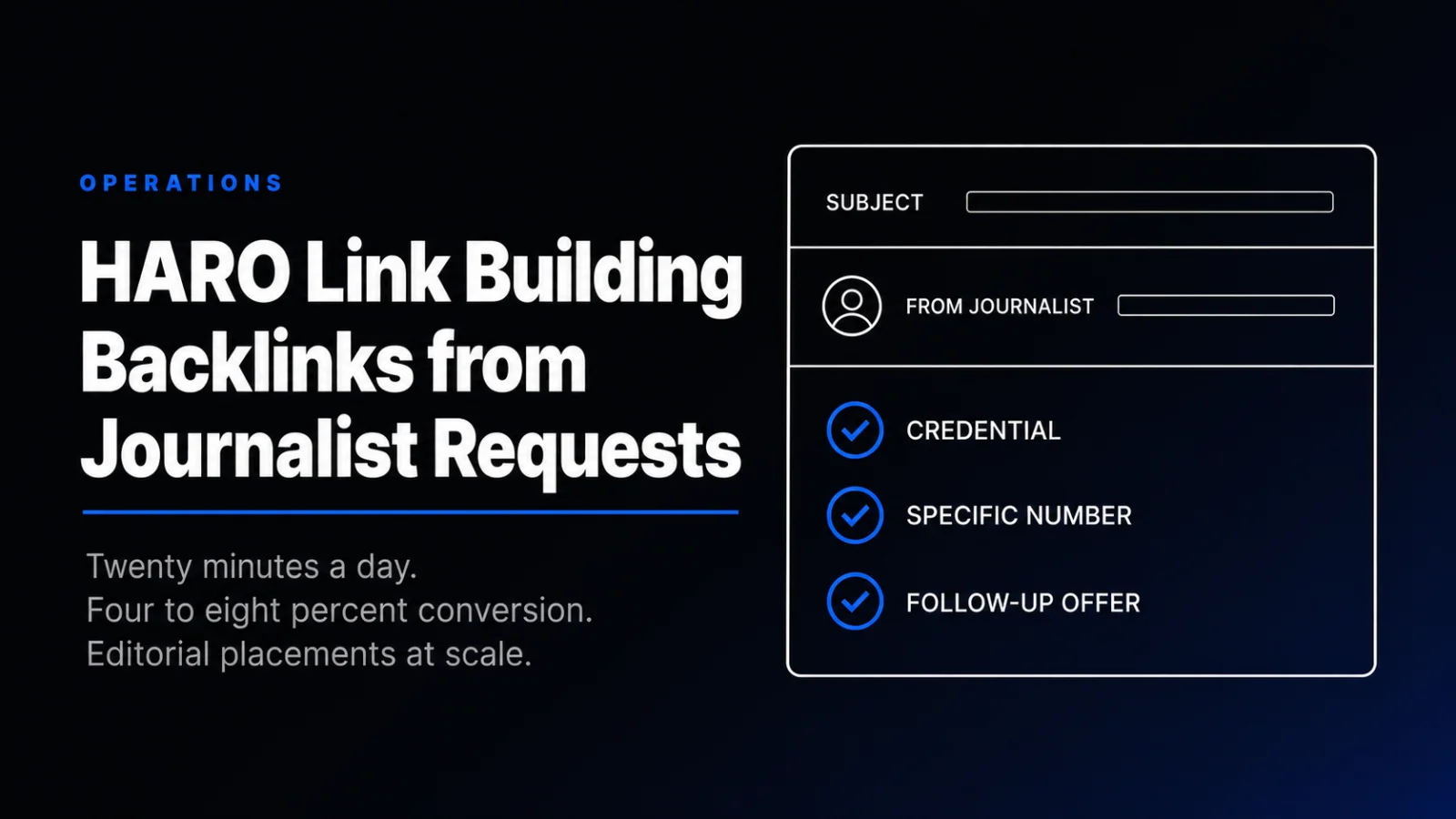
HARO is the cheapest path to a tier-1 backlink. The math is brutal: 20 to 40 minutes per day, 4 to 8% conversion on substantive responses, placements in publications including New York Times, Forbes, Inc, and dozens of trade titles. The catch is that most agencies run HARO badly, blast templated responses, and waste journalist attention. This guide covers how to run it without burning the source pool.
What Is HARO Link Building?
HARO (Help A Reporter Out) is a platform where journalists post requests for expert sources and sources respond with quotes. Cision rebranded it Connectively in 2024, then discontinued it in December 2024, and the HARO brand was later revived under new ownership. A successful response produces a published quote in the journalist's article, typically with a backlink to the source's site. The model that made HARO famous is fast (response cycles of 3-7 days), high-authority (participating publications skew tier-1), and low-cost (free for sources at the basic tier).
It sits alongside guest posts, broken link replacement, and tier-1 digital PR in the modern tactic stack.
Which Source-Response Platforms Actually Produce Placements in 2026?
Four platforms account for almost all credible source-response link building activity.
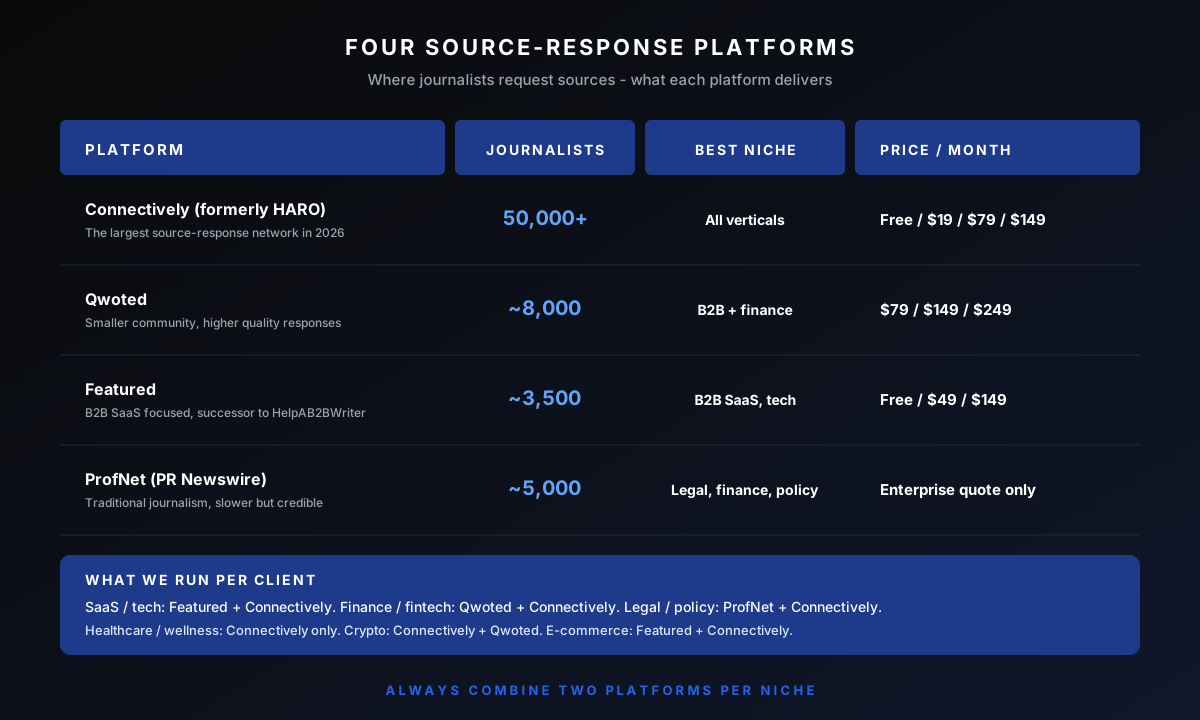
Connectively (formerly HARO). The largest platform, with 50,000+ journalists requesting sources. Free tier surfaces 3 emails per day; paid tiers ($19-149/mo) surface more and unlock targeting filters. Highest volume, broadest topic coverage.
Qwoted. Smaller community of journalists, higher response quality on average. Strong in B2B and finance niches. Free tier limited; paid tier $79-249/mo.
Featured. The successor to a defunct platform called HelpAB2BWriter, focused on B2B SaaS. Lower volume but high relevance for tech and SaaS brands.
ProfNet (PR Newswire). Older platform serving traditional journalism. Strongest in finance, legal, and policy reporting. Higher subscription cost; some agencies maintain it for legal vertical work specifically.
How Does The HARO Workflow Run End-To-End?
Five phases per day, 20 to 40 minutes total per source. Read the queries digest. Triage matching queries. Draft responses. Send and log. Track for publication and reclamation.
Phase 1: Read The Digest
Connectively sends 3 digests per day (morning, afternoon, evening US time). Read all three even if you only respond to one. Pattern recognition improves over time on which requests convert.
Phase 2: Triage
Most queries are not worth responding to. Filter by: topic match (must align with the brand's expertise), deadline (must have realistic time to draft), publication tier (DR 50+ for most campaigns), and request specificity (vague requests rarely convert).
Phase 3: Draft The Response
Response structure: 150-250 word total. Lead with a single named credential ("Bart Magera, Founder of Mojo Links LLC, an SEO agency specialising in regulated verticals"). Answer the specific question asked, not a related question you wanted to answer. Use a concrete number or named example in the first paragraph. Close with one sentence inviting follow-up. No attachments. No bullet points unless the journalist asked for them.
Phase 4: Send and Log
Send through the platform's reply mechanism (some platforms anonymise email addresses). Log the query, your response, and the publication target in a tracking spreadsheet. Most successful responses get published 5-15 days after sending.
Phase 5: Track and Reclaim
Set Google Alerts on your name. Use Connectively's notification feature where available. When a publication runs your quote without linking back, send a polite reclamation email asking for the missing link. Reclamation converts at 25-40%, the same range as standard unlinked mention work.
What Is The Conversion Rate of HARO Link Building?
4 to 8% from sent response to published quote on substantive responses in Mojo Links' 2024-2025 campaign data. Add 25-40% on reclamation outreach. Effective response-to-link rate after reclamation lands around 5-10%, slightly above raw publication rate. Time per placement averages 4-7 hours of cumulative response work across multiple queries.
Conversion varies by platform and niche. The full breakdown sits in the 2026 link building statistics across the major tactic comparison.
What Does a Winning HARO Response Actually Look Like?
Three rules separate winning responses from filtered noise.
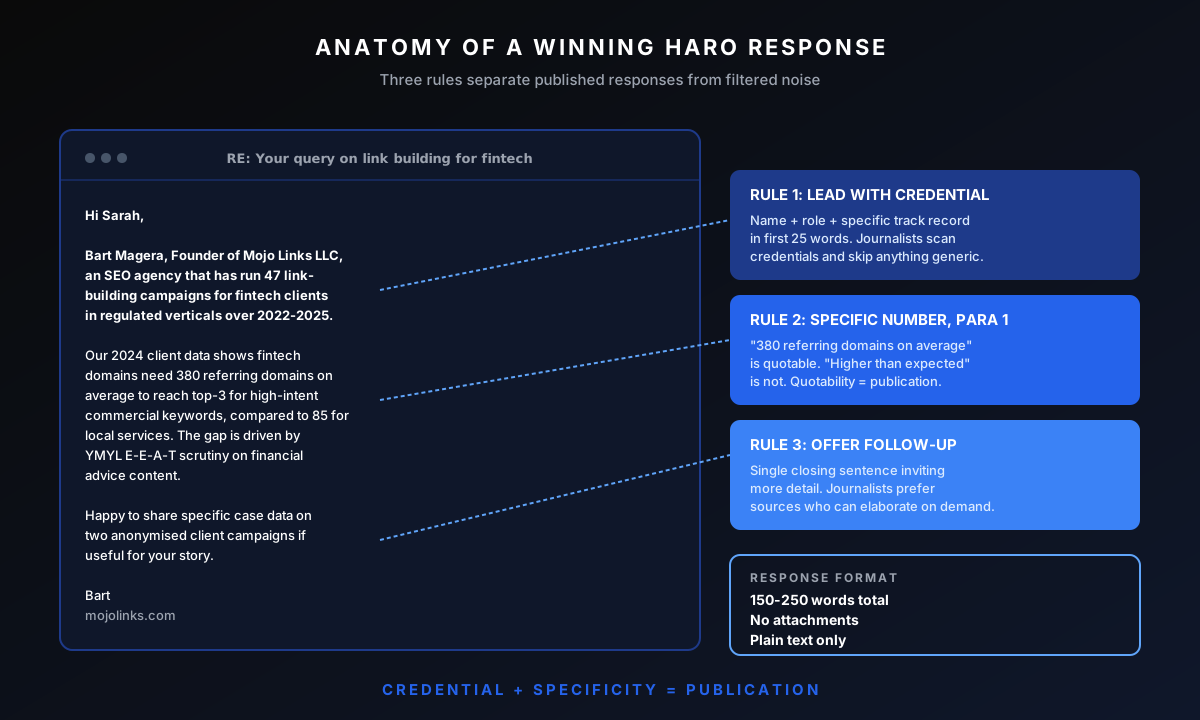
Rule 1: Lead with Credential, Not Introduction
"Bart Magera, Founder of Mojo Links, an SEO agency that runs link-building campaigns in regulated verticals" is a credential. "I am writing in response to your request" is an introduction. Journalists skim 20-50 responses per query and read the credential first. If the credential does not match the topic in the first 10 words, you are deleted.
Rule 2: Specific Number or Named Example in Paragraph One
"Our 2024 client data shows 6-9% rework rates on confirmed placements" beats "rework rates are often higher than expected." Specifics are quotable. Generalities are not. If your response cannot produce a single specific number or named example, do not send it.
Rule 3: Answer The Question, Not The Question You Wish They Asked
If the journalist asks for legal-vertical link-building advice and you reply with a general SaaS playbook, your response is filtered. Match the question exactly even if your strongest expertise is adjacent.
What Mistakes Ruin a HARO Campaign?
Five common failures.
Responding to every query. Quality is the constraint, not volume. Three personalised responses per day beats fifteen templated responses.
Treating HARO as a content marketing channel. The platform is for sources, not promotion. Promotional language gets filtered.
Skipping the reclamation phase. Half of all available backlinks from published quotes require reclamation outreach.
Burning credibility with one bad placement. Publications track sources informally; a thin or off-topic quote in one outlet damages your acceptance rate at others.
Ignoring the broader QA pass on confirmed placements. The same 24-hour QA checklist applies to HARO placements as to every other tactic in our end-to-end link building process.
Who Should Run HARO Link Building?
HARO works for three audience profiles. Founders with senior credentials in a defined niche (the credential is your edge over generic agency responses). Specialist agencies with named senior strategists who can speak credibly across multiple topics. In-house teams with a marketing lead willing to commit 20-40 minutes daily for 3-6 months before scaling. HARO does not work for junior outreach analysts without subject-matter authority, because journalists detect content-marketing language immediately.
How Did Mojo Links Develop This HARO Methodology?
This workflow consolidates 18 months of Connectively, Qwoted, and Featured responses across engagements during 2024-2025. Bart personally drafted most senior-credential responses; junior team members handled queries matching specific operational niches they had real expertise in. The conversion rates in this post are the empirical numbers from that internal dataset. We do not source data from agency content-marketing roundups because most of them inflate their own conversion rates by an order of magnitude.
Frequently Asked Questions About HARO Link Building
Is HARO Still Worth Doing Now That It Is Called Connectively?
Yes. The platform rebrand changed the name and dashboard but not the underlying source-response model. Conversion rates observed in the rebranded platform during 2024-2025 are roughly equivalent to the pre-rebrand period.
Can You Outsource HARO Responses To a Junior Writer?
No. The credential leading the response is the conversion factor. Journalists track source quality and stop publishing sources whose responses lack expertise. Junior writers without subject authority cannot fake the credential.
Should You Respond To No-Link Queries?
Sometimes. Build relationships with high-tier journalists who request sources via Connectively but rarely link out. The brand mention plus follow-on coverage in their other articles can be more valuable than a single linked placement.
How Much Does a Paid Connectively Subscription Cost?
$19-149/month at time of writing (2026). The mid-tier $79/month unlocks targeting filters that improve triage efficiency by 2-3x. Worth the cost for any serious source-response program.
Can HARO Replace Other Link Building Tactics?
No. HARO produces 2-6 placements per month at sustained pace. Most campaigns need 10-40 placements per month, requiring a tactic mix including guest posts and broken link building.
Want Us To Run HARO Link Building for Your Team?
HARO is part of the standard tactic mix inside our done-for-you link building, with Bart personally drafting senior-credential responses for client expertise areas. Book a slot to discuss your campaign.

About Bart Magera
Bart Magera is the founder of Mojo Links. Ten years across YMYL verticals (legal, medical, finance, supplements, crypto, gambling). Trained under Koray Tuğberk Gübür's Topical Authority framework. Author of two SEO books and international speaker.
Want this kind of analysis on your site?
Get a free video walkthrough within 48 hours covering technical health, backlinks, content gaps, and AI visibility.
Related posts
Keep reading on adjacent topics.
- Link Building
 Bart Magera10 min read
Contextual Backlinks: What They Are, Why They Win, and How To Earn Them
A contextual backlink sits inside the body of an article, surrounded by relevant text, not in a footer or author bio. That placement is what gives it weight. Here is what contextual backlinks are, what makes one high quality, how to earn them, and how to spot the cheap fakes.
- Link Building
 Bart Magera12 min read
What Is White Hat Link Building? Techniques That Work in 2026
The Problem: Why Most Link Building Fails Your SEO You wrote great content. It’s relevant. It’s useful. It even has infographics. But guess what? Crickets. Nobody’s linking. Google’s not ranking. And your “ultimate guide” is buried somewhere on page 7 under a recipe blog and a…
- Link Building
 Bart Magera10 min read
Tiered Link Building: How It Works and How To Do It Safely
Tiered link building layers weaker links behind your strongest ones to pass more authority to your money pages. Here is how the pyramid works, how to build one, which links are worth tiering, the risk SpamBrain introduced, and the lower-risk path I use on client sites.