

SaaS Link Building: How To Earn Links That Convert
Listen to this article
Browser-native voice. No account required.
SaaS link building has the same core problem as any commercial site: nobody links to a pricing page. People do not cite a feature page or a checkout, so the pages a SaaS company most wants to rank are the ones the web has no reason to reference. Most SaaS link building advice ignores this and lists generic tactics.
What makes SaaS different is the upside. A SaaS company can build assets the rest of the web cannot, from free tools to original product data, then route that authority to the pages that convert. It is the same off-site authority discipline applied everywhere, shaped to how software companies actually earn links.
What Is SaaS Link Building?
SaaS link building is the work of earning backlinks for a software company so that authority reaches the feature, pricing, and comparison pages that drive signups. The goal is not links for their own sake; it is rankings and pipeline on the pages that convert. As a slice of search engine optimization, it lives or dies on relevance. It is one pillar of a broader SaaS SEO strategy, not a substitute for it.
It is its own discipline because of the asset mix. A SaaS company has free tools, integrations, product data, and review-platform profiles that a typical brochure site does not, and those are exactly where links are earned.
Why Is Link Building Different for SaaS Companies?
Link building is different for SaaS because the money pages and the linkable assets are not the same pages. The feature and pricing pages convert but rarely earn links, while the tools, data, and comparison content earn links but do not directly sell.
This is the same structural problem stores face, which is covered in ecommerce link building. The difference is that SaaS has richer assets to work with, and relevance still decides their value, which is why it pays to weight niche relevant backlinks over raw domain authority metrics.
The SaaS companies that win treat link building as a routing problem. They build assets that deserve links, earn the links there, and connect that equity to the pages that convert on purpose.
Where Links Land on a SaaS Site
On a healthy SaaS site, links land on assets, not on the pricing page. They land on a free tool, a data study, an integration page, or a comparison. The pages that convert inherit that authority through internal links.
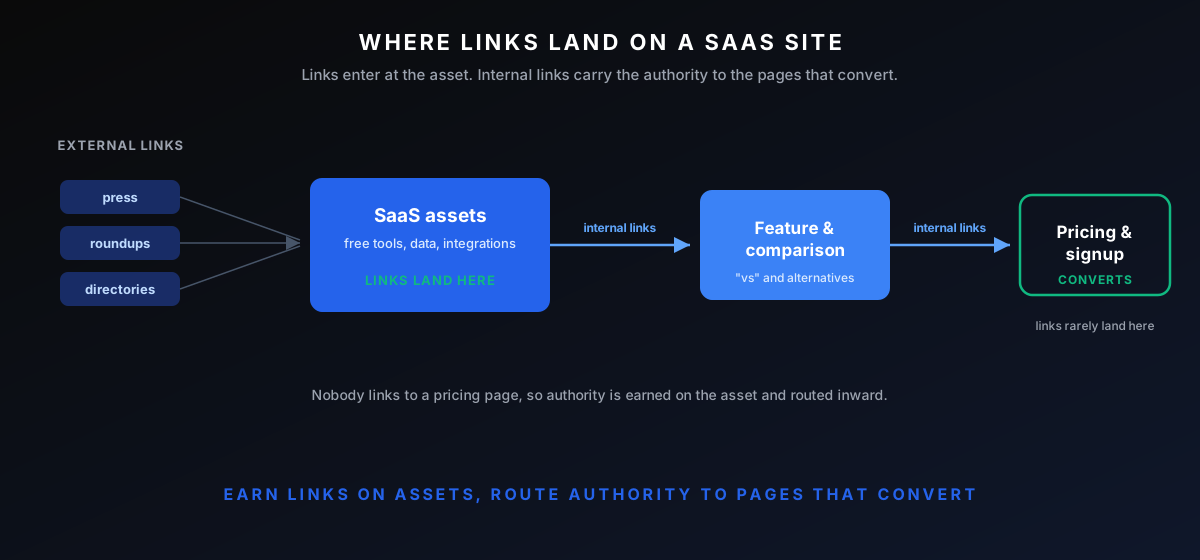
Read that flow left to right. External links enter at the linkable asset, the asset links across to the relevant feature or comparison page, and that page links to pricing. Authority is earned in one place and routed to the pages that convert, which is the whole game.
This is why a SaaS company with a strong tools-and-content layer outranks a bigger competitor that only has product pages. The asset layer gives links somewhere to land, and the internal structure delivers the benefit where it pays.
The SaaS Link Building Tactics That Work
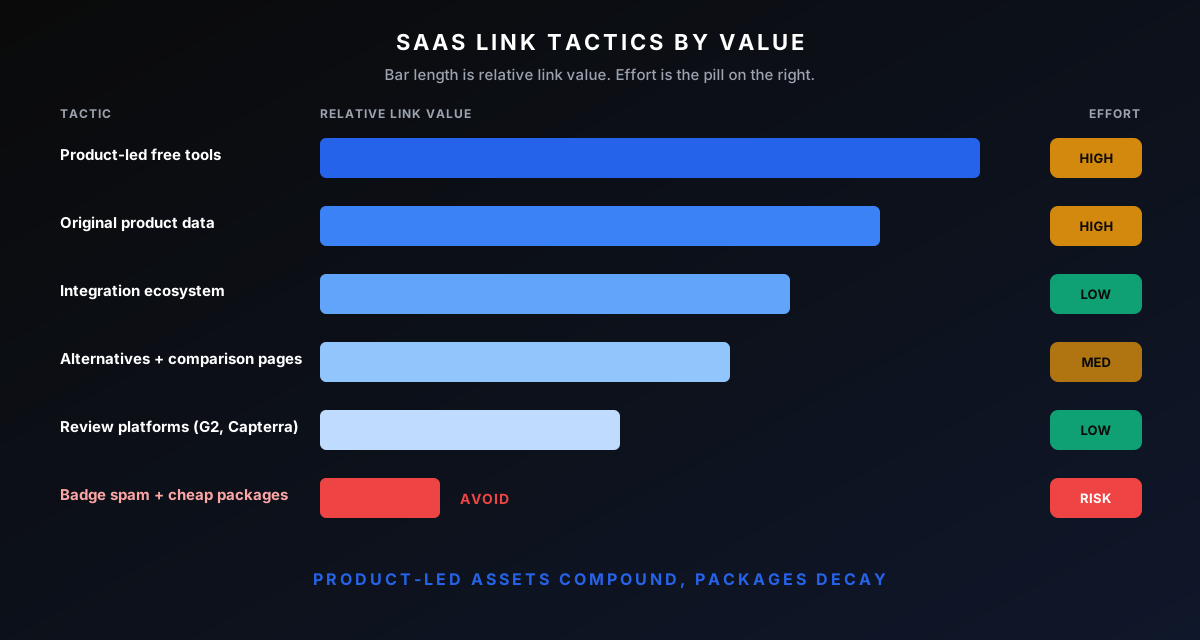
Here are the SaaS-specific tactics that actually earn links, in priority order, pairing link building with the content marketing assets a software company can uniquely build. Each targets an asset or a real relationship, not the pricing page, and each produces links a manual reviewer would call legitimate.
Product-Led Free Tools and Calculators
A free tool that solves a real problem is the highest-value SaaS link asset. A calculator, a generator, a grader, or a stripped-down free version earns links and signups for years, because people reference tools they actually use.
Calculators and graders. A tool that returns a personalized number or score people cite and share.
Free templates and generators. Genuinely useful assets adjacent to your product.
A free tier or mini-tool. A standalone slice of your product that lives on its own URL.
Original Product Data and Digital PR
SaaS companies sit on usage data nobody else has, which makes them natural data study candidates. Anonymized trends from your own platform, pitched as a story, earn the high-quality, tier-1 editorial links that move competitive rankings.
Anonymized usage trends. Aggregate platform data into a finding journalists cannot get elsewhere.
Annual state-of-industry reports. A recurring report that becomes the cited benchmark in your category.
Customer surveys. A survey on a question your industry has not answered.
Integration and Partner Ecosystem Links
Every tool you integrate with has a partner directory, a marketplace listing, or a docs page, and most will list you. These are relevant, legitimate links you often already qualify for and simply have not claimed.
Integration and marketplace listings. Get listed in every partner directory you connect to.
Partner and co-marketing pages. Joint case studies and partner pages link both ways.
API and developer directories. Listings relevant by definition for a technical product.
Alternatives and Comparison Pages
Comparison and alternatives content, built on honest competitor analysis, captures competitor brand demand and earns links from roundups and listicles. Done well, these pages rank for "[competitor] alternatives" and pull in the guest post links and roundup placements that cite category comparisons.
"[Competitor] alternatives" pages. Honest comparisons that capture buyers researching rivals.
Category "best of" content. Roundups that other publishers reference and link.
Use-case comparison pages. Pages that match your product to a specific job to be done.
Review Platforms and Software Directories
Software review platforms build both trust and links. A complete profile on G2, Capterra, and similar directories earns referral traffic and citations, and increasingly feeds the sources AI answers draw on.
G2, Capterra, and Trustpilot. Complete, reviewed profiles on the platforms buyers check.
Product Hunt and launch platforms. A launch presence with real discovery value.
Niche software directories. Category-specific listings relevant to your buyers.
How Internal Links Carry Authority To Feature and Pricing Pages
Earning the link is half the job; internal linking is the other half. A free tool that earns fifty links does nothing for pipeline unless those links connect to the feature and comparison pages you want to rank. Judge each earned link on the same quality backlinks standard, then point the page it lands on where it should go.
Link from the body of your tools, data studies, and blog content to the relevant feature or comparison page, using descriptive anchor text. Keep the path short, because every extra hop dilutes what reaches pricing. Done well, one strong asset lifts an entire product area.
This is where most SaaS sites leave value behind. They earn links to a tool or a report, then never connect it to anything that converts, so the authority pools where it cannot help.
SaaS Link Building Tactics To Avoid
Some SaaS tactics do more harm than good. Mass guest posts on irrelevant blogs, cheap link packages, and link-bearing "badge" widgets dropped across unrelated sites are the opposite of what Google's guidance on links and anchor text describes: editorially placed, descriptive links inside relevant content. Build for that standard and skip the rest.
Badge programs deserve a specific warning. A genuine customer badge is fine, but engineering a keyword-anchored link widget and pushing it across hundreds of unrelated sites is a link scheme, not a partnership. The same goes for any agency promising hundreds of SaaS backlinks for a flat monthly fee.
How To Measure SaaS Link Building
Measure SaaS link building by what it does for the product, not by vanity metrics. Domain rating climbing is not the goal; feature and comparison rankings rising, and signups and pipeline following, is the goal.
Feature and comparison rankings. The money-page positions you are actually trying to move.
Referring domains to assets. Whether your tools and data are earning links at all.
Assisted signups and pipeline. The downstream result that justifies the spend.
Internal-link coverage. Whether earned authority is reaching the pages that convert.
Does SaaS Link Building Help with AI Search?
It does, and SaaS is well positioned for it. AI answer engines lean on trusted mentions, comparisons, and review platforms, all of which are core SaaS link assets. A product cited in real comparisons, directories, and data stories is more likely to surface when someone asks an assistant what software to use.
The assets that earn links are the same ones that earn citations. A free tool, a data study, or a complete review profile is what an AI engine references, while a pricing page almost never is, which is one more reason to build the asset layer.
Frequently Asked Questions
What Is The Best Link Building Strategy for SaaS?
Build a product-led free tool or original data asset, earn links to it, and route that authority internally to your feature and comparison pages. It outperforms generic guest posting because the asset keeps earning links and signups long after a one-off outreach campaign ends.
Should SaaS Companies Build Links To Feature Pages or Content?
Build links to assets and content, then pass that authority to feature pages internally. Feature and pricing pages rarely earn links on their own, so the realistic path is to earn links where people will give them and route the benefit to the pages that convert.
Do SaaS Alternatives Pages Actually Earn Links?
Yes, when they are honest and useful. Comparison and alternatives pages get cited by roundups and listicles and capture buyers researching competitors. The links come because the pages help a real decision, not because they exist.
Are G2 and Capterra Links Worth It for SaaS?
Yes, for trust and discovery more than raw link power. Complete review profiles drive referral traffic, support buyer decisions, and increasingly feed AI answers. Treat them as foundational presence, not as a ranking lever on their own.
How Long Does SaaS Link Building Take To Work?
Expect months, not weeks. Assets take time to earn links, and those links take more time to mature and move rankings. The compounding is real, and product-led assets compound faster than one-off placements because they keep earning links.
Work with Mojo Links
SaaS link building only pays when earned authority reaches the pages that convert, and that is the work we run for clients: build the assets, earn the links, and route them to feature and pricing pages. We use link-building campaigns built around your product and category, and skip the mass-guest-post packages entirely. A personalized video audit includes a read on your SaaS link profile and where the real gaps are.

About Bart Magera
Bart Magera is the founder of Mojo Links. Ten years across YMYL verticals (legal, medical, finance, supplements, crypto, gambling). Trained under Koray Tuğberk Gübür's Topical Authority framework. Author of two SEO books and international speaker.
Want this kind of analysis on your site?
Get a free video walkthrough within 48 hours covering technical health, backlinks, content gaps, and AI visibility.
Related posts
Keep reading on adjacent topics.
- Link Building
 Bart Magera10 min read
Contextual Backlinks: What They Are, Why They Win, and How To Earn Them
A contextual backlink sits inside the body of an article, surrounded by relevant text, not in a footer or author bio. That placement is what gives it weight. Here is what contextual backlinks are, what makes one high quality, how to earn them, and how to spot the cheap fakes.
- Link Building
 Bart Magera12 min read
What Is White Hat Link Building? Techniques That Work in 2026
The Problem: Why Most Link Building Fails Your SEO You wrote great content. It’s relevant. It’s useful. It even has infographics. But guess what? Crickets. Nobody’s linking. Google’s not ranking. And your “ultimate guide” is buried somewhere on page 7 under a recipe blog and a…
- Link Building
 Bart Magera10 min read
Tiered Link Building: How It Works and How To Do It Safely
Tiered link building layers weaker links behind your strongest ones to pass more authority to your money pages. Here is how the pyramid works, how to build one, which links are worth tiering, the risk SpamBrain introduced, and the lower-risk path I use on client sites.