

Ecommerce Link Building: How To Earn Links To Product Pages
Listen to this article
Browser-native voice. No account required.
Most ecommerce link building advice ignores the one fact that decides everything: nobody links to a product page. People do not cite a "buy running shoes" page or a category grid, and the manufacturer copy on those pages is usually duplicated across a hundred other stores. That is the real problem, and the generic tactic lists skip right past it.
This is how it actually works. You earn links to things people will reference, then route that authority internally to the pages that make money. It is the same off-site authority building discipline applied everywhere, adapted to the structure of an online store.
What Is Ecommerce Link Building?
Ecommerce link building is the work of earning backlinks for an online store so that authority reaches its commercial category and product pages. The goal is not links for their own sake; it is rankings and revenue on the pages that sell.
What makes it its own discipline is the target. A blog or a SaaS site can earn links straight to the pages it wants to rank. A store usually cannot, because the pages it wants to rank are the ones nobody has a reason to link to. The software version of this problem, where the pages that convert rarely earn links, has its own playbook in SaaS link building.
Why Is Link Building Harder for Ecommerce Sites?
Link building is harder for stores because the pages that earn money are the pages that earn the fewest links. A category page is a commercial grid, and a product page is a transaction. Neither gives a writer, a blogger, or a journalist a reason to cite it.
On top of that, most product descriptions are supplied by the manufacturer and repeated across every retailer that stocks the item. Duplicate copy gives publishers nothing original to reference, and it weakens the page in search. Relevance still matters more than raw authority, which is why it pays to weight niche relevant backlinks over big numbers, but you first need something worth linking to.
The stores that win treat this as a routing problem, not a volume problem. They build pages that deserve links, earn the links there, and then move that equity to the money pages on purpose.
Where Links Actually Land on a Store
On a healthy store, links almost never land on the product page directly. They land on an asset: a buying guide, a free tool, a data study, or a comparison. The product page inherits that authority through internal links.
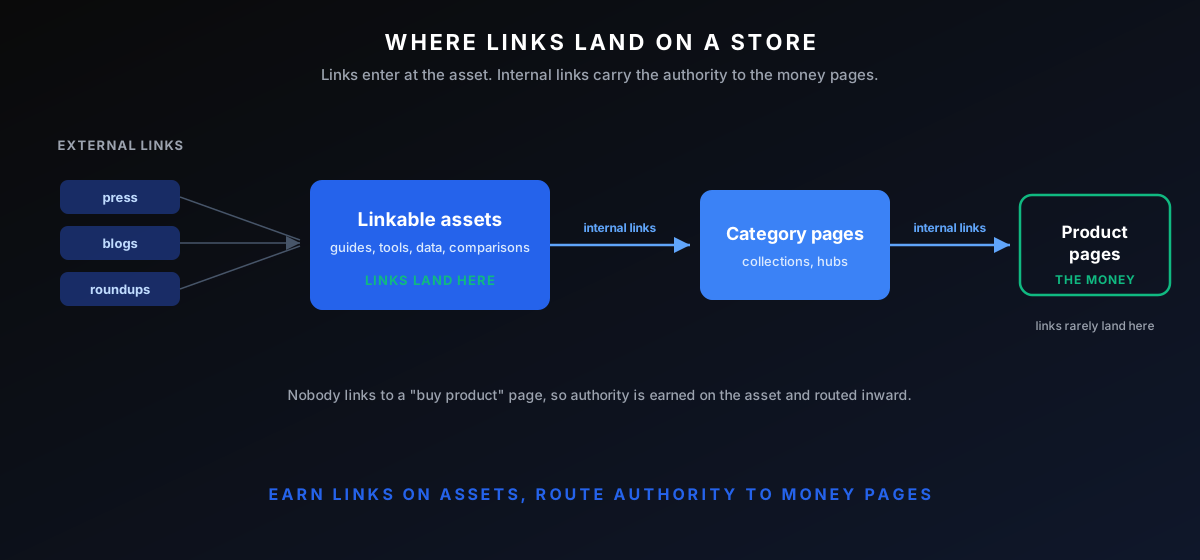
Read that flow left to right. External links enter at the linkable asset, the asset links down to the relevant category, and the category links to its products. Authority is earned in one place and routed to another, which is the whole game in ecommerce link building.
This is why a store with a strong content library outranks a bigger competitor that only has product pages. The library gives links somewhere to land, and the internal structure delivers the benefit where it pays.
The Ecommerce Link Building Tactics That Work
Here are the tactics that actually earn links for a store, in priority order. Each one targets an asset or a real relationship, not the product page, and each produces links a manual reviewer would call legitimate.
Digital PR and Original Data
The strongest ecommerce links come from giving journalists something to write about. Survey your customers, publish buying trends from your own sales data, or build a small interactive tool, then pitch it. This is digital PR, and it earns the editorial links that move competitive rankings.
Original data studies. Aggregate anonymized trends from your category and pitch them as a story.
Free tools and calculators. A sizing, cost, or comparison tool earns links for years.
Expert commentary. Respond to journalist requests in your niche with a real point of view.
Product Seeding and Expert Reviews
Sending products to genuine reviewers and publications earns editorial coverage and links, as long as it is real. Disclose the gift, expect an honest review, and never pay for a guaranteed link, which crosses into territory Google treats as a link scheme.
Niche reviewers and creators. People whose audience already buys what you sell.
Roundups and "best of" lists. Editorial comparisons in your category that a real editor controls.
Industry publications. Trade outlets that cover products like yours.
Supplier, Stockist, and Partner Links
If you sell other brands, their "where to buy" and stockist pages are legitimate, relevant links you often already qualify for and simply have not claimed. The same goes for manufacturers, partners, and trade associations you belong to.
Stockist and retailer-locator pages. Ask every brand you carry to list you.
Manufacturer and partner directories. Authorized-dealer and partner listings are relevant by definition.
Trade and membership bodies. Associations you actually belong to.
Broken Link Building and Link Reclamation
Stores discontinue products constantly, and every dead URL is a lost link and a lost ranking. Reclaiming those, and replacing competitors' dead product links with your live equivalents, is some of the cleanest work available. The mechanics are covered in broken link building.
Reclaim your own dead URLs. Redirect discontinued products to the closest live page so the links survive.
Replace competitors' dead links. Offer your in-stock product where their discontinued one used to be.
Recover unlinked brand mentions. Find places that name you without linking and ask for the link.
Resource Pages, Gift Guides, and Comparisons
Curated pages are made to link out, which makes them a natural fit for stores. Seasonal gift guides, "best [product] for [use case]" roundups, and category resource pages all link to retailers. Pitching these is classic resource page work, and it pairs well with the guest post links you place directly.
Gift guides. Seasonal roundups that send buyers straight to product pages.
Use-case roundups. "Best for beginners", "best budget", and similar editorial lists.
Niche resource pages. Curated link pages in your category that accept relevant stores.
How Internal Links Carry Authority To Product Pages
Earning the link is only half the job; the other half is internal linking. An asset that earns ten links does nothing for revenue unless those links connect to the category and product pages you want to rank. Judge each earned link on the same link quality standard, then make sure the page it lands on points where it should.
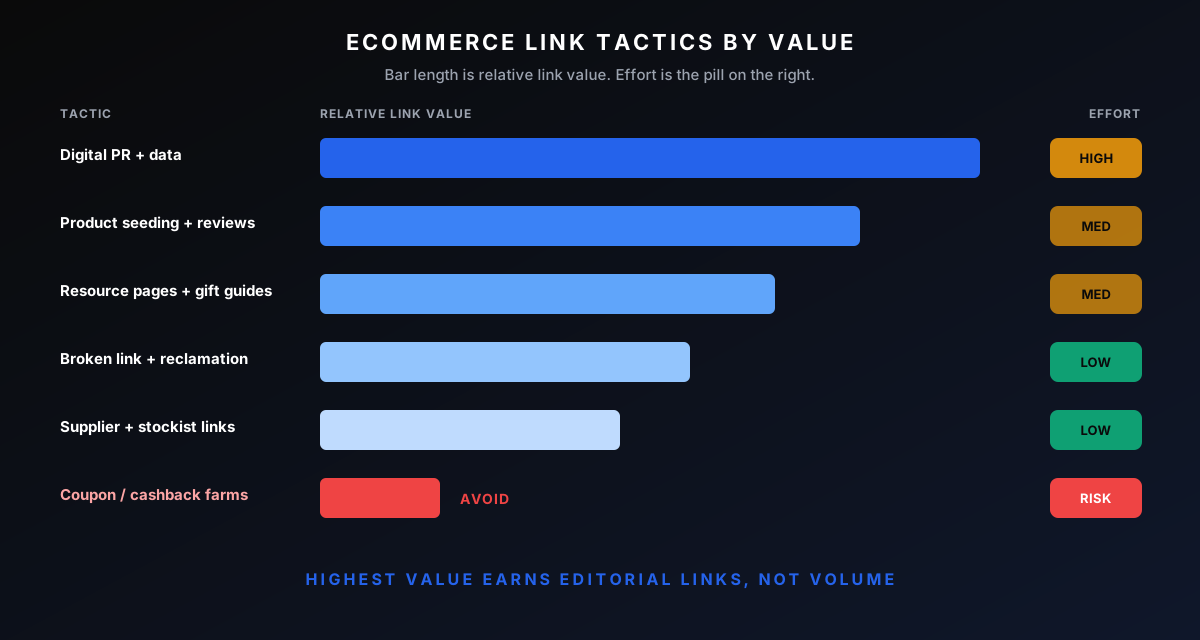
Link from the body of your guides and studies to the relevant category, using descriptive anchors, not "click here". Keep the path short, because every extra hop dilutes what reaches the product. Done well, one strong asset can lift an entire category.
This is also where most stores leave value on the table. They earn a few good links to a blog post, then never connect that post to anything that sells, so the authority pools where it cannot help.
Ecommerce Link Building Tactics To Avoid
Some ecommerce tactics do more harm than good. Coupon and cashback link farms, paid bulk-link packages, and mass directory submissions are exactly what Google's SpamBrain system is built to catch at scale. Earn links that point at product pages built on the fundamentals Google's ecommerce SEO documentation covers, and skip anything that risks a devaluation.
Coupon sites deserve a specific warning. A genuine affiliate or coupon relationship can drive sales, but buying placements on networks of low-quality coupon and cashback sites is a manipulation pattern, not a link strategy. The same goes for any service promising hundreds of store backlinks for a flat fee.
How To Measure Ecommerce Link Building
Measure ecommerce link building by what it does for the store, not by vanity metrics. Domain rating going up is not the goal; category and product rankings climbing, and assisted revenue following, is the goal.
Category and product rankings. The money-page positions you are actually trying to move.
Referring domains to assets. Whether your linkable assets are earning links at all.
Assisted and organic revenue. The downstream result that justifies the spend.
Internal-link coverage. Whether earned authority is reaching the money pages.
Does Ecommerce Link Building Help with AI Search?
It does, indirectly. AI answer engines lean on the same authority and relevance signals as search, plus mentions on trusted publications and communities. A store cited in real buying guides and editorial roundups is more likely to surface when someone asks an assistant what to buy.
The assets that earn links are the same ones that earn citations. A data study or a genuinely useful guide is what an AI engine references, while a product grid almost never is, which is one more reason to build the asset layer.
Frequently Asked Questions
Should I Build Links To Product Pages or Content?
Build links to content and assets, then pass that authority internally to product pages. Product pages rarely earn links on their own, so the realistic path is to earn links where people will give them and route the benefit to the money pages through internal linking.
Do Ecommerce Backlinks Need To Be Dofollow?
The links that move rankings should be dofollow and relevant, but a natural profile includes nofollow links too. Mentions, social profiles, and community links add legitimacy and referral traffic even when they pass no authority, so chasing only dofollow links is the wrong filter.
Are Coupon and Deal Sites Good for Ecommerce Links?
A genuine coupon partnership can drive sales, but coupon and cashback link farms built only to sell placements are a spam pattern. Judge them on value and risk: real audience and editorial control are fine, networks of thin pages are not.
How Long Does Ecommerce Link Building Take To Work?
Expect months, not weeks. Assets take time to earn links, and those links take more time to mature and move rankings. The compounding is real, but it rewards consistency over any single campaign.
How Many Backlinks Does An Ecommerce Site Need?
There is no fixed number; it depends on your niche and competitors. The honest answer is enough relevant links, pointed at the right assets and routed internally, to match or beat the stores already ranking for your category terms.
Work with Mojo Links
Ecommerce link building only pays when earned authority reaches the pages that sell, and that is the work we run for clients: build the assets, earn the links, and route them to the money pages. We use link-building campaigns built around your categories, and skip the coupon-farm tactics entirely. A free growth review includes a read on your store's link profile and where the real gaps are. The FMCG link building results show that playbook on a consumer goods store: a technical cleanup plus 12 targeted placements reaching the pages that sell.

About Bart Magera
Bart Magera is the founder of Mojo Links. Ten years across YMYL verticals (legal, medical, finance, supplements, crypto, gambling). Trained under Koray Tuğberk Gübür's Topical Authority framework. Author of two SEO books and international speaker.
Want this kind of analysis on your site?
Get a free video walkthrough within 48 hours covering technical health, backlinks, content gaps, and AI visibility.
Related posts
Keep reading on adjacent topics.
- Link Building
 Bart Magera10 min read
Contextual Backlinks: What They Are, Why They Win, and How To Earn Them
A contextual backlink sits inside the body of an article, surrounded by relevant text, not in a footer or author bio. That placement is what gives it weight. Here is what contextual backlinks are, what makes one high quality, how to earn them, and how to spot the cheap fakes.
- Link Building
 Bart Magera12 min read
What Is White Hat Link Building? Techniques That Work in 2026
The Problem: Why Most Link Building Fails Your SEO You wrote great content. It’s relevant. It’s useful. It even has infographics. But guess what? Crickets. Nobody’s linking. Google’s not ranking. And your “ultimate guide” is buried somewhere on page 7 under a recipe blog and a…
- Link Building
 Bart Magera10 min read
Tiered Link Building: How It Works and How To Do It Safely
Tiered link building layers weaker links behind your strongest ones to pass more authority to your money pages. Here is how the pyramid works, how to build one, which links are worth tiering, the risk SpamBrain introduced, and the lower-risk path I use on client sites.