

Resource Page Link Building: How To Earn Curated Backlinks
Listen to this article
Browser-native voice. No account required.
Resource pages are the librarian shelves of the open web. Someone took the time to curate the best resources on a topic, published the list, and now maintains it. Earning a placement on a credible resource page is one of the cleanest editorial backlinks a site can have. The catch: most resource pages are saturated with low-quality outreach pitches, and the curators have developed strong filters. This post covers how to run the tactic in regulated verticals where forcing a placement is impossible. A curated placement there earns you contextual links.
What Is Resource Page Link Building?
Resource page link building is the practice of identifying curated pages in your niche (titled "Best X resources", "Recommended X tools", "X guide directory"), then pitching the curator with an asset that genuinely belongs on the list. The curator either adds your asset or declines. Unlike most other tactics, there is no negotiation phase. The asset fits the list or it does not.
It is one of eight tactics in the operations guide, and the one most operators run worst. The reason: it looks easy on paper and falls apart when the curator inspects the asset.
Why Does Resource Page Link Building Still Work in 2026?
Three reasons it survives despite years of templated outreach abuse. First, curators have a clear job: maintain the list as a trusted reference. Adding a genuinely valuable asset improves the list. Declining a thin pitch protects the list. The incentive is editorially clean, the kind of placement that aligns with Google's link best practices. Second, resource pages accumulate backlinks themselves; getting placed on a high-traffic resource page produces meaningful link equity beyond the single direct link. Third, the qualification cost is high enough that automated tools cannot scale the tactic, which preserves the conversion rate for operators who do the qualification properly.
The catch: conversion rates are modest (3-7%) and total acquired link volume per campaign is bounded by the number of qualifying resource pages in the niche.
How Does The Resource Page Workflow Run End-To-End?
Five phases: search, qualify, asset prep, pitch, follow-up.
Phase 1: Search
Use Google search operators to surface curated lists. Examples: intitle:"resources" + niche keyword, intitle:"best tools" + niche keyword, inurl:resources + niche keyword, "recommended" + niche keyword + "tools". The volume of raw results is high. Most are not worth pursuing.
Phase 2: Qualify
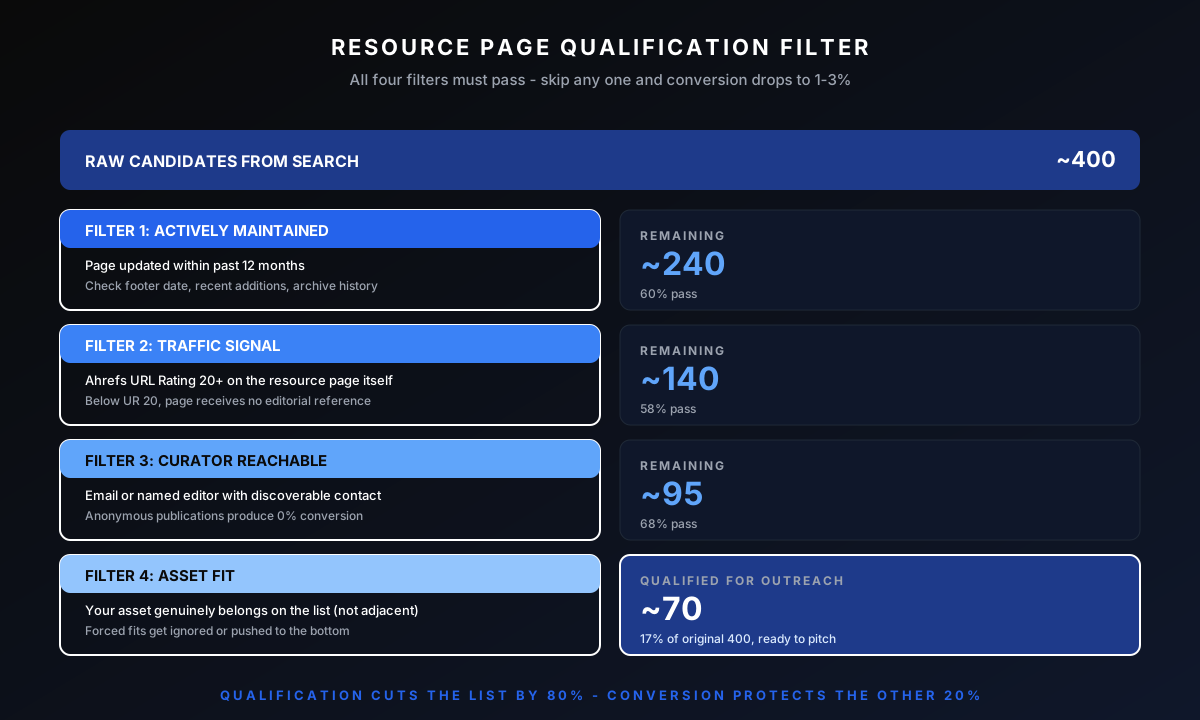
Apply four filters: page is actively maintained (last updated in past 12 months), page receives traffic (Ahrefs URL Rating 20+), curator is reachable (contact email or named editor), and your asset genuinely belongs on the list (not just adjacent, but a fit). Most candidate pages fail at least one filter. Qualification rate typically runs 20-30%.
Phase 3: Asset Prep
Resource pages list assets, not company sites. The pitch must offer a specific page: a guide, a calculator, a definitive tool, a research piece. If the site has only a homepage and a few service pages, this tactic is not yet ready. Build the asset first.
Phase 4: Pitch
A working resource page pitch has four parts. Subject line referencing the specific resource page title. Two-sentence opener acknowledging the list and what makes it useful. One sentence introducing your asset by name and explaining why it belongs. A sign-off offering to provide additional context. No more than 100 words. No marketing language.
Phase 5: Follow-Up
One follow-up at day 10. Move to cool-off list at day 21. Some curators update lists monthly or quarterly; long-tail conversions arrive 4-12 weeks after initial pitch as the curator does their next review cycle.
How Do You Find Resource Pages Worth Pursuing?
Three search strategies surface most of the qualifying prospects.
Search Operator Combinations
Standard combinations: intitle:"resources" + niche, intitle:"best [topic] tools" + qualifier, inurl:resources + niche, "useful [niche] sites", "[niche] directory". Vary the search across 8-12 query variants per campaign. Each variant produces 5-30 raw candidates.
Ahrefs Content Explorer
Search for "[niche] resources" or "best [niche] tools" filtered by referring domain count. Pages with 30+ referring domains are typically maintained resource pages worth pursuing. Pages with 0-5 referring domains are usually low-quality directories.
Reverse Engineering from Competitors
Pull each top competitor's backlink profile via Ahrefs. Filter for referring pages whose URL contains "resources", "tools", "directory", or "best". This surfaces resource pages your competitors already appear on. Pitch the same pages with a differentiated asset.
What Asset Types Fit Resource Pages?
Five categories convert well.
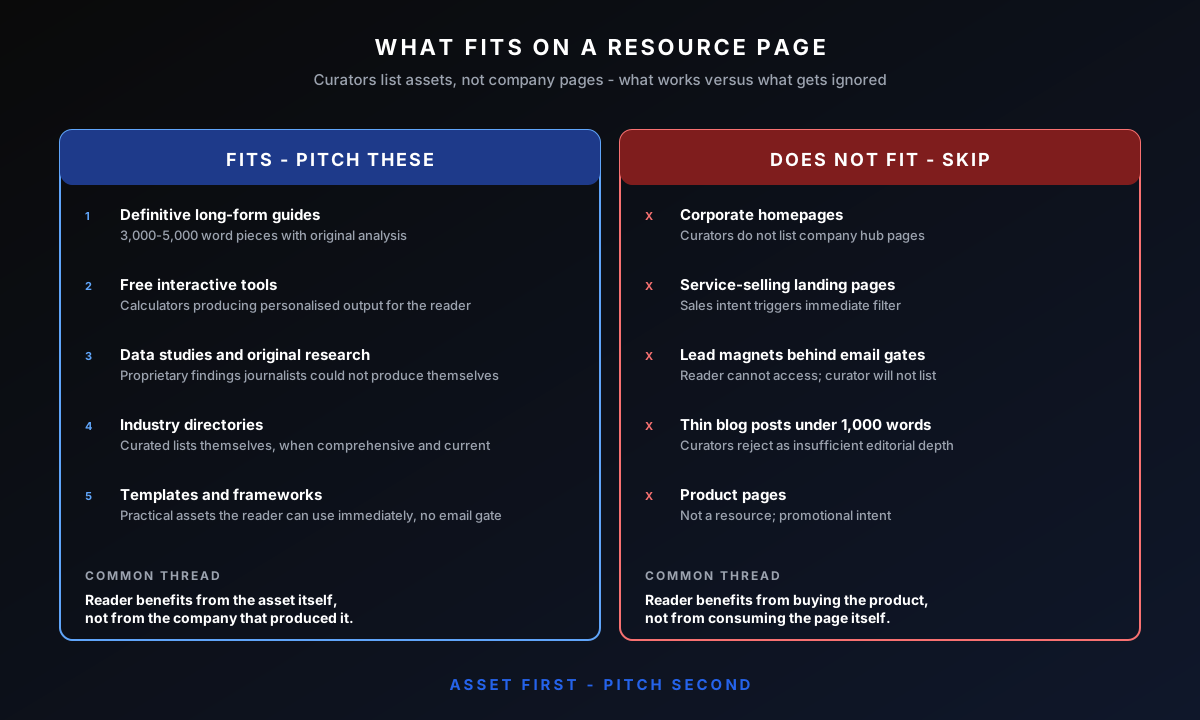
Definitive long-form guides (3,000-5,000 words on a specific topic, with original analysis).
Free interactive tools and calculators that produce a personalised output for the reader.
Data studies and original research with proprietary findings.
Industry directories or comparison resources that are themselves curated lists.
Templates and frameworks that the reader can use without paying. Asset types that do NOT fit resource pages: corporate homepages, service-selling landing pages, lead magnets with email gates, and thin blog posts under 1,000 words. New operators try to pitch service pages and then wonder why conversion is below 1%. Curators do not list sales pages. Asset development is documented in the manual link building workflow.
What Is The Conversion Rate of Resource Page Link Building?
3 to 7% from qualified prospect to live placement in Mojo Links' 2024-2025 campaign data. Conversion concentrates in two windows: immediate (curator responds within 14 days, ~60% of placements) and delayed (curator updates list quarterly, ~40% of placements arriving 30-90 days after pitch). Cost per placement runs $200-450 including senior outreach time. The full tactic comparison sits in the 2026 link building statistics.
What Mistakes Ruin a Resource Page Campaign?
Five common failures.
Pitching service pages instead of assets. Curators ignore these immediately.
Skipping the qualification phase. Pages with no maintenance, no traffic, or no reachable curator produce 0% conversion regardless of pitch quality.
Marketing language in the pitch. Curators detect promotional intent in the first sentence and delete.
Demanding placement above other listed assets. The curator decides ordering. Asking for position one converts at 0-2%.
Templated outreach to 200+ resource pages without personalisation. The curator community is small and reputation-aware. Templated blasts get flagged across multiple sites and burn the brand for future campaigns. The same qualification rigour applies as in link prospecting.
How Did Mojo Links Develop This Resource Page Methodology?
This workflow consolidates 12 resource-page campaigns we ran across 2023-2025. The qualification filters above were developed empirically: campaigns that skipped any single filter converted at 1-3% versus 5-8% for campaigns that applied all four. The numbers in this post are the empirical ranges from that internal dataset, not industry averages from public studies.
Frequently Asked Questions About Resource Page Link Building
How Long Until You See Results from a Resource Page Campaign?
Plan for 14 to 90 days. Most successful placements land within 2-4 weeks of initial pitch, but quarterly-update curators produce a long tail of placements arriving up to 3 months later.
Can Resource Page Link Building Work Without a Content Asset?
Rarely. Curators list assets, not company pages. If the site does not have a guide, calculator, or research asset, build one first. The tactic does not work as a sales-page placement strategy.
What Is The Difference Between Resource Page Link Building and Broken Link Building?
Resource pages list active assets. Broken link building targets dead resources that already exist as backlinks. Different prospect surfaces, different pitch structures. Both can be run in the same campaign cycle.
Should You Pay Curators for Resource Page Placements?
No. Paying a curator for placement makes the link sponsored under Google's policy, and the curator likely operates a paid-placement scheme that a backlink audit would flag. Resource page link building is a free-placement tactic by definition. Paid placements belong in a different category.
Can Small Businesses Run Resource Page Campaigns?
Yes, when they have at least one substantive asset (a guide, calculator, or research piece). The qualification filter is the floor: small businesses with thin content cannot pass the asset filter regardless of campaign budget.
Want Us To Run a Resource Page Campaign for Your Site?
Resource page outreach is one of the standard tactics inside our link building service, usually run in cycles alongside guest posts and broken-link campaigns. Book a slot to discuss your asset inventory and target niche.

About Bart Magera
Bart Magera is the founder of Mojo Links. Ten years across YMYL verticals (legal, medical, finance, supplements, crypto, gambling). Trained under Koray Tuğberk Gübür's Topical Authority framework. Author of two SEO books and international speaker.
Want this kind of analysis on your site?
Get a free video walkthrough within 48 hours covering technical health, backlinks, content gaps, and AI visibility.
Related posts
Keep reading on adjacent topics.
- Link Building
 Bart Magera10 min read
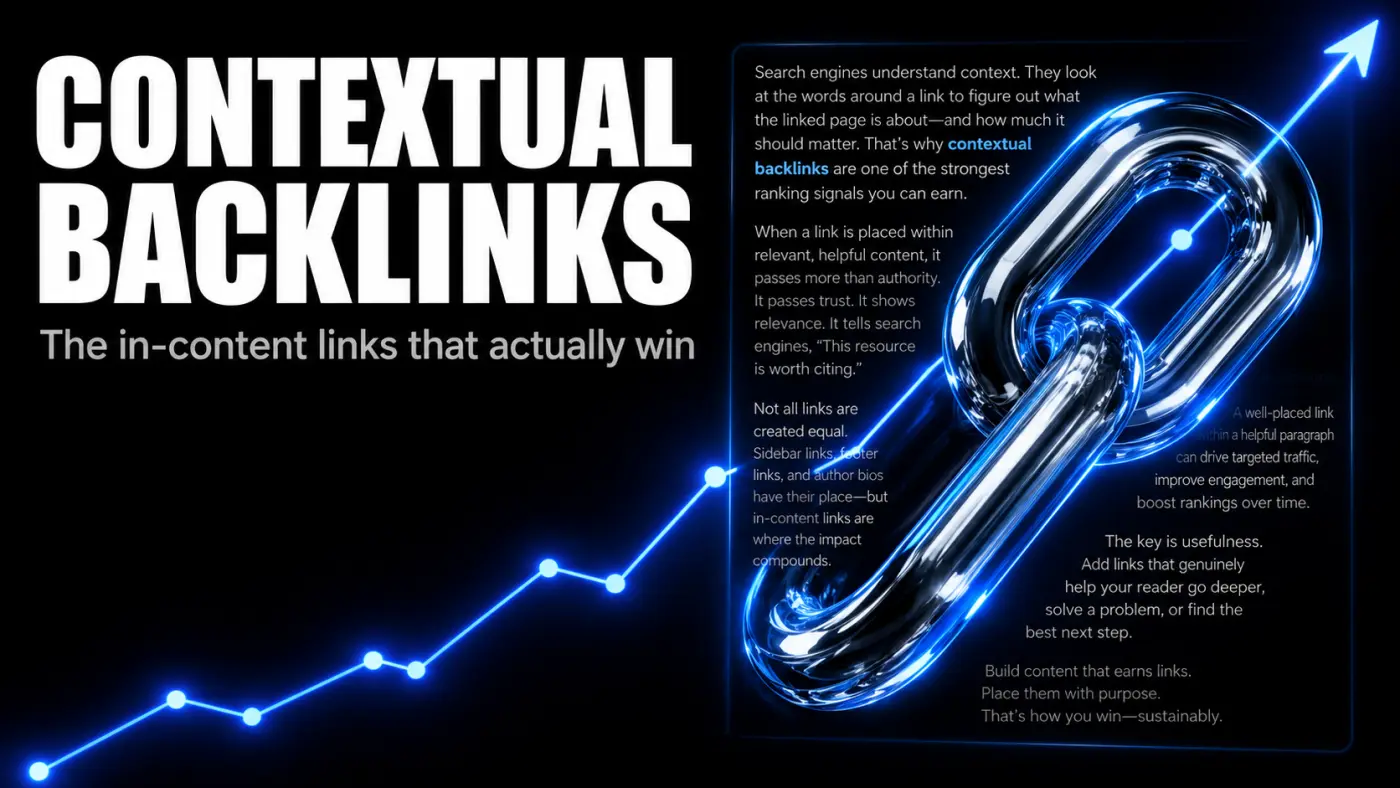
Contextual Backlinks: What They Are, Why They Win, and How To Earn Them
A contextual backlink sits inside the body of an article, surrounded by relevant text, not in a footer or author bio. That placement is what gives it weight. Here is what contextual backlinks are, what makes one high quality, how to earn them, and how to spot the cheap fakes.
- Link Building
 Bart Magera12 min read
What Is White Hat Link Building? Techniques That Work in 2026
The Problem: Why Most Link Building Fails Your SEO You wrote great content. It’s relevant. It’s useful. It even has infographics. But guess what? Crickets. Nobody’s linking. Google’s not ranking. And your “ultimate guide” is buried somewhere on page 7 under a recipe blog and a…
- Link Building
 Bart Magera10 min read
Tiered Link Building: How It Works and How To Do It Safely
Tiered link building layers weaker links behind your strongest ones to pass more authority to your money pages. Here is how the pyramid works, how to build one, which links are worth tiering, the risk SpamBrain introduced, and the lower-risk path I use on client sites.