

SaaS SEO: How To Rank The Pages That Actually Convert
Listen to this article
Browser-native voice. No account required.
Most SaaS companies do SEO backwards. They hire a content team, publish a blog post a week, watch traffic climb, and then wonder why almost none of those visitors ever start a trial. The traffic is real; the revenue is not.
SaaS SEO is the work of ranking the pages that actually convert, not just the ones that draw clicks. It is product-led and bottom-up: win the high-intent pages first, build topical authority around what the product does, and earn the links a competitive SaaS market demands. This is how it works.
What Is SaaS SEO?
SaaS SEO is the practice of optimizing a software company so it ranks when potential customers search for the problem it solves, the category it competes in, and the tools it competes against. Because the buyer is researching software, the goal is to rank the pages that move someone toward a trial or a demo, not just the pages that earn a pageview.
Unlike a local business chasing a map pack, a SaaS company competes on a national or global SERP against well-funded rivals and review sites. The whole job is to own the high-intent searches near the buying decision, then support them with content that builds authority on the core problem.
Why Does SaaS SEO Matter?
SaaS SEO matters because organic search is one of the few acquisition channels that compounds. A page that ranks keeps producing trials month after month at close to zero marginal cost, while paid acquisition stops the moment the budget does.
The economics are unusually favorable for software. A SaaS customer often stays for years, so the lifetime value dwarfs the cost of the content that won them, and a single ranking page can pay back many times over. For a product-led company, SEO is frequently the lowest-cost reliable source of qualified signups once it is built.
How SaaS SEO Is Different
SaaS SEO is product-led, conversion-driven, and unusually competitive. The biggest difference from local or general SEO is that traffic alone means nothing. A SaaS blog can pull a hundred thousand visitors a month and generate almost no revenue if those visitors never had buying intent.
The SERPs are also harder. Software searches are dominated by high-authority competitors and review sites, so on-page optimization rarely wins on its own and off-page authority carries more weight than it does in a local market. The buying cycle is long and multi-touch, which means the same prospect may read a blog post, compare two tools, and check an alternatives page before ever starting a trial.
Then there is the technical layer. Many SaaS sites are built as JavaScript applications, which can hide content from crawlers if rendering is not handled correctly, a problem covered in JavaScript SEO. Get the rendering wrong and even great content never ranks.
The Biggest SaaS SEO Mistake
The most expensive mistake in SaaS SEO is treating the blog as the strategy. Teams chase broad, high-volume top-of-funnel keywords because the traffic charts look impressive, but those readers are usually years away from buying anything, if they ever buy at all.
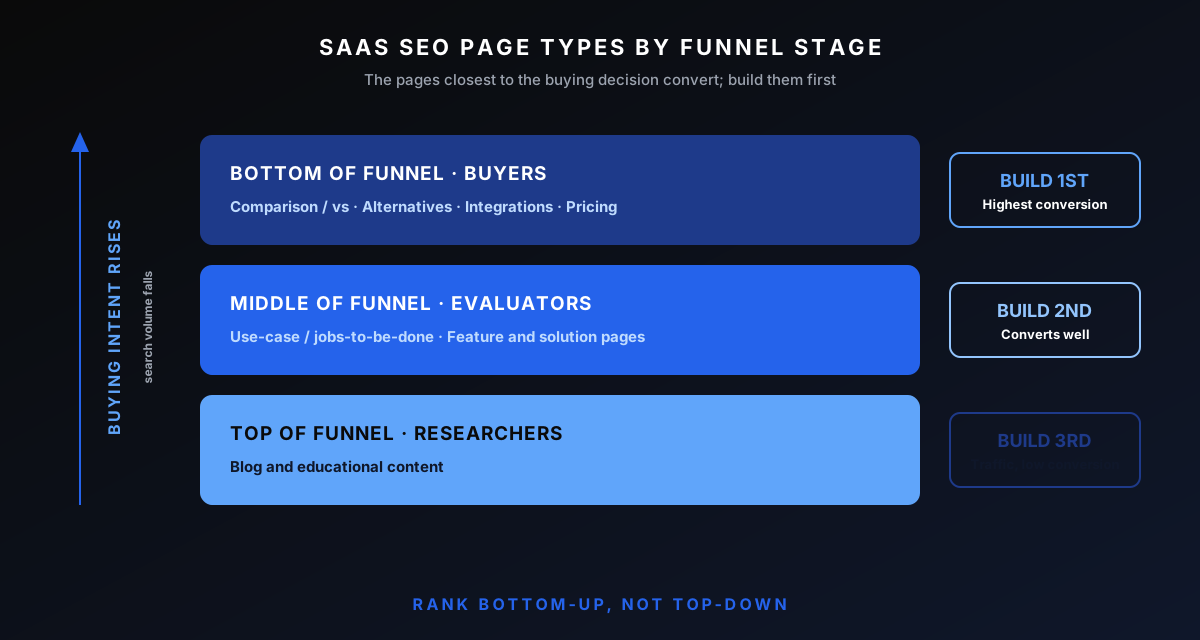
The fix is to invert the funnel and rank bottom-up. The pages closest to the buying decision, like comparisons, alternatives, and use-case pages, convert at a far higher rate, so they should be built and ranked first. Top-of-funnel content still has a role, but as a layer that supports authority and feeds the buying-intent pages, not as the whole plan.
The model is earning the revenue pages first, then funding the traffic pages with the authority they create. A handful of high-intent pages that rank will out-earn a hundred blog posts that pull traffic but no trials.
SaaS SEO Page Types That Convert
Not every page does the same job, and the high-intent page types deserve to be built first. Each has its own searcher, its own intent, and its own conversion rate, so the order of operations matters as much as the quality.
Comparison and "vs" pages. Searches like "tool A vs tool B" come from buyers deciding between options; among the highest intent on the site.
Alternatives pages. People searching "alternative to X" are unhappy with a competitor and ready to switch; capture them honestly.
"Best tools" and category pages. Listicle and category searches sit at the top of the consideration set for a whole software category.
Integrations pages. "X integration with Y" searches signal a user with an existing stack and a concrete need.
Use-case and jobs-to-be-done pages. Pages framed around the problem the buyer is solving, not the feature, match real search intent.
Feature and solution pages. The core product pages that explain what the software does for a specific role or industry.
Pricing pages. High-intent and often under-optimized; many buyers search the brand plus pricing before deciding.
Blog and educational content. Top-of-funnel pages that build authority and feed the buying-intent pages, valued for assist, not last-click.
Prioritize these by the mix of buying intent and winnable competition for the specific product, not by search volume. A comparison page with modest volume and clear intent is worth more than a broad guide that ranks but never converts.
SaaS SEO Ranking Factors
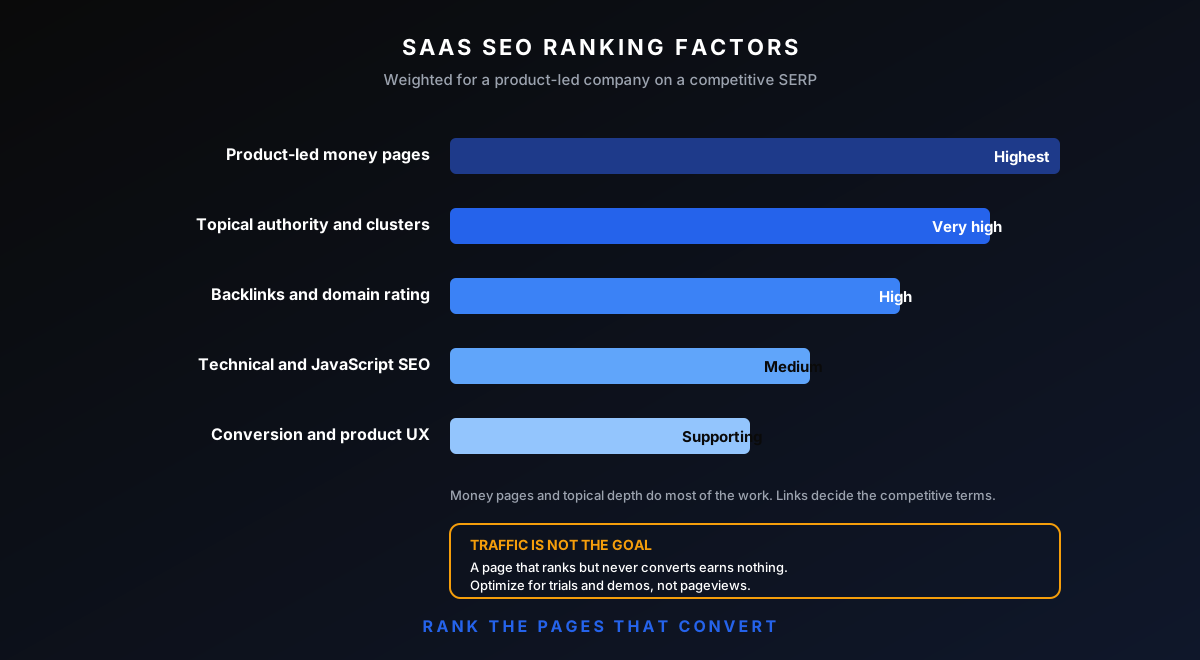
The factors that move SaaS rankings are weighted differently than general SEO. Product-led pages and topical authority do the heavy lifting, links decide the competitive terms, and technical health keeps the site eligible to rank at all.
Product-Led Money Pages
The pages tied to the buying decision are the foundation of SaaS SEO. Comparison, alternatives, integration, and use-case pages match high-intent searches and convert, so they earn the first and best optimization effort.
These pages also tend to be neglected by competitors who over-invest in the blog, which is the opening. A product that builds genuinely useful, honest money pages can out-rank larger rivals on the searches that matter most.
Topical Authority and Content Clusters
Google rewards depth on a subject, not scattered one-off posts. A SaaS site builds authority by covering the core problem and its surrounding questions thoroughly, with a clear hub-and-spoke structure that connects related pages.
This is where the blog finally earns its place. Educational content that surrounds the product topic builds the authority that lifts the money pages, as long as it is organized into clusters rather than published at random.
Backlinks and Domain Rating
SaaS SERPs skew high-authority, so backlinks carry real weight. Earning links from credible, relevant sites raises the domain authority that competitive software terms demand, which is why it pays to treat link building for SaaS as a core pillar rather than an afterthought.
Quality and relevance beat volume. A handful of links from respected industry publications and genuinely relevant sites move rankings more than a pile of low-quality links, and they carry less risk.
Technical and JavaScript SEO
Many SaaS sites are single-page applications, and if content only renders client-side, crawlers may never see it. Following Google's JavaScript SEO basics on rendering, crawlability, and indexing is what keeps the pages eligible to rank.
The fundamentals still apply on top of that: fast load times, clean site structure, logical internal links, and crawlable, indexable pages. A technically broken site quietly caps everything else the team does.
Conversion and Product Experience
Ranking is only half the job; the page still has to turn the visitor into a trial or demo. Clear value propositions, obvious calls to action, and a fast path to signing up decide whether the traffic becomes revenue.
Search engines increasingly reward pages that satisfy the searcher, so a page that converts well often correlates with the engagement signals that hold a ranking. Conversion and SEO are not separate goals here; they reinforce each other.
A Bottom-Up SaaS Keyword Strategy
A SaaS keyword strategy should be built from the bottom of the funnel up, not the top down. Start with the searches closest to the buying decision, then expand outward into supporting topics once the high-intent pages are in place.
Start with bottom-of-funnel. Brand-plus-pricing, competitor comparisons, alternatives, and "best tool for X" searches; the buyers.
Add middle-of-funnel. Use-case, solution, and integration searches from people evaluating how the product fits their workflow.
Layer on top-of-funnel last. Educational searches that build authority and feed the lower-funnel pages, prioritized for topical fit.
This order protects the budget. By the time the team invests in broad top-of-funnel content, the pages that capture and convert that interest already exist, so the traffic has somewhere to go instead of bouncing.
Content Clusters and Topical Authority for SaaS
Topical authority is what lets a smaller SaaS site outrank a larger one on its core subject. Rather than publishing isolated posts, build clusters: a central pillar page on the main topic, surrounded by supporting pages that answer every related question and link back to the hub.
The structure does two things at once. It signals to search engines that the site covers the subject comprehensively, and it routes authority and visitors from supporting content to the money pages that convert. A well-linked cluster compounds, while scattered posts never add up to authority.
Link Building for SaaS
Because SaaS SERPs are so competitive, links are often the deciding factor between two equally good pages. The most durable SaaS links come from the product itself: free tools, original data, integrations, and genuinely useful resources that other sites want to reference, which is detailed in link building for SaaS.
Digital PR and original research are especially effective here, because a strong data study earns links from publications no amount of outreach would otherwise reach. That approach is covered in digital PR link building. The goal is always relevant, credible links, not volume.
SaaS SEO and AI Search
AI engines now answer "what is the best tool for X" directly, pulling from the same signals that win the SERP: clear product positioning, topical authority, reviews, and trusted mentions. The comparison, alternatives, and use-case pages that convert human buyers are also what AI tools cite, which is covered in the AI Overviews playbook.
There is no separate AI strategy for a SaaS company. The product-led pages, topical depth, and credible links that win organic search are exactly what AI engines lean on, so doing the fundamentals well covers both. Google's own guidance on creating helpful, people-first content points in the same direction.
How Long SaaS SEO Takes
SaaS SEO is a medium-term play, not a quick win. High-intent money pages on less competitive terms can rank within a few months, while authority on a competitive core category takes six to twelve months of consistent work to build.
The timeline depends on the starting domain authority, the competitiveness of the category, and how product-led the approach is. A new product attacking broad category terms needs patience and links; one that starts with comparison and alternatives pages can see qualified signups much sooner.
Common SaaS SEO Mistakes
The most common mistake is optimizing for traffic instead of revenue, publishing blog content that ranks while the pages that convert go unbuilt. The second is ignoring the product in the content, writing generic advice that could describe any tool in the category.
The other recurring errors: launching broad top-of-funnel content before the buying-intent pages exist; treating the site as a marketing brochure while crawlers cannot render the JavaScript; and underinvesting in links on a SERP where authority decides everything. Fixing the technical and link foundations is the same groundwork behind JavaScript SEO and a serious link program.
The deeper mistake is impatience. SaaS SEO compounds, but only if the team commits past the first few quiet months, and a stop-start effort never accumulates the authority that makes the channel pay.
Choosing a SaaS SEO Approach
A SaaS company has three options: build an in-house SEO function, hire a generalist agency, or work with a partner that understands product-led SEO. In-house works once there is enough volume to justify a dedicated team; before that, the niche work of comparison pages, technical fixes, and links usually needs outside help.
Whichever you choose, judge it on trials and pipeline, not on traffic or rankings in isolation, and insist on a strategy that starts with the pages that convert. A specialist SaaS SEO agency should lead with money pages and links, not a content calendar. The work runs through a monthly SEO retainer and, where the SERP demands it, a link campaign.
Frequently Asked Questions
How Much Does SaaS SEO Cost?
It varies widely by ambition and competition, typically a few thousand dollars a month for ongoing content, technical work, and links. The right spend depends on how competitive the category is and how much of the work is handled in-house versus by a partner.
How Long Until a SaaS Company Sees Results from SEO?
High-intent money pages on less competitive terms can rank within a few months, while authority on a competitive category takes six to twelve months. Most SaaS companies see meaningful qualified signups within two to three quarters of consistent work.
Is SaaS SEO Different from Regular SEO?
Yes. SaaS SEO is product-led and conversion-driven, prioritizes comparison and alternatives pages over broad blog content, competes on high-authority SERPs, and often has to solve JavaScript rendering that local or content sites never face.
Should a SaaS Company Start with Blog Content?
Usually not. Blog content builds authority but rarely converts directly, so the high-intent pages like comparisons, alternatives, and use cases should come first. The blog earns its place once those revenue pages exist to capture the interest it creates.
Do SaaS Companies Still Need Link Building?
In most cases yes. SaaS SERPs are dominated by high-authority competitors and review sites, so credible, relevant links are often the deciding factor between two strong pages. Product-led links from tools, data, and integrations are the most durable.
Work with Mojo Links
SaaS SEO rewards companies that rank the pages that convert before they chase traffic, which is the product-led approach we run for software clients. We start with the comparison, alternatives, and use-case pages that capture buyers, then build the topical authority and links a competitive market demands. A growth audit shows where your SaaS SEO is leaking revenue and what to fix first.

About Bart Magera
Bart Magera is the founder of Mojo Links. Ten years across YMYL verticals (legal, medical, finance, supplements, crypto, gambling). Trained under Koray Tuğberk Gübür's Topical Authority framework. Author of two SEO books and international speaker.
Want this kind of analysis on your site?
Get a free video walkthrough within 48 hours covering technical health, backlinks, content gaps, and AI visibility.
Related posts
Keep reading on adjacent topics.
- SEO
 Bart Magera9 min read
Brand Mentions for SEO: Linked, Unlinked, and AI Citations
Most SEO budgets still treat a mention without a link as a failed pitch. That math is out of date. The same editorial naming that builds your entity in Google now decides whether AI engines name you in answers. Here is the value model behind linked, unlinked, and AI-cited mentions, and the three lanes for earning more of them.
- SEO
 Bart Magera12 min read
AI Visibility Tools: 9 Trackers Ranked and Compared
Nine AI visibility tools, one yardstick: engines covered, what gets measured, competitor tracking, and price. Every page-one comparison of these trackers is written by a vendor ranking its own product first. This one is not. Here is where each tool fits, from a $29 entry plan to enterprise quotes, and the one thing none of them can do.
- SEO
 Bart Magera10 min read
ChatGPT Brand Mentions: How To Track and Earn Them
When a buyer asks ChatGPT for the best option in a category, it names a few brands inside the answer. Those ChatGPT brand mentions, not the linked citations beneath them, are what get you recommended. Here is how to track them and how to earn them.