

How To Find Competitor Backlinks (and Get Them for Your Site)

Listen to this article
Browser-native voice. No account required.
Competitor backlink discovery is the first phase of every link-building campaign Mojo Links runs. Done well, it produces a list of 300 candidate domains that real publishers in your niche have already chosen to link to. Done badly, it produces a spreadsheet of high-DR sites that look impressive in a deliverable and place none of the links the campaign actually needs.
This guide documents the discovery process across 4 phases. The output is a qualified candidate list that hands off cleanly to the link prospect qualification workflow for scoring. The two posts together cover the full prospect funnel.
Why Competitor Backlink Discovery Comes First in Every Campaign
Competitor backlink discovery comes first because it answers the only useful question at the start of a link campaign: where are real publishers in your niche actually linking? Every other discovery method (broken-link mining, resource-page outreach, HARO) produces narrower candidate sets that depend on this baseline.
A site that ranks above you organically has already passed editorial review at the publishers you need links from. Those publishers will not link to a fitness blog about a legal SaaS topic. They will link to the legal SaaS that earned a relevant placement. Looking at where those competitors got linked is the cheapest, fastest map of the editorial territory worth chasing.
The mistake operators make is treating "competitor" as "the brand that comes up in sales calls." Sales-mentioned competitors are often not organic-search competitors. The brands ranking above you for the queries you sell against are the real targets - and they are usually 1-3 names nobody has raised in a meeting.
The 4-Phase Discovery Process at a Glance
The 4-phase process runs in order. Phase 1 identifies the right competitors (typically 5). Phase 2 extracts the backlink intersection. Phase 3 filters to the pursuable subset. Phase 4 hands off the candidate list to the prospect qualification workflow. Total operator time: 3-4 hours for a fresh campaign.
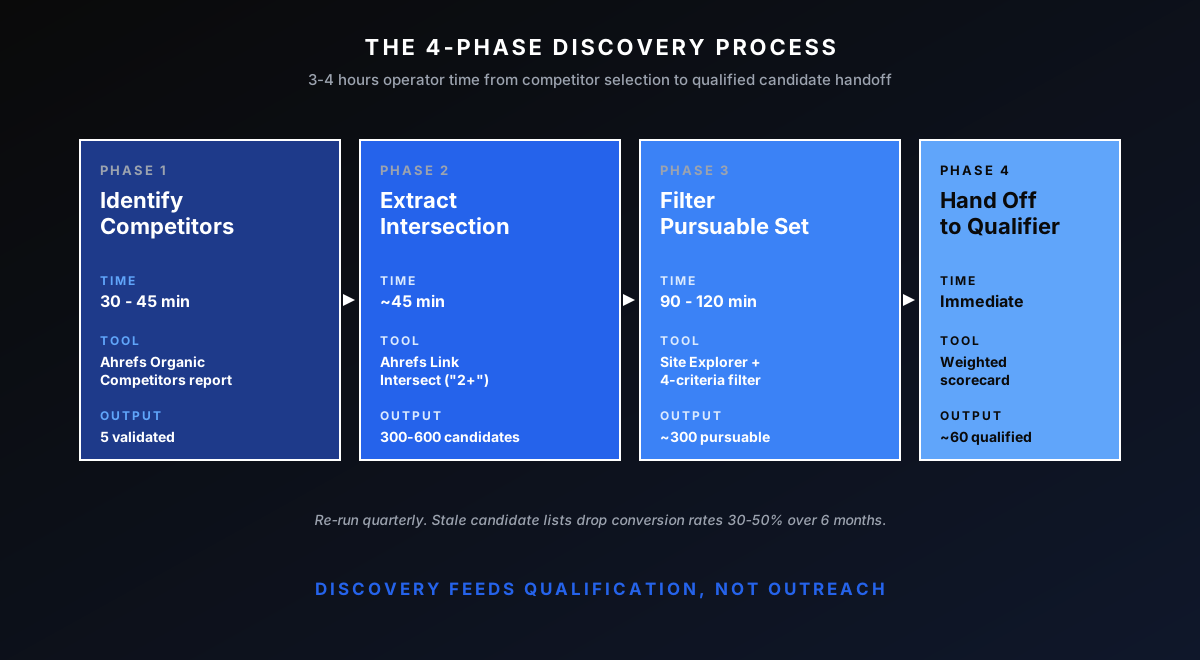
Phase 1: Identify the right competitors. Tool: Ahrefs Organic Competitors report. Output: 5 organic competitors selected from the algorithmic list, validated against the site's actual SERP territory.
Phase 2: Extract the backlink intersection. Tool: Ahrefs Link Intersect. Output: domains linking to 2 or more of the 5 competitors. Typical raw output: 300-600 candidates.
Phase 3: Filter to the pursuable subset. Tool: Ahrefs Site Explorer + manual review. Output: roughly 300 candidates passing the 4-criteria filter (organic traffic, topical relevance, indexation, placement context).
Phase 4: Hand off to qualification. Tool: a weighted scorecard. Output: the candidate list enters the qualification workflow which scores down to ~60 actionable prospects.
Phase 1: Identify The Right Competitors
Phase 1 identifies the 5 organic competitors whose backlink profiles you will intersect in Phase 2. The list comes from Ahrefs Organic Competitors filtered against the site's target SERPs. Sales-named competitors get included only if they also appear in the organic data.
Open Ahrefs Site Explorer for your domain, then Organic Search > Competing Domains. Ahrefs ranks competitors by shared keyword count and traffic overlap. Pull the top 20 and cross-reference each against the SERPs for your 5-10 highest-value commercial queries. A competitor that ranks top-10 for at least 3 of those queries qualifies.
Limit the list to 5 competitors because Ahrefs Link Intersect (the Phase 2 tool) handles 5 cleanly with the "linking to 2+" filter applied. More than 5 dilutes the intersection threshold. Less than 3 leaves the candidate list too small.
The output of Phase 1 is a list of 5 competitor domains plus a short note per domain on which queries they win. This becomes the input for Phase 2 and the reference document for the campaign overall. It also informs the topical-relevance scoring later in the link-prospecting qualification workflow.
Phase 2: Extract The Backlink Intersection
Phase 2 produces the raw candidate list using Ahrefs Link Intersect with all 5 competitor domains entered and the filter set to "linking to 2 or more." Typical output: 300-600 referring domains. The threshold matters: domains linking to only 1 competitor are coincidence; domains linking to 2+ are pattern.
Open Ahrefs Link Intersect, enter the 5 competitor domains in the "Show me who is linking to these targets" field, leave the "Excluding the targets" field with your own domain, and set the intersection filter to "Linking to 2+." Ahrefs returns the unique referring-domain list with each domain's DR, traffic, and the number of competitors it links to.
Export the full list to CSV. Sorting by "linking to" count descending reveals the publishers serving the niche most consistently - those linking to 4 or 5 of the 5 competitors are the highest-priority Phase 3 candidates. Domains linking to only 2 are still worth keeping but get less attention.
Common Phase 2 mistakes: forgetting to exclude your own domain (skews the data with self-references), using fewer than 5 competitors (intersection threshold too forgiving), and using the "Linking to all" filter (cuts the list to maybe 30 domains, losing useful pattern data).
Phase 2 takes about 45 minutes including the export and the initial CSV cleanup. The output is the raw candidate list that feeds Phase 3. For an alternative manual approach that does not require Ahrefs, see our manual backlink check sequence.
Phase 3: Filter To The Pursuable Subset
Phase 3 applies a 4-criteria filter to the raw 300-600 candidate list, dropping anything that fails on organic traffic, topical relevance, indexation status, or placement context. Output: roughly 300 pursuable candidates ready for the qualification workflow. Time: 90-120 minutes for the bulk filter. Before that slower manual pass, you can check Domain Rating across the whole list in one paste with the free Mojo Links tool, so the clearly-thin domains surface first and the 90 minutes goes to candidates worth reading.
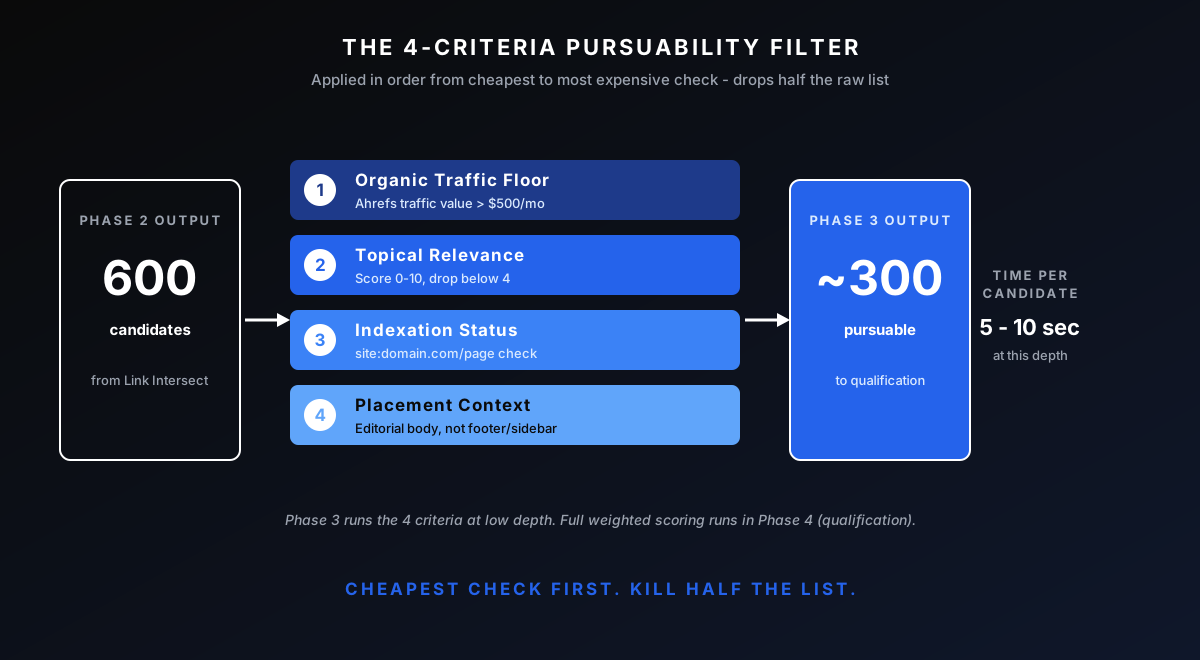
The 4 criteria, applied in order from cheapest to most expensive:
Organic traffic floor. Ahrefs traffic value above $500/month (or estimated organic traffic above 1,000/month for B2B niches). Zero-traffic domains are link farms regardless of DR. Drop these first because Ahrefs surfaces the metric in the same view we exported from in Phase 2.
Topical relevance. Source covers your niche territory. The check: open the candidate's top 20 ranking pages and verify entity overlap with the site's target cluster. Score this 0-10; anything below 4 gets dropped.
Indexation status. Linking page is indexed in Google. Use a site:domain.com/page query to confirm. Non-indexed pages do not pass signal.
Placement context. The competitor link sits in editorial body content, not footer or sidebar. Sample 2-3 of each candidate's links to competitors to check placement pattern.
The 4-criteria filter is the same one applied during full qualification. Phase 3 runs it at lower depth (5-10 seconds per candidate to drop obvious failures) so Phase 4 can run the full weighted scoring on a cleaner list.
Phase 3 drops about half the raw Phase 2 list - typical 300 candidates from 600. The kept candidates head into our weighted qualification scorecard where each gets scored 0-100 across 5 weighted criteria.
Phase 4: Hand Off To Outreach Qualification
Phase 4 hands the filtered candidate list to the prospect qualification workflow. Do not start outreach against the Phase 3 output - the list is still too coarse. Qualification scores each candidate 0-100 across 5 weighted criteria, surfaces the ~60 with composite scores above 65, and produces the outreach-ready batch.
The handoff is operational, not strategic. Phase 3 produces a list of "domains that pass the quality floor." Phase 4 (qualification) produces a list of "domains to actively pursue this quarter." The distinction matters because outreach is the most expensive phase of the campaign, and burning outreach effort on lukewarm candidates is the dominant failure mode in agency link-building.
The qualification workflow runs the candidate list against topical relevance (40% weight), editorial quality (25%), backlink profile health (15%), traffic and engagement signals (10%), and outreach yield probability (10%). For the full workflow, see our link prospect qualification scorecard.
Which Tools To Use (and Which To Skip)
Discovery runs in Ahrefs primarily, with one auxiliary tool for cross-validation. Most of the "competitor backlink tool" market sells features built on top of the same underlying data Ahrefs surfaces directly. Skip the wrappers because they add cost without adding signal.
Those are the tools worth reaching for in discovery. If you are still choosing one, see the comparison of the backlink checker tools on index size, gap analysis, and price in a separate guide.
Ahrefs Site Explorer + Link Intersect. Primary tool. Handles Phases 1, 2, and the bulk of 3. The Link Intersect feature is the load-bearing tool of the entire process.
Semrush Backlink Gap. Auxiliary tool for cross-validation. Open it only when Ahrefs surfaces an unusually small intersection list - sometimes Semrush picks up referring domains Ahrefs missed.
Majestic. Use Majestic Trust Flow as a tiebreaker on borderline candidates in Phase 3. Not part of the core flow.
Sitebulb. Used elsewhere in audit work but not for competitor backlink discovery.
Top-10 ranking pages tend to carry more referring domains than positions 11-20. The competitor intersection method, the same approach Ahrefs documents in its competitor link analysis guide, exploits this directly: domains that link to multiple top-10 competitors are the highest-probability targets for your own outreach.
How Often To Re-Run The Discovery
Re-run the full 4-phase discovery once per quarter on every active campaign. Competitor profiles shift, new editorial publishers enter the niche, and old prospects either get exhausted (a link already landed there) or rotated out (their editorial standards shifted). Stale candidate lists drop conversion rates 30-50% over 6 months.
Between quarterly refreshes, do not run discovery again. Work the qualified candidate list from the last refresh until it is exhausted or until conversion rates drop sharply. Re-running discovery more often produces marginally different lists at full operator cost - the time is better spent on outreach against the existing qualified pool.
Who Should Run This Process
This process is for agency outreach managers running 3 or more active client campaigns, in-house SEOs at brands with active link-building budgets, and freelance link operators handling multiple clients in parallel. Solo operators on a single campaign can use a lighter version focused on Phase 1 and Phase 2 only.
The structured process earns its weight at scale. A single campaign can be discovery-light if the operator already knows the niche's top publishers from prior work. Multiple campaigns across multiple verticals cannot - the only sustainable approach is the same documented workflow applied per campaign. The senior strategist running our monthly SEO retainer executes this 4-phase process during week 1 of each new engagement.
What Goes Wrong with DIY Competitor Backlink Discovery
Three failure modes repeat: choosing the wrong 5 competitors (sales-named brands instead of organic competitors), running Link Intersect without the "linking to 2+" filter (too many false positives), and skipping the 4-criteria filter to move straight to outreach (the dominant failure that produces $200-per-link spreadsheets with zero placements).
Wrong-competitor selection. Including a sales-mentioned competitor that does not rank for the site's commercial queries pollutes the intersection list with off-target publishers. Validate every competitor against the site's real SERPs before Phase 2.
Loose intersection filter. Running Link Intersect with "linking to 1+" instead of "2+" returns 2,000+ domains. Most are noise. The pattern signal of "multiple competitors got linked here" is what makes the discovery method work; relaxing the filter erases the signal.
Skipping Phase 3. Operators under deadline pressure sometimes go straight from Phase 2 (raw 600 candidates) into outreach. The conversion math falls apart: a 5% outreach yield on 600 unfiltered candidates is 30 attempted placements with most failing on editorial quality grounds. The same 5% yield on 300 filtered candidates produces 15 placements, but the AVERAGE quality of those 15 is far higher.
Treating the list as static. A candidate list discovered in Q1 and worked through Q2-Q3-Q4 progressively loses conversion as the warm prospects get exhausted. Quarterly re-runs are not optional.
Competitor backlink research is one input into the prospecting phase. For the end-to-end program this fits into, see Link Building: The Operations Guide.
Competitor Backlink Discovery FAQ
How long does the full 4-phase discovery take?
3-4 hours of operator time for a fresh campaign. Phase 1 is 30-45 minutes, Phase 2 is about 45 minutes, Phase 3 is 90-120 minutes (the longest phase because the manual filter takes time per candidate), and Phase 4 is the handoff to qualification (immediate).
Can you run this with fewer than 5 competitors?
Yes but the intersection threshold has to relax. With 3 competitors, change the filter to "linking to 2+" (which equals "linking to most") and accept a smaller candidate list. With 2 competitors, the method effectively becomes single-competitor analysis, which loses the pattern-detection benefit.
What if a site has no organic competitors yet?
Run discovery against the competitors of the closest commercially-adjacent vertical. A pre-launch legal SaaS targeting personal-injury attorneys can run discovery against the established personal-injury legal SaaS market and inherit the publisher list. Most editorial publishers cover the vertical, not the specific brand.
Does this process work for local businesses?
Partially. Phases 1-2 work the same. Phase 3 filtering relaxes the organic-traffic threshold because local-business publishers (community news sites, local directories) often have low Ahrefs-measured traffic but high local intent. Use local-keyword ranking as the substitute relevance signal.
Why exclude your own domain in Phase 2?
If you do not exclude your own domain, Ahrefs counts domains already linking to it as part of the intersection. Those are not discovery targets - they are existing links. The whole point of the intersection method is finding NEW publishers, which requires removing publishers the site is already on.
Is the candidate list confidential?
Treat it as confidential work product. It is not a published asset. Sharing the candidate list with stakeholders during scoping is fine; publishing it externally undermines the campaign by exposing target publishers to competitive outreach.

About Bart Magera
Bart Magera is the founder of Mojo Links. Ten years across YMYL verticals (legal, medical, finance, supplements, crypto, gambling). Trained under Koray Tuğberk Gübür's Topical Authority framework. Author of two SEO books and international speaker.
Want this kind of analysis on your site?
Get a free video walkthrough within 48 hours covering technical health, backlinks, content gaps, and AI visibility.
Related posts
Keep reading on adjacent topics.
- Link Building
 Bart Magera10 min read
Contextual Backlinks: What They Are, Why They Win, and How To Earn Them
A contextual backlink sits inside the body of an article, surrounded by relevant text, not in a footer or author bio. That placement is what gives it weight. Here is what contextual backlinks are, what makes one high quality, how to earn them, and how to spot the cheap fakes.
- Link Building
 Bart Magera12 min read
What Is White Hat Link Building? Techniques That Work in 2026
The Problem: Why Most Link Building Fails Your SEO You wrote great content. It’s relevant. It’s useful. It even has infographics. But guess what? Crickets. Nobody’s linking. Google’s not ranking. And your “ultimate guide” is buried somewhere on page 7 under a recipe blog and a…
- Link Building
 Bart Magera10 min read
Tiered Link Building: How It Works and How To Do It Safely
Tiered link building layers weaker links behind your strongest ones to pass more authority to your money pages. Here is how the pyramid works, how to build one, which links are worth tiering, the risk SpamBrain introduced, and the lower-risk path I use on client sites.