
Dofollow Backlinks: The Link Type That Makes or Breaks Your SEO
Listen to this article
Browser-native voice. No account required.
You want rankings? Get in line. Google doesn’t hand them out. It watches. It waits. And it only moves when someone credible points a finger at your page and says, “This one.”
That finger is called a dofollow backlink.
Google search engine spiders care how much you “optimize” your site if no one is willing to vouch for you. This guide shows you how search engine optimization actually works when you create dofollow backlinks with real authority.
Understanding Dofollow Backlinks
If you don’t know what dofollow backlinks are, don’t talk about SEO. You’re not in it. You’re outside the stadium with a foam finger yelling at the wrong digital marketing team.
Here’s the general rule. A dofollow link tells search engines one thing: “You can trust this.” That trust is currency. It’s called link equity, and for showing the best search results possible, it’s the only thing Google respects more than its own stock price.
You won’t find this in a spreadsheet. You spot it in the HTML code of your URL. No rel="nofollow" means that link is dofollow. That’s it. One tiny tag decides if your website climbs or stays buried under 47 pages of garbage content.
And yet, people waste hours chasing nofollow links from profile bios, forum comments, and AI-generated guest posts that smell like a Fiverr gig. None of it counts.
Want real movement? Start with manual link building. Stop begging. Stop buying junk. Get serious.
If your backlinks aren’t dofollow, you’re not optimizing. You’re decorating a grave in the dark depths of the Internet web.
Dofollow Links vs Nofollow Links
Let’s kill the confusion. There are only two types of backlinks that matter: the kind that move your rankings, and the kind that waste your time.
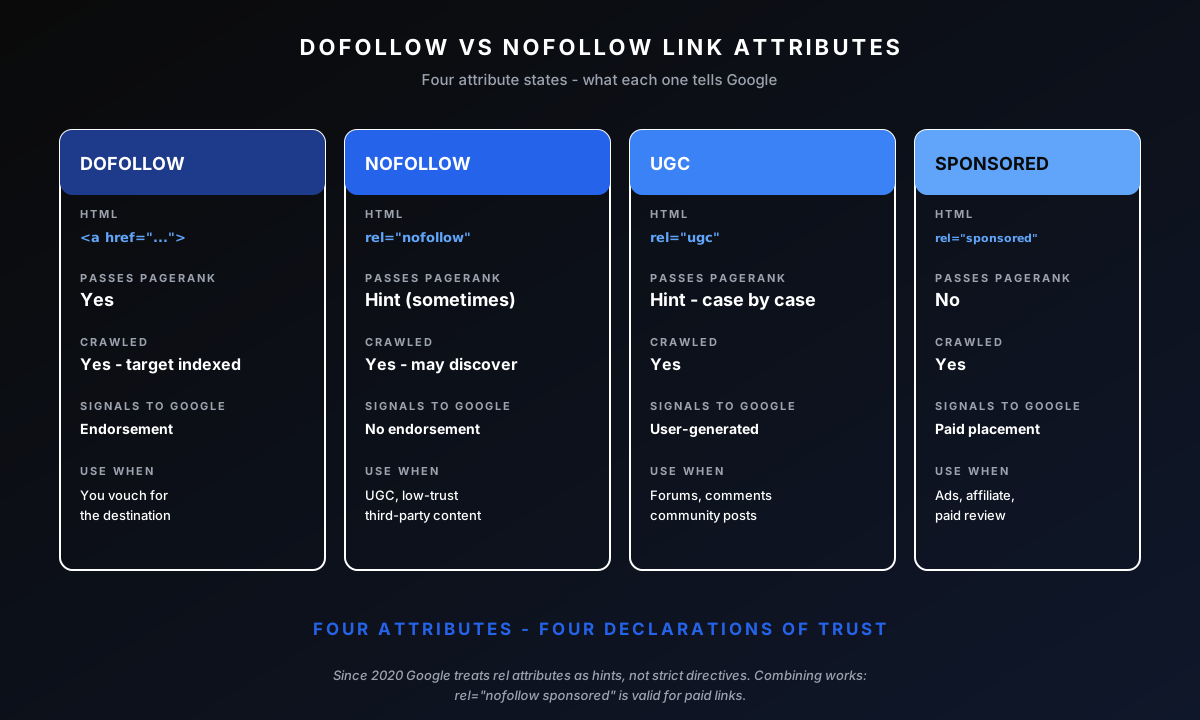
That’s the difference between dofollow and nofollow.
Dofollow links pass trust. Nofollow links pass nothing. One is the SEO juice. The other sits there looking pretty while your website sinks.
And no, nofollow links are not “just as good.” They’re not. That’s wishful thinking for people who don’t want to do real work.
Here’s how they compare:
If you're chasing rankings, you chase dofollow. Those are the links that tell search engines your content has weight. That someone trusted you enough to link without conditions.
Nofollow? Keep them for diversity. Maybe you get a little referral traffic. But if you're relying on them for SEO, you're walking into a gunfight with a pool noodle.
Why Are Dofollow Links Important?
Dofollow backlinks are the fuel. Without them, your site’s a parked car with no keys.
Search engines don’t just rank based on what’s on your page. They rank based on what other important pages say about it. When a trusted website links to yours without the nofollow tag, that’s a vote. A loud one. It tells search engine crawlers your page is relevant, trustworthy, and worth ranking.
The more quality dofollow links you have, the more link juice flows into your domain. That juice compounds. It raises the authority of not just one page but your entire website.
This is how your website can climb against other websites.
The benefits stack:
Your website becomes easier to crawl
Your domain authority grows
Your pages rank faster and higher
You earn trust across more competitive terms
You get more organic traffic without buying a single ad
Think of a dofollow backlink like a public endorsement. Not whispered. Shouted. And when enough people are pointing at your website and saying “this is the one,” search engine optimization starts working like it’s supposed to.
Skip this and nothing else matters. Not your "high quality content", not your keywords, not your speed score. Without good backlinks, Google doesn’t even see you.
Identifying Dofollow Links
Not all links are created equal. Some help you rank. Some do nothing. If you can’t tell which is which, you're probably building the wrong ones.
Dofollow links are the ones that count. If you're guessing, you're losing. You need to check the HTML code and know for sure.
There are two ways to do it:
1. Browser Inspect Tool
Screenshot
Right-click on any link. Hit “Inspect.” Look at the code. If it says rel="nofollow" - bad news. That link is neutered. It won’t pass link equity. No juice. No boost to your own website.
If there's no rel attribute at all, congrats. That’s a dofollow link. That’s the kind Google notices.
Yeah, it’s manual. Yeah, it takes time. But if you’re serious about search engine optimization, you need to get this right.
2. Chrome Extensions
Don’t want to dig into code? Fine. There are tools that do it for you. Extensions like Detailed, NoFollow, or MozBar will highlight nofollow links so you don’t waste time chasing junk.
They show you exactly which links are passing value and which are just sitting there pretending to be helpful.
If you're building a healthy backlink profile while trying to add new links, this is basic hygiene. Know what you're getting. Know what you're giving.
Because building backlinks without checking if they’re dofollow is like buying a car without checking if the engine works.
You can also check backlinks manually if you don't want to use any tools.
Why You Need Dofollow Backlinks
Because without them, your content is invisible. Doesn’t matter how “helpful” your post is. Google doesn’t trust it. And if Google doesn’t trust it, no one sees it.
Dofollow backlinks are how trust gets transferred online. They’re endorsements. Signals. The digital equivalent of a reference check. Example: If a high authority website links to your page and says “this is worth reading,” search engines take that seriously.
It’s not optional. It’s how organic search rankings are earned.
Here’s what dofollow links do for you:
They pass link equity to your site
They build website authority with every legit vote
They pull more search engine crawlers to your pages
They drive both SEO value and referral traffic
They help your site rank for competitive keywords without begging for attention
No amount of content creation can outrank a site that’s building better links. You don’t need 500 articles. You need 5 articles that real websites are willing to link to. This pulls in valuable users to your website on a regular basis.
And if you’ve been building links blindly (just hoping they help) you’re probably wasting time. Worse, you’re giving Google nothing to work with.
Want authority? Earn links that pass it.
How Dofollow Links Boost Authority
Every time a real site links to you with a dofollow backlink, it hands over a slice of its power. That power is called link juice. And yes, it matters more than your content calendar.
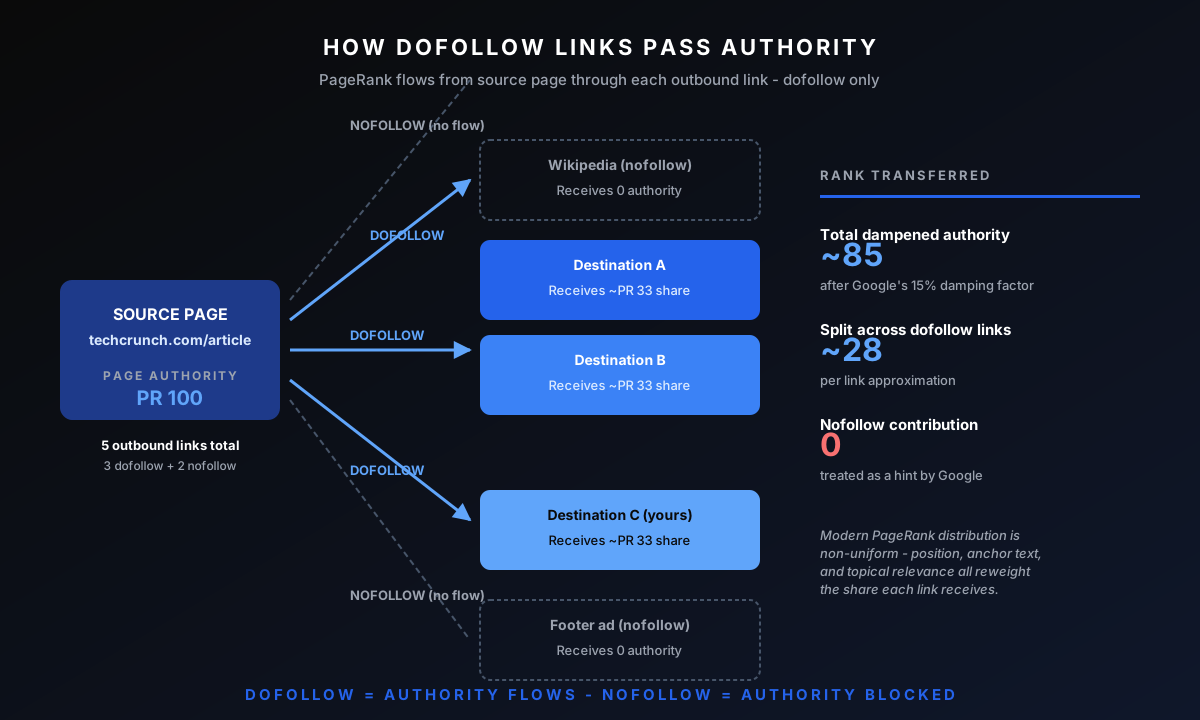
More juice means more trust. More trust means higher rankings. That’s the chain.
But not all links are equal. A backlink from a forgotten blog nobody reads? Worthless. A link from a respected site in your niche? That moves the needle.
Here’s where people mess it up. They chase volume. They slap links all over a page. They ignore relevance. They let internal links multiply like rabbits. When that happens, the juice gets diluted. Google sees it. And stops rewarding you.
You build real authority when you get links that:
Come from reputable, niche-relevant domains
Make sense to human readers
Use natural, focused anchor text
Point to content that’s actually worth linking to
This is what grows your domain rating. This is how you build domain authority. Not by throwing links around. By earning ones that count.
Start weak, build strong. One solid backlink from the right site beats a hundred low-value ones every time.
Strategies for Building Dofollow Backlinks
Let’s be clear. You don’t get dofollow backlinks by existing. You get them by earning attention, proving relevance, and making it impossible for legit sites not to link to you.
Here’s how that happens.
Create Content That Deserves a Link
No, not content that’s “valuable.” That’s vague. You need content that solves real people’s problems, answers real questions, and gives other sites a reason to say, “Yeah, I’ll point to that.”
This means:
Posts that go deeper than top 10 lists
Guides that actually teach something
Data that isn’t regurgitated from page one of Google
Answers to questions people are actually typing into the search bar
If your content can’t earn a link on merit, don’t expect outreach to save it.
Guest Posts (that Don’t Suck)
Most guest posting is spam wearing a tie. If you’re trading low-quality content for a link, you’re not building a brand. You’re just another parasite.
Real guest posting means writing for websites that:
Have an actual audience
Are relevant to your niche
Are great source for information
Don’t hand out links like Halloween candy
This works when your post makes their site better. Not when it’s filler. Not when it’s fluff.
Need help finding those placements? That’s where curated guest posts come in. The kind that actually stick and send real signals to search engines.
Broken Link Building
This is the SEO equivalent of street-smart hustle. You find broken links on legit sites. You offer to replace them with content of your own. You do their job for them. They give you the link.
But don’t just shove a link in their inbox.
Make it easy:
Show them exactly where the broken link is
Offer a replacement that’s better than what was there
Keep the email short, sharp, and useful
If your offer saves them time, you’ll get the link. If it feels like a pitch, you won’t.
Common Pitfalls To Avoid
Most people don’t fail at link building because they’re lazy. They fail because they follow garbage advice. Or they rush it. Or they think Google won’t notice when they flood their site with junk from irrelevant pages.
You want to build dofollow backlinks that last? Avoid these rookie moves.
Ignoring Page-Level Relevance
If the site linking to you has nothing to do with your topic, the link is dead weight. Worse, it tells search engines you’re part of a sketchy network.
Relevance matters. Context matters. If the page doesn’t make sense with your link in it, you shouldn’t be there.
Linking from Spammy Sites
Low-quality sites tank your credibility. It’s that simple. If you’re buying links from sites with spun content, fake authors, or link farms in the footer, you’re throwing your domain authority in the trash.
This isn’t a numbers game. It’s a trust game. And spammy backlinks break trust fast. Organic backlinks win every time.
Blindly Using Tools Without Manual Review
Ahrefs. Semrush. Sure, they’re great. But if you’re not reviewing your backlink profile manually, you’re trusting a dashboard to spot every problem. It won’t.
You need to check for:
Irrelevant anchor text
Obvious link networks
Sites that got nuked in the last Google update
Use tools. But trust your eyes.
Not Cleaning Up Toxic Links
Bad links don’t just sit there. They rot your authority. They tell Google your content hangs out with scammers and bots.
Use an audit tool to find them. Then disavow the backlinks before they drag you into the dirt.
Leveraging Tools for Dofollow Backlink Analysis
You can’t fix what you don’t measure. If you’re building backlinks without tracking what they’re doing, you’re guessing. And guessing in SEO is how you lose to someone smarter.
Two tools matter. They’re not magical. They just give you the data you need to make decisions that don’t suck.
Ahrefs
Ahrefs is a sniper rifle. It shows you every dofollow backlink pointing to your site, where it came from, how strong it is, and whether it’s helping or hurting.
Here’s how to use it without wasting time:
Go to the Backlinks or Referring Domains report
Filter by dofollow
Check anchor text and domain rating
Look for drops in link count or quality over time
Export the data and nuke anything that looks suspicious
Use Ahrefs weekly. Not once a month. You’ll see problems before they hit your rankings.
Semrush
Semrush gives you a big-picture view. It’s not as surgical, but it’s great for spotting patterns, weak links, and domains that look okay on paper but are dragging your SEO value down.
Run a backlink audit. When Google introduced rel="sponsored" and rel="ugc" alongside nofollow, it began treating all three as hints, so the attribute on each link sets the ceiling on how much equity it can pass rather than deciding it outright. Look at:
The toxicity score
Broken or lost dofollow links
Irrelevant referring pages
Suspicious TLDs (looking at you, .xyz and .info)
Semrush also helps you track the anchor text profile of your site. If half your links say “click here,” you’ve got a problem.
Both tools work. Neither will save you if you’re not using them consistently. Treat your backlink analysis like blood work. If you don’t monitor it, things die behind the scenes.
Summary
No dofollow backlinks means no trust. No trust means no rankings. No rankings means no traffic.
If that sounds harsh, good. It should. That’s how this works.
You can write all the “great content” you want. Doesn’t matter. If no one links to it, Google assumes it’s useless.
To fix that? Build dofollow links that actually count. From real pages. On real sites. With real relevance.
Everything else is noise.
For the cluster sibling covering the nofollow attribute - when it helps, when it hurts, and what percentage of your profile should be nofollow - see the nofollow links guide.
Earning dofollow links at scale requires the full operational pipeline. For the end-to-end program this fits into, see Mojo Links link building methodology.
Frequently Asked Questions
Are LinkedIn backlinks dofollow?
No. LinkedIn uses nofollow tags for external links. Good for clicks, worthless for rankings.
What is a dofollow backlink?
A link that passes authority. If the code doesn’t say nofollow, search engines follow it.
How do I check if it’s dofollow?
Right-click. Inspect. If there’s no nofollow tag, you’re good. Or use a browser plugin if you’re lazy.
Why do they matter?
Because they prove someone trusts your content. That trust becomes rankings. Rankings become traffic.
Best way to get dofollow backlinks?
Earn them. Write better stuff. Do outreach that doesn’t suck. Replace broken links with content that matters.
Can dofollow links hurt you?
Yes. If they come from trash sites, they’ll tank your authority.
How often should I check my backlinks?
Weekly. Monthly if you like playing with fire.
Should I disavow bad links?
Yes. Don’t let junk rot your rankings. Clean it up before it costs you.

About Bart Magera
Bart Magera is the founder of Mojo Links. Ten years across YMYL verticals (legal, medical, finance, supplements, crypto, gambling). Trained under Koray Tuğberk Gübür's Topical Authority framework. Author of two SEO books and international speaker.
Want this kind of analysis on your site?
Get a free video walkthrough within 48 hours covering technical health, backlinks, content gaps, and AI visibility.
Related posts
Keep reading on adjacent topics.
- Link Building
 Bart Magera10 min read
Contextual Backlinks: What They Are, Why They Win, and How To Earn Them
A contextual backlink sits inside the body of an article, surrounded by relevant text, not in a footer or author bio. That placement is what gives it weight. Here is what contextual backlinks are, what makes one high quality, how to earn them, and how to spot the cheap fakes.
- Link Building
 Bart Magera12 min read
What Is White Hat Link Building? Techniques That Work in 2026
The Problem: Why Most Link Building Fails Your SEO You wrote great content. It’s relevant. It’s useful. It even has infographics. But guess what? Crickets. Nobody’s linking. Google’s not ranking. And your “ultimate guide” is buried somewhere on page 7 under a recipe blog and a…
- Link Building
 Bart Magera10 min read
Tiered Link Building: How It Works and How To Do It Safely
Tiered link building layers weaker links behind your strongest ones to pass more authority to your money pages. Here is how the pyramid works, how to build one, which links are worth tiering, the risk SpamBrain introduced, and the lower-risk path I use on client sites.