

How Many Backlinks Do You Need To Rank? Benchmarks by Niche
Listen to this article
Browser-native voice. No account required.
How many backlinks a website needs depends on niche competition, target keyword difficulty, page type, and site age. Generic answers like "more is better" produce wasted budgets. Specific benchmarks tied to your actual SERP competitors produce ranking gains. This guide covers the framework Mojo Links uses to set realistic acquisition targets in 2026.
How Many Backlinks Does a Website Need To Rank in 2026?
A website needs enough backlinks to close the referring-domain gap to its top three SERP competitors on its highest-value commercial queries. For most B2B SaaS sites, that means 300 to 800 referring domains site-wide and 80 to 200 referring domains on the specific commercial pages targeting page-1 rankings. For YMYL verticals (legal, medical, finance), multiply both numbers by 2 to 5x.
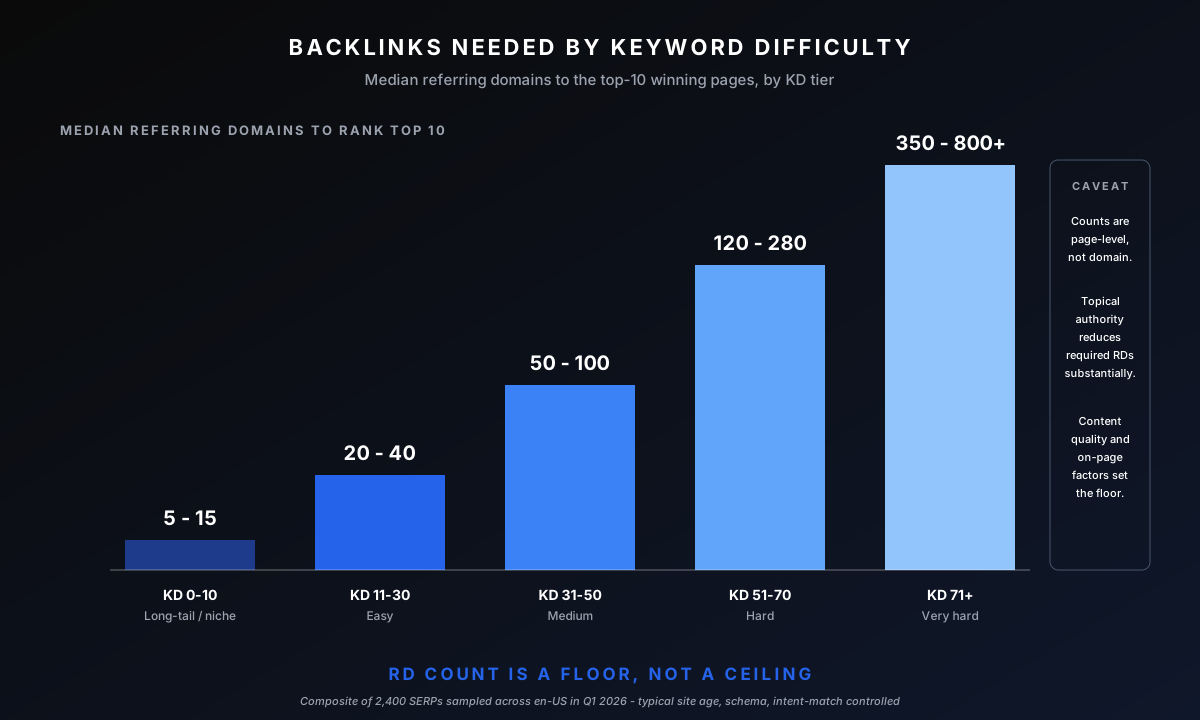
Three baseline benchmarks from measured Mojo Links campaigns:
Site-wide referring domains for first-page commercial rankings: 300-1,500 depending on niche
Per-page referring domains for first-page commercial rankings: 80-200
Anchor text earned from referring domains: 50-70 percent branded across the profile
How Many Backlinks Should a Homepage Have Versus Internal Pages?
Homepages typically carry 5 to 10 times more referring domains than individual internal pages. Most external sites link to the homepage by default, not to specific commercial pages. The implication: high-converting internal pages routinely have weaker link profiles than the homepage, even when the homepage is not the target of your acquisition campaign.
Three rules from the distribution pattern:
Commercial pages need direct links, not inherited authority from the homepage. Internal linking helps but does not substitute for external referring domains pointing at the target page.
Homepage link surplus is normal. A 500-RD homepage and a 20-RD commercial page is the typical starting state for non-optimized sites.
Active campaigns target commercial pages. Acquiring 30 referring domains to a commercial page produces more ranking lift than acquiring 30 to the already-link-rich homepage.
What Are The Backlink Benchmarks by Niche and Business Type?
Backlink benchmarks vary by niche competition and SERP intent. YMYL verticals (legal, medical, finance, supplements, gambling) need 2-5x more referring domains than non-YMYL niches to rank for equivalent commercial queries. B2B SaaS sites can rank competitive long-tail queries with smaller profiles than e-commerce sites in the same commercial intent space.
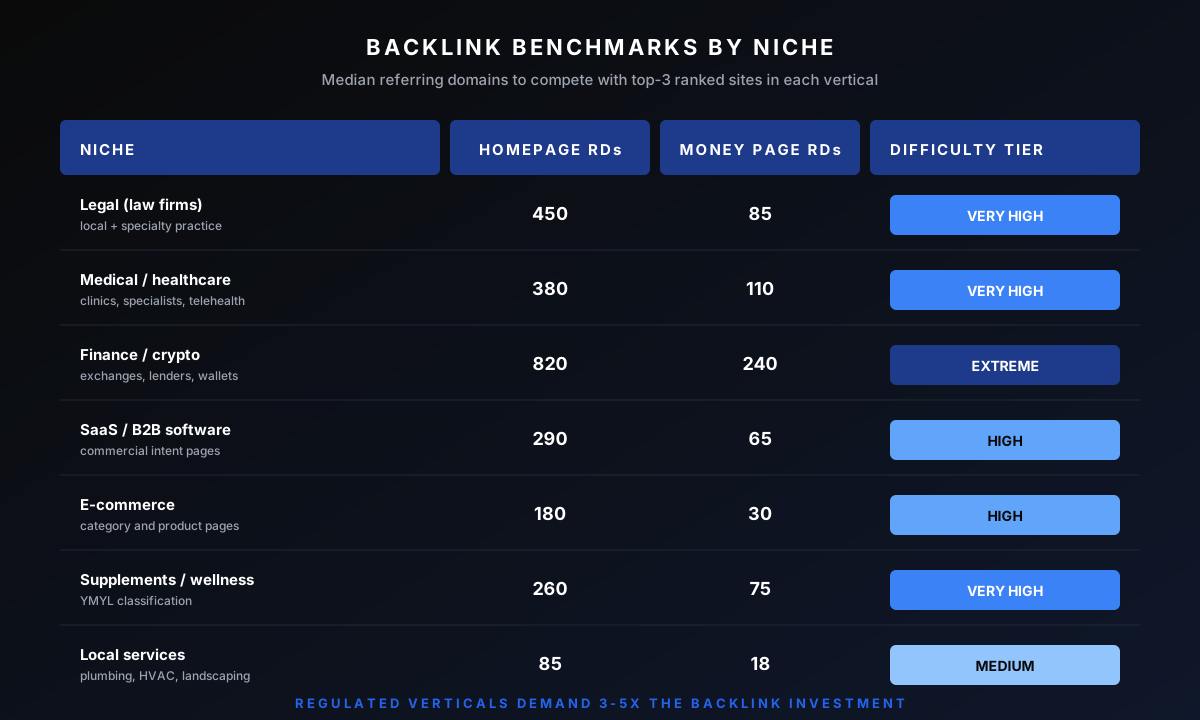
Benchmarks from measured campaign data (referring domains needed for first-page rankings):
Local services (HVAC, dentists, lawyers in single city): 50-150 referring domains
Regional B2B (services in 1-3 states): 150-400 referring domains
B2B SaaS (national, mid-market): 300-800 referring domains
E-commerce (mid-tier brands, non-YMYL): 400-1,200 referring domains
YMYL verticals (legal, medical, finance, supplements, gambling): 800-3,000+ referring domains
Crypto and gambling (highest competition): 1,500-5,000+ referring domains
What Do These Backlink Benchmarks Actually Mean?
The benchmarks describe site-wide referring domain counts to compete for first-page rankings on commercial queries. They do not describe homepage-only counts, raw backlink totals, or one-time acquisition targets. Benchmarks become actionable when paired with two additional metrics: your current count and your top three SERP competitors' counts.
Three filters to apply before treating any benchmark as your target:
Your specific SERP. The benchmark range above is a starting point. Your actual competitors may need more or fewer than the niche average.
Your link velocity. Acquiring 200 referring domains in 3 months looks like negative SEO. The same 200 over 18 months reads as organic growth.
Your link quality. 100 high-relevance referring domains beat 500 low-quality referring domains. The benchmark assumes the relevance criterion is met.
What Factors Determine How Many Backlinks You Actually Need?
Five factors determine the backlink count required for a specific page to rank: target keyword difficulty, the current referring domain count of the top three ranking competitors, the page's on-page topical authority, internal linking depth from authority pages on your site, and the link velocity Google has indexed in your acquisition history. Plugging "average" benchmarks into these five variables produces an estimate within 20-40 percent of accurate.
Keyword Difficulty
Higher keyword difficulty means more referring domains needed to rank. Ahrefs Keyword Difficulty (KD) under 20 typically ranks with 5-30 referring domains. KD 40-60 needs 50-150. KD 70+ needs 100-300+. These are page-level counts on the specific target page, not site-wide.
Top Three Competitors' Referring Domain Counts
Your acquisition target is whatever count meets or exceeds the median of your top three SERP competitors. If their commercial pages carry 120, 95, and 180 referring domains respectively, your target is 100-150. Aim for the median, not the maximum.
Internal Linking Depth
Internal links from high-authority pages on your own site multiply external link signal. A commercial page with 50 referring domains plus 30 internal links from authority pages ranks comparably to a commercial page with 80 referring domains and zero internal linking. Internal linking is the cheapest acquisition channel - prioritize before external campaigns.
Link Velocity
Link velocity is the rate of referring domain growth over time. Sustainable velocity for established sites runs 8-25 per month. New sites under 12 months old need 4-8 per month maximum to avoid velocity-spike pattern detection. Velocity is what separates organic-looking link profiles from algorithmically-suspect ones.
Link Quality (relevance and Trust)
Link quality - topical relevance, source authority, placement context - multiplies the impact of every referring domain. 50 high-quality referring domains can outperform 200 low-quality ones. The benchmarks above assume quality is at the median; below-median quality means acquiring more to compensate.
How Do You Build Backlinks That Actually Move Rankings?
Backlinks that move rankings combine three properties: topical relevance to the target page, editorial placement (in-body, not footer), and source-domain authority within the niche. Acquiring 30 referring domains meeting all three criteria produces more ranking lift than acquiring 100 referring domains where one or more criteria are missing.
The acquisition tactics that consistently meet all three criteria: guest posts on real-traffic publishers, niche edits inside indexed in-niche articles, digital PR placements, and broken-link reclamation. See the seven link building fundamentals for the full tactical breakdown.
Who Needs To Track Backlink Count Carefully?
Three audiences need to track backlink count carefully: founders running pre-revenue or early-stage projects (because every link costs scarce budget), agencies onboarding new clients (because the count sets realistic campaign expectations), and SEO teams defending budgets against quarterly cuts (because referring-domain growth is the metric CMOs understand).
Backlink count is one input, not the scorecard, so pair it with the link building KPIs that tie acquisition to ranking and pipeline.
For Founders and Early-Stage Operators
Founders should target the lower bound of their niche benchmark in months 0-6, then evaluate ranking impact before committing additional budget. Acquiring 50 referring domains in 6 months produces measurable signal at most niches. Acquiring 200 in 3 months produces velocity spikes Google flags.
For Agencies
Agencies should baseline every new client against the top three SERP competitors before quoting work. Quoting 100 referring domains over 12 months when competitors carry 800 sets the client up for "the campaign did not work" friction. Set expectations against actual competitive reality, not generic benchmarks.
For in-House SEO Teams
In-house teams should report referring domain delta vs top three SERP competitors as the headline metric in CMO updates. Raw backlink count is a vanity metric; relative gap-closing is the metric that justifies budget against alternative acquisition channels.
What Mistakes Lead To Wrong Backlink Targets?
Five mistakes produce wrong backlink targets: copying competitor counts without checking link velocity, treating raw backlink count as referring domain count, ignoring topical relevance in the count, setting universal targets across all pages on a site, and underestimating the time required to reach the target.
Copying counts without velocity. A competitor with 500 referring domains built over 5 years is not a "build 500 referring domains" target - it is a "build 100 per year sustainably" target.
Confusing raw backlinks with referring domains. 5,000 backlinks from 50 sources is weaker than 500 backlinks from 500 sources.
Ignoring relevance. Acquiring 200 off-niche referring domains produces less signal than 50 niche-relevant ones.
Universal site-wide targets. Different pages need different counts. Apply the per-page benchmark to commercial pages, not the homepage.
Underestimating time. Closing a 300-referring-domain gap takes 24-36 months at sustainable velocity, not 6 months.
How Did Mojo Links Develop These Backlink Benchmarks?
The niche benchmarks and per-page ranges come from Mojo Links campaign data across 300+ engagements between 2019 and 2026. The ranges reflect measured ranking impact at each count tier across YMYL and non-YMYL verticals. The benchmarks were validated against the public Backlinko 11.8M search result study (which found top-10 pages carry 3.8x more backlinks than positions 11-20).
For the full benchmark data behind these numbers, see our our 2026 link building statistics guide. For the competitor-comparison workflow that sets actual per-site targets, see competitor backlink discovery.
For the foundational explainer behind these benchmarks - what is a backlink and how Google uses them - see our definitional pillar.
Frequently Asked Questions About Backlink Counts
How Many Backlinks Does It Take To Rank #1 on Google?
Ranking #1 typically requires 1.5 to 2x the referring domain count of position 5 on the same query. For competitive commercial queries, that means 150-400 referring domains on the target page. For low-competition long-tail queries, that may be 10-30 referring domains. Always benchmark against the actual top three competitors, not against generic ranges.
How Many Backlinks Per Month Should I Build?
Sustainable monthly velocity ranges from 4-8 referring domains for new sites (under 12 months old) to 15-25 for established sites with active acquisition campaigns. Aggressive campaigns (50+ per month) require multi-person outreach teams and specialised infrastructure. See the manual link building workflow for cadence by site age.
Is It Possible To Rank with Zero Backlinks?
Yes, for low-competition long-tail queries and on high-authority parent domains. Pages on sites with 1,000+ existing referring domains can rank long-tail queries via internal linking and topical authority alone. New domains rarely rank competitive queries with zero external links. The "zero backlinks" path is the exception, not the rule.
How Long Does It Take To Build 100 Backlinks?
At sustainable manual outreach velocity, 100 referring domains takes 6-12 months. Faster acquisition is possible with paid links or aggressive digital PR but increases algorithmic risk. New sites should target 12-18 months for the first 100 referring domains to avoid velocity-spike pattern detection.
Do Nofollow Backlinks Count Toward The Total?
Nofollow backlinks count toward referring domain count in tool dashboards but pass weaker ranking signal than dofollow links. They still contribute through referral traffic, brand exposure, and indirect trust signals. Treat nofollow links as a 30-50 percent multiplier on dofollow ranking impact, not as direct equivalents.
Hitting your target backlink count requires an operational acquisition program. For the end-to-end program this fits into, see the link building operations guide.
Want Us To Set Realistic Backlink Targets for Your Site?
A Mojo Links engagement starts with a competitive backlink audit that sets specific per-page targets against your actual SERP competitors, not generic benchmarks. For a free 20-minute audit covering link gap, content gaps, and AI visibility, book a book a free growth audit. Senior strategist on the call. No junior PMs.

About Bart Magera
Bart Magera is the founder of Mojo Links. Ten years across YMYL verticals (legal, medical, finance, supplements, crypto, gambling). Trained under Koray Tuğberk Gübür's Topical Authority framework. Author of two SEO books and international speaker.
Want this kind of analysis on your site?
Get a free video walkthrough within 48 hours covering technical health, backlinks, content gaps, and AI visibility.
Related posts
Keep reading on adjacent topics.
- Link Building
 Bart Magera10 min read
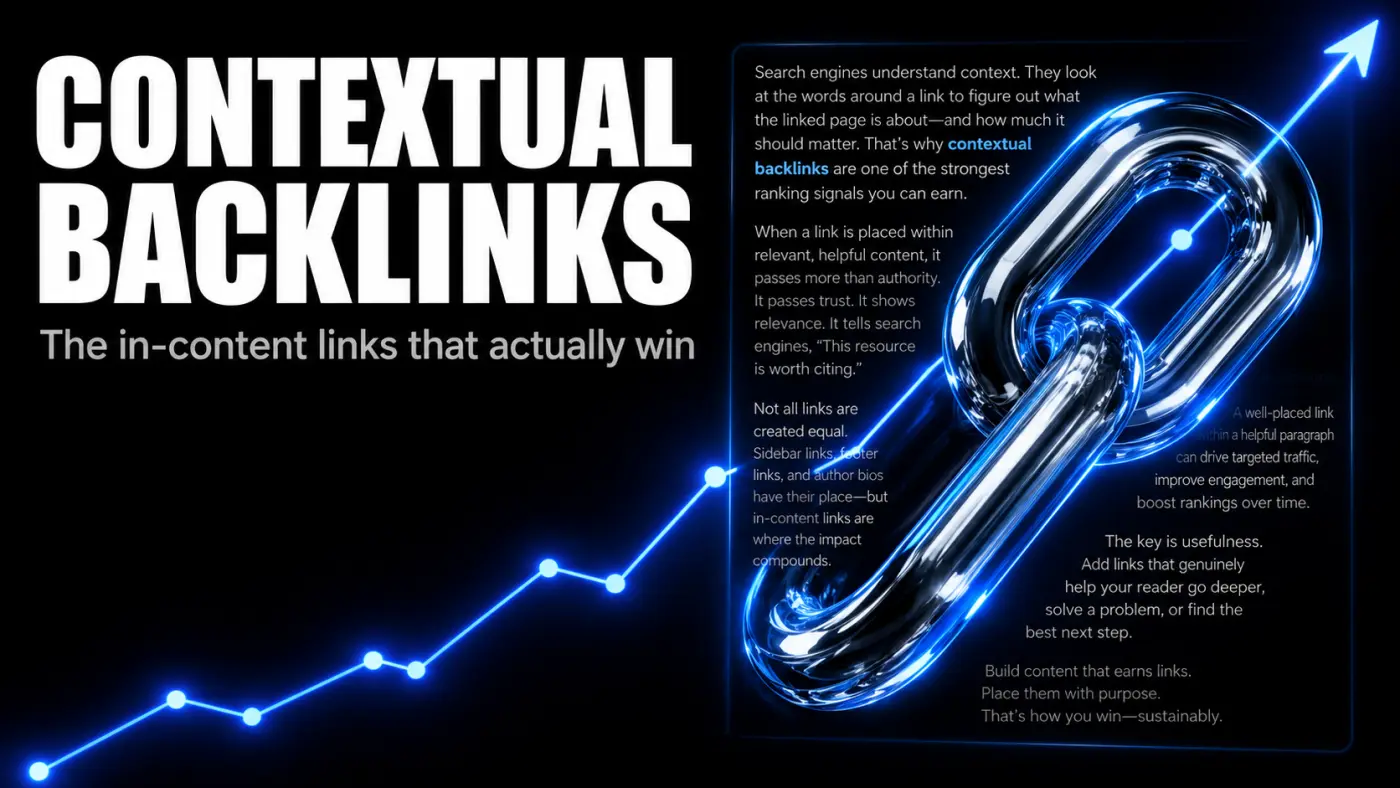
Contextual Backlinks: What They Are, Why They Win, and How To Earn Them
A contextual backlink sits inside the body of an article, surrounded by relevant text, not in a footer or author bio. That placement is what gives it weight. Here is what contextual backlinks are, what makes one high quality, how to earn them, and how to spot the cheap fakes.
- Link Building
 Bart Magera12 min read
What Is White Hat Link Building? Techniques That Work in 2026
The Problem: Why Most Link Building Fails Your SEO You wrote great content. It’s relevant. It’s useful. It even has infographics. But guess what? Crickets. Nobody’s linking. Google’s not ranking. And your “ultimate guide” is buried somewhere on page 7 under a recipe blog and a…
- Link Building
 Bart Magera10 min read
Tiered Link Building: How It Works and How To Do It Safely
Tiered link building layers weaker links behind your strongest ones to pass more authority to your money pages. Here is how the pyramid works, how to build one, which links are worth tiering, the risk SpamBrain introduced, and the lower-risk path I use on client sites.