

7 Link Building Fundamentals Every Strategy Needs in 2026
Listen to this article
Browser-native voice. No account required.
Link building fundamentals are the seven decisions every successful campaign repeats. Relevance, authority, anchor diversity, velocity, tactical mix, linkable assets, and measurement. The order matters. Getting one fundamental right covers for getting another fundamental wrong. Getting four wrong wastes the budget regardless of how aggressive the campaign looks on paper.
This guide covers each fundamental as Mojo Links runs it in regulated and competitive verticals. The framework is the same whether the campaign budget is $1,000 or $50,000 per month. What changes is depth, not principle.
What Are Link Building Fundamentals?
Link building fundamentals are the seven principles every successful backlink campaign applies regardless of niche, budget, or scale: topical relevance, source authority, anchor text diversity, link velocity, tactical mix, linkable content, and measurement. Strategies that ignore one or more fundamentals burn budget without producing compounding rankings. Strategies that follow all seven compound results across 12 to 18 months.
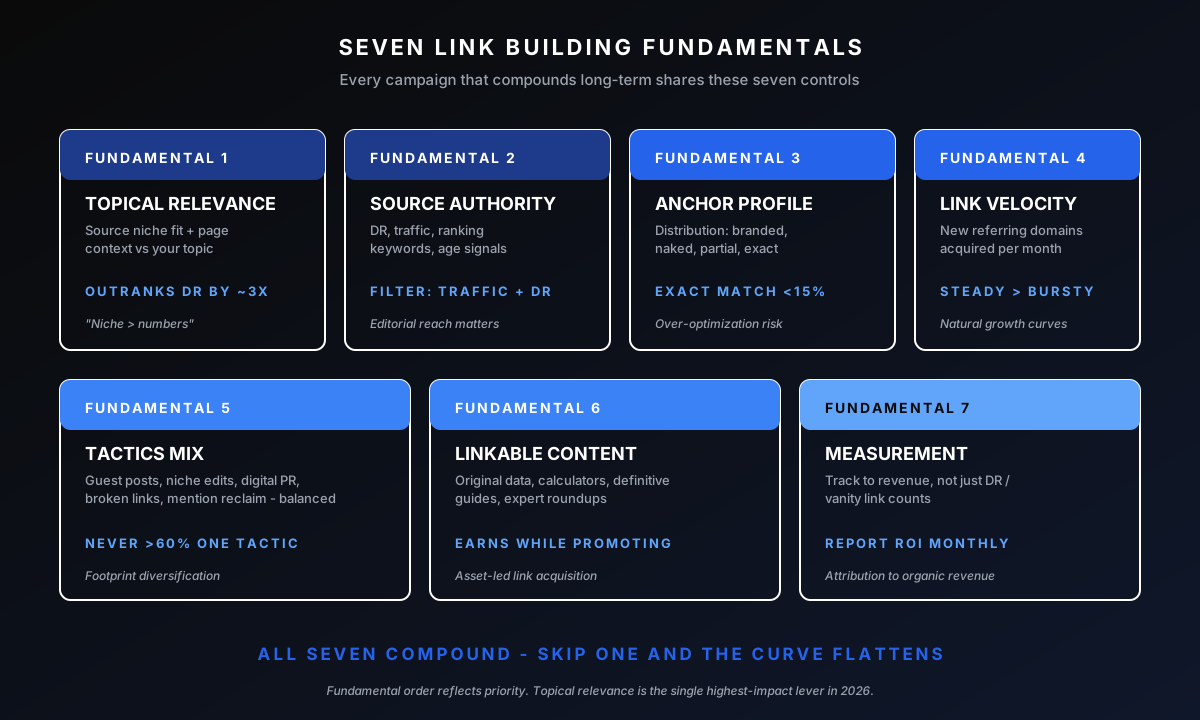
The seven fundamentals are not equal weights. They are ranked by ranking impact in the order they appear below: relevance first, measurement last. Each fundamental builds on the ones before it.
Why Do Most Link Building Strategies Fail?
Most link building strategies fail because they execute one fundamental (usually guest posts) at scale while ignoring the other six. Volume tactics produce flat rankings and high cost-per-link because they miss relevance, anchor balance, and velocity. The result is a referring domain count that looks healthy on paper but does not move commercial-query rankings.
The three failure patterns that show up across audits:
All authority, no relevance. Acquiring DR 70+ links from any niche. Looks great in reports, ranks nothing.
All volume, no quality. Cheap mass outreach producing 100+ links/month from DR 10-20 sources. Burns reputation and triggers algorithmic devaluation.
All tactics, no measurement. Acquiring links without tying placements to specific commercial queries. Six months in, nobody can answer "did this work."
Fundamental 1: Why Does Topical Relevance Matter More Than Dr?
Topical relevance matters more than Domain Rating because Google's 2026 ranking algorithm weights the source domain's topical proximity to the target page higher than absolute domain authority. A DR 40 site covering your exact niche transfers more ranking signal than a DR 70 site outside your topic. Mojo Links has measured this across 300+ campaigns: relevant-niche links rank 2 to 3x more reliably than off-niche higher-DR links.
Public correlation studies consistently find that referring-domain count tracks ranking position more closely than most other measured factors. The fundamentals below cover what makes that signal compound.
How to score relevance:
Direct niche overlap (strongest). The source site covers your exact topic or category.
Adjacent niche (good). The source covers a related topic your audience also reads.
Generic high-authority (weak). The source is a news site, blog network, or general business publication.
Off-niche (skip). The source covers topics your audience never reads.
Relevance is also the single criterion that protects a site from Google's 2024 link spam updates. For the operational guide on building niche-aligned profiles, see niche-relevant backlinks.
Fundamental 2: How Do You Choose High-Authority Backlink Sources?
High-authority backlink sources combine measurable domain rating (DR 30+), real organic traffic (Ahrefs traffic value above $500/month), editorial standards (named writers, contact pages, masthead), and topical relevance to your niche. Single-metric filtering on DR misses the half of high-DR sites that are link networks dressed up as real publications. The four-criteria check takes 90 seconds per source and removes 60 to 70 percent of raw prospect exports.
Five red flags that disqualify a source even at DR 60+:
Zero organic traffic (link farm or expired domain)
No named authors or masthead (PBN footprint)
Sitewide outgoing links to unrelated commercial sites (paid-link network)
Foreign-language anchor text mixed into otherwise English content (negative SEO pattern)
No editorial process (anyone can publish anything)
Fundamental 3: How Do You Build a Healthy Anchor Text Profile?
A healthy anchor text profile follows a 50 to 70 percent branded, 10 to 20 percent generic, 10 to 15 percent partial-match, and 5 to 10 percent exact-match commercial distribution. Over-optimization on exact-match anchors (the "best [product] 2026" pattern) is the single fastest path to algorithmic suppression. Under-optimization (100 percent branded) leaves ranking gains on the table on commercial queries. The free anchor text ratio calculator checks your current profile against these exact percentages in seconds.
The anchor text breakdown that holds up across Mojo Links campaigns:
Branded (50-70%): "Mojo Links", "mojolinks.com", "Mojo Links 2026 report"
Generic (10-20%): "click here", "this resource", "learn more"
Partial-match (10-15%): "Mojo Links link building service", "Mojo Links guide to backlink audits"
Exact-match commercial (5-10%): "link building service", "buy backlinks"
Image alt and URL anchors (remainder)
Distribution shifts by niche. YMYL sites (legal, medical, finance) need tighter branded ratios (60-70 percent) than non-YMYL sites (50-60 percent).
Fundamental 4: How Fast Should You Build Backlinks?
Backlink velocity should match the site's organic momentum. New sites under 12 months old need 4 to 8 referring domains per month to grow without triggering velocity flags. Established sites can sustain 10 to 25 per month. Spikes (50+ new domains in 30 days followed by zero for six months) look like negative SEO patterns to Google's velocity-spike filter and can suppress rankings even when the links themselves are clean.
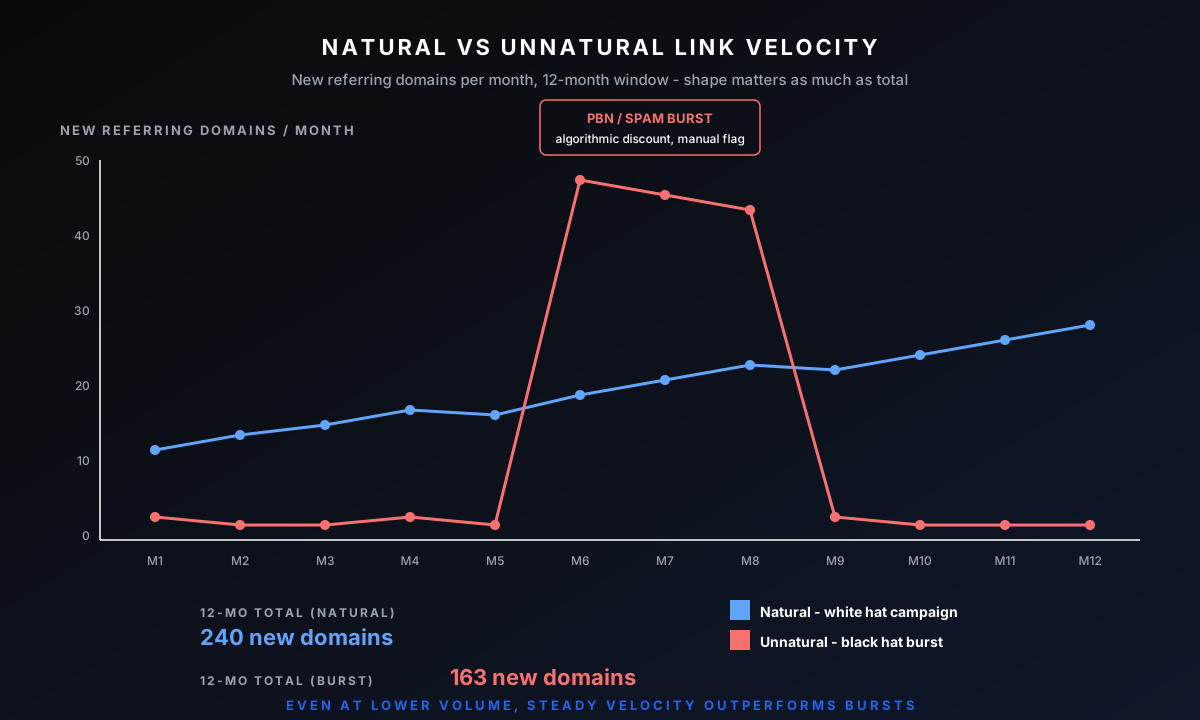
Velocity guidelines by site age and budget:
New site (under 6 months): 2-5 referring domains/month. Build slowly, build defensively.
Site 6-12 months: 4-8 referring domains/month. Mix branded + topical sources.
Established site (12-36 months): 8-15 referring domains/month. Sustainable cadence beats spikes.
Mature site (3+ years, DR 50+): 15-25 referring domains/month. Active acquisition phase.
Recovery from penalty: 3-5 referring domains/month. Underbuilding is safer than overbuilding while Google re-evaluates.
Fundamental 5: Which Link Acquisition Tactics Work in 2026?
Five tactics produce 90 percent of measurable backlink ROI in 2026: guest posts on real-traffic publishers, niche edits inside indexed pages, digital PR through journalist outreach, broken link building, and unlinked brand mentions converted to links. Each tactic delivers different ranking signals and runs at different conversion rates. A campaign using only one tactic underperforms a campaign using three to four.
Guest Posts: 8-15% Conversion, $200-500 Per Placement
Guest posts are full articles published under your byline on a third-party publisher. Conversion rate from clean outreach: 8 to 15 percent. Use for branded-anchor coverage and topical authority signals. See guest posts for the placement workflow.
Niche Edits: 5-10% Conversion, $150-400 Per Placement
Niche edits insert your link into an existing indexed article. Conversion rate: 5 to 10 percent. Faster than guest posts because the page is already indexed and earning traffic. See niche edits for placement specifics.
Digital Pr: 1-4% Conversion, Highest Authority
Digital PR earns placements in tier-1 publications through journalist outreach, original research, and HARO-style expert sourcing. Lowest conversion rate (1 to 4 percent) but highest placement quality and DR. Best deployed when the site has a unique data set or original viewpoint worth pitching.
Broken Link Building: 5-12% Conversion
Broken link building identifies broken outbound links on relevant publishers, then pitches your replacement page. Higher conversion than cold guest-post outreach because you're solving a real problem for the editor. Tools: Ahrefs Broken Link Checker, Check My Links, Screaming Frog.
Unlinked Brand Mentions
Unlinked brand mentions are existing references to your brand without a hyperlink. Found via Google Alerts, Brand24, or manual brand SERP search. Conversion rate from outreach: 25 to 40 percent because the publisher already chose to mention you - they just forgot the link.
Fundamental 6: How Do You Create Content That Earns Backlinks?
Content earns backlinks when it serves a writer or journalist at the moment they need it. The five formats that consistently attract links in 2026: original research, data studies, free tools, comparison content, and visual reference assets (infographics, charts). Lead magnets and product pages rarely earn links because they serve buyers, not citers. The same site can run both, but only the citer-facing assets earn backlinks at scale.
Five Formats That Earn Links in 2026
Original research (highest leverage). Survey 200+ practitioners or analyze a proprietary dataset. Single asset can earn 50-200 referring domains over 18 months.
Data studies (high leverage). Smaller-scale research with one clear finding. Earns 20-80 referring domains.
Free tools and calculators (compounding). Once built, earns links indefinitely without further investment.
Comparison content ("best X", "X vs Y", "X alternatives"). Earns links from roundup articles and editorial coverage.
Visual reference assets (infographics, charts, frameworks). Highest cold-outreach acceptance rates.
Fundamental 7: How Do You Measure Link Building ROI?
Link building ROI is measured at three levels: link acquisition (referring domains acquired vs spend), ranking impact (commercial-query position changes over 90 days), and revenue contribution (organic traffic-to-conversion attribution). Stopping at level 1 produces vanity metrics. Reaching level 3 requires attribution infrastructure (GSC + GA4 + revenue tagging) that most campaigns skip.
Per Google's ranking systems documentation, backlinks contribute to multiple systems running in combination. Single-metric reporting against DR or referring domains alone misses the layered scoring Google actually runs.
The three measurement levels:
Level 1 - Link acquisition. Referring domains acquired per quarter, cost per referring domain, conversion rate from outreach. Reportable in week 1.
Level 2 - Ranking impact. Position changes on your top 10 commercial queries, 90-day delta. Visible in GSC after 8-12 weeks.
Level 3 - Revenue contribution. Organic conversion attribution to specific commercial pages. Requires GA4 + revenue tagging + 6+ month evaluation window.
Who Should Follow These Link Building Fundamentals?
The seven fundamentals apply to in-house SEO teams, agencies, and founders, but the implementation pace and budget allocation differ. The principles do not change. What changes is which fundamentals get full attention each quarter and which run on autopilot.
For in-House SEO Teams
In-house teams should treat all seven fundamentals as quarterly review items. Each quarter, audit performance on one fundamental in depth and report findings to the CMO. Anchor distribution and link velocity typically need the closest monitoring; relevance and authority are slower to drift.
For Agencies
Agencies should bake the seven fundamentals into client onboarding documents and monthly reporting templates. The fundamentals are the framework clients evaluate the agency against; treating them as implicit rather than explicit costs client retention. Use the fundamentals as the client-facing scorecard.
For Founders and Operators
Founders running pre-revenue or early-stage projects should prioritize fundamentals 1 (relevance), 2 (authority), and 4 (velocity) for the first 12 months. Anchor distribution, tactical mix, and measurement matter more once the site has crossed 50 referring domains and a baseline rankings position. Trying to perfect all seven simultaneously slows acquisition without measurable benefit.
How Did Mojo Links Develop These Fundamentals?
The seven fundamentals come from Mojo Links campaign data across 300+ engagements between 2019 and 2026. The framework was refined through three Google algorithm updates that punished SEOs who treated link building as a volume problem: the 2022 link spam update, the 2024 link spam update (which introduced machine-learning-based devaluation of entire link networks), and the ongoing AI-Overview citation algorithm.
What that means for the percentages and ratios in this guide:
Anchor ratios (50-70% branded) reflect our internal campaign data and align with the broader Backlinko ranking-factor research.
Velocity guidelines come from our recovery work across penalty-stricken sites. Underbuilding is safer than overbuilding when Google is actively re-evaluating.
Tactic conversion rates (8-15% guest post, 5-10% niche edit, 1-4% digital PR) match the published industry survey averages within 2 percentage points.
For the broader benchmark data behind these numbers, see our link building statistics 2026 guide.
What Mistakes Break a Link Building Strategy?
Five mistakes break otherwise-sound link building strategies: optimizing for the wrong fundamental, switching tactics too often, ignoring competitor link gaps, treating link building as separate from content strategy, and failing to measure beyond referring domain count.
Optimizing the wrong fundamental. Sites stuck at DR 30 obsessing over anchor text distribution while ignoring topical relevance. Fix relevance first.
Switching tactics too often. 3 months of guest posts, then 3 months of niche edits, then 3 months of PR. Tactics need 6-month minimum runs to produce measurable signal.
Ignoring competitor link gaps. Every strategy should run quarterly competitive gap analysis. See how to find competitor backlinks for the workflow.
Treating link building as separate from content. Linkable assets earn 5 to 10 times more links than product pages. Without the content layer, link acquisition stays cold and expensive.
Measuring only referring domain count. Without revenue attribution, a strategy that "works" by acquisition metrics may not be moving the business needle.
Once the seven fundamentals are in place, the next layer is a semantic SEO audit that maps topical authority gaps the link strategy cannot fix on its own.
For the deep dive on which link attributes pass ranking signal, see our guide on dofollow backlinks.
For the tactical comparison between the two most common acquisition methods, see our guest posts vs niche edits breakdown.
For the per-niche distribution ratios and the recovery workflow when anchor text drifts off target, see our full anchor text distribution guide.
For the foundational definition and how Google uses backlinks to rank pages in 2026, see what is a backlink.
Frequently Asked Questions About Link Building Fundamentals
How Many Backlinks Do I Need Before Rankings Move?
First-page rankings on competitive commercial queries typically require 80 to 200 referring domains on the target page, plus a healthy site-wide profile. New sites can rank long-tail queries with 10 to 30 referring domains. See how many backlinks should a website have for niche-specific benchmarks.
Is Link Building Still Effective in 2026?
Yes. Backlinks remain the strongest single correlation with first-page rankings. Top-10 pages carry 3.8x more referring domains than positions 11-20 (Backlinko 11.8M search result analysis). The tactics that work have shifted (volume is dead, relevance is required), but the fundamental signal Google uses has not changed.
How Long Until Link Building Shows Ranking Results?
Initial ranking movement begins 4 to 6 weeks after Google indexes new placements. Full ranking impact materializes over 3 to 6 months for algorithmic gains, or 6 to 12 months for sites recovering from a manual action. Sites expecting results in 2 to 4 weeks are not seeing link building effects; they are seeing temporary SERP volatility.
These ranges follow the same link building timeline every campaign moves through, from first placement to compounding authority.
What Is The Minimum Budget for Link Building To Work?
A minimum effective monthly link building budget runs $1,500 to $3,000 for B2B and SaaS niches, $3,000 to $8,000 for non-YMYL competitive niches, and $8,000+ for YMYL verticals (legal, medical, finance, supplements, gambling). Below the minimum, link velocity falls below the threshold needed to outpace competitor acquisition.
Should I Build Links Myself or Hire An Agency?
Founders with under 12 months of SEO experience should hire an agency. Founders with SEO operational experience can run link building in-house for the first 6 months, then outsource as the campaign scales. Agencies become cost-effective when the campaign exceeds 10 to 15 referring domains per month or when the niche requires regulated-vertical outreach experience.
These seven fundamentals sit inside a six-phase production workflow. For the end-to-end program this fits into, see Link Building: The Operations Guide.
Want Us To Build a Strategy for You?
A Mojo Links engagement applies all seven fundamentals to your specific niche and competitive context. We work across regulated and competitive verticals (legal, medical, finance, supplements, gambling, crypto, SaaS). For a free 20-minute audit covering current link risk, content gaps, and AI visibility, book a growth session. Senior strategist on the call. No junior PMs.

About Bart Magera
Bart Magera is the founder of Mojo Links. Ten years across YMYL verticals (legal, medical, finance, supplements, crypto, gambling). Trained under Koray Tuğberk Gübür's Topical Authority framework. Author of two SEO books and international speaker.
Want this kind of analysis on your site?
Get a free video walkthrough within 48 hours covering technical health, backlinks, content gaps, and AI visibility.
Related posts
Keep reading on adjacent topics.
- Link Building
 Bart Magera10 min read
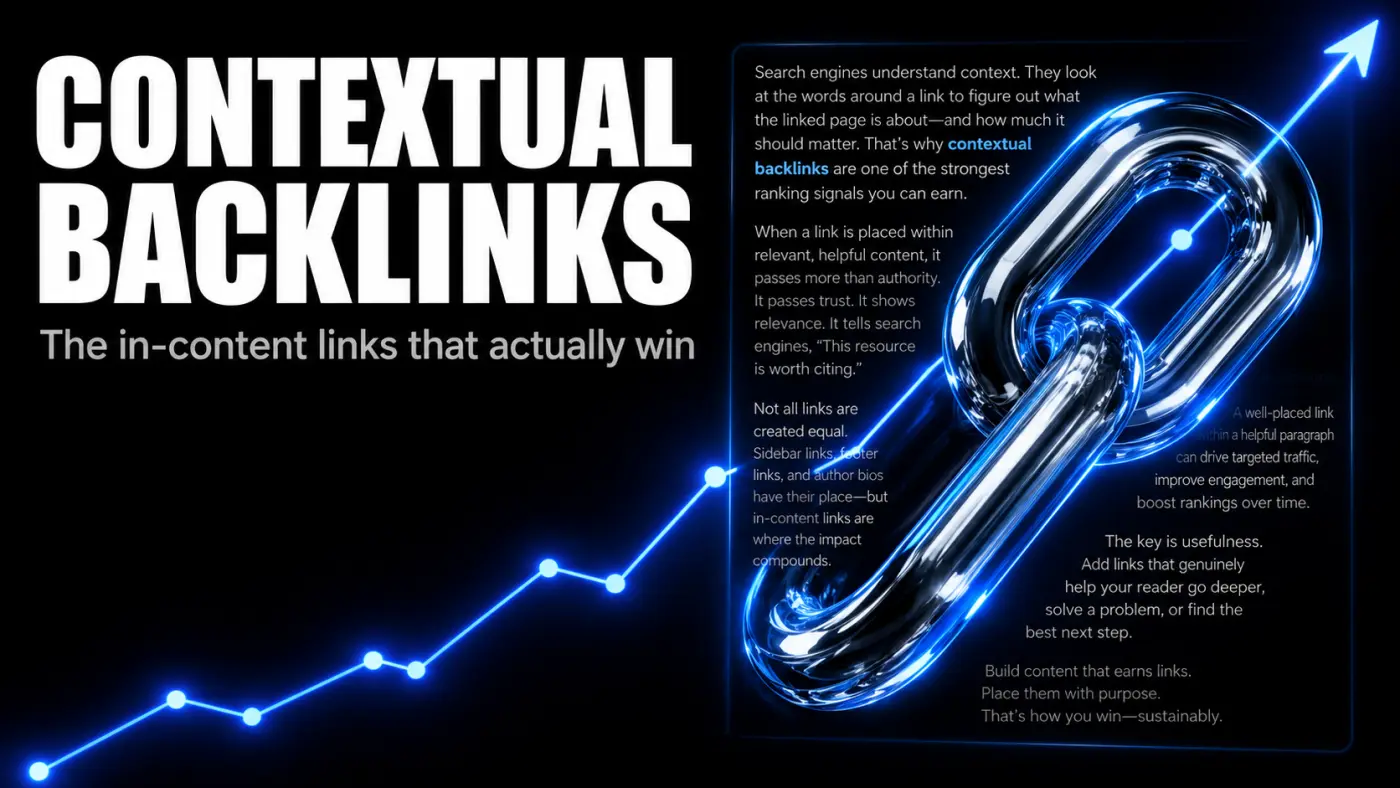
Contextual Backlinks: What They Are, Why They Win, and How To Earn Them
A contextual backlink sits inside the body of an article, surrounded by relevant text, not in a footer or author bio. That placement is what gives it weight. Here is what contextual backlinks are, what makes one high quality, how to earn them, and how to spot the cheap fakes.
- Link Building
 Bart Magera12 min read
What Is White Hat Link Building? Techniques That Work in 2026
The Problem: Why Most Link Building Fails Your SEO You wrote great content. It’s relevant. It’s useful. It even has infographics. But guess what? Crickets. Nobody’s linking. Google’s not ranking. And your “ultimate guide” is buried somewhere on page 7 under a recipe blog and a…
- Link Building
 Bart Magera10 min read
Tiered Link Building: How It Works and How To Do It Safely
Tiered link building layers weaker links behind your strongest ones to pass more authority to your money pages. Here is how the pyramid works, how to build one, which links are worth tiering, the risk SpamBrain introduced, and the lower-risk path I use on client sites.