

Benefits of Link Building: What It Actually Delivers
Listen to this article
Browser-native voice. No account required.
I was once asked to justify a link building invoice to a CFO. The CFO did not care about domain rating. He cared about what the spend returned.
The honest move is to stop pitching benefits and start reporting outcomes. This is that report: what link building changes on a campaign, how to measure each effect, and how long each one takes to show.
What Link Building Actually Buys a Business
Link building buys ranking ability, referral exposure, faster discovery, and brand credibility for the pages that drive revenue. The benefit is not the link. It is the movement the link causes on a page that already converts.
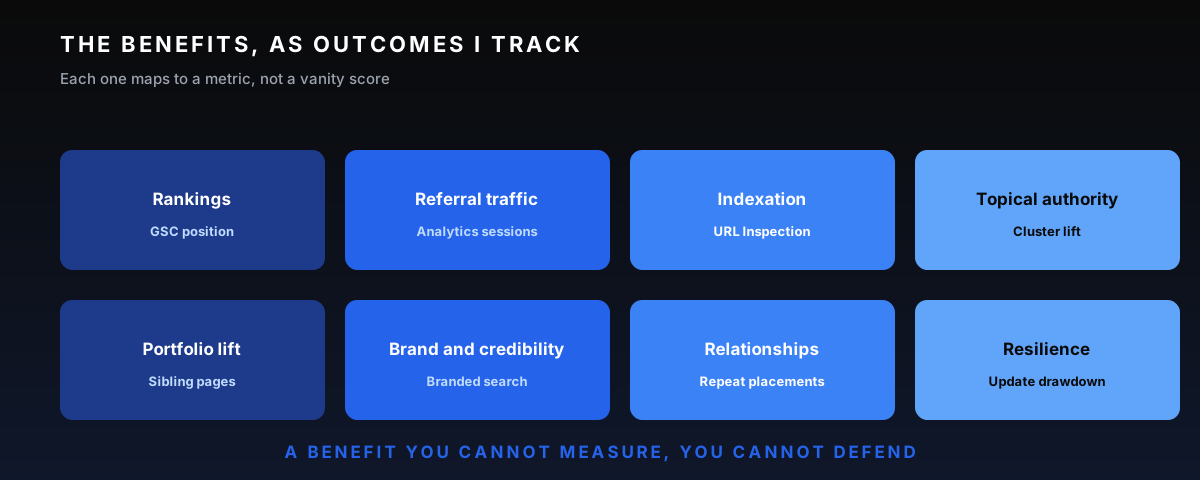
You probably picture link building as chasing a higher domain authority score. That number is a proxy. The product is what a relevant, high-quality link does once it points at a page that matters.
A backlink is a transferable signal of relevance and trust from one website to another. That is the short version of what a backlink is. The longer version is the rest of this page.
The macro case is settled. Ahrefs studied over 900 million pages and reported a clear correlation between referring domains and organic traffic, with 90.63% of pages that have no referring domains pulling no search traffic at all. Correlation is not causation, and they say so. Across ten years of campaigns, the causation has held often enough to bet real budgets on it.
Most pages on the web describe these benefits as a list. This guide describes them as reportable outcomes, because a benefit you cannot measure is a benefit you cannot defend to a CFO.
Ranking Movement on The Pages That Make Money
The first benefit of link building is position change on money pages, and it is the one to report first. Track the average position of a target page for its primary query cluster in Google Search Console, week over week, alongside a rank tracker on the commercial keywords.
Not vanity terms. The pages that take a credit card or a contact form.
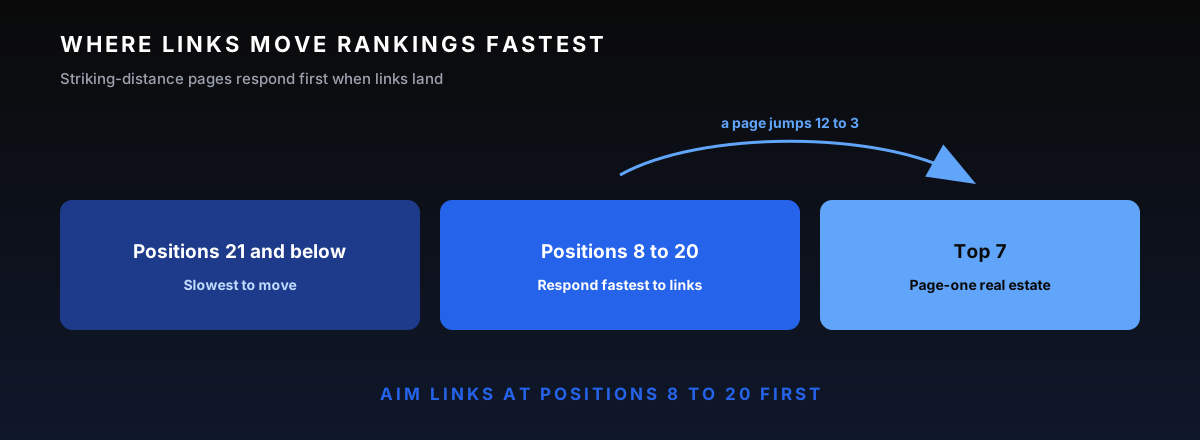
Striking-distance pages move fastest. A page already sitting at positions 8 to 20, the second half of page one and the top of page two, tends to respond first when relevant links land. That is where to aim links when you want a fast read on whether the strategy is working. The size of the push depends on the gap, which is the practical question behind how many backlinks you need.
Referral Traffic and Qualified Leads from The Link Itself
A good placement sends real people, not just a ranking signal. Measure referral traffic as sessions from the linking domain in analytics, plus any assisted conversions those sessions touch.
Real humans. From a page that already has the right audience reading it.
Mojo Links' prospecting scorecard exists because too many links passed authority but sent nobody. A link on a page with live readers does two jobs at once: it moves search rankings over months and it sends referral traffic the day it publishes. The difference between those placements and dead ones is what the types of backlinks breaks down in detail.
Faster Indexation of New and Deep Pages
Links speed up how fast Google finds and crawls new or buried pages. Google’s own documentation confirms that pages are discovered when it extracts a link from a known page to a new one. An external link is a discovery path the search engine follows.
Watch this in the URL Inspection tool and the page indexing report. When a deep page sits in "Discovered, currently not indexed" for weeks, an internal link from a strong page or a single quality backlink often shakes it loose. For a new website with thin internal structure, that early indexation lift is one of the most immediate benefits there is.
Topical Trust and Domain Authority That Compound
Relevant links reinforce what a website is about, and that reinforcement compounds. A link from an on-topic source tells Google the page belongs to a subject the linking site already covers. Ten of those build a pattern.
This is the part that separates a one-off bump from durable authority. The mechanism, how relevance and authority actually move through a graph of links, is methodology that lives on bartmagera.com rather than re-explaining here. On the operations side, the effect shows as a whole content cluster lifting together, not a single page spiking alone. That is how link equity flows between connected pages.
Domain authority is a third-party score, not a Google metric, so treat it as a directional read on the link profile rather than a goal. The benefit is the ranking ability the authority represents, not the number itself.
Authority That Lifts Pages You Never Touched
Strong links to one page raise the standing of pages you never built links to. Domain-level authority distributes through internal links, so a powerful backlink to a pillar page lifts the supporting pages it links to.
This is the portfolio effect, and it is the quiet reason link building pays back beyond its direct targets. Confirm it by watching non-target pages in the same cluster, the ones with no new links of their own, climb in the weeks after a pillar gets a strong placement. The broader pattern across the industry sits in the link building statistics roundup.
Brand Awareness and Credibility
Links from sites your audience already reads build brand awareness and credibility, not just rankings. A mention on a respected industry publication puts the brand in front of the right readers and borrows that site’s trust at the same time.
Measure this benefit through branded search volume and direct traffic, not link counts. When a campaign places the brand on credible websites, branded queries and direct visits tend to rise, which signals that the audience now recognizes the name.
Credibility also compounds inside the sales process. A prospect who has seen the brand cited on a publication they respect arrives warmer, and that perceived authority shortens the conversation. Search engines reward the same trust signals that humans do.
Relationships, Partnerships, and Industry Standing
Earned links create relationships, and the relationship usually outlasts the link. Every genuine placement starts with outreach to a real editor or site owner, and those contacts become repeat opportunities: guest spots, co-marketing, and quotes in future articles.
That relationship layer is where link building turns into thought leadership. A brand that keeps showing up across credible industry sites becomes a name people cite without being asked, which is the durable version of the benefit. It is also a reason to treat guest posts and niche edits as relationship channels, not just link inventory.
You cannot put a clean number on a relationship. Track it loosely through repeat placements from the same domains and inbound requests, because a site that links once and invites you back is worth more than a one-time mention.
Defense Against Algorithm Swings and Competitors
A strong, diverse link profile is insurance against volatility. Sites with thin or low-quality profiles swing harder on core updates, because there is less trust holding their rankings in place.
Anyone selling a link profile that is immune to Google updates is selling fiction. What a real profile buys is resilience: smaller drops, faster recoveries, and a moat a competitor has to outspend to cross. The quality of those links decides how much defense you actually get, which is why every prospect should be qualified against fixed backlink quality criteria before a link goes live.
How To Measure Whether The Links Are Working
So how do you know a link is doing its job? Watch five signals, and report them on a fixed cadence rather than cherry-picking the one that looks good that month. Every benefit above maps to one of them.
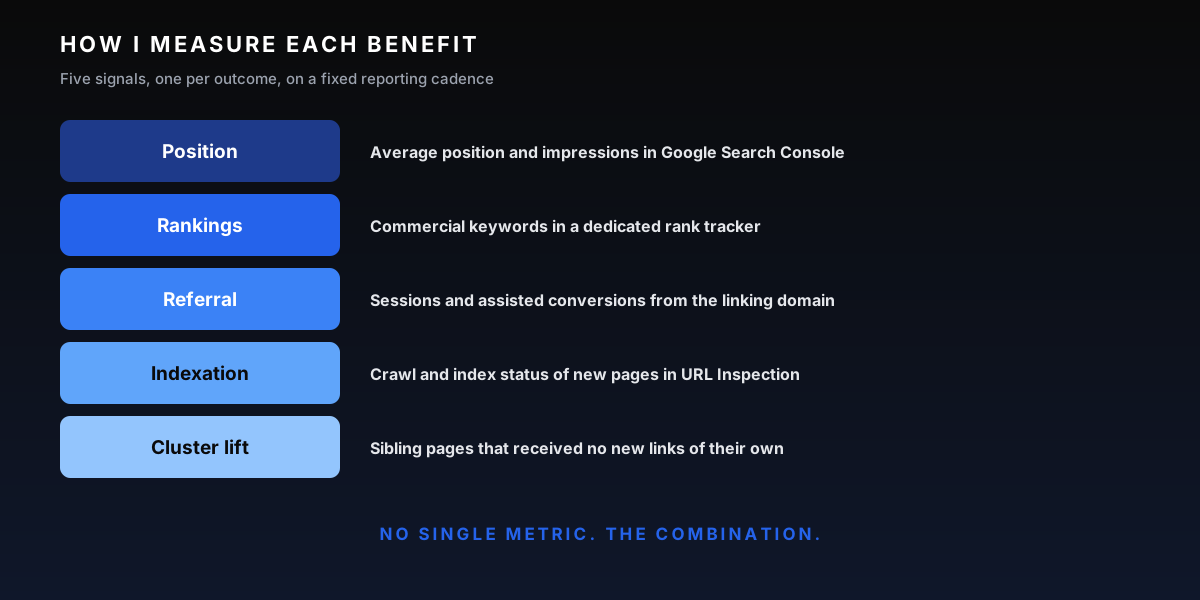
Position. Average position and impressions for the target page and its query cluster in Google Search Console.
Rankings. The commercial keywords in a dedicated rank tracker, money terms only.
Referral. Sessions and assisted conversions from the linking domain in analytics.
Indexation. Crawl and index status of new and deep pages in URL Inspection.
Cluster lift. Movement on sibling pages that received no new links.
No single metric tells the story. The combination does. A link that moves position but sends no referral traffic is still working; a link that moves nothing on any of the five after a full quarter was never worth what it cost.
From Link To Revenue: The Math To Show The CFO
The benefit a CFO cares about is revenue, so translate the link into the chain that produces it. Referring domains lift ranking position, position raises click-through rate, clicks become sessions, sessions convert, and conversions become revenue.
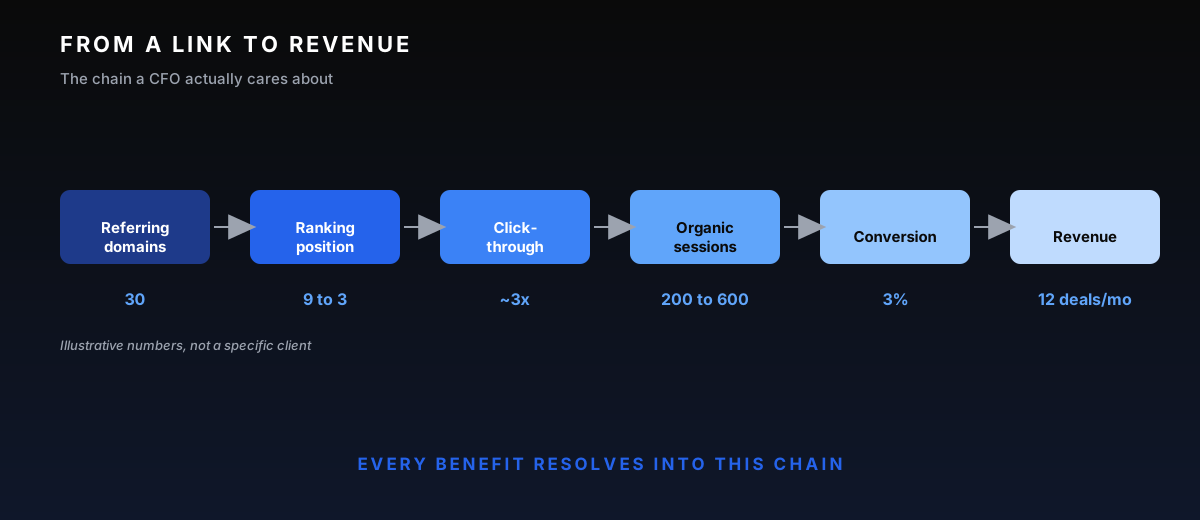
Here is the arithmetic, with illustrative numbers. Say a commercial page sits at position 9 and relevant links move it to position 3. Click-through roughly triples between those positions.
A page drawing 200 organic sessions a month at position 9 lands nearer 600 at position 3. At a 3% conversion rate and a $1,200 average client value, that is roughly 12 additional deals a month, not a prettier authority score.
The point is not the exact figures. The point is that every benefit on this page resolves into that chain, and an operator who cannot draw the chain is guessing.
Which Benefits Compound and Which Decay
Not every benefit behaves the same way over time, and treating them as one lump is where most pages go wrong. Some compound. Some are one-time and decay.
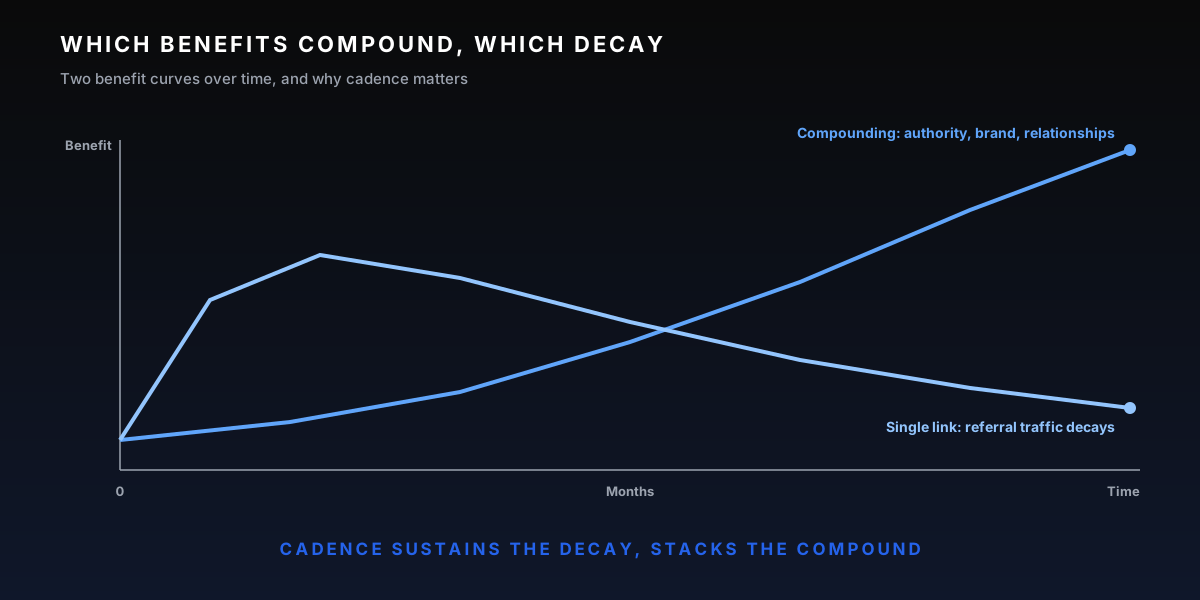
Compounding. Topical authority, domain-level trust, relationships, and thought leadership grow as more quality links accrue.
Decaying. The referral traffic from a single link fades as the host page ages, and the indexation bump is a one-time event.
Plan campaigns around the split. The decaying benefits justify a steady cadence of new placements, while the compounding ones are why a profile built patiently keeps paying out long after the invoice clears.
Referring Domains, Not Backlink Count
The benefit scales with the number of distinct websites linking to you, not the raw backlink count. Thirty referring domains usually outperform three hundred links from five sites, because diversity of sources is the harder signal to fake.
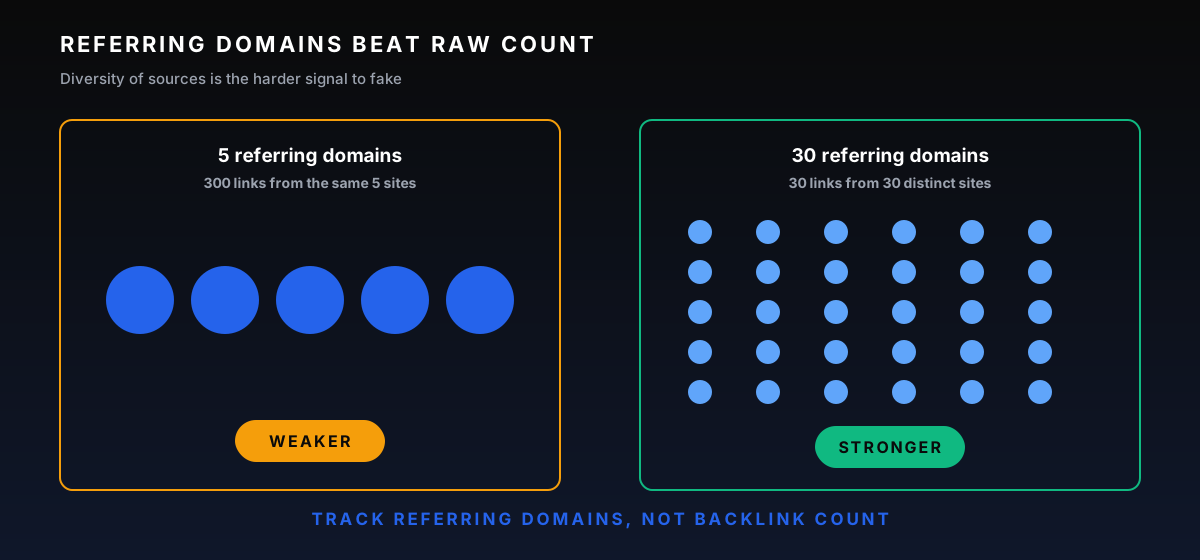
Every page on the first SERP for this topic uses "links" and "backlinks" as if they were the same thing. They are not. Track referring domains as the headline number because it predicts ranking strength better than volume, and it keeps a campaign honest about whether it is buying reach or just repetition.
When The Benefits Show Up: The Realistic Timeline
Most link building benefits surface in 60 to 120 days, not the first month. Discovery and indexation effects can show within days. Referral traffic arrives the day a link publishes. Ranking movement on striking-distance pages tends to land inside two to three months, and compounding authority is the slow one, measured over quarters.
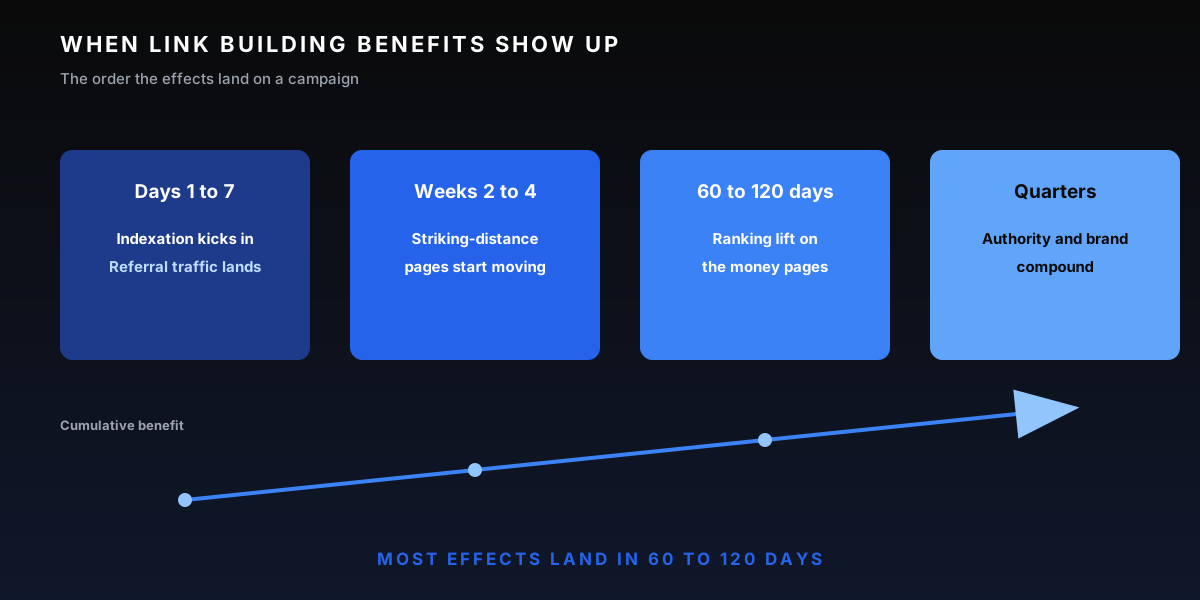
Sixty to 120 days. That range is the honest answer, and it holds across most Mojo Links campaigns. The full breakdown of what moves when sits in the link building timeline guide. A promise of page-one results in two weeks describes a different, riskier game entirely.
When Link Building Is Not The Lever
Links amplify a page that deserves to rank. They will not rescue one that does not. If the content misses search intent, a technical issue blocks indexing, or the page does not convert, more links only fund a problem links cannot fix.
Mojo Links has turned down link campaigns because the bottleneck sat somewhere else. A page stuck at position 4 with a 0.8% click rate has a title and intent problem. Not a link problem.
Sorting that out first is what a link building campaign should be scoped against. Spend on links last, after a page earns the right to them.
The free growth audit settles the question before anyone scopes links, checking whether acquisition is even the constraint. Links go in once the page is ready to convert the traffic they bring.
Frequently Asked Questions
How Does Link Building Help SEO?
Link building helps SEO by passing relevance and trust signals that improve a page’s ranking ability, speeding up indexation, building brand credibility, and sending referral traffic. The measurable effect is movement on commercial pages, tracked in Google Search Console and a rank tracker.
Are Backlinks Still Important in 2026?
Yes. Backlinks remain a core Google ranking signal in 2026, and they increasingly influence which sources get cited in AI search answers. Relevance and quality now matter more than raw volume, but links from credible, on-topic websites still move rankings.
Does The Quality of Backlinks Matter More Than Quantity?
Quality wins. A handful of links from relevant, trusted referring domains outperforms hundreds of low-quality links, which can do nothing or trigger a penalty. Qualify every prospect on relevance and authority before acquiring a link, and track referring domains rather than backlink count.
How Long Before Backlinks Improve Rankings?
Most pages show ranking movement 60 to 120 days after relevant links land. Indexation and referral effects appear faster, sometimes within days. Pages already ranking in positions 8 to 20 respond quickest, while brand-new pages and saturated keywords take longer.
Is Link Building a One-Time Job or Ongoing?
It is ongoing. Some benefits compound, like authority and relationships, while others decay, like the referral traffic from a single aging link. A steady cadence of quality links sustains the decaying benefits and stacks the compounding ones, so stopping cold lets momentum fade.
Do Backlinks Help with AI Search Visibility?
Links shape AI search visibility indirectly. Large language models tend to cite pages from sources Google already treats as authoritative, and links are a primary input to that authority. A page that earns trusted backlinks is more likely to surface in AI-generated answers.

About Bart Magera
Bart Magera is the founder of Mojo Links. Ten years across YMYL verticals (legal, medical, finance, supplements, crypto, gambling). Trained under Koray Tuğberk Gübür's Topical Authority framework. Author of two SEO books and international speaker.
Want this kind of analysis on your site?
Get a free video walkthrough within 48 hours covering technical health, backlinks, content gaps, and AI visibility.
Related posts
Keep reading on adjacent topics.
- Link Building
 Bart Magera10 min read
Contextual Backlinks: What They Are, Why They Win, and How To Earn Them
A contextual backlink sits inside the body of an article, surrounded by relevant text, not in a footer or author bio. That placement is what gives it weight. Here is what contextual backlinks are, what makes one high quality, how to earn them, and how to spot the cheap fakes.
- Link Building
 Bart Magera12 min read
What Is White Hat Link Building? Techniques That Work in 2026
The Problem: Why Most Link Building Fails Your SEO You wrote great content. It’s relevant. It’s useful. It even has infographics. But guess what? Crickets. Nobody’s linking. Google’s not ranking. And your “ultimate guide” is buried somewhere on page 7 under a recipe blog and a…
- Link Building
 Bart Magera10 min read
Tiered Link Building: How It Works and How To Do It Safely
Tiered link building layers weaker links behind your strongest ones to pass more authority to your money pages. Here is how the pyramid works, how to build one, which links are worth tiering, the risk SpamBrain introduced, and the lower-risk path I use on client sites.