

Link Building Outreach: How To Run Campaigns That Get Replies
Listen to this article
Browser-native voice. No account required.
Most outreach campaigns fail before the first email goes out. They start with a template, a scraped list, and a numbers game, and they end in a spam folder.
Outreach is the part of link building where the work actually happens, and it is the part most people automate into uselessness. This is the process to run instead, from the qualified list through to a placed link. It is the execution layer of the link building playbook.
What Is Link-Building Outreach?
Link-building outreach is the process of contacting site owners, editors, and writers to earn editorial links to your content. It takes a qualified prospect list, finds the right person, sends a personalized and relevant pitch, follows up on a set cadence, and negotiates a placement. The output is placed links, not sent emails.
It is a sales process wearing an SEO hat. You have a list, a pitch, a follow-up sequence, and a close. The difference is that your product is a link the other person has to agree is worth adding to their page.
Why Do Most Outreach Campaigns Fail?
Most campaigns fail because they scale volume instead of relevance. A Backlinko study of nearly 12 million outreach emails found the average response rate was just 8.5%, and personalized subject lines lifted that by a third. Blasting a template to a scraped list lands you in the 91.5% that gets ignored.
The second reason is impatience. People send one email, get nothing, and quit, or they send six and get blocked. The same study found that following up doubled responses. There is a narrow band between persistent and annoying, and most teams miss it on both sides.
The third reason is targeting. A pitch to a site with no reason to link, or to the wrong person at the right site, fails no matter how good the email is. Relevance has to exist in the list before outreach can convert it. You cannot write your way into a link that was never plausible.
Before Outreach Starts
Outreach is only as good as the list feeding it. The input is a qualified prospect list: sites that are relevant, have real traffic, and would plausibly link to your page. Building that list is its own discipline, and it is covered in the prospect qualification guide.
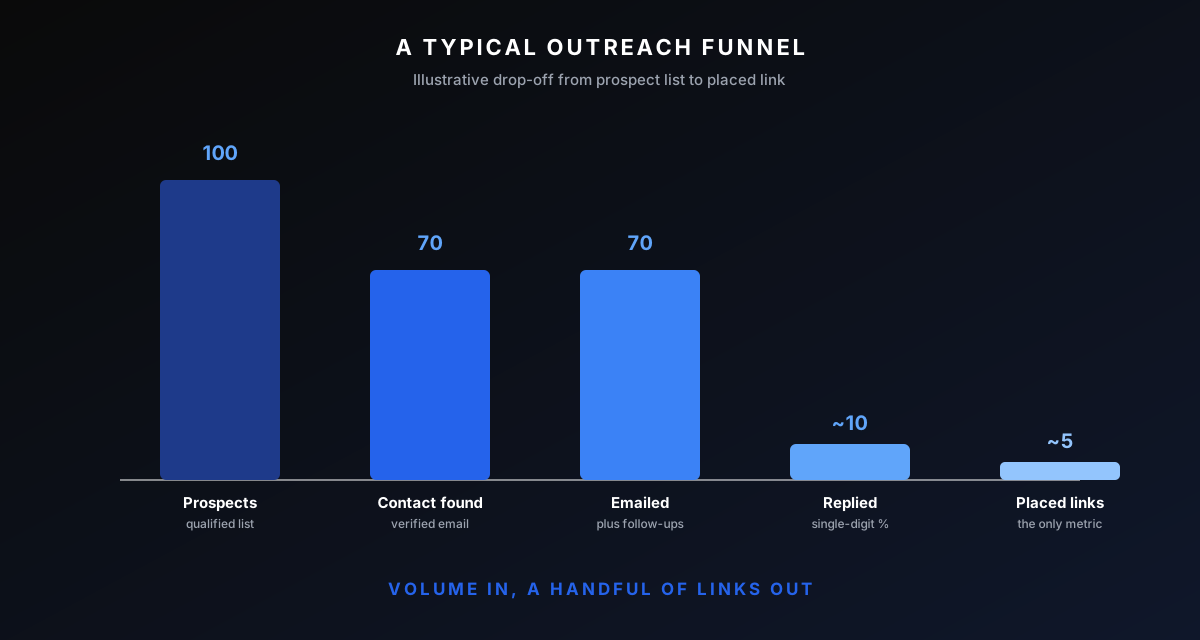
If the list is junk, no email saves it. Contacting 40 genuinely relevant sites beats 400 random ones. The narrow list is faster to work, converts higher, and keeps the sending domain clean. Volume on a bad list is just a faster way to burn a domain. Sizing the list before writing a word keeps it honest: a free bulk DR pass over the whole list flags the domains with no authority to pass, so you are not warming up a sending domain for sites that were never going to move a ranking.
The Sending Setup
Before any campaign, the infrastructure has to be clean, because one careless send poisons every email after it. Send from a dedicated domain, never the primary one, so a deliverability problem never touches your real email.
A new sending domain gets warmed up over a couple of weeks, ramping volume gradually so inbox providers see a real sender instead of a spam cannon. Daily sends stay capped, and the list is scrubbed for bounces before the first email goes out. None of this earns a link on its own. Skip it and the good emails never reach an inbox.
The Outreach Process
Here is the sequence to run on every campaign, in order. Each step exists to protect the next one, and skipping any of them shows up as a lower placement rate at the end. Every step here is one stage of the broader manual link building workflow that runs from prospecting through placement.
Segment The Prospect List
Split the list by pitch angle before writing a word. A broken-link prospect gets a different email than a resource-page editor or a journalist running a roundup. Segmenting by why you are contacting them, not just by domain rating, is what lets the pitch feel written for one person.
Each segment gets its own message skeleton and its own success benchmark. A roundup pitch converts differently than a broken-link fix, and lumping them together hides which angle is actually working. Small segments also keep daily send volume low per template, which protects deliverability.
Find and Verify Contacts
A pitch to a generic contact form rarely lands. Find the specific person who owns the page or the editorial calendar, then verify the email before sending. An unverified address bounces, and bounces hurt the sending domain's reputation, which quietly tanks every later email in the campaign.
Role addresses like info@ or editor@ are a last resort. A named person, reachable at a verified personal address, replies far more often than a shared inbox nobody owns. When the right contact cannot be found at a reasonable cost, drop the prospect rather than guess.
Write The Relevance Hook
The first line has to prove you actually looked at their site. A specific reference to their content, a broken link on a named page, a stat of theirs that is out of date. An outreach email that opens with "Dear Webmaster, I was browsing your website" was written by nobody and read by no one. The hook is the whole pitch; the rest is logistics. This is where outreach email templates help, as a skeleton, never as a script. The skyscraper technique is built around exactly that hook: the page they currently link to has been outclassed.
The First Email
Short, specific, one ask. Name the person, give the relevance hook, state plainly what you are proposing and why it helps their reader, and stop. No five-paragraph backstory, no flattery, no list of three different things you want. One clear request a busy editor can say yes to in ten seconds.
Follow-Up Cadence
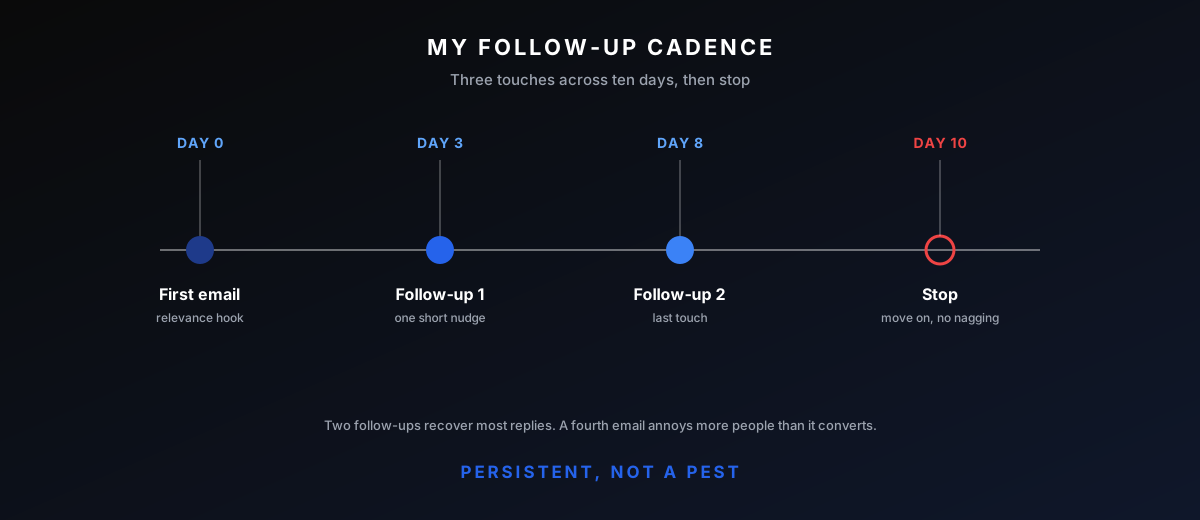
Silence is usually a buried inbox, not a no. Send a short follow-up around day three and a final one around day eight, then stop. Two nudges recover most of the replies a single email leaves on the table. A third follow-up converts almost nobody and starts generating complaints.
Handling The Reply
A reply is the start of a negotiation, not the finish line. Confirm the placement is an editorial in-body link, agree the anchor and surrounding context, and make the addition effortless for them. The goal is a link that passes full value and that the editor is glad they added, not one they quietly remove next quarter.
Anatomy of An Email That Gets a Reply
Every effective email has the same four parts, and each one earns the next. Get the subject line wrong and the hook is never read. Get the hook wrong and the ask is never reached.
Subject line. Short, specific, no clickbait, often the prospect's own topic or a named page. A vague subject is the first thing a busy editor deletes.
The hook. One line proving you read their site: a broken link on a named page, an outdated stat, a genuinely useful addition to a specific article.
The ask. One clear request, framed around their reader's benefit, that can be granted in a single reply. Never three asks stacked into one email.
The sign-off. A real name, a real site, and an easy way to decline. Identity and an opt-out are also what keep the email compliant.
That is the whole structure. Four parts, one of which (the hook) gets rewritten for every prospect. The structure scales; the hook does not, and that trade is what makes outreach work at all.
Personalization at Scale
The whole game is keeping personalization high while volume rises, and the two fight each other. Pure mail-merge scales infinitely and converts at nearly zero. Hand-writing every email converts well and does not scale past a few dozen a week.
The answer is tiered. Top-priority prospects get a fully hand-written email. Mid-tier prospects get a strong template with two or three genuinely personalized lines. Low-tier prospects either get dropped or batched lightly. The relevance hook is never the part to automate, because it is the only part that works.
The Tools That Matter
The stack is simple and it serves the process, not the other way around. Use a contact-finder to surface the right person and their email, a verification tool to confirm the address before sending, and a sending platform that handles sequencing, follow-ups, and reply tracking from one inbox.
Hunter and Pitchbox cover most of this; plenty of teams run leaner. The tool is the cheap part. What matters is that sending happens from a warmed-up domain, follow-ups fire on schedule, and every reply is tracked to a placement. The same discipline runs through the full-service link building.
Metrics That Matter
Track placed links and the placement rate, which is links earned divided by prospects contacted. Everything else is a diagnostic. Open rate tells you if subject lines work. Reply rate tells you if the hook works. But the campaign is judged on links in body content, full stop.
On a tight, relevant list, a placement rate of 4 to 8% is a healthy target. A scraped list runs a fraction of that. When the rate drops, look upstream first: a low reply rate points at the hook, and a low placement rate despite good replies points at the offer or the prospect fit. The number tells you where the process broke.
Compliance is part of the metric too. Cold outreach in the US sits under the FTC's CAN-SPAM rules, which means honest subject lines, a real identity, and an easy opt-out. A campaign that earns links and burns a domain is a loss, not a win.
Proof from Real Campaigns
Outreach done this way compounds. For bspin.io, a full SEO engagement in a brutally competitive vertical, relationship-led outreach built a profile of roughly 200 referring links that drives 9,167 organic visits a month against an estimated $17,330 in monthly traffic value. Not a blast. A few hundred placements earned one at a time.
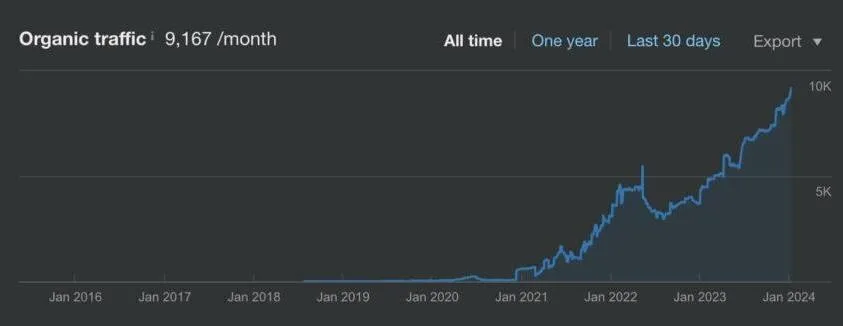
The same approach took mindlabpro.com through a focused link campaign that helped sustain 26,000-plus organic visits a month. The pattern repeats: a tight relevant list, a real pitch, disciplined follow-up, and links that stay placed because the editor actually wanted them.
Common Mistakes
The template blast is the big one. A merge-field email to a thousand addresses feels productive and produces almost nothing while damaging the sending domain. Volume is not a strategy when the list and the pitch are weak.
The other three repeat constantly. Skipping verification, so half the list bounces. Over-following-up, so the replies you do get are complaints. And quitting after one email, which leaves most of the available links unclaimed. Fix those four and you beat the majority of campaigns in any niche.
Outreach vs Buying Links
Earned outreach links are an asset; bought links are a liability with a delay. Google treats undisclosed paid follow links as link spam, so a purchased-link profile is a future cleanup, not a shortcut.
That said, not every placement needs cold outreach. Editorial guest posts and niche edits are legitimate when the content is real and the placement is editorial, and tactics like broken link building are just outreach with a sharper hook. The line is editorial intent, not whether an email was involved. Then there is HARO link building, where the journalist asks first and you answer instead of pitching cold.
Frequently Asked Questions
How Many Outreach Emails Does It Take To Get One Link?
It varies by niche and list quality, but a strong, relevant list with personalized pitches commonly lands a link for every 15 to 25 prospects contacted. A scraped list with templated emails can send hundreds for almost nothing. The list and the hook drive the ratio far more than the email count.
What Is a Good Outreach Reply Rate?
Single digits are normal. Backlinko's study of nearly 12 million emails found an average response rate of 8.5%, and personalization and follow-ups push that higher. If you are clearing 15 to 20% on a relevant list with a real hook, you are doing well. Chasing a higher number usually means a narrower, better list.
How Many Follow-Ups Should I Send?
Two. A short nudge around day three and a final one around day eight recover most of the replies a single email misses. Data shows following up roughly doubles responses, but a third or fourth follow-up converts almost nobody and starts generating spam complaints. Persistent, not a pest.
Is Outreach Better Than Buying Links?
Yes, for anything you want to keep. Earned editorial links are assets that compound and survive scrutiny. Bought follow links violate Google's guidelines and become a liability you later pay to clean up. Outreach is slower, but it is the only method that builds a profile you do not have to defend.
How Long Until Outreach Produces Links?
First placements usually land within two to four weeks of sending, depending on editorial cycles. The compounding effect takes longer; a profile that moves rankings is built over months of steady sending, not a single burst. Treat outreach as an ongoing program, not a one-time push.
Want Mojo Links To Run Your Outreach?
Outreach is slow, manual, and easy to do badly, which is exactly why most teams outsource it. We run the full process for clients: qualified lists, personalized pitches, disciplined follow-up, and placements backed by a 120-day replacement guarantee. If you want a read on where your link gaps sit first, start with a personalized video walkthrough.

About Bart Magera
Bart Magera is the founder of Mojo Links. Ten years across YMYL verticals (legal, medical, finance, supplements, crypto, gambling). Trained under Koray Tuğberk Gübür's Topical Authority framework. Author of two SEO books and international speaker.
Want this kind of analysis on your site?
Get a free video walkthrough within 48 hours covering technical health, backlinks, content gaps, and AI visibility.
Related posts
Keep reading on adjacent topics.
- Link Building
 Bart Magera10 min read
Contextual Backlinks: What They Are, Why They Win, and How To Earn Them
A contextual backlink sits inside the body of an article, surrounded by relevant text, not in a footer or author bio. That placement is what gives it weight. Here is what contextual backlinks are, what makes one high quality, how to earn them, and how to spot the cheap fakes.
- Link Building
 Bart Magera12 min read
What Is White Hat Link Building? Techniques That Work in 2026
The Problem: Why Most Link Building Fails Your SEO You wrote great content. It’s relevant. It’s useful. It even has infographics. But guess what? Crickets. Nobody’s linking. Google’s not ranking. And your “ultimate guide” is buried somewhere on page 7 under a recipe blog and a…
- Link Building
 Bart Magera10 min read
Tiered Link Building: How It Works and How To Do It Safely
Tiered link building layers weaker links behind your strongest ones to pass more authority to your money pages. Here is how the pyramid works, how to build one, which links are worth tiering, the risk SpamBrain introduced, and the lower-risk path I use on client sites.