

Skyscraper Technique: What It Is and Does It Still Work?
Listen to this article
Browser-native voice. No account required.
The Skyscraper Technique made Brian Dean famous in 2015. The original playbook: find high-link-count content, build something meaningfully better, then pitch the backlinks of the original to switch. It produced jaw-dropping case studies for early adopters. A decade later the playbook is widely known, widely copied, and only works in a narrow band of conditions. Mojo Links runs it 3-5 times per year in specific situations; the rest of the time a different tactic wins. This guide covers when and how.
What Is The Skyscraper Technique?
The Skyscraper Technique is a content-and-outreach tactic for earning backlinks by improving existing high-link-count content. Three steps in the original Brian Dean playbook: identify content that has accumulated many backlinks, build a meaningfully better version, then pitch the webmasters who link to the original and suggest they switch the reference. The economic insight underneath is that webmasters update outdated references when prompted with a clear improvement.
It is one of eight tactics covered in our operations guide for SEO teams, alongside guest posts, niche edits, dead resource replacement, and pitching original data.
Why Does The Skyscraper Technique Still Work in 2026?
Three reasons it survives despite saturation. First, the underlying logic is editorial truth: webmasters do update broken or outdated references when shown a clear improvement, and that incentive has not changed. Second, the tactic produces high-relevance links by definition. You inherit the topical context of the original target, which is exactly what Google reweights for in 2026. Third, it scales horizontally across many original-asset targets when properly qualified.
The reasons it works less than it used to: webmasters are saturated with "I built something better" pitches, automated tools made the volume noisier, and a generation of operators copy-pasted the playbook without the editorial judgement that made it convert.
What Are The Four Conditions Where Skyscraper Still Produces Results?
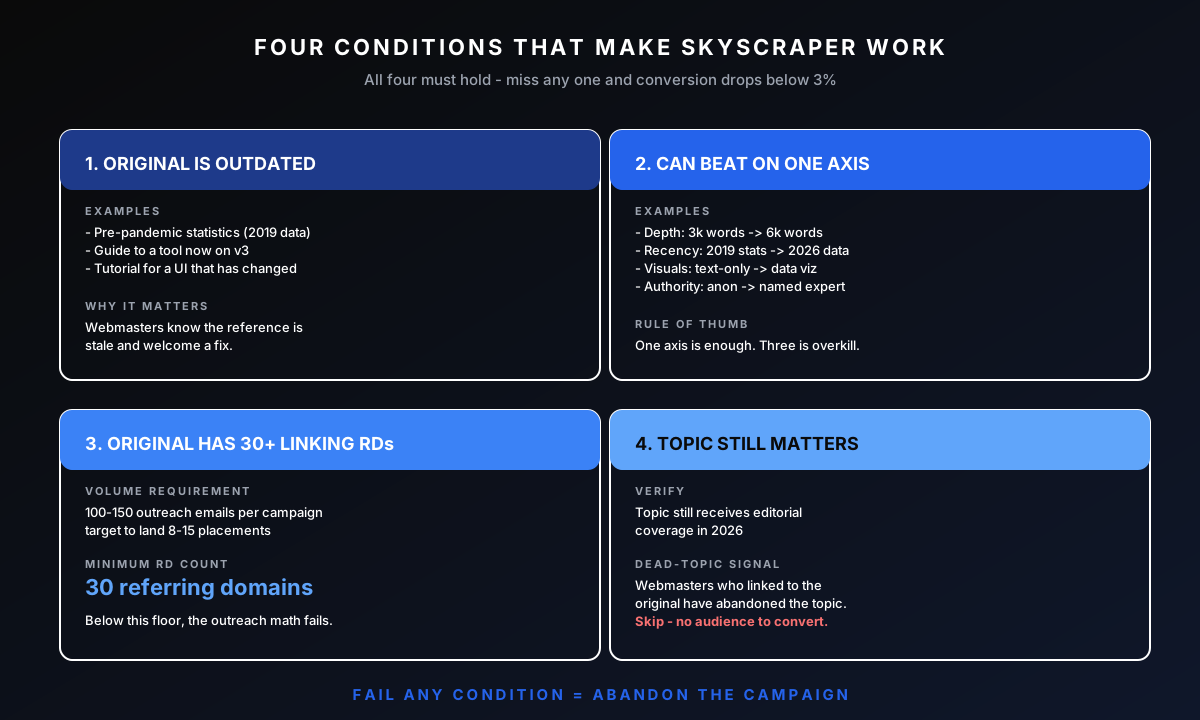
Run the technique only when all four conditions hold. Outside this band, conversion drops to 1-3% and the ROI does not justify asset development cost.
Condition 1: The Original Asset Is Genuinely Outdated
Statistics post from 2019 referencing pre-pandemic data. A guide to a tool that has since released v3. A "how to use X" tutorial when X has changed its UI. Outdated assets are the strongest skyscraper candidates because the webmasters linking to them know the reference is stale and welcome a fix.
Condition 2: You Can Meaningfully Beat The Original on at Least One Axis
Depth (a 3,000 word guide replaced by a 6,000 word definitive version with original data). Recency (2019 statistics replaced by 2026 data). Visual quality (text-only post replaced by data visualisations). Authority (anonymous post replaced by a named expert with credentials). Beating on one axis is enough. Beating on three is overkill but reduces friction.
Condition 3: The Original Has 30+ Linking Root Domains
Below 30 referring domains, the outreach math fails. Expect 100-150 outreach emails per skyscraper campaign target to land 8-15 placements. That means each campaign target should have at least 100 referring root domains. Below 30, you cannot scale the outreach enough to justify asset development.
Condition 4: The Topic Still Matters Editorially
Some topics fade. Webmasters who linked to "Twitter API best practices" in 2018 may have abandoned that content entirely. Verify that the topic still receives editorial coverage in 2026 before building a replacement.
How Does The Skyscraper Workflow Run End-To-End?
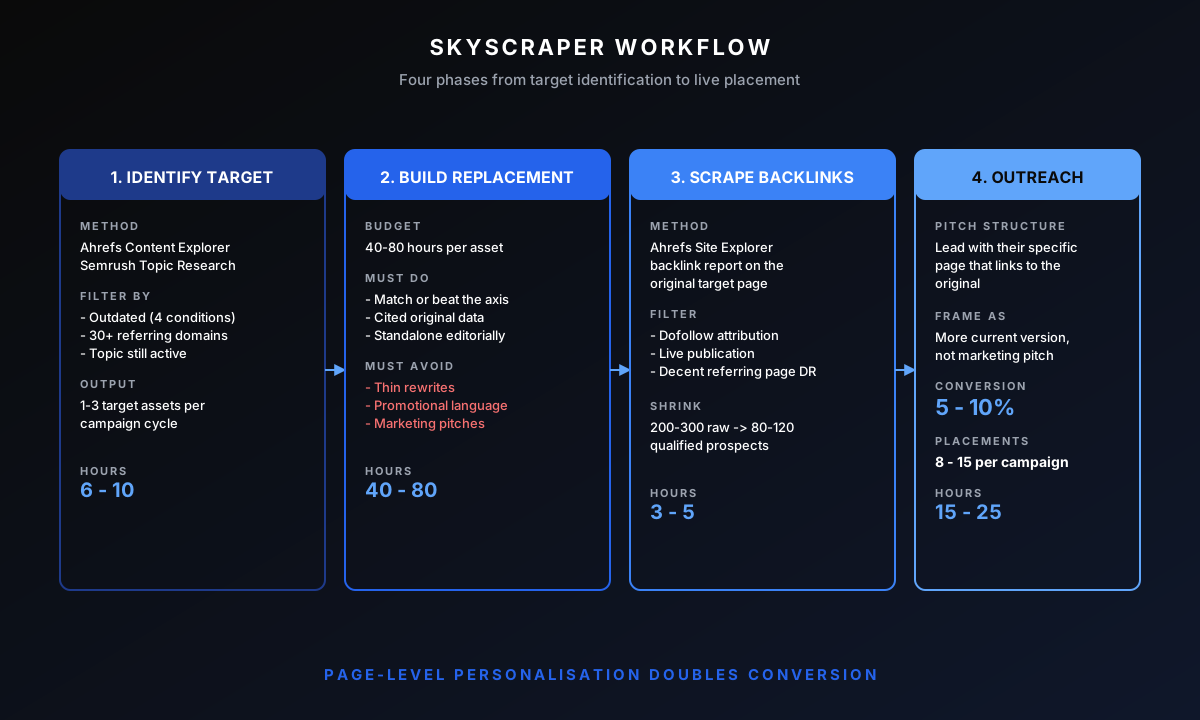
Four phases: identify target, build the replacement asset, scrape backlinks, run personalised outreach.
Phase 1: Identify The Target
Pull top-link-count content in your topic via Ahrefs Content Explorer or Semrush. Filter for the four conditions above. Score by referring root domain count, age, and topical fit. Most campaigns target 1-3 original assets per cycle, not 10-20.
Phase 2: Build The Replacement
Match or beat the original on the chosen axes. Budget 40-80 hours per replacement asset. Treat the skyscraper asset as a serious linkable asset, not a quick rewrite. Cheap rewrites convert at single digits because webmasters can tell.
Phase 3: Scrape Backlinks To The Original
Pull all referring pages via Ahrefs Site Explorer. Filter for dofollow, decent referring domain authority, and active publication status. Most lists shrink from 200-300 raw to 80-120 qualified after filtering.
Phase 4: Run Personalised Outreach
Pitch each webmaster individually. Lead with the specific page they linked from and the specific original they referenced. Frame the replacement as a more current version, not a marketing pitch. Conversion lands at 5-10% on properly qualified prospects.
What Is The Conversion Rate of The Skyscraper Technique?
5 to 10% from outreach email to live placement on properly qualified prospects in Mojo Links' 2024-2025 campaign data. Below 5% when assets are thin or when targets fail the four conditions. Time per placement averages 6-9 hours including asset development amortised across the campaign.
Why Does The Skyscraper Technique Fail for Most Operators?
Five common failures account for most failed campaigns.
Targeting content that is not actually outdated. The original is still the best resource on the topic. Webmasters do not switch.
Building thin replacements. A 4,000 word original cannot be skyscrapered with a 1,500 word post.
Scraping too aggressively. Pitching all 300 referring pages without filtering produces 1-2% conversion and burns prospect goodwill.
Treating it as a content marketing exercise. The KPI is backlinks, not page views.
Skipping the qualification step entirely. Plenty of operators run Skyscraper against content with 12 referring root domains and wonder why their campaign produced two placements. The four conditions exist precisely to prevent this. The same link prospecting qualification rigour applies here as in every other tactic.
What Does Mojo Links Do Differently with Skyscraper Campaigns?
Three operational refinements vs the original 2015 playbook. First, we apply the four-condition filter strictly: most candidate targets fail at least one condition and we drop them. Second, we build replacements with cited original data, not just longer prose. Original data is what publishers prefer to reference in 2026. Third, we run outreach personalisation at the page level (each pitch names the specific page the recipient owns), which roughly doubles conversion vs domain-level personalisation.
How Did Mojo Links Develop This Skyscraper Methodology?
The refinements above came from 7 Skyscraper campaigns we ran between 2023 and 2025, plus 4 we declined to run after the qualification filter failed. The internal postmortems documented which conditions correlated with which conversion outcomes. The four-condition framework above is the synthesis. We publish it because the alternative is watching another generation of operators run thin Skyscraper campaigns and conclude the tactic is dead. It is not. It is just over-applied.
Frequently Asked Questions About The Skyscraper Technique
Is The Skyscraper Technique Dead in 2026?
No, but it is over-applied. Most attempts fail because operators skip the qualification step. Properly qualified campaigns still produce 5-10% conversion rates.
How Much Does a Skyscraper Campaign Cost?
$2,500-6,000 per target including asset development amortised across the outreach. Above the cost of broken-link building, below the cost of digital PR per acquired link.
Can You Skyscraper Your Own Old Content?
Yes, if the four conditions hold against the existing asset. Internal Skyscraper (updating your own page that has accumulated backlinks but become outdated) is a separate workflow that belongs in content refresh campaigns.
What Is The Difference Between Skyscraper and Broken Link Building?
Skyscraper replaces non-broken content with something better. Broken link building replaces dead content with a working substitute. Skyscraper requires more editorial judgement; broken link building requires more volume.
Does The Skyscraper Technique Work for B2b?
Yes, with adjustments. B2B Skyscraper works best when the original asset is a benchmark study or industry report that has aged. Generic SaaS listicles rarely qualify under the four conditions.
Want Us To Run a Skyscraper Campaign for Your Site?
Skyscraper is one of the standard tactics inside our link building service when client conditions support it. We run 3-5 campaigns per year across active engagements, plus internal Skyscraper work on client legacy content. Book a slot to assess your candidate targets.

About Bart Magera
Bart Magera is the founder of Mojo Links. Ten years across YMYL verticals (legal, medical, finance, supplements, crypto, gambling). Trained under Koray Tuğberk Gübür's Topical Authority framework. Author of two SEO books and international speaker.
Want this kind of analysis on your site?
Get a free video walkthrough within 48 hours covering technical health, backlinks, content gaps, and AI visibility.
Related posts
Keep reading on adjacent topics.
- Link Building
 Bart Magera10 min read
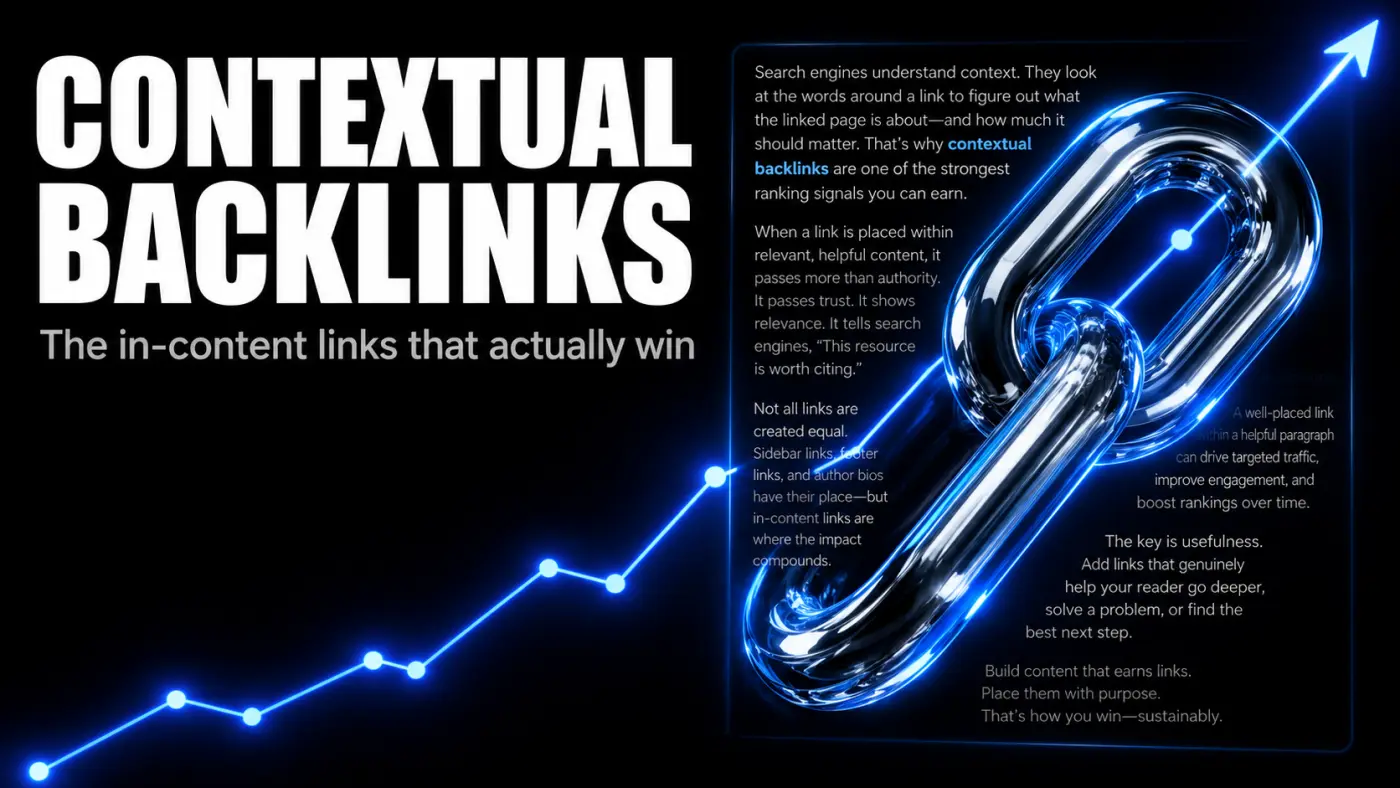
Contextual Backlinks: What They Are, Why They Win, and How To Earn Them
A contextual backlink sits inside the body of an article, surrounded by relevant text, not in a footer or author bio. That placement is what gives it weight. Here is what contextual backlinks are, what makes one high quality, how to earn them, and how to spot the cheap fakes.
- Link Building
 Bart Magera12 min read
What Is White Hat Link Building? Techniques That Work in 2026
The Problem: Why Most Link Building Fails Your SEO You wrote great content. It’s relevant. It’s useful. It even has infographics. But guess what? Crickets. Nobody’s linking. Google’s not ranking. And your “ultimate guide” is buried somewhere on page 7 under a recipe blog and a…
- Link Building
 Bart Magera10 min read
Tiered Link Building: How It Works and How To Do It Safely
Tiered link building layers weaker links behind your strongest ones to pass more authority to your money pages. Here is how the pyramid works, how to build one, which links are worth tiering, the risk SpamBrain introduced, and the lower-risk path I use on client sites.