

Linkable Assets: What They Are and How To Build Them
Listen to this article
Browser-native voice. No account required.
Most content earns no links at all. An Ahrefs study of over a billion pages found that 66.31% have zero referring domains. Publishing more of it does not change the math.
A linkable asset is built to beat that average on purpose. It gives other writers a concrete reason to cite you, and earning the link is the whole point of the page. This is what to build when the goal is links, and how to decide which asset is worth the budget. It is the content engine behind the complete link building workflow.
What Is a Linkable Asset?
A linkable asset is a piece of content created specifically to attract editorial links. It gives writers, journalists, and site owners a reason to reference it: original data, a free tool, a definitive guide, or a visual they can cite. The goal is the link itself, not a direct sale, which is what separates it from ordinary marketing content.
Think of it as bait with substance. A product page wants a purchase. A blog post wants a reader. A linkable asset wants a citation, and everything about how it is built serves that one outcome.
Why Do Most Pages Earn No Links?
Most pages earn no links because they give nobody a reason to link. They restate what already ranks, add no new data, and were written for the brand rather than for the person who might cite them. The Ahrefs study of over a billion pages is blunt: two-thirds of pages have zero referring domains.
Links are earned by being citable, not by being published. A page becomes citable when it offers something a writer needs and cannot get elsewhere. Publishing another "10 tips" post and hoping for links is a strategy the way buying lottery tickets is a retirement plan.
What Makes An Asset Linkable
Five traits separate an asset that earns links from content that just exists. Each one answers the same question from a different angle: why would another writer point their readers here?
Original. It contains data, a tool, or a take that exists nowhere else, so citing you is the only way to use it.
Reference-worthy. It settles a question other writers keep needing to answer, which makes linking to you easier than re-explaining it.
Evergreen. It stays accurate for years instead of spiking once on a news cycle and dying.
Easy to cite. The stat, chart, or definition is pullable in one line, so a journalist can lift it without effort.
Visual where it helps. A clean chart or map gets embedded, and an embed usually carries a link.
An asset that misses these is just a post. The traits are also the brief: before building anything, check that it can plausibly clear all five, because the ones that miss are the ones that earn nothing.
The Six Linkable Asset Types
Six types cover almost every campaign Mojo Links runs. They are not equal: they differ sharply in production cost and in how reliably they earn links. The pick depends on the niche, the budget, and what competitors have not already done.
Original Data and Research
A study built on data only you have is the strongest asset there is. A survey, an analysis of your own platform numbers, or an industry benchmark gives every writer in the niche a stat to cite, and each citation is a link. It is the most expensive type to produce and the one that earns links for years.
Source it from your own platform, a survey of your audience, or a fresh analysis of public data nobody has framed yet. The angle matters more than the sample size. One surprising, well-framed number outperforms a vast dataset of the expected.
Free Tools and Calculators
A genuinely useful free tool earns links every time someone recommends it. A mortgage calculator, a margin estimator, a checker that does one job well. It costs real development time, but a good tool keeps attracting links passively long after launch, which is rare for any other asset.
The trick is scoping it small. One calculation done cleanly beats a bloated suite nobody finishes building, and a focused tool is easier for a writer to describe in the sentence where they link to it.
Definitive Guides
A guide that is clearly the most complete resource on a specific topic becomes the default thing people link to when they mention it. The bar is high; "definitive" means it answers the question better than the current top result, not just at greater length. Done right, it doubles as a ranking page and a link magnet.
Visual and Interactive Assets
Infographics, maps, and interactive charts earn links through embeds. Someone uses your visual in their article, and the embed code carries a link back. The format matters less than the data behind it; a beautiful graphic of obvious facts earns nothing, while a plain chart of a surprising number gets picked up.
Contrarian and Opinion Pieces
A well-argued take that pushes against the consensus earns links from everyone who wants to agree or argue. This is the cheapest asset to produce, because it is writing rather than research, but it lives or dies on credibility. A contrarian post from a known operator gets cited; the same words from nobody get ignored.
Glossaries and Stat Pages
A roundup of statistics or a clear glossary for a niche becomes a reference writers return to. "X statistics for 2026" pages earn links because journalists need a number and a source fast. They are low effort and low ceiling, but they fill a profile reliably while the bigger assets are in production. Plenty of writers will quote the number and name you without linking, so sweep for unlinked mentions afterward.
How To Choose Which To Build
The choice is a match between the site and the asset, not a ranking of favorites. Look at four things: the niche, the budget, who would actually cite it, and the competitive gap. A B2B SaaS with proprietary usage data should build a study. A local service business should not. What moves the needle for that local business is building local links: citations and community coverage, not studies.
Budget sets the floor. A data study or a custom tool needs real money and weeks of work; a contrarian piece or a stats page needs neither. Shipping one asset that clears all five traits beats three that half-clear them. The competitive gap breaks ties: if every competitor already has a calculator, build the study nobody has.
A Worked Example
Say a fintech brand arrives with a real budget and a competitive niche where every rival already publishes guides and calculators. A seventh guide earns nothing. The gap is data, and the brand is sitting on it.
So the asset to build is a benchmark study from their anonymized platform numbers: average approval times, rate spreads, whatever they uniquely measure. It is the most expensive asset on the menu, but it is the one nobody else can copy, and every finance writer who needs that stat now has exactly one place to cite. Then promote it. That sequence, gap to data to promotion, is the whole decision in miniature.
Effort vs Link Potential
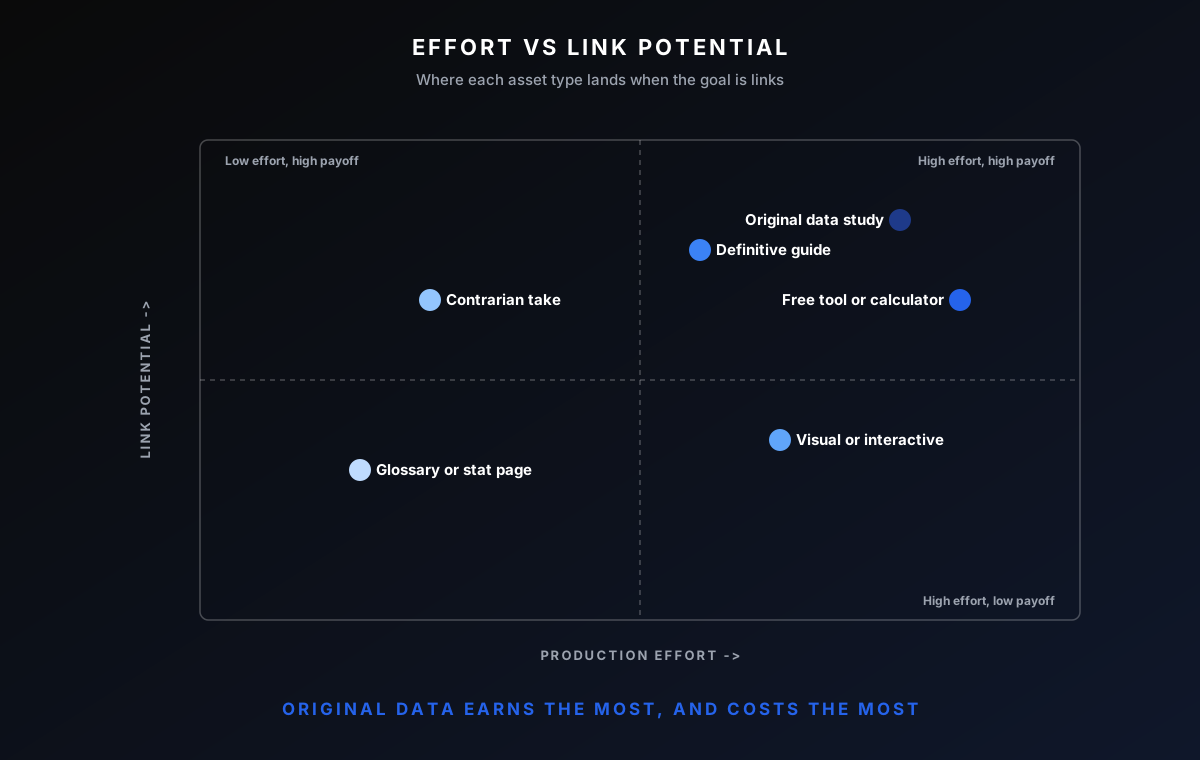
Every asset type sits somewhere on a curve of effort against link potential. Original data and custom tools live in the high-effort, high-payoff corner. Glossaries and stat pages sit low on both. Contrarian pieces are the outlier: low effort, surprisingly high potential, as long as the byline carries weight.
The mistake is assuming more effort always means more links. It does not. A cheap contrarian post from a credible operator can outperform an expensive infographic of obvious facts. Spend the budget where the data, not the production polish, is the thing being cited.
The Asset Is Half The Job
A linkable asset earns nothing until people know it exists. Building it is step two of five: research, build, seed, promote, compound. The promotion is link-building outreach, and for bigger assets it is digital PR.
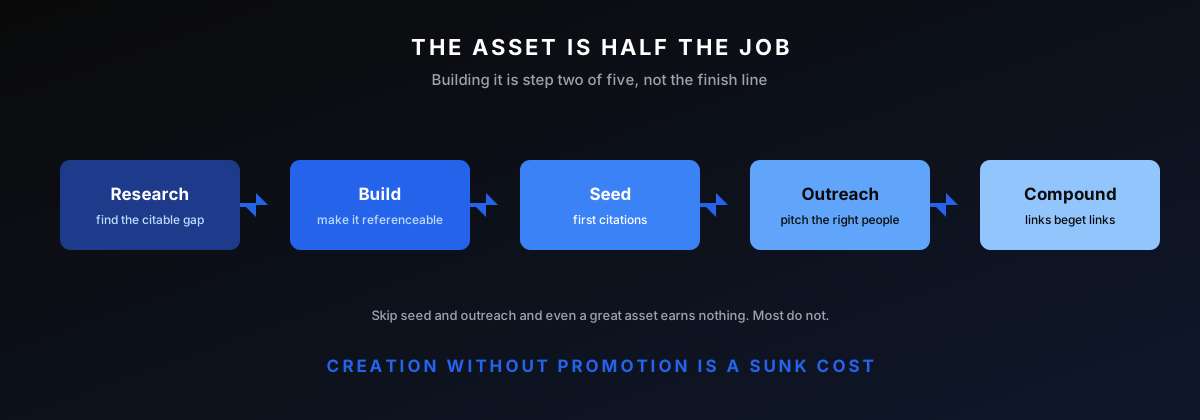
This is where most asset projects fail. A team spends a month on a study, publishes it, and waits. Nothing happens, because nobody pitched it. The skyscraper technique is really an asset paired with outreach, and the outreach is the part that does the work. Creation without promotion is a sunk cost.
Proof from Real Campaigns
Assets plus promotion compound. For bspin.io, a full SEO engagement in a brutally competitive vertical, reference-worthy content paired with steady outreach built a profile of roughly 200 referring links that drives 9,167 organic visits a month against an estimated $17,330 in monthly traffic value. The links came to content built to be cited, then actively pitched.
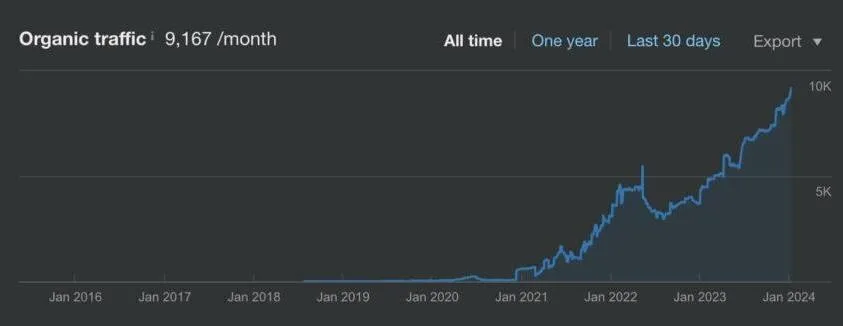
The pattern is always the same. A page that gives writers something to cite, promoted to the people who would cite it, earns links that stay because the citation was genuine. A page built for the brand and left to fend for itself earns the zero-backlink average. Some of those earned links later vanish when pages move, which is where link reclamation recovers the value.
Common Mistakes
Building for the brand is the big one. An asset stuffed with product mentions reads as marketing, and writers do not cite marketing. The asset has to make someone else's article better before it does anything for you. Google's guidance on people-first content points the same way: build for the reader, and the links follow.
The other three repeat constantly. No original angle, so there is nothing to cite. No promotion, so a good asset dies unseen. And chasing virality over reference value, which buys a traffic spike and a handful of links that vanish in a month. An asset that is still being cited a year later beats one that trended for a day.
Linkable Assets vs Link Bait
Link bait and linkable asset get used interchangeably, but they are not the same. Link bait optimizes for attention: a shocking claim, a hot take, a stunt that earns a burst of links and then fades. A linkable asset optimizes for reference value, the kind a writer cites because it is genuinely the best source.
The best assets do both: attention on launch, reference value for years. But if you have to choose, build for reference value, because evergreen citations compound while attention spikes decay. That choice is the difference between a profile that grows and one that resets every quarter, and it ties directly into how Mojo Links runs managed link campaigns.
Frequently Asked Questions
What Is The Best Type of Linkable Asset?
Original data, when you can produce it. A study built on numbers only you have gives every writer in the niche something to cite, and each citation is a link that lasts. It is the most expensive type to build, but it has the highest and longest-lasting link potential of any asset.
How Much Does a Linkable Asset Cost To Build?
It ranges widely by type. A contrarian piece or a stats page costs little more than writing time. A definitive guide costs more in research. An original study or a custom tool can run into real development and data budgets. Match the spend to the site's competitive gap, not to a fixed figure.
How Many Links Should An Asset Earn?
There is no fixed number, and any agency that promises one is guessing. A strong asset in a competitive niche, promoted properly, can earn dozens of referring domains over its life. A glossary might earn a steady trickle. Judge by referring domains over time, not a launch-week spike.
Do Linkable Assets Still Work in 2026?
Yes, more than ever. With two-thirds of pages earning zero links, anything genuinely citable stands out further. AI Overviews and language models also favor authoritative, original sources, so an asset that earns links also tends to earn AI citations. The bar for "citable" is just higher than it used to be.
How Do I Promote a Linkable Asset?
Through targeted outreach to the people who would cite it, plus digital PR for the bigger assets. Seed the first citations, then pitch journalists, bloggers, and resource-page editors who cover the topic. An asset with no promotion plan is half a project, and the half that earns nothing.
Want Mojo Links To Build Your Linkable Asset?
Building an asset that earns links, and then actually earning them, is a different job than publishing a blog post. We research, build, and promote linkable assets for clients, with placements backed by a 120-day replacement guarantee. If you want a read on which asset your niche is missing, start with a free video walkthrough.

About Bart Magera
Bart Magera is the founder of Mojo Links. Ten years across YMYL verticals (legal, medical, finance, supplements, crypto, gambling). Trained under Koray Tuğberk Gübür's Topical Authority framework. Author of two SEO books and international speaker.
Want this kind of analysis on your site?
Get a free video walkthrough within 48 hours covering technical health, backlinks, content gaps, and AI visibility.
Related posts
Keep reading on adjacent topics.
- Link Building
 Bart Magera10 min read
Contextual Backlinks: What They Are, Why They Win, and How To Earn Them
A contextual backlink sits inside the body of an article, surrounded by relevant text, not in a footer or author bio. That placement is what gives it weight. Here is what contextual backlinks are, what makes one high quality, how to earn them, and how to spot the cheap fakes.
- Link Building
 Bart Magera12 min read
What Is White Hat Link Building? Techniques That Work in 2026
The Problem: Why Most Link Building Fails Your SEO You wrote great content. It’s relevant. It’s useful. It even has infographics. But guess what? Crickets. Nobody’s linking. Google’s not ranking. And your “ultimate guide” is buried somewhere on page 7 under a recipe blog and a…
- Link Building
 Bart Magera10 min read
Tiered Link Building: How It Works and How To Do It Safely
Tiered link building layers weaker links behind your strongest ones to pass more authority to your money pages. Here is how the pyramid works, how to build one, which links are worth tiering, the risk SpamBrain introduced, and the lower-risk path I use on client sites.