

Google Manual Action Recovery: Diagnosis To Reinstatement
Listen to this article
Browser-native voice. No account required.
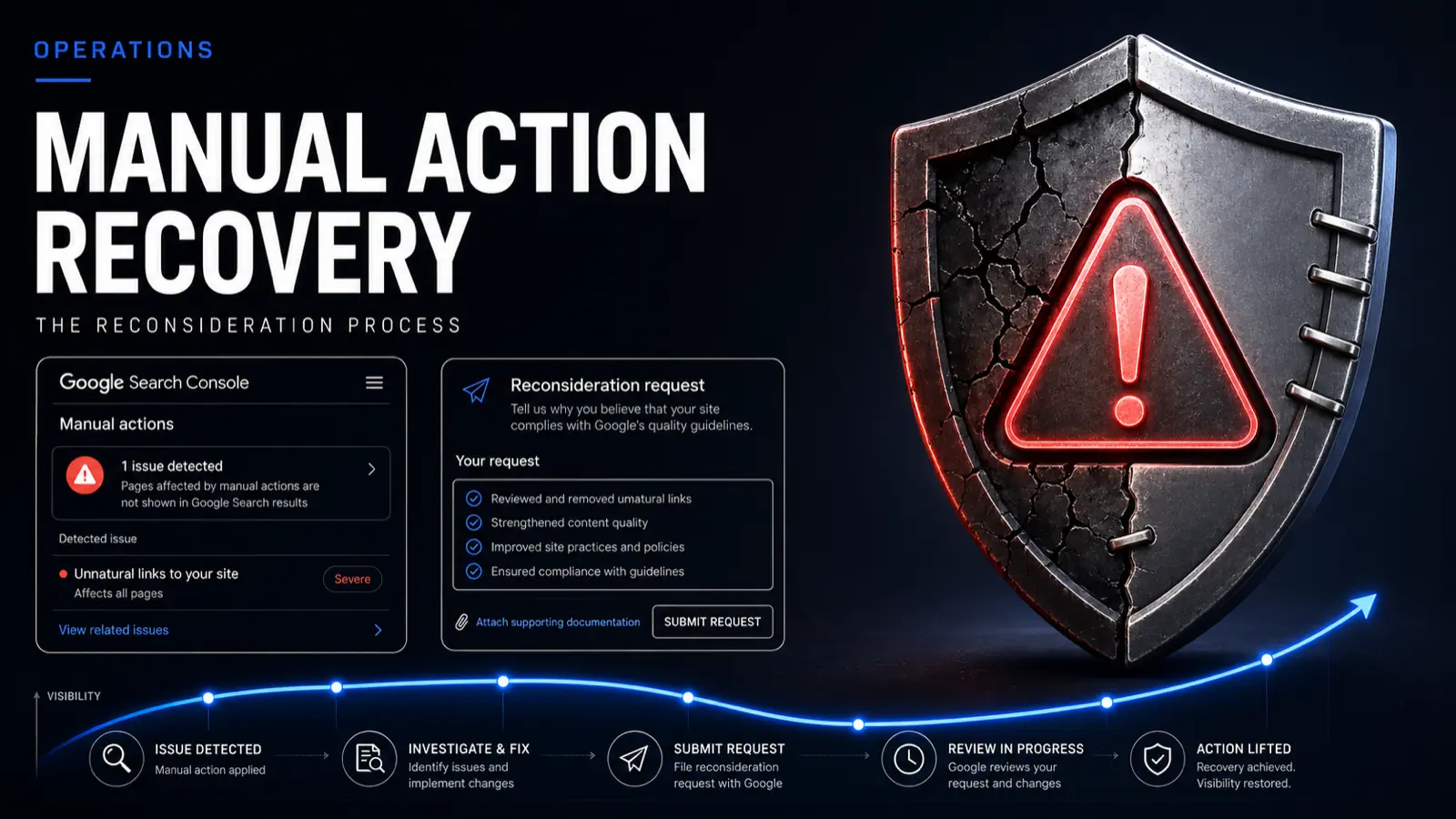
A manual action can take a site's organic visibility down overnight, and unlike a quiet ranking slip, it comes with a notice telling you a human at Google decided your site broke the rules. Every day it sits unfixed is traffic and revenue handed to the competitor ranking in your place.
The good news is that a manual action is one of the few penalties you can actively reverse. This is the process to recover one, from confirming it in Search Console to writing the reconsideration request that gets it lifted. It sits inside the wider link building operations playbook, because most manual actions trace back to links.
What Is a Google Manual Action?
A Google manual action is a penalty applied by a human reviewer, not an algorithm, when a site violates Google's spam policies. It appears as a notice in the Search Console Manual Actions report, suppresses or deindexes the affected pages, and stays in place until you fix the violation and pass a reconsideration request.
It is the one penalty Google tells you about directly. A reviewer looked at your site, matched it to a specific policy violation, and applied the action by hand. Google documents the full list in its manual actions report.
The action can be site-wide, hitting your whole domain, or partial, hitting only specific pages or sections. Partial actions are easy to miss, because most of your traffic looks fine while one section quietly disappears from search.
How Is a Manual Penalty Different from An Algorithmic One?
A manual penalty comes with a Search Console notice and is lifted by a reconsideration request after you fix the violation. An algorithmic suppression has no notice, no reviewer, and no reconsideration request; it lifts on its own once Google recrawls an improved site and the next update runs. The recovery paths are completely different.
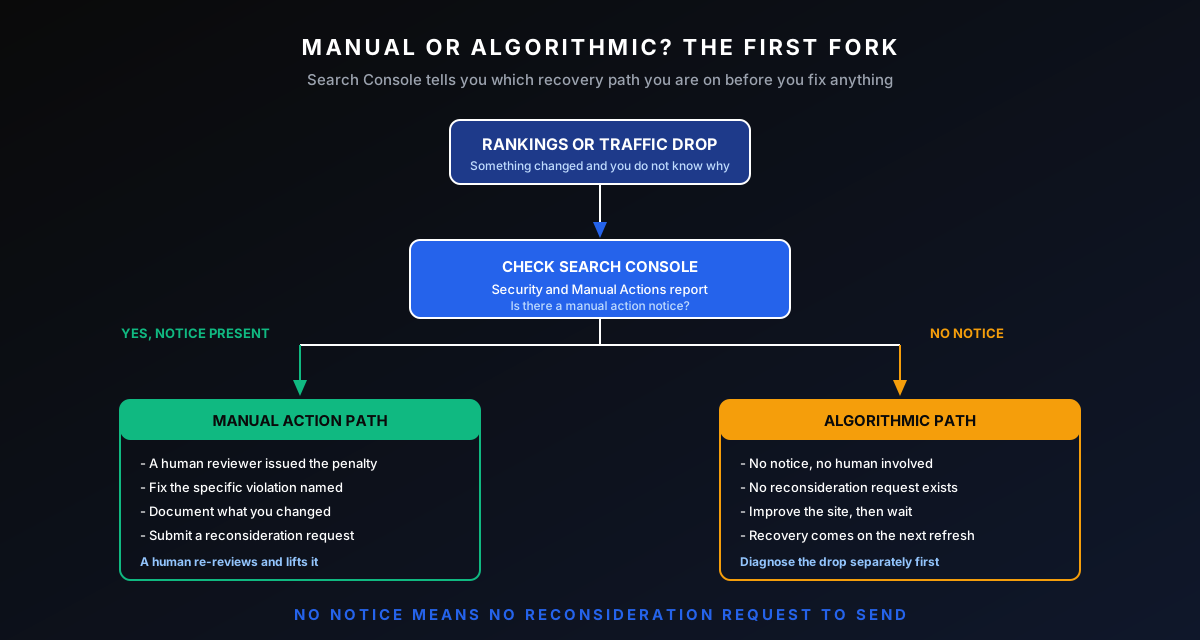
This fork decides everything you do next, so it comes first. If there is no notice in the Manual Actions report, you are not dealing with a manual action, and chasing a reconsideration request wastes time. Run the 60-minute traffic-drop triage to find the real cause instead.
When the drop is algorithmic, recovery follows a different cadence entirely, which is covered in the algorithm update recovery playbook. The rest of this guide assumes you have confirmed a manual action notice.
Manual Action Types
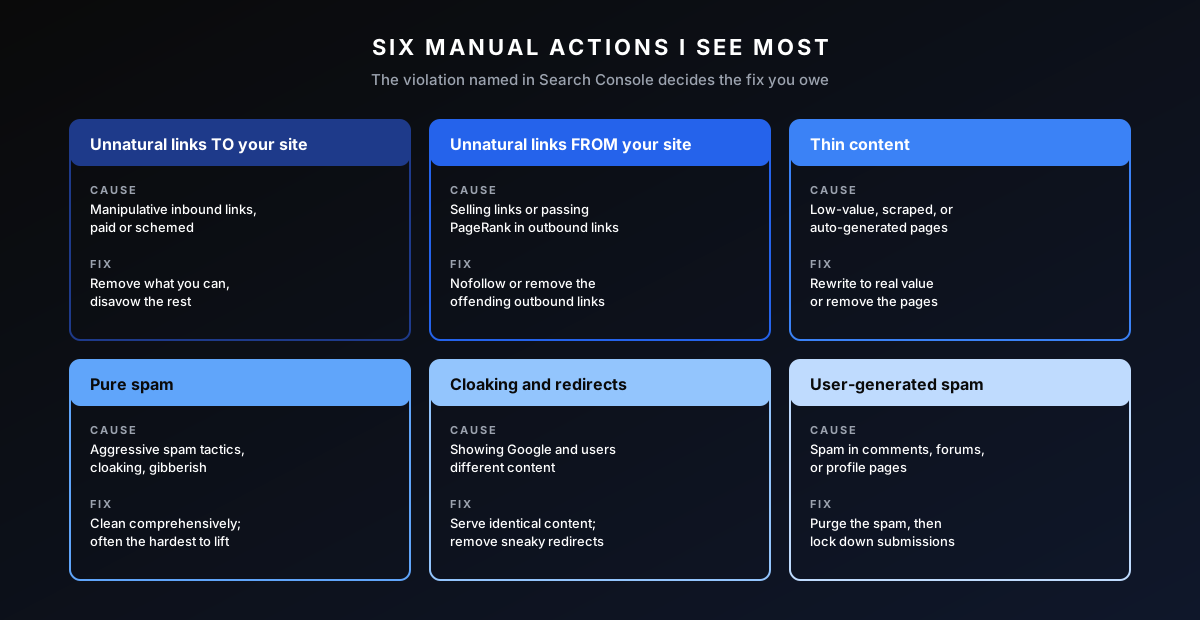
The notice names the exact violation, and that name decides the fix you owe. These are the manual actions that appear most often in recovery work.
Unnatural Links To Your Site
This is the most common one: Google found inbound links it judged manipulative, usually paid links, link-scheme placements, or low-quality bulk links. The fix is to remove what you can and disavow the rest, which is covered in detail in the disavow backlinks guide.
Sometimes the cause is not even your own doing. A competitor pointing spam at your domain can trigger this, which is where reading the pattern of an attack matters before you clean.
Unnatural Links from Your Site
This action targets outbound links, when a site sells links or passes ranking signals through paid or schemed placements. The fix is to find the offending outbound links and either remove them or add the correct nofollow or sponsored attribution.
Thin and Spammy Content
Thin content, pure spam, and scraped or auto-generated pages all draw their own manual actions. The fix is to rewrite the pages into something genuinely useful, or remove them, then make sure nothing else on the site fits the same description.
Cloaking and Sneaky Redirects
Cloaking means showing Google one thing and users another, and sneaky redirects send visitors somewhere they did not expect. Both are serious violations. The fix is to serve identical content to crawlers and users, and strip out any redirect that misleads.
The Diagnostic Sequence
Before fixing anything, confirm what you are dealing with and how far it reaches. Skipping this is how people fix the wrong thing and submit a reconsideration request that fails.
Confirming The Manual Action
Open Search Console, go to Security and Manual Actions, then Manual Actions. If there is a notice, it names the violation type and whether it is site-wide or partial. That notice is the brief for everything that follows.
If the report says No issues detected, there is no manual action, full stop. The drop is algorithmic or technical, and the recovery path changes completely.
Whether the action is site-wide or partial also changes the urgency and approach. A site-wide action against the whole domain is an emergency. A partial action against one section is contained, but it still has to be fixed completely before the request will pass.
Scoping The Damage
Next, map exactly what is affected. For a links action, that means pulling the full backlink profile and flagging every manipulative link. For a content action, it means listing every page that fits the violation. A deep analysis surfaces the pages and patterns that a quick look misses.
The output of this step is a complete list of everything at fault. If that list is incomplete, the fix will be too, and a partial fix is the single most common reason a reconsideration request comes back rejected.
The Recovery Process
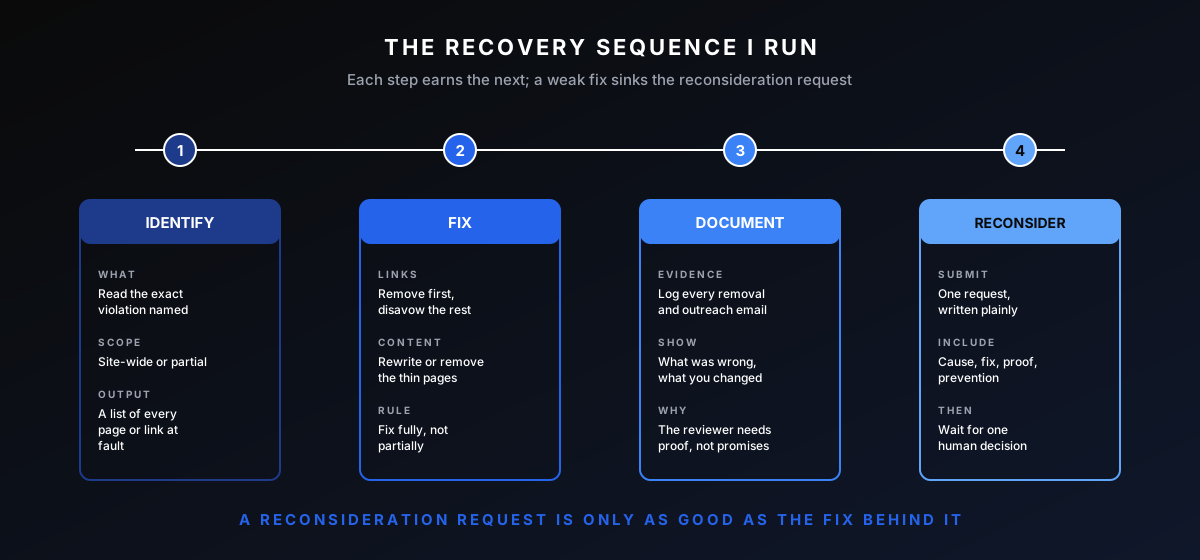
Recovery runs in a deliberate order: identify, fix, document, then submit. Each step earns the next, and a weak fix sinks the reconsideration request no matter how well it is written.
Fixing Unnatural Links
For a links action, removal comes before disavowal. Reach out to remove the worst manipulative links at the source where you can, then disavow whatever cannot be removed. The mechanics of building the disavow file live in the disavow backlinks walkthrough, and the wider sweep is the full cleanup workflow.
Knowing which links to target is its own skill. Score the profile the way you would in any toxic backlink review, so the cleanup removes the genuinely harmful links and leaves the legitimate ones earning their keep.
Fixing Content Violations
For a content action, the fix is to bring every flagged page up to a standard a reviewer would accept, or to remove it. Half-measures do not pass. A reviewer who finds one remaining thin page assumes the rest of the cleanup is just as shallow.
The standard to clear is Google's own. Read the relevant policy for the exact violation named in the report, then fix against that definition rather than a guess at what counts as thin. Auto-generated, scraped, and doorway pages each have a precise meaning Google spells out.
Removal is a legitimate fix, not a defeat. A page that cannot be made genuinely useful is better gone than rewritten into something equally hollow, and a smaller site of real pages recovers faster than a large one still padded with filler.
Documenting The Cleanup
As you work, log everything: every link removed, every outreach email sent asking for removal, every page rewritten or deleted. This log becomes the evidence in the reconsideration request. A reviewer wants proof of effort, not a claim that the problem is gone.
The Reconsideration Request
The reconsideration request is the part nothing else on the site covers, and the part people get wrong most. It is a short, honest account of what was wrong, what you did about it, and why it will not happen again.
What To Include
You submit these through Google's reconsideration request process, and a request that gets accepted has four parts. State the violation plainly, describe the specific fix in detail, attach the evidence from your cleanup log, and explain the safeguard that prevents a repeat. No excuses, no blaming Google, no padding.
The cause. Name the violation honestly, including how it happened.
The fix. Detail exactly what you removed, disavowed, rewrote, or deleted.
The proof. Link to the documentation: removed links, outreach attempts, the disavow file.
The prevention. Explain what you changed so it cannot recur.
Tone matters more than people expect. The reviewer reads dozens of these, so a request that is specific, calm, and backed by evidence stands out against the defensive ones. Write it as a factual account, not a plea.
What Gets a Request Rejected
Most rejections come down to an incomplete fix, a request that argues instead of demonstrating, or a disavow file submitted in place of real removal effort. Submit once, get it right, and do not resubmit the same request faster hoping for a different reviewer.
A rejection is not the end, but it costs time. When one comes back, Google usually points at what is still wrong, often a set of links you missed or pages you did not fully fix. Treat that as the next work order: clean the remainder, add it to the log, and resubmit only when the fix is genuinely complete.
Recovery Timeline
A reconsideration request is reviewed by a human, so it takes time, generally measured in days to a few weeks depending on the violation and the queue. Links actions often take longer to review than content actions, because verifying a cleaned link profile is more involved.
Recovery is also not always instant once the action is lifted. The penalty going away restores eligibility to rank, but the rankings themselves can take time to settle back, and a site that leaned on manipulative links may not return to exactly where it was. That is the honest trade: you recover the site, not necessarily the shortcut that caused the problem.
Proof from Real Cleanup Work
The most useful reference point I have for large-scale link cleanup is a defensive engagement I led on Regenexx during my time at Paradox Marketing, running from August 2024 to August 2025. The brief was defensive, not a manual-action recovery, but the link-cleanup mechanics are identical.
I disavowed roughly 7,000 toxic backlinks, pruned outdated and low-value pages, and cleaned up the crawl. Traffic stayed flat through February 2025, then broke out in March 2025 and kept compounding past the end of the engagement.
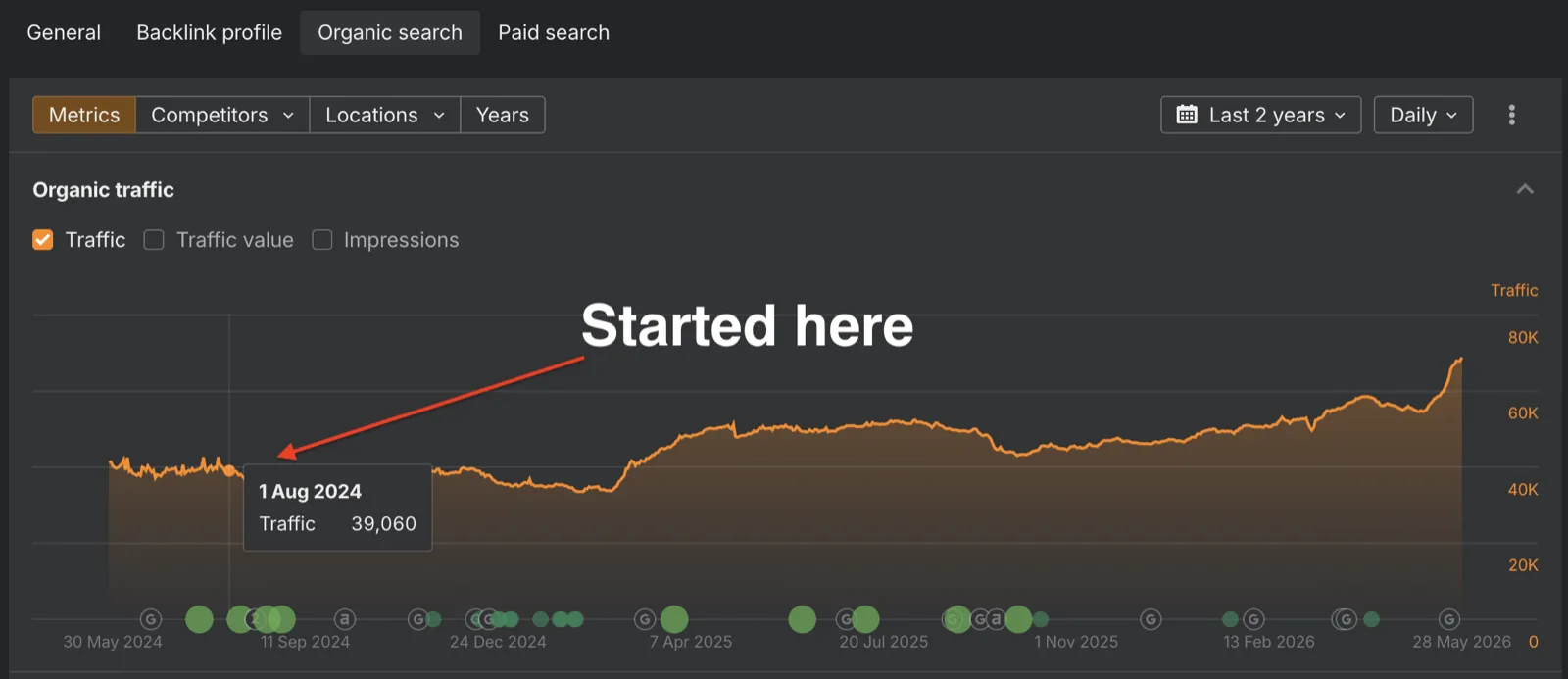
Regenexx organic traffic, Ahrefs. A large-scale disavow and defensive cleanup across the August 2024 to August 2025 engagement, with the breakout following months after the cleanup work landed.
The lesson that transfers directly to manual-action recovery is scale and patience. Cleaning a polluted link profile thoroughly is the work that earns the result, and the payoff lands after the cleanup, not the day you finish it.
Common Mistakes
Most failed recoveries repeat the same handful of errors, and each one is avoidable.
Fixing partially. Cleaning most of the bad links but leaving a few is the top reason a request fails.
Disavowing instead of removing. A disavow file alone reads as low effort; remove at the source first, then disavow the remainder.
Arguing in the request. A reviewer wants evidence of a fix, not a case for why the penalty was unfair.
Resubmitting too fast. Firing off another request hours later, with nothing new fixed, just burns goodwill.
Confusing manual with algorithmic. Writing a reconsideration request when there is no notice means writing into a void.
Preventing The Next Penalty
The cheapest manual action is the one you never get. Once recovered, keep the site clean by monitoring its backlink profile for sudden spam, vetting every new link against real quality criteria, and watching for the kind of negative SEO attacks that point manipulative links at a domain you do not control.
The discipline is the same one that earns rankings honestly in the first place: build links that would survive a reviewer reading them one by one, and there is nothing for a manual action to catch.
Frequently Asked Questions
How Long Does Manual Action Recovery Take?
A reconsideration request is reviewed by a human, so it usually takes days to a few weeks depending on the violation type and Google's queue. Links actions tend to take longer than content actions. Rankings can then take additional time to settle once the action is lifted.
Can I Recover Without a Reconsideration Request?
Not for a manual action. The penalty was applied by a human and only a human review lifts it, which means a reconsideration request is mandatory. Only algorithmic suppressions recover without one, because no reviewer was ever involved.
Will My Rankings Come Back Fully?
Sometimes, but not always. Lifting the action restores your eligibility to rank, yet a site that depended on manipulative links may not return to its old positions, because the signals that propped it up are gone. You recover the site, not necessarily the shortcut.
How Do I Know If I Have a Manual Penalty?
Open Search Console, go to Security and Manual Actions, then Manual Actions. A notice there, naming a violation, confirms a manual penalty. If it says no issues detected, your drop is algorithmic or technical, and the fix is different.
Should I Disavow or Remove Links First?
Remove first, disavow second. Reaching out to remove manipulative links at the source shows genuine effort, which reviewers weigh heavily. Disavow only the links you cannot get removed, and submit the disavow file as a backstop, not as your whole cleanup. When you build that file, the free disavow.txt tool formats it correctly for Search Console.
Want Mojo Links To Run Your Penalty Recovery?
A manual action is recoverable, but the cleanup has to be complete and the reconsideration request has to prove it. That is exactly the work we run through Google penalty recovery. If you want a read on what triggered the action and how deep the cleanup needs to go, start with a free SEO audit and we will map the path back.
Fix the violation completely, prove it plainly, and the same penalty that wiped your visibility becomes the one you reverse. That is the part we run for clients every month.

About Bart Magera
Bart Magera is the founder of Mojo Links. Ten years across YMYL verticals (legal, medical, finance, supplements, crypto, gambling). Trained under Koray Tuğberk Gübür's Topical Authority framework. Author of two SEO books and international speaker.
Want this kind of analysis on your site?
Get a free video walkthrough within 48 hours covering technical health, backlinks, content gaps, and AI visibility.
Related posts
Keep reading on adjacent topics.
- Link Building
 Bart Magera10 min read
Contextual Backlinks: What They Are, Why They Win, and How To Earn Them
A contextual backlink sits inside the body of an article, surrounded by relevant text, not in a footer or author bio. That placement is what gives it weight. Here is what contextual backlinks are, what makes one high quality, how to earn them, and how to spot the cheap fakes.
- Link Building
 Bart Magera12 min read
What Is White Hat Link Building? Techniques That Work in 2026
The Problem: Why Most Link Building Fails Your SEO You wrote great content. It’s relevant. It’s useful. It even has infographics. But guess what? Crickets. Nobody’s linking. Google’s not ranking. And your “ultimate guide” is buried somewhere on page 7 under a recipe blog and a…
- Link Building
 Bart Magera10 min read
Tiered Link Building: How It Works and How To Do It Safely
Tiered link building layers weaker links behind your strongest ones to pass more authority to your money pages. Here is how the pyramid works, how to build one, which links are worth tiering, the risk SpamBrain introduced, and the lower-risk path I use on client sites.