

Negative SEO: How To Detect Link-Based Attacks and Respond
Listen to this article
Browser-native voice. No account required.
Negative SEO is rare. Most operators who panic about it have a different problem. But it happens, the response window matters, and the workflow below comes from real remediation work. Mojo Links's playbook was built around the Regenexx.com engagement at Paradox Marketing, where I disavowed roughly 7,000 toxic backlinks against a YMYL/medical site starting August 2024. Mojo Links has also remediated one adjacent attack - a JavaScript-injection compromise that caused thousands of spam URLs to get indexed - which is a different attack vector with a different recovery workflow. This post focuses on the link-based response. Skip the panic, run the diagnostic.
What Is Negative SEO?
Negative SEO is a deliberate attempt to damage a competitor's search rankings by manipulating their backlink profile or other ranking signals from outside their control. The most common form is toxic backlink injection: someone points hundreds or thousands of low-quality, irrelevant, or clearly-spammy links at the target site in a short window, trying to trigger algorithmic suppression or a manual action.
Negative SEO sits adjacent to the toxic backlinks identification framework but starts from a different premise. Toxic backlinks usually accumulate organically; negative SEO is intentional and adversarial.
How Common Is Negative SEO in 2026?
Less common than most operators fear. Google's 2023-2024 spam-detection updates dramatically improved the system's ability to ignore obvious negative SEO attempts. Most attacks that worked in 2018 are now algorithmically discounted within 2-4 weeks of arrival, before they meaningfully affect rankings. The Ahrefs guide to detecting and deflecting negative SEO attacks lands in the same place: detection and a disciplined response, not a disavow reflex.
The exceptions: sophisticated attacks that mix toxic links with anchor-text over-optimisation, target a specific competitive keyword, and coincide with other ranking-signal damage (content scraping, fake reviews, hacked-site link injections). These multi-vector attacks are still effective in regulated verticals and high-value commercial niches. The Regenexx engagement was one - roughly 7,000 toxic backlinks paired with anchor concentration against a YMYL/medical site.
What Are The Typical Negative SEO Attack Vectors?
Four vectors account for most documented attacks.
Vector 1: Toxic Backlink Injection
The classic playbook. Attacker points 500-5,000 backlinks from spammy domains, PBN networks, or auto-generated content sites at the target. Attacks usually target a specific page (the competitor's top-ranking commercial page) rather than the whole site. The link signal is designed to look like manipulated link-building by the target.
Vector 2: over-Optimised Anchor Text Injection
A variation of vector 1, focused specifically on exact-match commercial anchors. The attacker points 50-200 links with anchors like "best [target keyword]" at the same destination. The anchor concentration triggers Google's over-optimisation filter even at modest link volumes.
Vector 3: Hacked-Site Link Injections
Less common but more dangerous. Attacker compromises a high-DR third-party site, injects hidden links to the target with manipulative anchor text. The links carry real authority because the host site is legitimate, but they trigger spam-detection because the placement and anchor pattern are unnatural.
Vector 4: Fake Reviews and Social Signal Manipulation
Not strictly a link attack but often combined with one. Negative reviews, fake business listings, social-platform reports of brand misconduct. These do not directly damage rankings but can trigger trust-flow downgrades when combined with other signals. The defensive framework connects to the broader cleanup workflow.
How Do You Detect a Negative SEO Attack?
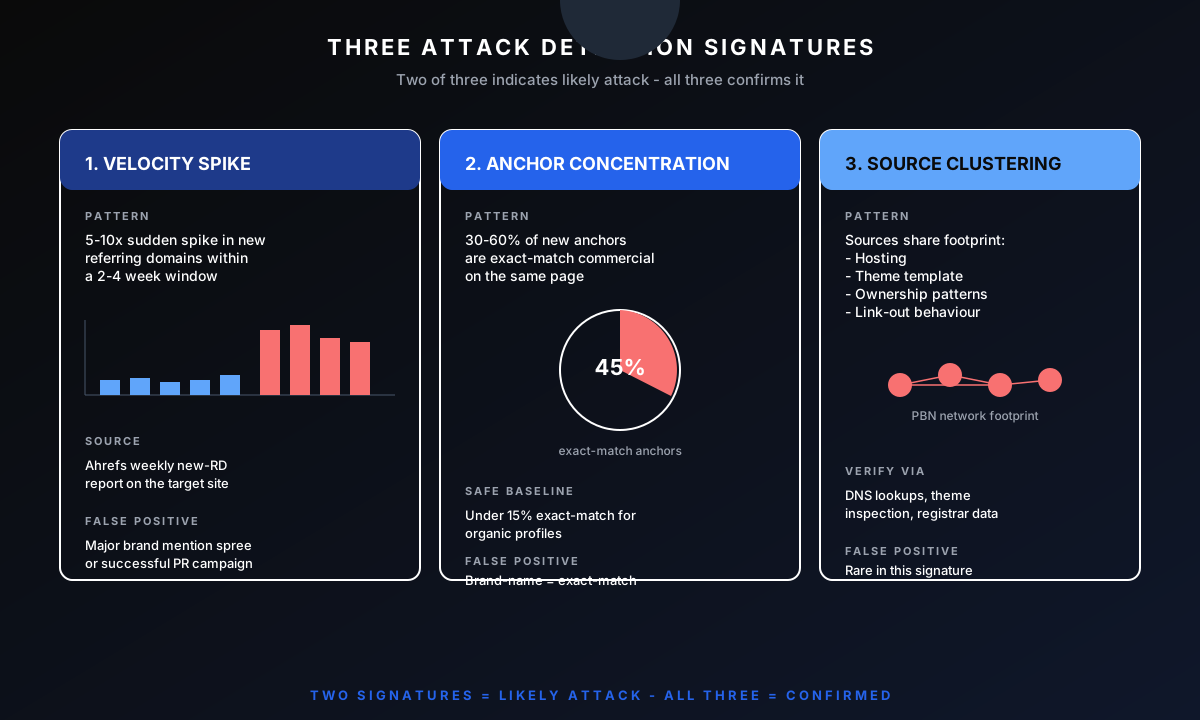
Three detection signatures together indicate an attack rather than organic profile drift.
Signature 1: Sudden Link Influx Velocity
A 5-10x spike in new referring domains within a 2-4 week window, where the baseline acquisition is zero or low. Organic link growth is rarely bursty; deliberate attacks are. Pull weekly RD counts from Ahrefs to surface velocity anomalies.
Signature 2: Anchor Text Concentration
30-60% of new anchors are exact-match commercial keywords pointing at a single page. Organic link profiles never produce this concentration. Manipulated link-building by the site owner produces it sometimes; attacks produce it almost always.
Signature 3: Source Quality Clustering
New sources cluster around a small number of identifiable footprint patterns (shared hosting, shared theme template, shared ownership, identical link-out behaviour). Organic acquisition produces diverse sources; attack campaigns reuse the same low-quality inventory.
What Damage Can Negative SEO Actually Cause?
Three realistic damage scenarios.
Algorithmic discount on the targeted page. The page's rankings drop 5-30 positions on the targeted keyword. Recovery takes 8-16 weeks of cleanup plus organic profile dilution from legitimate acquisition.
Site-wide trust signal degradation. Rare but possible when attack volume is sustained over 6+ months. The whole domain's authority gets discounted, not just the targeted page. Recovery requires 6-12 months of comprehensive cleanup and legitimate acquisition.
Manual action from Google. The rarest outcome. Requires the attack to be sophisticated enough that Google's automated systems flag the site for human review. Recovery requires disavow + reconsideration request, documented in the disavow guide.
How Do You Respond To a Confirmed Negative SEO Attack?
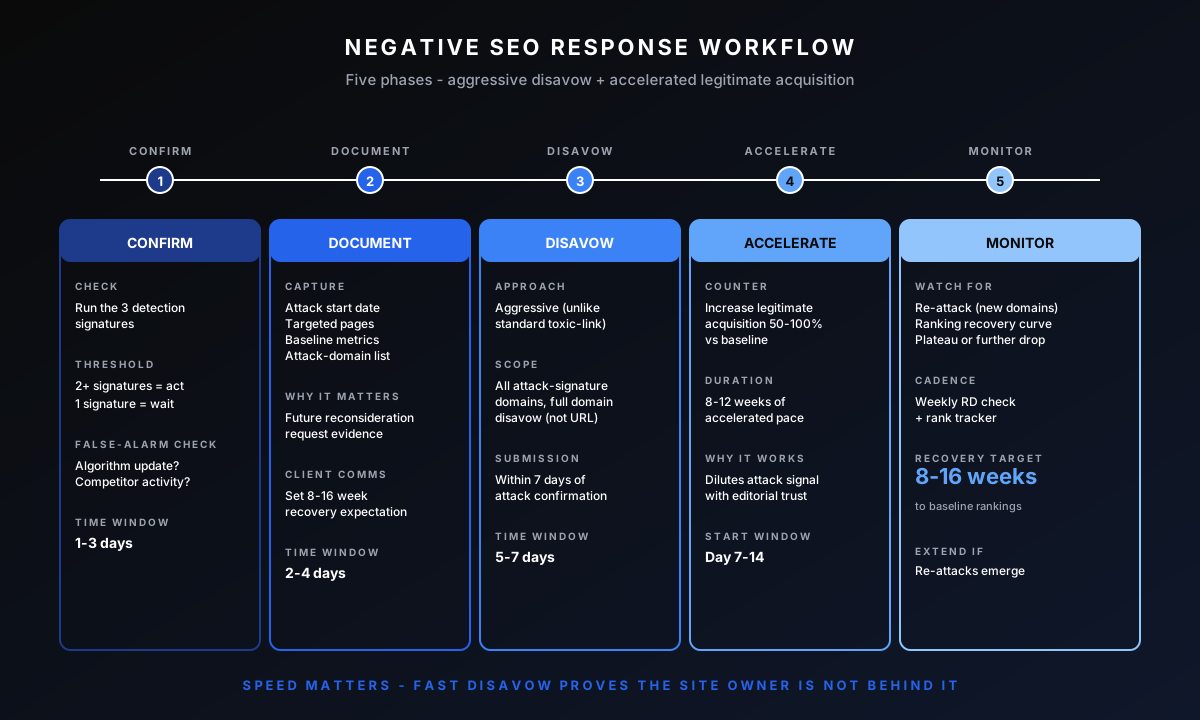
Five-phase response workflow.
Phase 1: Confirm The Attack Signature
Run the three detection signatures above. Two of three indicate likely attack; all three indicate confirmed attack. Single signatures are often false alarms (organic anchor concentration from a major brand mention spree, or a competitor's legitimate campaign you misidentified).
Phase 2: Document The Timeline
Establish when the attack started, which pages are targeted, what the baseline metrics looked like 30 days before the attack. Documentation matters for any future reconsideration request and for stakeholder communication during the recovery window.
Phase 3: Aggressive Disavow
Unlike standard toxic-link remediation (where the rule is to disavow sparingly), negative SEO response justifies aggressive disavow. Add all attack-signature domains to the disavow file within 7 days of detection. The fast-response disavow signals to Google that the site owner is not behind the manipulation. The free disavow file generator turns the attack-signature domains into an upload-ready file in seconds, which is the whole point when speed matters.
Phase 4: Accelerate Legitimate Acquisition
Counter-acquisition with high-quality editorial backlinks dilutes the attack signal. Accelerate legitimate placement velocity during attack response. The combination of aggressive disavow plus accelerated legitimate acquisition is what produces recovery.
Phase 5: Monitor for Re-Attack
Negative SEO attackers sometimes return with new domains after the first wave gets disavowed. Monitor weekly for re-attack signatures across 60-90 days post-initial response. The monitoring uses the same audit framework as standard quarterly profile review.
When Is Something Not Actually Negative SEO?
Three common false alarms.
Audit tools flagging low-quality links as "toxic". Most tool-flagged links are not attack indicators. They are organic low-quality links Google already ignores. Tool-flag-based panic produces over-disavow disasters.
Algorithm-update ranking drops. A core update repositioning the SERP looks like an attack at first glance. The signature is wrong: algorithm updates affect many sites in the same niche; attacks affect one. Diagnostic: check competitors' rankings during the same window.
Legitimate competitor acquisition. When a competitor runs a successful campaign and gains 50 new RDs, your relative ranking can drop without any link attack on your site. Diagnostic: your own RD count is stable; their RD count is climbing.
How Did Mojo Links Develop This Negative SEO Response Framework?
The response workflow above comes from the Regenexx.com engagement at Paradox Marketing, where I disavowed roughly 7,000 toxic backlinks against a YMYL/medical site starting August 2024. Recovery followed a three-phase pattern: initial ranking lift in the first weeks after disavow, a flatline period of several months while Google re-processed the link graph, then a breakout in February 2025 when the legitimate-acquisition layer fully compounded. The total window from disavow submission to compounding rank growth was approximately six months. The playbook standardises that response shape - fast aggressive disavow, parallel legitimate acquisition, patience through the flatline, and re-attack monitoring once recovery begins.
Frequently Asked Questions About Negative SEO
Can You Sue Someone for Negative SEO?
Legally possible in some jurisdictions but operationally rare. Attribution is hard. Cost-benefit usually favours technical remediation over legal action.
How Long Does Negative SEO Take To Damage Rankings?
4-12 weeks for the link signal to fully apply against the targeted page. Damage that appears within 7-14 days of new placements is usually not the new placements - it is something else.
Can Google Detect Negative SEO Automatically?
Most of the time, yes. The 2023-2024 spam updates substantially improved detection. Sophisticated multi-vector attacks still slip through; standard toxic-link injection rarely does.
Should You Disavow Before Damage Appears, Just in Case?
No. Preventive disavow on suspected-but-not-yet-damaging links can hurt rankings (you lose any equity those links were passing if they were not actually attack vectors). Disavow only after confirming the attack signature and observing actual damage.
What Is The Worst Negative SEO Attack You Have Seen?
The Regenexx.com engagement at Paradox Marketing in August 2024 - roughly 7,000 toxic backlinks against a YMYL/medical site, paired with anchor-text concentration on commercial pages. The disavow + accelerated-acquisition response produced a three-phase recovery: initial lift, flatline, then breakout in February 2025. I led the disavow workflow as the senior operator on the Paradox account; the playbook documented here is now standard at Mojo Links.
Want Us To Audit Your Profile for Negative SEO Signatures?
Negative SEO detection is part of every link campaign onboarding audit. If signatures are present we shift the engagement into response mode before standard acquisition. Book a slot to discuss your profile.

About Bart Magera
Bart Magera is the founder of Mojo Links. Ten years across YMYL verticals (legal, medical, finance, supplements, crypto, gambling). Trained under Koray Tuğberk Gübür's Topical Authority framework. Author of two SEO books and international speaker.
Want this kind of analysis on your site?
Get a free video walkthrough within 48 hours covering technical health, backlinks, content gaps, and AI visibility.
Related posts
Keep reading on adjacent topics.
- Link Building
 Bart Magera10 min read
Contextual Backlinks: What They Are, Why They Win, and How To Earn Them
A contextual backlink sits inside the body of an article, surrounded by relevant text, not in a footer or author bio. That placement is what gives it weight. Here is what contextual backlinks are, what makes one high quality, how to earn them, and how to spot the cheap fakes.
- Link Building
 Bart Magera12 min read
What Is White Hat Link Building? Techniques That Work in 2026
The Problem: Why Most Link Building Fails Your SEO You wrote great content. It’s relevant. It’s useful. It even has infographics. But guess what? Crickets. Nobody’s linking. Google’s not ranking. And your “ultimate guide” is buried somewhere on page 7 under a recipe blog and a…
- Link Building
 Bart Magera10 min read
Tiered Link Building: How It Works and How To Do It Safely
Tiered link building layers weaker links behind your strongest ones to pass more authority to your money pages. Here is how the pyramid works, how to build one, which links are worth tiering, the risk SpamBrain introduced, and the lower-risk path I use on client sites.