

Restaurant SEO: How Restaurants Get Found and Fill Tables
Listen to this article
Browser-native voice. No account required.
Most people choose a restaurant without ever visiting its website. They search "Italian near me" or "best brunch downtown," scan the map pack, look at the star rating and a few photos, glance at the menu, and book or drive over. The whole decision happens on Google and a couple of apps.
Restaurant SEO is the work of winning those moments, in the map pack, the reviews, and the photos, before a website ever enters the picture. It is intensely local, unusually visual, and it starts with something most restaurants get wrong: a menu Google can actually read. This is how it works.
What Is Restaurant SEO?
Restaurant SEO is the practice of optimizing a restaurant so it appears when nearby diners search for somewhere to eat, from "tacos near me" to "best date-night restaurant downtown." Because the searches are local, visual, and review-driven, the goal is to be the most visible and most appealing option at the moment someone is deciding where to go.
Unlike a national brand chasing broad keywords, a restaurant competes inside a few square miles and a cuisine. The whole job is to dominate the map pack, earn the reviews and photos that win the click, and make sure the menu and website back it up when a diner looks closer.
Why Does Restaurant SEO Matter?
Restaurant SEO matters because the diners searching right now have immediate intent and pick from whoever shows up first and looks appealing. A strong local presence turns "near me" searches into walk-ins, reservations, and orders, night after night, without paying for each one.
It is also durable and cheap relative to the alternatives. Third-party delivery apps take a heavy cut of every order, and ads stop the moment the budget does, while a strong profile and a deep review base keep filling tables. For most restaurants, local search is the highest-margin source of new customers once it is built.
How Restaurant SEO Is Different
Restaurant SEO is more off-website than almost any other local business. Diners make the decision inside Google and a few apps, looking at the map pack, the star rating, and the photos, so the profile and reviews do more work than the website ever will.
It is also intensely visual and review-driven. People eat with their eyes, so photo quality and quantity directly influence clicks and visits, and a steady stream of recent, positive reviews is often the single biggest factor in who gets chosen.
Then there is the platform layer. Restaurants live on Yelp, TripAdvisor, and the ordering and reservation apps far more than a plumber or a dentist does, so consistency across all of them matters. Where HVAC SEO is won almost entirely in the Google Business Profile and reviews, a restaurant has to hold that same ground plus the platforms.
How Diners Find a Restaurant
The path from craving to table is short and almost entirely off the website. A diner searches a cuisine plus a location or "near me," sees the map pack, and judges the top few by star rating and photos before clicking anything.
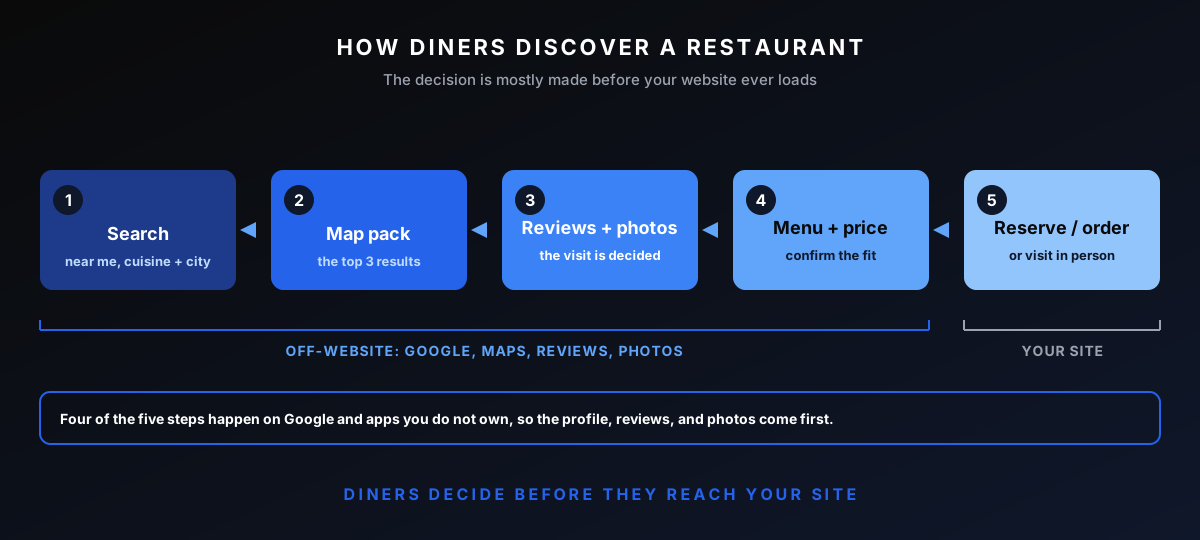
From there they skim recent reviews and scan the photos, then check the menu and the price range to confirm the fit. Only at the end, if at all, do they reach the website, usually to book a table, place an order, or get directions.
Most of the deciding happens before the website loads. A restaurant can have a beautiful site and still lose the diner by being invisible in the pack, thin on recent reviews, or short on appetizing photos.
Restaurant SEO Ranking Factors
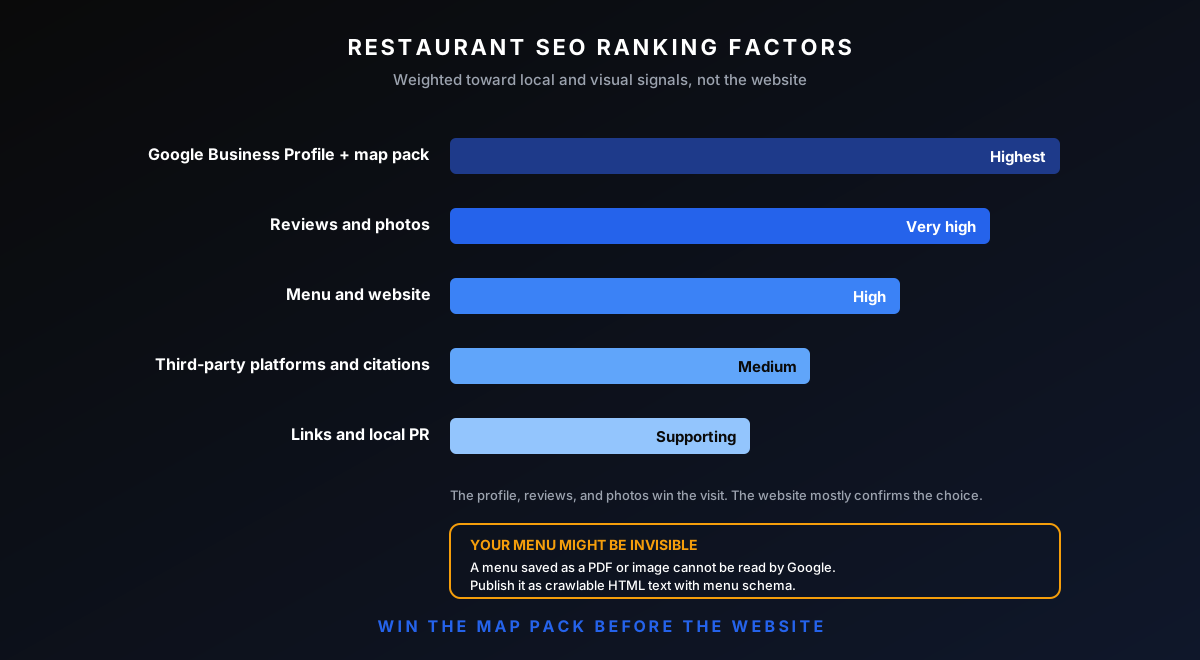
The factors that move restaurant rankings are weighted heavily toward local and visual signals. The profile, reviews, and photos do most of the work, the menu and website support them, and the third-party platforms keep the restaurant consistent everywhere diners look.
Google Business Profile and The Map Pack
The Google Business Profile is the real homepage of a restaurant. A complete, active profile, with the right primary category, the menu, hours, attributes, ordering and reservation links, and fresh photos, is what earns map-pack visibility under Google's relevance, distance, and prominence model.
Most restaurants set the profile up once and forget it. Keeping the category correct, the hours accurate, the menu current, and the photos fresh is what separates the restaurants that own the pack from the ones that do not.
Reviews and Photos
Reviews and photos are the deciding factors for a restaurant, and both feed rankings. Star rating, volume, recency, and owner responses drive local prominence and trust, an effect quantified in hospitality research on restaurant online reviews. People eat with their eyes, so appetizing photos directly lift clicks and visits.
A simple system for earning steady reviews, and adding new photos regularly, beats a one-time push. Restaurants that respond to reviews and keep their galleries fresh hold the pack far better than those that let both go stale.
Menu and Website
The menu is the most important page a restaurant owns, and it has to be crawlable. A menu stored as a PDF or an image is invisible to Google, while a menu in real, structured text lets the restaurant rank for dish and cuisine searches and feed AI answers.
The rest of the website should be fast, mobile-first, and clear, with tappable phone numbers, obvious ordering and reservation buttons, and local business and menu schema. Most restaurant browsing happens on a phone, so a slow or clumsy mobile site quietly costs covers.
Third-Party Platforms and Citations
Yelp, TripAdvisor, and the ordering and reservation apps are part of restaurant SEO whether the owner likes it or not. Consistent name, address, and phone number across all of them, plus active, complete profiles, reinforce the signals Google uses and capture diners who search on those platforms directly.
Inconsistent details across listings are a common, quiet drag on the map pack. A restaurant that moved, rebranded, or changed its hours and never updated every platform sends mixed signals that suppress visibility.
Links and Local PR
Links from local food blogs, "best of" roundups, event coverage, and press build the prominence Google rewards. They matter less than the profile and reviews, but earning local links and getting featured on local sites still move competitive city rankings.
Restaurants have a natural advantage here: they are inherently newsworthy and local. New menus, chef features, events, and community involvement are all genuine reasons for local publications and bloggers to link, which most restaurants never pursue.
Your Menu Is Probably Invisible To Google
The single most common technical mistake in restaurant SEO is a menu that Google cannot read. Restaurants love to post the menu as a designed PDF or a photo, which looks great to a human and is completely invisible to a search engine, so none of those dish and cuisine terms can ever rank.
The fix is to publish the menu as real, structured HTML text on the site, with sections, dish names, descriptions, and prices, plus menu schema. That single change lets a restaurant start ranking for the specific dishes and cuisines people search, and it is exactly the kind of crawlability work behind AI Overview citations, since AI answers pull from text they can actually read.
Restaurant SEO by Search Type
Not every restaurant search is equal, and the higher-intent ones deserve the focus. Each search type has its own intent and competition, so the profile, menu, and content should be built to match them.
"Near me" and location. The highest-volume, highest-intent searches; won mostly through the profile and the map pack.
Cuisine plus location. "Thai food in [neighborhood]" buyers know what they want; match it on the profile and menu.
Dish and specialty. Specific dishes like "best ramen" or "wood-fired pizza" reward a crawlable, detailed menu.
Occasion and experience. "Date-night," "brunch," or "private dining" searches reward dedicated, descriptive pages.
Online ordering. Takeout and delivery intent; capture it on your own site to avoid the third-party cut.
Reservations. Booking intent; make reserving obvious on the profile and the site.
A restaurant does not need to win all of these at once. Prioritize the cuisine, dish, and occasion searches with the best mix of demand and winnable competition for that specific city, then build outward.
Restaurant SEO and AI Search
AI and voice assistants increasingly answer "where should I eat near here" directly, pulling from the same local signals: the profile, reviews, photos, and a menu they can read. The work that wins the map pack is the same work that gets a restaurant surfaced in an AI answer or a voice result.
The reassuring part is that there is no separate AI strategy for a restaurant. A complete profile, steady reviews, strong photos, and a crawlable menu are exactly what AI engines lean on, so doing the local fundamentals well covers both search and AI.
How Long Restaurant SEO Takes
Local restaurant SEO can move quickly. Profile, photo, and review improvements often shift map-pack visibility within weeks, while competitive cuisine and city rankings take a few months to settle.
The timeline depends on the starting point, the city, and the competition. A restaurant with a neglected profile and few reviews can see fast early wins; one fighting for a popular cuisine in a dense city needs more sustained work on reviews, photos, and local links to move.
Common Restaurant SEO Mistakes
The most common mistake is posting the menu as a PDF or image, leaving every dish and cuisine term invisible to search. The second is treating the Google Business Profile as set-and-forget while pouring effort into a website most diners never see.
The other recurring errors: no system for earning steady reviews; stale or unappealing photos; inconsistent details across Yelp, TripAdvisor, and ordering apps; and a slow, clumsy mobile site. Fixing the listing and citation basics is also the foundation of earning local links for a restaurant.
The deeper mistake is leaning on third-party delivery apps as the whole strategy. Their commissions eat the margin, and they own the customer relationship, while a strong local presence sends diners to the restaurant directly at a fraction of the cost.
Choosing a Restaurant SEO Approach
A restaurant has three options: handle it in-house, hire a generalist agency, or work with someone who knows local hospitality SEO. In-house can manage the profile, photos, and review requests; the harder parts, like a crawlable menu, schema, citations at scale, and local links, usually need help.
Whichever you choose, judge it on covers, orders, and reservations, not vanity rankings, and insist on transparency about what is actually being done. The work runs through ongoing optimization and, where the city is competitive, managed authority growth.
Frequently Asked Questions
How Much Does Restaurant SEO Cost?
It varies widely by market and scope, typically a few hundred to a couple of thousand dollars a month for ongoing local SEO. The right spend depends on how competitive the city and cuisine are, and on how much of the work is done in-house.
How Long Until a Restaurant Sees Results?
Profile, photo, and review work can move map-pack visibility within weeks, while competitive cuisine and city rankings take a few months. Most restaurants see meaningful traffic and covers within a few months of consistent work.
Does a Restaurant Need a Website for SEO?
A website helps, especially for a crawlable menu, online ordering, and reservations, but the Google Business Profile does more of the work. Many diners decide entirely within Google, so the profile, reviews, and photos come first.
Why Is My Restaurant Menu Not Showing Up on Google?
Usually because the menu is a PDF or an image, which Google cannot read. Publishing the menu as real, structured HTML text, with menu schema, lets it rank for dish and cuisine searches and appear in AI answers.
Are Third-Party Apps Like Yelp and DoorDash Part of Restaurant SEO?
Yes. Diners search and decide on those platforms, and consistent, complete profiles there reinforce the signals Google uses. They are worth maintaining, though capturing orders and reservations on your own site protects your margin.
Work with Mojo Links
Restaurant SEO rewards the operators who win the map pack, the reviews, and the photos before they touch the website, which is the work we run for local clients. We start with the profile, the reviews, and a menu Google can actually read, then build the local links a competitive city demands. A personalized video walkthrough shows where your local visibility is leaking and what to fix first.

About Bart Magera
Bart Magera is the founder of Mojo Links. Ten years across YMYL verticals (legal, medical, finance, supplements, crypto, gambling). Trained under Koray Tuğberk Gübür's Topical Authority framework. Author of two SEO books and international speaker.
Want this kind of analysis on your site?
Get a free video walkthrough within 48 hours covering technical health, backlinks, content gaps, and AI visibility.
Related posts
Keep reading on adjacent topics.
- SEO
 Bart Magera9 min read
Brand Mentions for SEO: Linked, Unlinked, and AI Citations
Most SEO budgets still treat a mention without a link as a failed pitch. That math is out of date. The same editorial naming that builds your entity in Google now decides whether AI engines name you in answers. Here is the value model behind linked, unlinked, and AI-cited mentions, and the three lanes for earning more of them.
- SEO
 Bart Magera12 min read
AI Visibility Tools: 9 Trackers Ranked and Compared
Nine AI visibility tools, one yardstick: engines covered, what gets measured, competitor tracking, and price. Every page-one comparison of these trackers is written by a vendor ranking its own product first. This one is not. Here is where each tool fits, from a $29 entry plan to enterprise quotes, and the one thing none of them can do.
- SEO
 Bart Magera10 min read
ChatGPT Brand Mentions: How To Track and Earn Them
When a buyer asks ChatGPT for the best option in a category, it names a few brands inside the answer. Those ChatGPT brand mentions, not the linked citations beneath them, are what get you recommended. Here is how to track them and how to earn them.