

Personal Injury Lawyer SEO: How Injury Firms Win Cases from Search
Listen to this article
Browser-native voice. No account required.
When someone is hurt in a crash, they reach for their phone within days, sometimes hours, and search "personal injury lawyer near me" or "car accident attorney [city]." They scan the first few firms, the reviews, and the ads, and call one. The firm that owns that search wins a case worth far more than the click.
Personal injury lawyer SEO is the work of being that firm, and it is the most competitive, highest-stakes corner of legal search. This is how it actually works for an injury firm, what moves it, and how to tell a real approach from a packaged one. It is the personal-injury application of the broader legal SEO playbook for practices.
What Is Personal Injury Lawyer SEO?
Personal injury lawyer SEO is the practice of optimizing an injury firm's online presence so it appears when accident victims search for a lawyer or research their type of injury. It spans injury-type content, the Google Business Profile and map pack, reviews, authoritative backlinks, and the expertise signals Google demands of legal sites, with the goal of turning searches into signed cases. It is legal SEO sharpened for the most competitive practice area.
Unlike a low-competition local business, a PI firm competes against national brands, aggregators, and firms spending heavily on the same terms. The job is to win the specific injury searches and local intent where a focused firm can actually beat them.
Why Does Personal Injury Lawyer SEO Matter?
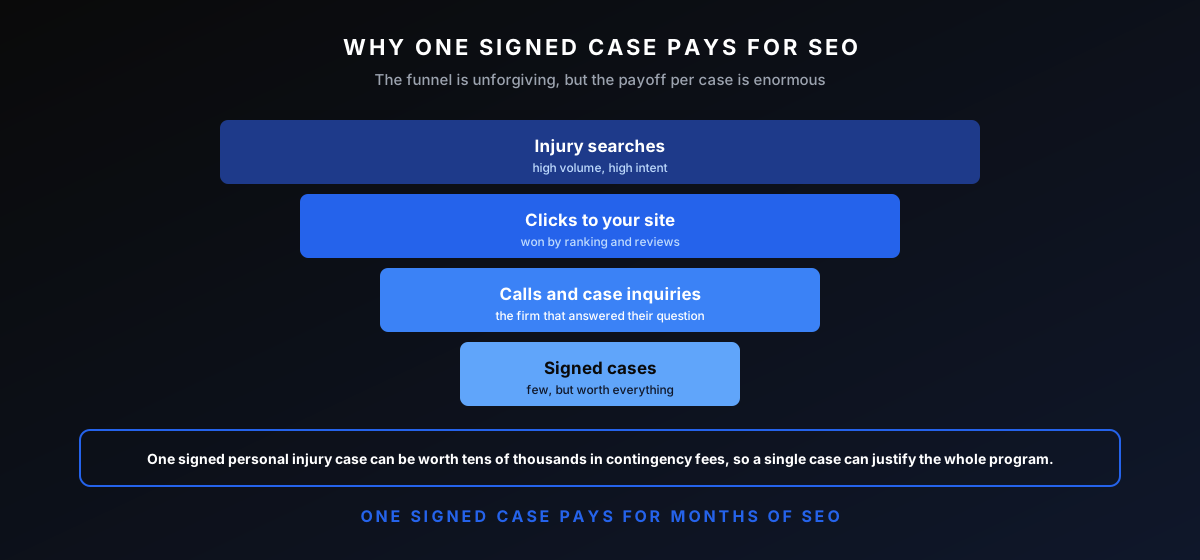
Personal injury lawyer SEO matters because the economics are unlike any other vertical. PI runs on contingency, so a single signed case can be worth tens of thousands in fees, which means one ranking that produces one case pays for an aggressive SEO program many times over. The funnel is unforgiving, but the payoff per case is enormous.
It also matters because paid search is brutal here. PI has some of the highest costs per click anywhere, so firms that rely only on ads bleed budget. Organic rankings and a strong local presence keep producing cases without paying for every click, which is why the firms that invest in SEO compound an advantage the ad-only firms cannot.
How Personal Injury SEO Is Different
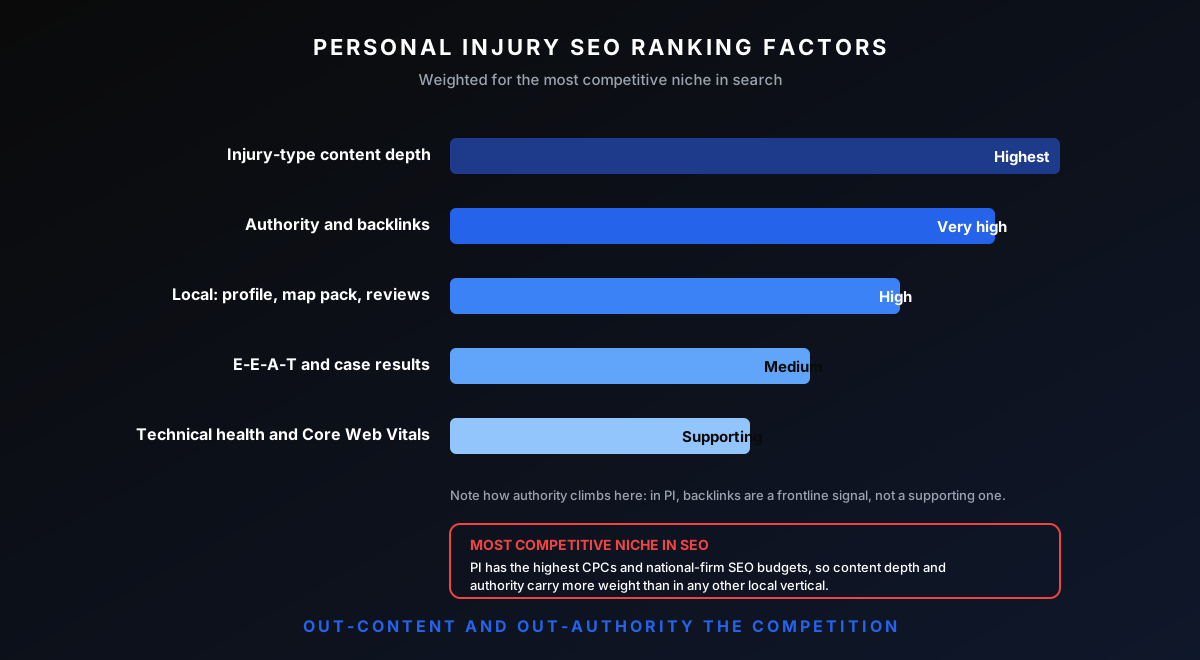
Personal injury is the most competitive niche in SEO, full stop. The CPCs are the highest in any industry and national firms run large, sophisticated SEO programs, so winning takes more authority and content depth than any other local vertical. The general law firm SEO fundamentals apply, but the intensity is in a different league.
The content game is injury-type pages, not a single category page. Victims search their specific situation, "car accident," "truck accident," "slip and fall," and the firm with a thorough, genuinely useful page for that injury is the one that ranks and earns trust. One generic "personal injury" page loses to specific ones.
Authority carries more weight here than in any other vertical. Because you are fighting established national firms, backlinks and genuine local prominence are often the deciding factor between two firms with similar content. Links are not a supporting signal in PI; they are a frontline one.
And bar advertising rules constrain the work. State bar rules govern what a firm can claim, how case results and client testimonials can be shown, and what disclaimers are required, so the content has to win trust while staying compliant. That is a real constraint a generic SEO plan ignores.
How Injury Victims Find a Lawyer
The path from injury to hiring is fast and decided early. A victim searches "personal injury lawyer near me" or their specific injury, sees the ads, the map pack, and the first organic results, scans reviews and case results, then calls one or two firms. SEO either wins or loses the case at each of those steps.
It is urgent and high-stakes. Someone facing medical bills and a missed paycheck is not comparing ten firms for weeks; they are calling the first credible firm with strong reviews and a clear answer to their situation. The firms that win these moments did the local and content work long before the search.
Many victims also research before they call, reading what their injury is worth and how the process works. A firm whose injury-type pages answered those questions has already earned trust by the time the phone rings, which is why content and local presence work together in PI.
Personal Injury Lawyer SEO Ranking Factors
The factors that move PI rankings are weighted differently than other verticals. Injury-type content and authority sit at the top, local signals win the "near me" searches, and technical health supports it all. Here is the order to work them in.
Injury-Type Content Depth
The biggest content lever in PI is a dedicated, genuinely useful page for each injury type the firm handles. A car accident page, a truck accident page, a slip-and-fall page, each answering what the case is worth, how the process works, and what to do next, gives Google something specific to rank and gives victims the answer they searched for. Depth and specificity win here.
Templated pages with the city name swapped out do not rank in PI anymore. A motorcycle accident and a medical malpractice claim are different injuries, different processes, different fears. Write them like a lawyer who handles them, not like a content mill.
Authority and Backlinks
Authority is the frontline signal in personal injury. Because you are fighting national firms, a strong, relevant backlink profile is often what separates two firms with similar content and local presence. The same off-page SEO fundamentals apply, but PI demands more of them: genuine local press, legal directories, community involvement, and earned editorial links all carry weight.
This is also where shortcuts get firms hurt. PI is targeted heavily by link schemes and spam, and Google scrutinizes the niche closely, so a clean, earned profile beats a bought one that invites a penalty in the most competitive category there is.
Local: Google Business Profile and Reviews
For the "injury lawyer near me" searches, the Google Business Profile and reviews do the work. Google's local-ranking signals come down to relevance, distance, and prominence, and Clio's Legal Trends research tracks how prospective clients find and choose counsel. For a frightened injury victim, recent, credible reviews are decisive.
E-E-A-T and Case Results
Legal is a YMYL category, so Google weights real attorney credentials, experience, and trust heavily. Named attorney bios attached to the injuries they handle, genuine case results where bar rules allow, and accurate, current content all build the expertise signal. Anonymous or ghostwritten content does not clear the bar in PI.
Technical Health and Core Web Vitals
Most injury searches happen on a phone, often by someone in distress, so a fast, mobile-friendly site with click-to-call is non-negotiable. Local business and legal schema, clean indexable injury-type pages, and solid Core Web Vitals remove the friction between a search and a call. Technical problems quietly cap everything above them.
Personal Injury SEO by Case Type
Not every injury search is equal, and the case types a firm handles deserve their own dedicated pages. Each has its own intent, competition, and case value, and a firm that wins the profitable ones outperforms one chasing only "personal injury lawyer."
Car accidents. The volume base; high competition and high intent, won with thorough pages and reviews.
Truck and commercial vehicle. Higher case value and complexity; a dedicated page captures serious, lucrative cases.
Motorcycle accidents. Distinct audience and injuries; a focused page wins searches the car-accident page misses.
Slip and fall and premises. Common and varied; clear pages on liability and process convert researching victims.
Medical malpractice. High value, long sales cycle, heavy research; deep, credible content carries it.
Wrongful death. Sensitive and high-stakes; trust signals and tactful, accurate content matter most.
Workers compensation. High volume in many markets; often its own practice area with its own searches.
Mass tort and class action. A separate game of national scale and aggressive competition; worth its own track if the firm pursues it.
A firm does not need to win all of these at once. Prioritize the case types with the best mix of case value and winnable competition for that firm and market.
Personal Injury Lawyer SEO and AI Search
AI answer engines now sit above the blue links for many injury queries, and they cite the firms that already rank. AI Overviews, ChatGPT, and Perplexity pull from the same injury-type content, reviews, and trusted mentions that drive search, so a firm strong in PI SEO tends to be the one these answers surface. The path mirrors how to rank in AI Overviews.
Accuracy is not optional here. AI engines paraphrase legal content to vulnerable people, so the firms an engine is willing to cite are the ones whose content is credible, current, and clearly authored by real attorneys. The compliance bar and the citation bar are the same bar.
How Long Personal Injury Lawyer SEO Takes
Personal injury SEO is slower than most verticals because the competition is so intense. Local profile and review wins can come within weeks, but ranking competitive injury-type terms against established firms takes many months of content and authority work, with results compounding from there.
The timeline depends heavily on the market. A firm in a mid-size market can see traction in months; competing in a major metro against firms with large budgets is a long, sustained campaign. Anyone promising fast page-one results for competitive injury terms is describing ads, not SEO.
Common Personal Injury Lawyer SEO Mistakes
The most common mistake is one generic "personal injury" page instead of a real page per injury type. Victims search their specific situation, and the firm without dedicated injury pages is invisible for most of the searches that matter.
The other recurring errors: buying links in the niche Google scrutinizes most and earning a penalty; neglecting the Google Business Profile and reviews; thin, ghostwritten content with no named attorney behind it; and ignoring bar advertising rules until they become a problem.
The deeper mistake is treating PI like a normal local vertical. It is the most competitive niche there is, so a thin, underfunded effort stalls. Tie the work to signed cases, not rankings, because in PI a single case can justify the entire program.
Choosing a Personal Injury Lawyer SEO Approach
A firm has three options: do it in-house, hire a generalist agency, or work with one that knows legal and the intensity of PI. In-house can handle the profile and reviews. A generalist often underestimates how much content and authority PI demands. A specialist gets to results faster but costs more, and in PI the math usually supports it.
Whichever you choose, judge it on signed cases and qualified inquiries, not vanity rankings, and insist on transparency about what is actually being done. The work runs through ongoing optimization and, where authority is the gap, strategic link acquisition. Be wary of anyone guaranteeing rankings or selling cheap links in the niche Google watches most closely.
Frequently Asked Questions
How Much Does Personal Injury Lawyer SEO Cost?
More than most verticals, because the competition demands it, typically several thousand dollars a month for a serious campaign in a competitive market. The right spend depends on your market and case types. Cheap packages do not move the needle in the most competitive niche in SEO. Judge cost against the value of a single signed case.
How Long Until a Personal Injury Firm Sees Results?
Local profile and review wins can come within weeks, but competitive injury-type rankings take many months against established firms, compounding after that. The market sets the pace; a mid-size market moves faster than a major metro full of big-budget firms. Fast page-one promises for competitive terms describe ads, not SEO.
Why Is Personal Injury SEO so Competitive?
Because the case values are enormous and run on contingency, so a single case can be worth tens of thousands in fees. That economics pulls in national firms and huge ad and SEO budgets, making PI the highest-CPC, most contested niche in search. It also means the upside of ranking is larger than almost anywhere else.
Do Backlinks Matter for Personal Injury SEO?
More than in any other local vertical. Because you are competing with established national firms, a strong, earned backlink profile is often the deciding factor. But PI is also the niche Google scrutinizes most for link spam, so earned, relevant links matter and bought ones invite a penalty.
Can a Personal Injury Firm Do SEO Themselves?
Parts of it, yes. A firm can maintain its Google Business Profile, ask for reviews, and keep details consistent. The harder parts, deep injury-type content, authority building, and technical health, take time and expertise most firms lack in-house, and the competition is unforgiving. Many do the local basics and bring in help for the rest.
Work with Mojo Links
Personal injury SEO rewards firms that build genuine injury-type authority instead of chasing one generic page, which is the work we run for clients in competitive and regulated verticals. We start with the injuries and searches that actually produce cases, then build the content, local signals, and authority to win them. A free audit includes a read on your local visibility, your injury-page coverage, and where a competitor is winning cases you are not.

About Bart Magera
Bart Magera is the founder of Mojo Links. Ten years across YMYL verticals (legal, medical, finance, supplements, crypto, gambling). Trained under Koray Tuğberk Gübür's Topical Authority framework. Author of two SEO books and international speaker.
Want this kind of analysis on your site?
Get a free video walkthrough within 48 hours covering technical health, backlinks, content gaps, and AI visibility.
Related posts
Keep reading on adjacent topics.
- SEO
 Bart Magera9 min read
Brand Mentions for SEO: Linked, Unlinked, and AI Citations
Most SEO budgets still treat a mention without a link as a failed pitch. That math is out of date. The same editorial naming that builds your entity in Google now decides whether AI engines name you in answers. Here is the value model behind linked, unlinked, and AI-cited mentions, and the three lanes for earning more of them.
- SEO
 Bart Magera12 min read
AI Visibility Tools: 9 Trackers Ranked and Compared
Nine AI visibility tools, one yardstick: engines covered, what gets measured, competitor tracking, and price. Every page-one comparison of these trackers is written by a vendor ranking its own product first. This one is not. Here is where each tool fits, from a $29 entry plan to enterprise quotes, and the one thing none of them can do.
- SEO
 Bart Magera10 min read
ChatGPT Brand Mentions: How To Track and Earn Them
When a buyer asks ChatGPT for the best option in a category, it names a few brands inside the answer. Those ChatGPT brand mentions, not the linked citations beneath them, are what get you recommended. Here is how to track them and how to earn them.